
Advent 2
Devotional
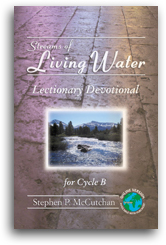
Streams of Living Water
Lectionary Devotional for Cycle B
Object:
Isaiah 40:1-11
The grass withers, the flower fades; but the word of our God will stand forever.
-- Isaiah 40:8
The people of Israel had been taken into exile. Everything that they had held onto as a sign of their special identity -- land, temple, king -- had been taken away from them. Now the prophet is called to speak words of comfort to a despairing people. "In the wilderness," in the time of exile, they are told "to prepare the way of the Lord." When they are commanded to cry out that the Lord is coming, they respond in despair that "all flesh is like grass" that soon withers under the sun. There is no hope that new leaders will rise up to lead them. Their cynicism is overwhelming. Like today, when people have lost all confidence in politicians and religious leaders and despair that all people are selfish and self-serving, so Israel had lost all hope. The prophet challenges that despair not by denying the weakness of humans but by proclaiming the power of God. The light in the darkness is not some new scheme of reform or some champion of the people but the truth that God cares for us like a shepherd for his flock. As you reflect on your own life, where are the points of despair and where are you looking for help? What does it mean for you to trust that God cares for you in your particular situation?
Psalm 85:1-2, 8-13
Steadfast love and faithfulness will meet; righteousness and peace will kiss each other.
-- Psalm 85:10
The shalom of God includes both God's initiative and our response. "Faithfulness will spring up from the ground and righteousness will look down from the sky." We are caught in a tension within the church between those who want to pursue righteousness at any cost and those who insist on peace at any price. The thought that "righteousness and peace (must) kiss each other" is hard to grasp. Perhaps part of the problem is that we do not take the other person seriously enough to listen beneath the rhetoric. Those who insist on an ethical stance must hear the fear of those who seek peace, and those who insist on peace must hear the hunger of those who yearn for what is right. Each needs to know that commitment to each other will not allow for separation. "Steadfast love and faithfulness" must meet if there is to be shalom. A community that worships the absence of conflict puts integrity on the altar, but those who are willing to split the community because others will not agree on their issue substitute self-righteousness, for God's righteousness which we only "see through a glass darkly."
2 Peter 3:8-15a
The Lord is not slow about his promise, as some think of slowness, but is patient with you, not wanting any to perish, but all to come to repentance.
-- 2 Peter 3:9
Context is everything. If it is true, as Paul reminds us, "... that with the Lord one day is like a thousand years and a thousand years are like one day," then a factor in our struggles within the church may be our failure to trust in God's timing. Our own lack of patience causes us to push for decisions within the body before the body has discerned the mind of God. The temptation of churches is to model themselves after political bodies that make decisions by votes that leave winners and losers. Yet God's will is that all will come to an awareness of the mind of God so that "none shall perish."
If the church is a body rather than an organization, it may be that coming to a decision too quickly is like the fingers saying to the arm, "since we are more than you, we win the vote and have no need of you." Discernment of the will of God is the task of the church. Such discernment invites people to study the scriptures, share a variety of opinions within the community, pray a lot, and then have patience. Whether the issue is one of the current ones around the issue of sexuality or one of the previous ones around democracy, slavery, the role of women in the church, the struggle for civil rights, or the response of the church to poverty or war, God is taking the faithful acts of many Christians and slowly working within the church for the salvation of humanity. Consider the power of making your faithful witness but also having patience with your neighbor to await the working of God in his or her heart.
Mark 1:1-8
The voice of one crying in the wilderness: "Prepare the way of the Lord."
-- Mark 1:3
A member admits to me that he does not like Advent because it tries to make a mystery out of something he already knows. He wants to go right to the celebration and skip the preparation. But what he celebrates is a past event. Mark suggests that the kingdom of God is knocking at this member's door waiting for him to experience the baptism of repentance so that he can be prepared to receive this new thing. Advent is a difficult season for many of us because we want to blur the season into Christmas. The liturgical calendar does not make sense to us because we really are not preparing for a surprise. We think that we already know the end of the story. And more importantly, we do not believe anything different will happen this year. It is hard to prepare the way of the Lord when we do not expect the Lord to come. But what if this year God is about to act decisively, and we miss it altogether because we weren't willing to prepare? What if Advent only rehearses the past event to illuminate how we are to discern the sign of the times? What would take place if Christians prepared for God's coming to us fully expecting that this may happen?
The grass withers, the flower fades; but the word of our God will stand forever.
-- Isaiah 40:8
The people of Israel had been taken into exile. Everything that they had held onto as a sign of their special identity -- land, temple, king -- had been taken away from them. Now the prophet is called to speak words of comfort to a despairing people. "In the wilderness," in the time of exile, they are told "to prepare the way of the Lord." When they are commanded to cry out that the Lord is coming, they respond in despair that "all flesh is like grass" that soon withers under the sun. There is no hope that new leaders will rise up to lead them. Their cynicism is overwhelming. Like today, when people have lost all confidence in politicians and religious leaders and despair that all people are selfish and self-serving, so Israel had lost all hope. The prophet challenges that despair not by denying the weakness of humans but by proclaiming the power of God. The light in the darkness is not some new scheme of reform or some champion of the people but the truth that God cares for us like a shepherd for his flock. As you reflect on your own life, where are the points of despair and where are you looking for help? What does it mean for you to trust that God cares for you in your particular situation?
Psalm 85:1-2, 8-13
Steadfast love and faithfulness will meet; righteousness and peace will kiss each other.
-- Psalm 85:10
The shalom of God includes both God's initiative and our response. "Faithfulness will spring up from the ground and righteousness will look down from the sky." We are caught in a tension within the church between those who want to pursue righteousness at any cost and those who insist on peace at any price. The thought that "righteousness and peace (must) kiss each other" is hard to grasp. Perhaps part of the problem is that we do not take the other person seriously enough to listen beneath the rhetoric. Those who insist on an ethical stance must hear the fear of those who seek peace, and those who insist on peace must hear the hunger of those who yearn for what is right. Each needs to know that commitment to each other will not allow for separation. "Steadfast love and faithfulness" must meet if there is to be shalom. A community that worships the absence of conflict puts integrity on the altar, but those who are willing to split the community because others will not agree on their issue substitute self-righteousness, for God's righteousness which we only "see through a glass darkly."
2 Peter 3:8-15a
The Lord is not slow about his promise, as some think of slowness, but is patient with you, not wanting any to perish, but all to come to repentance.
-- 2 Peter 3:9
Context is everything. If it is true, as Paul reminds us, "... that with the Lord one day is like a thousand years and a thousand years are like one day," then a factor in our struggles within the church may be our failure to trust in God's timing. Our own lack of patience causes us to push for decisions within the body before the body has discerned the mind of God. The temptation of churches is to model themselves after political bodies that make decisions by votes that leave winners and losers. Yet God's will is that all will come to an awareness of the mind of God so that "none shall perish."
If the church is a body rather than an organization, it may be that coming to a decision too quickly is like the fingers saying to the arm, "since we are more than you, we win the vote and have no need of you." Discernment of the will of God is the task of the church. Such discernment invites people to study the scriptures, share a variety of opinions within the community, pray a lot, and then have patience. Whether the issue is one of the current ones around the issue of sexuality or one of the previous ones around democracy, slavery, the role of women in the church, the struggle for civil rights, or the response of the church to poverty or war, God is taking the faithful acts of many Christians and slowly working within the church for the salvation of humanity. Consider the power of making your faithful witness but also having patience with your neighbor to await the working of God in his or her heart.
Mark 1:1-8
The voice of one crying in the wilderness: "Prepare the way of the Lord."
-- Mark 1:3
A member admits to me that he does not like Advent because it tries to make a mystery out of something he already knows. He wants to go right to the celebration and skip the preparation. But what he celebrates is a past event. Mark suggests that the kingdom of God is knocking at this member's door waiting for him to experience the baptism of repentance so that he can be prepared to receive this new thing. Advent is a difficult season for many of us because we want to blur the season into Christmas. The liturgical calendar does not make sense to us because we really are not preparing for a surprise. We think that we already know the end of the story. And more importantly, we do not believe anything different will happen this year. It is hard to prepare the way of the Lord when we do not expect the Lord to come. But what if this year God is about to act decisively, and we miss it altogether because we weren't willing to prepare? What if Advent only rehearses the past event to illuminate how we are to discern the sign of the times? What would take place if Christians prepared for God's coming to us fully expecting that this may happen?
