
Advent 3
Devotional
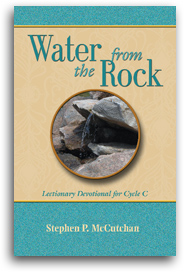
Water From the Rock
Lectionary Devotional for Cycle C
Object:
... The king of Israel, the Lord, is in your midst....
-- Zephaniah 3:15
As we greet the third Sunday of Advent, the excitement of the Christmas holiday increases. The pressure on pastors to skip the Advent hymns and move right to the Christmas carols is strong. The desire of our culture is to now focus on the warm glow of the season and to put aside or cover up any of the negative features of our lives and society. The pressure for joy, cheer, and celebration is so strong that many who are experiencing loneliness or sadness feel as if they are being left behind. The passage from Zephaniah is a sobering message to be read in the midst of this pressure.
First, it reminds us that Christmas is not only about celebrating a historical event that took place 2,000 years ago but also anticipating a future event. The "Day of the Lord" is the culmination of history and is often referred to by Christians as the second coming of Christ. Jesus did not just come once a long time ago but will also return to establish God's kingdom. Christians are to live as if that day is very near. But our very anticipation of the second coming causes us to recognize that all is not well among us. Zephaniah's description of the Day of the Lord is similar to the events preceding Noah and the flood where God said, "I have determined to make an end of all flesh, for the earth is filled with violence because of them; now I am going to destroy them along with the earth" (Genesis 6:13). Perhaps Advent needs to make space for us to pause in our headlong rush to Christmas and to reflect on the hurt and loneliness that exists all around us.
Such an invitation is not meant to kill the joy of the season but to open us to anticipate the only one who can fill our lives with true joy. If we are to sing "Joy To The World," it is helpful to recognize that we do so in light of the thorns that infest the ground, and our real hope is not in ignoring those thorns but in the source of blessing that can flow "far as the curse is found" ("Joy To The World" by Isaac Watts, v. 3).
-- Zephaniah 3:15
As we greet the third Sunday of Advent, the excitement of the Christmas holiday increases. The pressure on pastors to skip the Advent hymns and move right to the Christmas carols is strong. The desire of our culture is to now focus on the warm glow of the season and to put aside or cover up any of the negative features of our lives and society. The pressure for joy, cheer, and celebration is so strong that many who are experiencing loneliness or sadness feel as if they are being left behind. The passage from Zephaniah is a sobering message to be read in the midst of this pressure.
First, it reminds us that Christmas is not only about celebrating a historical event that took place 2,000 years ago but also anticipating a future event. The "Day of the Lord" is the culmination of history and is often referred to by Christians as the second coming of Christ. Jesus did not just come once a long time ago but will also return to establish God's kingdom. Christians are to live as if that day is very near. But our very anticipation of the second coming causes us to recognize that all is not well among us. Zephaniah's description of the Day of the Lord is similar to the events preceding Noah and the flood where God said, "I have determined to make an end of all flesh, for the earth is filled with violence because of them; now I am going to destroy them along with the earth" (Genesis 6:13). Perhaps Advent needs to make space for us to pause in our headlong rush to Christmas and to reflect on the hurt and loneliness that exists all around us.
Such an invitation is not meant to kill the joy of the season but to open us to anticipate the only one who can fill our lives with true joy. If we are to sing "Joy To The World," it is helpful to recognize that we do so in light of the thorns that infest the ground, and our real hope is not in ignoring those thorns but in the source of blessing that can flow "far as the curse is found" ("Joy To The World" by Isaac Watts, v. 3).
