
The Ascension Of Our Lord
Preaching
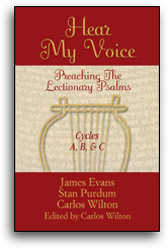
Hear My Voice
Preaching The Lectionary Psalms for Cycles A, B, C
Object:
(Occurs in all three cycles of the lectionary; see The Ascension Of Our Lord, Cycle A, for an alternative approach.)
This psalm celebrates God's regal bearing: "The Lord he is king, he is robed in majesty" (v. 1). But it is the powerful imagery of God's throne "established from of old" (v. 2) that draws this psalm into use on Ascension Sunday. Early Christian confessions assert that Jesus ascended to the "right hand of God." This imagery presumes a throne room with a right and left hand of power. Among ancient Eastern monarchs, the place at the right hand of the king was regarded as the most privileged place, second only to the throne itself. It was reserved for that one person who most pleased the king.
Living in the modern world, and especially in the United States, does not offer us many parallels for understanding the significance of all this royal imagery. Even the American president, with the awesome power at his command, still does not touch the sovereign character of ancient kings.
The psalmist, however, offers images that are helpful in making appropriate connections. The psalmist links God's kingship with creation. The reference to the "floods" and the roaring waters most certainly refer to the primeval waters upon which God moved and brought the earth into existence (Genesis 1). The power of God is no where more potently demonstrated than in the administration of the universe.
This is where our view of the modern world helps us. What we know about the scope of the universe makes the confession of God as creator truly astounding. The sheer depth and breadth of our universe reveals a God of immense power and creativity. If that is what the Bible means when it declares that God is king, then God is a king truly glorious and worthy of praise and devotion (v. 1).
The universe, as we understand it, is an immense and complex order. Imagining a living force which stands outside this universe, or acts upon this universe -- not to mention bringing it into existence -- certainly implies a higher order of administrator. While we may not have a frame of reference for the meaning of king, anyone who can build and sustain such an organization is a creative force worthy of awe and respect. And if Jesus is seated at the right hand of this amazing creative force, then his role as King of kings certainly takes on a universal significance.
The psalmist responds to his own recognition and understanding of God as king by singing a song of praise for the "majesty" of God. How can we do less?
-- J. E.
This psalm celebrates God's regal bearing: "The Lord he is king, he is robed in majesty" (v. 1). But it is the powerful imagery of God's throne "established from of old" (v. 2) that draws this psalm into use on Ascension Sunday. Early Christian confessions assert that Jesus ascended to the "right hand of God." This imagery presumes a throne room with a right and left hand of power. Among ancient Eastern monarchs, the place at the right hand of the king was regarded as the most privileged place, second only to the throne itself. It was reserved for that one person who most pleased the king.
Living in the modern world, and especially in the United States, does not offer us many parallels for understanding the significance of all this royal imagery. Even the American president, with the awesome power at his command, still does not touch the sovereign character of ancient kings.
The psalmist, however, offers images that are helpful in making appropriate connections. The psalmist links God's kingship with creation. The reference to the "floods" and the roaring waters most certainly refer to the primeval waters upon which God moved and brought the earth into existence (Genesis 1). The power of God is no where more potently demonstrated than in the administration of the universe.
This is where our view of the modern world helps us. What we know about the scope of the universe makes the confession of God as creator truly astounding. The sheer depth and breadth of our universe reveals a God of immense power and creativity. If that is what the Bible means when it declares that God is king, then God is a king truly glorious and worthy of praise and devotion (v. 1).
The universe, as we understand it, is an immense and complex order. Imagining a living force which stands outside this universe, or acts upon this universe -- not to mention bringing it into existence -- certainly implies a higher order of administrator. While we may not have a frame of reference for the meaning of king, anyone who can build and sustain such an organization is a creative force worthy of awe and respect. And if Jesus is seated at the right hand of this amazing creative force, then his role as King of kings certainly takes on a universal significance.
The psalmist responds to his own recognition and understanding of God as king by singing a song of praise for the "majesty" of God. How can we do less?
-- J. E.
