
Calling Others In God's Name
Sermon
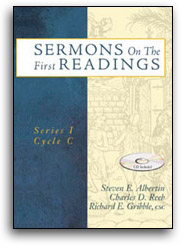
Sermons On The First Readings
Series I, Cycle C
The realization that God calls all people of faith to service and discipleship, and thereby to be a prophetic voice in the contemporary world, is manifest most strongly through the multiple ways God speaks to us. Reading the scriptures, personal meditation and reflection, and the experiences of daily life show God's face to us. For me, however, the hope and the challenge of God's message to be prophetic is found most in the observation of one who is prophetic and staunchly defends one's beliefs and calls others to a similar degree of faith. It is appropriate, therefore, that this book of sermons on the prophetic life be dedicated to two men who have been significant prophets to me: my friends, Joe Ross and Joe Carey.
Introduction
British poet Francis Thompson's epic work, "The Hound of Heaven," is in many ways an autobiographical poem that speaks of the never-ending search that God conducts in the quest of our souls. Thompson, a drug addict whose great talent was only discovered later in life, was called by God, but it took some time for the message to penetrate through the facade of his significant problems that wrapped his potential in a blanket of ignorance and fear. Once the call was heard and the message received, this great poet began to call others in God's name.
Prophecy is a concept that is ordinarily associated with figures we meet in the Hebrew Scriptures, what Christians call the Old Testament. Certainly the great prophets of this era of salvation history, men like Elijah, Isaiah, Jeremiah, Micah, and Amos, to name just a few, spoke God's word to ofttimes rebellious people and helped initiate a change in heart, what the Greeks call metanoia. But if this is where our idea of prophecy ends, then we have truly missed a great deal of beauty. Prophets who call us to greatness in God's name are all about us; we simply need to recognize their words and heed their message. God calls all men and women in varied ways to lives of service and discipleship. Similarly, we are asked to be prophetic and to proclaim God's message to others. Made in the image and likeness of God, as the book of Genesis clearly states, we are the presence of God to others. This awesome responsibility and privilege beckons us to hear God's call and then to pass the call along to others. We act as prophets and call others to faith in God's name, through our words and actions. We must be mindful, therefore, of what we say and do, for such actions communicate who we are and what we believe.
The first third of the Pentecost or Proper cycle reminds us of our need to take the Resurrection message and proclaim it to all peoples as contemporary prophets. It is appropriate, therefore, that the First Lesson scripture passages for this season concentrate on the ministry of the prophets. Scripture calls us never to limit our potential, to work together as a Christian family of faith, to learn to appreciate and gain strength through diversity in society, to speak and spread the truth, and never to block our sense to the needs and cries of the poor, as we do our little bit each day to complete our Master's work on earth.
These sermons are the reflections of one person of faith on the Hebrew Scriptures and what they can and must mean for us today. We cannot shirk our responsibilities as followers of Christ and the consequent challenge to live active lives as contemporary prophets. We have the common vocation to holiness that is manifest each day through the ways we call others in the name of Christ to achieve their great potential. It is my hope that those who read and hear these sermons may be inspired to be prophetic in all that they say and do, carrying forth God's message and doing their share day-by-day to build God's kingdom in our world.
Richard Gribble, CSC
Introduction
British poet Francis Thompson's epic work, "The Hound of Heaven," is in many ways an autobiographical poem that speaks of the never-ending search that God conducts in the quest of our souls. Thompson, a drug addict whose great talent was only discovered later in life, was called by God, but it took some time for the message to penetrate through the facade of his significant problems that wrapped his potential in a blanket of ignorance and fear. Once the call was heard and the message received, this great poet began to call others in God's name.
Prophecy is a concept that is ordinarily associated with figures we meet in the Hebrew Scriptures, what Christians call the Old Testament. Certainly the great prophets of this era of salvation history, men like Elijah, Isaiah, Jeremiah, Micah, and Amos, to name just a few, spoke God's word to ofttimes rebellious people and helped initiate a change in heart, what the Greeks call metanoia. But if this is where our idea of prophecy ends, then we have truly missed a great deal of beauty. Prophets who call us to greatness in God's name are all about us; we simply need to recognize their words and heed their message. God calls all men and women in varied ways to lives of service and discipleship. Similarly, we are asked to be prophetic and to proclaim God's message to others. Made in the image and likeness of God, as the book of Genesis clearly states, we are the presence of God to others. This awesome responsibility and privilege beckons us to hear God's call and then to pass the call along to others. We act as prophets and call others to faith in God's name, through our words and actions. We must be mindful, therefore, of what we say and do, for such actions communicate who we are and what we believe.
The first third of the Pentecost or Proper cycle reminds us of our need to take the Resurrection message and proclaim it to all peoples as contemporary prophets. It is appropriate, therefore, that the First Lesson scripture passages for this season concentrate on the ministry of the prophets. Scripture calls us never to limit our potential, to work together as a Christian family of faith, to learn to appreciate and gain strength through diversity in society, to speak and spread the truth, and never to block our sense to the needs and cries of the poor, as we do our little bit each day to complete our Master's work on earth.
These sermons are the reflections of one person of faith on the Hebrew Scriptures and what they can and must mean for us today. We cannot shirk our responsibilities as followers of Christ and the consequent challenge to live active lives as contemporary prophets. We have the common vocation to holiness that is manifest each day through the ways we call others in the name of Christ to achieve their great potential. It is my hope that those who read and hear these sermons may be inspired to be prophetic in all that they say and do, carrying forth God's message and doing their share day-by-day to build God's kingdom in our world.
Richard Gribble, CSC
