Carrying On The Tradition
Sermon
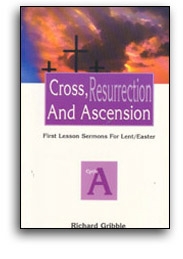
Cross, Resurrection, And Ascension
First Lesson Sermons For Lent/Easter
Tradition is an integral part of being human. All nations, peoples, cultures, and families celebrate many traditions in special and unique ways. In the United States there are many traditions, some of which have become so much a part of what we are as a nation that we don't even think of them as traditions. For example, we use a Roman form of law where the accused is considered innocent until proven guilty. Under our system of law people have rights guaranteed to them by the law of the land, the Constitution.
Summer is an annual event, a tradition, and a special time for all people. In our country there are certain summer events that are celebrated in traditional ways. Summer traditionally opens with the Memorial Day weekend. This is the time when people take that first trip out, go to vacation spots, or open summer homes to enjoy the better weather that lies ahead. Each summer we celebrate the national ritual of the Fourth of July with fireworks, parades, Uncle Sam, barbecues, and family outings to the park. It is a day when we proudly wear the red, white, and blue. The close of summer is traditionally celebrated over the Labor Day weekend. School will soon begin; vacations are over; it is time to settle in for the fall.
Tradition is an important element in the celebration of culture and ethnicity. On March 17 everyone is Irish at least in spirit. We wear green, eat corned beef and cabbage, watch a parade, and toast friends at a local pub. Ethnic groups celebrate the tradition of their language, customs, foods, saints, festivals, and holidays.
Families also celebrate their own traditions. Holidays such as Christmas, Easter, and Thanksgiving are often ritualized in families. It may be a trip to visit relatives, a dinner out, or a family gathering with Mom and Dad. Families many times celebrate birthdays, anniversaries, and other special events in ways which become traditions.
Tradition is certainly one of the key elements of all religion. Rituals and designated days to praise God, celebration of important events, and means to remember the past are all part of the tradition. Tonight the Christian community remembers the tradition and we celebrate our heritage as Judeo-Christian people.
The Jews, like all religious people, remember and celebrate the tradition of their ancestors. While the Jews remember many events of the past and practice traditions rich in history, there is none greater than the Passover, which we hear beautifully described in tonight's reading. God rescued the people; God saved them from the brink of death and brought them home to the land promised them many generations earlier. Jews celebrate the tradition of the seder meal when, as we heard, they ate roasted lamb and bitter herbs as a people in flight from bondage. The Passover, God's intervention on behalf of the people, is the central tradition of the Jews, and since Christianity finds its roots in Judaism it is appropriate that we hear this story tonight, when we enter into the central mystery and celebration of our Christian tradition.
Maundy Thursday is the beginning of the greatest celebration in the Christian tradition, the paschal mystery -- the passion, death, and resurrection of the Lord. On this night we celebrate many traditions of our Christian heritage. We remember that it was this night that Jesus ate his last meal, a Passover meal, with his best friends, the apostles, who had walked the road with him from the beginning. At this meal Jesus gave us the Eucharist as a gift of his eternal presence with us. We also celebrate the tradition of community. We are gathered together as one Christian people to begin to walk more fervently with Jesus these last few hours before his salvific death. This is a night when we celebrate the Christian tradition of service, the common call for all baptized people to serve their brothers and sisters in love, responding to our God who first loved us.
We have many examples of Christian service which have carried on the tradition of Jesus. William and Catherine Booth founded the Salvation Army which even today serves millions of people with assistance and the Christian message. Dorothy Day and Peter Maurin founded the Catholic Worker Movement at the height of the Depression to provide shelter and a meal to those who lived on the streets of our cities. In a different but no less important way, Dietrich Bonhoeffer carried on the tradition of service by his fearless stance against Nazi tyranny and his refusal to forego the work for which he had been ordained.
All of us have been called by Our Lord, Jesus Christ, to live the tradition of the Church. We have been called to live in hope, a hope which only God can give. We are called to live in love and to express this most special yet difficult of human emotions to all. We are called to be servants, to others and to God.
Our Lenten journey from the desert to the tomb to resurrection has reached its climax; the three holy days are upon us. God rescued the Hebrew people from bondage when they cried out. Jesus Christ, God's only-begotten Son, has ransomed us from death by dying on the cross. The Hebrews celebrated the tradition of their rescue with a meal; we remember how God saved us with a meal of our own. Let us celebrate our tradition as people redeemed in God's love. Let us enter fully into these holy days, take the risk of dying a bit to self, so as to rise with Jesus to a new more glorious and eternal life.
Summer is an annual event, a tradition, and a special time for all people. In our country there are certain summer events that are celebrated in traditional ways. Summer traditionally opens with the Memorial Day weekend. This is the time when people take that first trip out, go to vacation spots, or open summer homes to enjoy the better weather that lies ahead. Each summer we celebrate the national ritual of the Fourth of July with fireworks, parades, Uncle Sam, barbecues, and family outings to the park. It is a day when we proudly wear the red, white, and blue. The close of summer is traditionally celebrated over the Labor Day weekend. School will soon begin; vacations are over; it is time to settle in for the fall.
Tradition is an important element in the celebration of culture and ethnicity. On March 17 everyone is Irish at least in spirit. We wear green, eat corned beef and cabbage, watch a parade, and toast friends at a local pub. Ethnic groups celebrate the tradition of their language, customs, foods, saints, festivals, and holidays.
Families also celebrate their own traditions. Holidays such as Christmas, Easter, and Thanksgiving are often ritualized in families. It may be a trip to visit relatives, a dinner out, or a family gathering with Mom and Dad. Families many times celebrate birthdays, anniversaries, and other special events in ways which become traditions.
Tradition is certainly one of the key elements of all religion. Rituals and designated days to praise God, celebration of important events, and means to remember the past are all part of the tradition. Tonight the Christian community remembers the tradition and we celebrate our heritage as Judeo-Christian people.
The Jews, like all religious people, remember and celebrate the tradition of their ancestors. While the Jews remember many events of the past and practice traditions rich in history, there is none greater than the Passover, which we hear beautifully described in tonight's reading. God rescued the people; God saved them from the brink of death and brought them home to the land promised them many generations earlier. Jews celebrate the tradition of the seder meal when, as we heard, they ate roasted lamb and bitter herbs as a people in flight from bondage. The Passover, God's intervention on behalf of the people, is the central tradition of the Jews, and since Christianity finds its roots in Judaism it is appropriate that we hear this story tonight, when we enter into the central mystery and celebration of our Christian tradition.
Maundy Thursday is the beginning of the greatest celebration in the Christian tradition, the paschal mystery -- the passion, death, and resurrection of the Lord. On this night we celebrate many traditions of our Christian heritage. We remember that it was this night that Jesus ate his last meal, a Passover meal, with his best friends, the apostles, who had walked the road with him from the beginning. At this meal Jesus gave us the Eucharist as a gift of his eternal presence with us. We also celebrate the tradition of community. We are gathered together as one Christian people to begin to walk more fervently with Jesus these last few hours before his salvific death. This is a night when we celebrate the Christian tradition of service, the common call for all baptized people to serve their brothers and sisters in love, responding to our God who first loved us.
We have many examples of Christian service which have carried on the tradition of Jesus. William and Catherine Booth founded the Salvation Army which even today serves millions of people with assistance and the Christian message. Dorothy Day and Peter Maurin founded the Catholic Worker Movement at the height of the Depression to provide shelter and a meal to those who lived on the streets of our cities. In a different but no less important way, Dietrich Bonhoeffer carried on the tradition of service by his fearless stance against Nazi tyranny and his refusal to forego the work for which he had been ordained.
All of us have been called by Our Lord, Jesus Christ, to live the tradition of the Church. We have been called to live in hope, a hope which only God can give. We are called to live in love and to express this most special yet difficult of human emotions to all. We are called to be servants, to others and to God.
Our Lenten journey from the desert to the tomb to resurrection has reached its climax; the three holy days are upon us. God rescued the Hebrew people from bondage when they cried out. Jesus Christ, God's only-begotten Son, has ransomed us from death by dying on the cross. The Hebrews celebrated the tradition of their rescue with a meal; we remember how God saved us with a meal of our own. Let us celebrate our tradition as people redeemed in God's love. Let us enter fully into these holy days, take the risk of dying a bit to self, so as to rise with Jesus to a new more glorious and eternal life.