
Conversion To Christ
Sermon
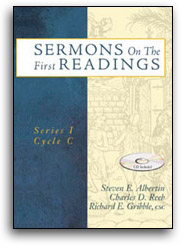
Sermons On The First Readings
Series I, Cycle C
Contemporary life provides almost endless opportunities and possibilities that allow us to maximize our potential. The complexities of today's world, however, create many difficulties and hardships that can either defeat us or strengthen our resolve and faith. I have been privileged to witness and been greatly inspired by how people of great faith negotiate the hurdles of life and come out on top. This collection of sermons, which speaks of conversion, is thus dedicated to one of the champions, my friend Nancy, who has struggled but persevered, never losing hope and always bringing the face of Christ to those she meets each day.
Introduction
In his famous autobiography The Confessions, Saint Augustine wrote, "Late have I loved you, O Beauty ever ancient, ever new, late have I loved you." History reveals that Augustine, while now acknowledged to be one of the greatest saints, did not discover the Lord until he had wandered for many years and tried many different religions. Finally, as he says in his book, it was through the prayers of his mother that he was converted to Christianity and went on to become the great bishop, theologian, and defender of the Faith. Augustine experienced conversion in this life, a change that came about over time as he grew in the realization of God's call in his life.
When most people think of conversion, certain images and ideas come to mind. Most, I suspect, associate conversion with the transformation many experience in finding God. There was the dramatic conversion of Saint Paul on the road to Damascus (Acts 9:1-19), an event which many cite as the essence of religious conversion. However, conversion is a much broader concept than simply its application to religion, and most times it is a process that is on-going, rather than one dramatic experience. We must apply the need and methods of conversion to the multiple aspects of our daily lives.
What in our lives needs to be converted? First and foremost the attitudes and opinions we possess and express in word and action need conversion. Life experience and numerous influences train us to think in specified ways, but we all must admit that our attitudes toward ideas, institutions, and most importantly people are not always God-centered. We sometimes are selfish and hold attitudes and express opinions that benefit ourselves and those special to us, often to the detriment of others. We act in an exclusive manner, dividing those we know into essentially two categories, those who are in and those who are out. Such attitudes are inconsistent with Christ's example, which was always inclusive, calling all to himself and excluding no one. Jesus reached out to all, showing no partiality. We must do the same.
Relationships are another important common area of life that need our conversion. Often people carry old hurts and grudges, thinking that holding onto this pain will in some way punish those who inflicted it. The reality, however, is that we need to release ourselves from these past hurts. If we cannot, these grudges will act like a ball and chain attached to our ankle that weighs us down and does not allow us to move freely. It will probably take time, but we need to be converted to the sure belief that the only way to progress in the Christian life is to let go of the past and move forward. We must recall Jesus' words to the woman caught in the act of adultery and apply them to our relationships with others: "Neither do I condemn you. Go your way, and from now on do not sin again" (John 8:11b). The Lord gave release to the woman; we must do the same with one another.
Habits are a third area that might need conversion in our life. Whether we do something that is personally harmful, such as smoking, excessive drinking, or other addictive behavior, or participate in patterns of life that annoy or are distasteful to others, we need to be converted. As with most conversions, change of this nature will not be effected overnight, but the process of change is itself part of the benefit of conversion. We must start at some place and time; why not start today?
Conversion must be a daily event in which we participate. We need to be converted in heart, mind, and spirit to a greater understanding of our role in God's master plan, but we cannot gain insight without seeking daily conversion. We are provided numerous opportunities to be converted, to the Lord, toward more Christ-like attitudes and opinions, and away from the vices in which we all, to a certain extent, participate. Sometimes we ignore the opportunity, even when it is placed directly before us. Other times we actively run away, too fearful of what the opportunity to change may require of us. There are times as well when the opportunity arrives that we tell ourselves, "I don't need to change. Everything is fine with me." The blindness of our head and heart will bring stagnation in the Christian journey and can, if we are not careful, lead to personal destruction.
These sermons are centered about the reality of our need to be converted to a broader and deeper understanding of our role in Christ's master plan. We must see the need to make the most of life, despite the hurtful and problematic situations that sometimes arise. We need to re-commit ourselves to Christ, confident that the Lord knows what he is doing and will provide the path and sustenance we need for the journey. We must learn that conversion will not be easy, but rather is a process filled with many obstacles and road blocks. The person who endures and stays the course will be the one who finds eternal life with the Lord.
Sermons are by nature personal, but I hope that these reflections present themes and messages that can be applied by all in our daily struggle to follow the Lord. If these essays provide some assistance along that sacred path, then these pages will be worth the effort made in their composition.
Richard E. Gribble, CSC
Introduction
In his famous autobiography The Confessions, Saint Augustine wrote, "Late have I loved you, O Beauty ever ancient, ever new, late have I loved you." History reveals that Augustine, while now acknowledged to be one of the greatest saints, did not discover the Lord until he had wandered for many years and tried many different religions. Finally, as he says in his book, it was through the prayers of his mother that he was converted to Christianity and went on to become the great bishop, theologian, and defender of the Faith. Augustine experienced conversion in this life, a change that came about over time as he grew in the realization of God's call in his life.
When most people think of conversion, certain images and ideas come to mind. Most, I suspect, associate conversion with the transformation many experience in finding God. There was the dramatic conversion of Saint Paul on the road to Damascus (Acts 9:1-19), an event which many cite as the essence of religious conversion. However, conversion is a much broader concept than simply its application to religion, and most times it is a process that is on-going, rather than one dramatic experience. We must apply the need and methods of conversion to the multiple aspects of our daily lives.
What in our lives needs to be converted? First and foremost the attitudes and opinions we possess and express in word and action need conversion. Life experience and numerous influences train us to think in specified ways, but we all must admit that our attitudes toward ideas, institutions, and most importantly people are not always God-centered. We sometimes are selfish and hold attitudes and express opinions that benefit ourselves and those special to us, often to the detriment of others. We act in an exclusive manner, dividing those we know into essentially two categories, those who are in and those who are out. Such attitudes are inconsistent with Christ's example, which was always inclusive, calling all to himself and excluding no one. Jesus reached out to all, showing no partiality. We must do the same.
Relationships are another important common area of life that need our conversion. Often people carry old hurts and grudges, thinking that holding onto this pain will in some way punish those who inflicted it. The reality, however, is that we need to release ourselves from these past hurts. If we cannot, these grudges will act like a ball and chain attached to our ankle that weighs us down and does not allow us to move freely. It will probably take time, but we need to be converted to the sure belief that the only way to progress in the Christian life is to let go of the past and move forward. We must recall Jesus' words to the woman caught in the act of adultery and apply them to our relationships with others: "Neither do I condemn you. Go your way, and from now on do not sin again" (John 8:11b). The Lord gave release to the woman; we must do the same with one another.
Habits are a third area that might need conversion in our life. Whether we do something that is personally harmful, such as smoking, excessive drinking, or other addictive behavior, or participate in patterns of life that annoy or are distasteful to others, we need to be converted. As with most conversions, change of this nature will not be effected overnight, but the process of change is itself part of the benefit of conversion. We must start at some place and time; why not start today?
Conversion must be a daily event in which we participate. We need to be converted in heart, mind, and spirit to a greater understanding of our role in God's master plan, but we cannot gain insight without seeking daily conversion. We are provided numerous opportunities to be converted, to the Lord, toward more Christ-like attitudes and opinions, and away from the vices in which we all, to a certain extent, participate. Sometimes we ignore the opportunity, even when it is placed directly before us. Other times we actively run away, too fearful of what the opportunity to change may require of us. There are times as well when the opportunity arrives that we tell ourselves, "I don't need to change. Everything is fine with me." The blindness of our head and heart will bring stagnation in the Christian journey and can, if we are not careful, lead to personal destruction.
These sermons are centered about the reality of our need to be converted to a broader and deeper understanding of our role in Christ's master plan. We must see the need to make the most of life, despite the hurtful and problematic situations that sometimes arise. We need to re-commit ourselves to Christ, confident that the Lord knows what he is doing and will provide the path and sustenance we need for the journey. We must learn that conversion will not be easy, but rather is a process filled with many obstacles and road blocks. The person who endures and stays the course will be the one who finds eternal life with the Lord.
Sermons are by nature personal, but I hope that these reflections present themes and messages that can be applied by all in our daily struggle to follow the Lord. If these essays provide some assistance along that sacred path, then these pages will be worth the effort made in their composition.
Richard E. Gribble, CSC
