
The Day of Pentecost
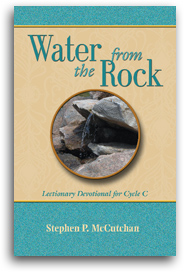
Devotional
Water From the Rock
Lectionary Devotional for Cycle C
Object:
When the day of Pentecost had come, they were all together in one place.
-- Acts 2:1
Too often Gentile Christians forget that Pentecost was a Jewish celebration of the renewal of the covenant that they had with God. Fifty days after Passover, Jews renewed the covenant that they had with God. The symbol of fire resting on the disciples' heads recalled the symbol of fire that was part of the original covenant-making process in Genesis 15:17. When Abram had laid out the divided animals, it was God who passed between them symbolizing the remarkable testimony of the Jewish faith that it was God, in the form of a smoking fire pot and a flaming torch, who accepted responsibility for keeping this covenant that God had made with Abram.
As has been frequently noted, this story also becomes the mirror image of the story of the tower of Babel in Genesis 11:1-9, where the arrogance of humanity resulted in their being divided into many tribes that spoke different languages. As they gather, the disciples experience the possibility of the reversal of this division. Through the power of the Holy Spirit they began to speak in other languages. This was not a reference to glossolalia. They were not speaking a heavenly language. The report made clear that Jews from all around the world heard them speaking "in the native language of each." This further astonished them because these speakers were not from some intellectual class but people from the rural province of Galilee. Not only are the divisions of language overcome but also the divisions of class, age, sex, and nationality. This is emphasized by Peter's interpretation of the event. Peter recalled the prophecy of Joel where the Spirit of God was poured out on young and old, male and female, slave and free.
Pentecost was a renewal of hope that God would heal the divisions that seek to tear our world apart. For the church, Pentecost is a time to openly acknowledge the divisions that exist even within the church that reflect the arrogance of the tower of Babel. The mirror images of Babel and Pentecost offer us a challenge and a hope for the future. By the Holy Spirit, we are given a word that not only respects our differences (each heard in their own language) but also unites us in a common testimony to the reconciling love of God. As it was with Abram, it is clear that it is God who will accomplish this reconciliation, but it is by our faith that we will respond to what God is doing.
-- Acts 2:1
Too often Gentile Christians forget that Pentecost was a Jewish celebration of the renewal of the covenant that they had with God. Fifty days after Passover, Jews renewed the covenant that they had with God. The symbol of fire resting on the disciples' heads recalled the symbol of fire that was part of the original covenant-making process in Genesis 15:17. When Abram had laid out the divided animals, it was God who passed between them symbolizing the remarkable testimony of the Jewish faith that it was God, in the form of a smoking fire pot and a flaming torch, who accepted responsibility for keeping this covenant that God had made with Abram.
As has been frequently noted, this story also becomes the mirror image of the story of the tower of Babel in Genesis 11:1-9, where the arrogance of humanity resulted in their being divided into many tribes that spoke different languages. As they gather, the disciples experience the possibility of the reversal of this division. Through the power of the Holy Spirit they began to speak in other languages. This was not a reference to glossolalia. They were not speaking a heavenly language. The report made clear that Jews from all around the world heard them speaking "in the native language of each." This further astonished them because these speakers were not from some intellectual class but people from the rural province of Galilee. Not only are the divisions of language overcome but also the divisions of class, age, sex, and nationality. This is emphasized by Peter's interpretation of the event. Peter recalled the prophecy of Joel where the Spirit of God was poured out on young and old, male and female, slave and free.
Pentecost was a renewal of hope that God would heal the divisions that seek to tear our world apart. For the church, Pentecost is a time to openly acknowledge the divisions that exist even within the church that reflect the arrogance of the tower of Babel. The mirror images of Babel and Pentecost offer us a challenge and a hope for the future. By the Holy Spirit, we are given a word that not only respects our differences (each heard in their own language) but also unites us in a common testimony to the reconciling love of God. As it was with Abram, it is clear that it is God who will accomplish this reconciliation, but it is by our faith that we will respond to what God is doing.
