
Discerning in Love
Sermon
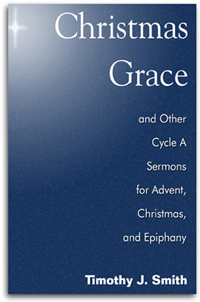
Christmas Grace
Cycle A Second Lesson Sermons for Advent, Christmas, Epiphany
Many people have come to rely on Global Positioning Systems (GPS) to travel from one place to another. GPS is especially helpful when you are traveling in an area that you are unfamiliar with. By typing in the address of your destination, the GPS will inform you where and when to turn. If you miss a turn it will recalculate your position and get you back on course. The GPS will get you to your destination in one piece and in the same condition you were in when you left.
While there is a definite advantage to traveling with such a device, GPS cannot help us navigate our faith and our relationships with each other. Love asks why we are in a particular place at a specific time. Sometimes the difficulties that we experience are because we do not pause to ask, "Why are we going there?" We should always be open at every moment to what God wants to teach us and lead us.
The problem is that there are so many distractions that lure us away from the faith. We often become lost when we follow too many detours. As we have discovered it did not take much for the Corinthians to become distracted and confused. The apostle Paul spent a year and a half teaching the Corinthians about Jesus and the Christian faith. Paul then set out for a new destination to begin the process all over again, witnessing to others about Jesus, and then starting a new church. It was not long after Paul left that the Corinthians began having problems. When they sought Paul's help and advice, he realized that the problems were serious enough that they threatened the church's very existence as well as their future.
Without the aid of a GPS, Paul determined that the people needed to go back to the beginning, to the foundation of their faith. When we lose our focus, we can get back on track by going back to the beginning -- the basis of our faith. We gather this day and every Sunday because of what God has done and continues to do in and through Jesus Christ. It is easy to become confused and view our faith in terms of what benefits we personally receive. Paul brings us back hoping to rekindle the faith we once professed.
When Paul was with them he preached about the cross of Christ. He was both honest and humble in admitting that "I did not come proclaiming the mystery of God to you in lofty words or wisdom." His message was simple and to the point as he preached about Jesus Christ. Paul wanted the people to understand the power of God at work in and through Jesus Christ. Paul might very well have called attention to himself; after all he founded that church. However, he did not -- instead he preached about the cross. "So that your faith might rest not on human wisdom but on the power of God," Paul wrote. Paul relied on the power of God to allow his own words to produce fruit. The success of the church does not rest on one individual but on the power of God, "with a demonstration of the Spirit."
As soon as Paul left Corinth other more polished, flashy speakers came and won a following among the people. It was then that Paul's preaching style as well as his message was criticized. With humility Paul acknowledged his own shortcomings and inadequacies. When he first spoke he did so with fear and trembling. Paul preached "nothing among you except Jesus Christ, and him crucified." Paul understood the danger of elevating the preacher to become the focal point of the message. The crucified Christ is the center of our faith.
Paul modeled the proper attitude for the troubled Corinthians. Paul never drew attention to himself or his many accomplishments or even mentioned that he founded the church in Corinth. He might have desired that the church be named after him, or that his name be placed everywhere as a constant reminder of his importance in the life of that congregation. But he did not. Instead he preached, "Nothing among you except Jesus Christ, and him crucified." Paul knew that the faith did not center on him but rather was all about Jesus Christ.
A serious threat to the unity and future of the church was a group of people who thought too highly of themselves. They viewed themselves as being wise. They incorrectly believed that they possessed superior spiritual gifts. Whenever anyone claims to be on a higher spiritual plane than others in the church there will always be hurt feelings. Paul skillfully called the congregation back to the foundation of their faith, the cross. In effect, it was time to review what they believed in and why they held those beliefs.
Paul preached Christ, "so that your faith might rest not on human wisdom but on the power of God." The message is that simple, although sometimes we are guilty of making it too complex for people to understand. Paul knew that the people who became believers did not do so because of him but rather through the power of God's Spirit at work in their midst. It was God's power that seized them and made them God's own people.
For over sixty years Billy Graham has preached the good news of Jesus Christ. Dr. Graham has preached before more people than anyone. With many of his crusades televised he has reached millions of people around the world. A couple of years ago Dr. Graham celebrated his ninetieth birthday. People were encouraged to write messages to the evangelist. Many gave moving testimonies of coming to faith during a particularly difficult time in their lives.
One person wrote, "I am grateful for the opportunity to tell you how God has used you in my life." He went on to tell of the time in 1995 when he was between combat tours of the Persian Gulf and Bosnia. One night he was sitting in the barracks "seriously contemplating suicide." He claims that a voice in his head told him to turn on the television. It was then that he discovered a televised crusade with Dr. Graham preaching. At one point in his message Dr. Graham said that we should not hurt ourselves and that suicide is not the answer.
"I was loved that night," the person writes, "I cannot put into words what the Lord did for me that night." He goes on to say that he has served the Lord Jesus ever since and is today involved in ministry to people who have experienced trauma. As he concludes his note of appreciation he writes, "with tears gushing from my eyes as I reminisce of all that has happened in my life as I have served the Lord, which all started that cold February night in northern Canada when I didn't take my life, but gave it to God."1
"For I decided to know nothing among you except Jesus Christ, and him crucified," Paul writes. We proclaim the good news and then rely on the power of God to transform lives.
Faith is grounded not on human wisdom or performance but rather on God's power. There is nothing wrong with learning, unless we use it to put other people down. Not everyone who claims to possess wisdom grasps God's wisdom. "We speak God's wisdom," Paul writes, "secret and hidden, which God decreed before the ages for our glory." No everyone understood God's purpose in sending Jesus, which is why the earthly rulers sentenced him to death. They might have thought they were doing what was right, but in fact they were opposing the will of God. In a sense Paul was telling his readers that although they thought highly of themselves for possessing human wisdom, they were in danger of opposing God.
God's plan was not revealed to those who considered themselves wise but rather to those who purposefully sought God's will. Those who were ready to listen for God's voice grasped God's intent. The ways of God are discernible when we allow the Holy Spirit to teach us God's ways. "These things God has revealed to us through the Spirit," Paul boldly states, "for the Spirit searches everything, even the depths of God." The Holy Spirit is at work in the lives of all believers. Later in his letter Paul writes about encouraging believers to use their spiritual gifts to benefit other people.
Within the Corinthian congregation were some who were critical of Paul's preaching, specifically for not instructing them in all aspects of wisdom. In his response Paul says that he did in fact teach wisdom but not everyone understood. Paul defines true wisdom as building up the church and seeking God's will in light of the cross of Jesus Christ. While the world might scoff at that notion it is, nonetheless, God's plan of salvation. This serves as another reminder that God's ways are not always our ways. What we think is important might not be so in God's eyes.
We relate to God not through wisdom but rather by love. We must strive to be more like Jesus and act and react as Jesus would. As spiritual people Paul claims that we have the mind of Christ. Bearing the mind of Christ should be evident in all that we do both as individuals and as the church.
Susan felt no real sense of direction in her life. She claims that this is due to always trying to please others. Other people were always making requests of her. She began to take daily walks where she listened for the voice of God and the guiding of the Holy Spirit. "I have to remove myself from the voices that barrage me in order to find my true compass," Susan explained.
"Discerning God's voice is not so hard when I make time to listen closely," she claimed. Sometimes it was a sudden insight, while at other times it was a sense of reordering her priorities or conviction about what she should say or do.
Her walks allowed her to slow down enough to listen for God's direction. She said that faith is about entering into a relationship with God through Christ and "not about intellectualizing God's commands, but internalizing his truth within my heart." This understanding affected not only her thoughts but also her actions.
"I am most at peace when I tune out the voices of the world long enough to hear the still, small voice of God directing me."2
In a church that was in danger of dividing, Paul preached that unity came from acknowledging the cross of Jesus Christ. When we look for unity in anything other than the cross of Christ we will become something other than the church.
We gather in worship each week to discern God's will for our lives, for our church, and for our world. There is a corporate nature to our faith. That is why it is important to worship together. We also seek God's will individually through our prayers, fasting, Bible readings, and other devotional readings. Our desire is to know God's will. Paul reminds us, "Those who are spiritual discern all things, and they are themselves subject to no one else's scrutiny." Amen.
__________
1. www.BillyGraham90.com.
2. Susan Cosio is a chaplain at Sutter Medical Center in Sacramento, California, This I Believe.com.
While there is a definite advantage to traveling with such a device, GPS cannot help us navigate our faith and our relationships with each other. Love asks why we are in a particular place at a specific time. Sometimes the difficulties that we experience are because we do not pause to ask, "Why are we going there?" We should always be open at every moment to what God wants to teach us and lead us.
The problem is that there are so many distractions that lure us away from the faith. We often become lost when we follow too many detours. As we have discovered it did not take much for the Corinthians to become distracted and confused. The apostle Paul spent a year and a half teaching the Corinthians about Jesus and the Christian faith. Paul then set out for a new destination to begin the process all over again, witnessing to others about Jesus, and then starting a new church. It was not long after Paul left that the Corinthians began having problems. When they sought Paul's help and advice, he realized that the problems were serious enough that they threatened the church's very existence as well as their future.
Without the aid of a GPS, Paul determined that the people needed to go back to the beginning, to the foundation of their faith. When we lose our focus, we can get back on track by going back to the beginning -- the basis of our faith. We gather this day and every Sunday because of what God has done and continues to do in and through Jesus Christ. It is easy to become confused and view our faith in terms of what benefits we personally receive. Paul brings us back hoping to rekindle the faith we once professed.
When Paul was with them he preached about the cross of Christ. He was both honest and humble in admitting that "I did not come proclaiming the mystery of God to you in lofty words or wisdom." His message was simple and to the point as he preached about Jesus Christ. Paul wanted the people to understand the power of God at work in and through Jesus Christ. Paul might very well have called attention to himself; after all he founded that church. However, he did not -- instead he preached about the cross. "So that your faith might rest not on human wisdom but on the power of God," Paul wrote. Paul relied on the power of God to allow his own words to produce fruit. The success of the church does not rest on one individual but on the power of God, "with a demonstration of the Spirit."
As soon as Paul left Corinth other more polished, flashy speakers came and won a following among the people. It was then that Paul's preaching style as well as his message was criticized. With humility Paul acknowledged his own shortcomings and inadequacies. When he first spoke he did so with fear and trembling. Paul preached "nothing among you except Jesus Christ, and him crucified." Paul understood the danger of elevating the preacher to become the focal point of the message. The crucified Christ is the center of our faith.
Paul modeled the proper attitude for the troubled Corinthians. Paul never drew attention to himself or his many accomplishments or even mentioned that he founded the church in Corinth. He might have desired that the church be named after him, or that his name be placed everywhere as a constant reminder of his importance in the life of that congregation. But he did not. Instead he preached, "Nothing among you except Jesus Christ, and him crucified." Paul knew that the faith did not center on him but rather was all about Jesus Christ.
A serious threat to the unity and future of the church was a group of people who thought too highly of themselves. They viewed themselves as being wise. They incorrectly believed that they possessed superior spiritual gifts. Whenever anyone claims to be on a higher spiritual plane than others in the church there will always be hurt feelings. Paul skillfully called the congregation back to the foundation of their faith, the cross. In effect, it was time to review what they believed in and why they held those beliefs.
Paul preached Christ, "so that your faith might rest not on human wisdom but on the power of God." The message is that simple, although sometimes we are guilty of making it too complex for people to understand. Paul knew that the people who became believers did not do so because of him but rather through the power of God's Spirit at work in their midst. It was God's power that seized them and made them God's own people.
For over sixty years Billy Graham has preached the good news of Jesus Christ. Dr. Graham has preached before more people than anyone. With many of his crusades televised he has reached millions of people around the world. A couple of years ago Dr. Graham celebrated his ninetieth birthday. People were encouraged to write messages to the evangelist. Many gave moving testimonies of coming to faith during a particularly difficult time in their lives.
One person wrote, "I am grateful for the opportunity to tell you how God has used you in my life." He went on to tell of the time in 1995 when he was between combat tours of the Persian Gulf and Bosnia. One night he was sitting in the barracks "seriously contemplating suicide." He claims that a voice in his head told him to turn on the television. It was then that he discovered a televised crusade with Dr. Graham preaching. At one point in his message Dr. Graham said that we should not hurt ourselves and that suicide is not the answer.
"I was loved that night," the person writes, "I cannot put into words what the Lord did for me that night." He goes on to say that he has served the Lord Jesus ever since and is today involved in ministry to people who have experienced trauma. As he concludes his note of appreciation he writes, "with tears gushing from my eyes as I reminisce of all that has happened in my life as I have served the Lord, which all started that cold February night in northern Canada when I didn't take my life, but gave it to God."1
"For I decided to know nothing among you except Jesus Christ, and him crucified," Paul writes. We proclaim the good news and then rely on the power of God to transform lives.
Faith is grounded not on human wisdom or performance but rather on God's power. There is nothing wrong with learning, unless we use it to put other people down. Not everyone who claims to possess wisdom grasps God's wisdom. "We speak God's wisdom," Paul writes, "secret and hidden, which God decreed before the ages for our glory." No everyone understood God's purpose in sending Jesus, which is why the earthly rulers sentenced him to death. They might have thought they were doing what was right, but in fact they were opposing the will of God. In a sense Paul was telling his readers that although they thought highly of themselves for possessing human wisdom, they were in danger of opposing God.
God's plan was not revealed to those who considered themselves wise but rather to those who purposefully sought God's will. Those who were ready to listen for God's voice grasped God's intent. The ways of God are discernible when we allow the Holy Spirit to teach us God's ways. "These things God has revealed to us through the Spirit," Paul boldly states, "for the Spirit searches everything, even the depths of God." The Holy Spirit is at work in the lives of all believers. Later in his letter Paul writes about encouraging believers to use their spiritual gifts to benefit other people.
Within the Corinthian congregation were some who were critical of Paul's preaching, specifically for not instructing them in all aspects of wisdom. In his response Paul says that he did in fact teach wisdom but not everyone understood. Paul defines true wisdom as building up the church and seeking God's will in light of the cross of Jesus Christ. While the world might scoff at that notion it is, nonetheless, God's plan of salvation. This serves as another reminder that God's ways are not always our ways. What we think is important might not be so in God's eyes.
We relate to God not through wisdom but rather by love. We must strive to be more like Jesus and act and react as Jesus would. As spiritual people Paul claims that we have the mind of Christ. Bearing the mind of Christ should be evident in all that we do both as individuals and as the church.
Susan felt no real sense of direction in her life. She claims that this is due to always trying to please others. Other people were always making requests of her. She began to take daily walks where she listened for the voice of God and the guiding of the Holy Spirit. "I have to remove myself from the voices that barrage me in order to find my true compass," Susan explained.
"Discerning God's voice is not so hard when I make time to listen closely," she claimed. Sometimes it was a sudden insight, while at other times it was a sense of reordering her priorities or conviction about what she should say or do.
Her walks allowed her to slow down enough to listen for God's direction. She said that faith is about entering into a relationship with God through Christ and "not about intellectualizing God's commands, but internalizing his truth within my heart." This understanding affected not only her thoughts but also her actions.
"I am most at peace when I tune out the voices of the world long enough to hear the still, small voice of God directing me."2
In a church that was in danger of dividing, Paul preached that unity came from acknowledging the cross of Jesus Christ. When we look for unity in anything other than the cross of Christ we will become something other than the church.
We gather in worship each week to discern God's will for our lives, for our church, and for our world. There is a corporate nature to our faith. That is why it is important to worship together. We also seek God's will individually through our prayers, fasting, Bible readings, and other devotional readings. Our desire is to know God's will. Paul reminds us, "Those who are spiritual discern all things, and they are themselves subject to no one else's scrutiny." Amen.
__________
1. www.BillyGraham90.com.
2. Susan Cosio is a chaplain at Sutter Medical Center in Sacramento, California, This I Believe.com.
