
Easter 2
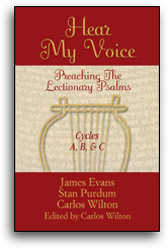
Preaching
Hear My Voice
Preaching The Lectionary Psalms for Cycles A, B, C
Object:
This psalm is a song of confidence and trust, and the first-century church found in it a prophecy of the Resurrection. Peter, in his Pentecost sermon, quotes verses 8-11 (Acts 2:25-28), applying them to the risen Lord. Thus, its designation as the responsorial psalm for Easter 2.
The psalm falls easily into three divisions: verses 1-4, there is no good apart from God; 5-8, the Lord is my portion and my counselor; and 9-11, there is joy and life with God.
Obviously, verse 10 could be of use to expound upon the Resurrection. Among the other preaching possibilities are these:
1. There is not much indication that the psalmist is in difficulties. With the possible exception of the opening line -- "Protect me, O God, for in you I take refuge" -- the singer says nothing that alludes to problems. And even that line can be read in the same general way as we might pray, "Be with me, O God," without having a specific trouble in mind. Why not talk about the importance of keeping one's relationship with God constant, and not just asking for help when hard times hit? This could be a springboard for a sermon on "Being a Christian When Everything's Coming Up Roses."
2. When the psalmist says, "I have no good apart from you" (v. 2), and expresses his delight in the "holy ones" (v. 3), he recognizes the truth of the "no man is an island" theme. He never talks as an individual separated from God, nor from the worshiping community. He is not the lonely self-seeking God, but the member of the fellowship who, carried by them, grows in his spirituality. A sermon could teach about the function of the church as not only a community that cares, but "a community that carries."
3. What is the meaning of verse 6: "The boundary lines have fallen for me in pleasant places"? It was probably a metaphor from the division of land by survey, but could it not be used to talk about the parameters of the righteous life? Yes, Christian living puts certain behaviors out of bounds, but only enriches life by doing so. It takes nothing away from the godly, but declares unloving actions off limits.
-- S. P.
The psalm falls easily into three divisions: verses 1-4, there is no good apart from God; 5-8, the Lord is my portion and my counselor; and 9-11, there is joy and life with God.
Obviously, verse 10 could be of use to expound upon the Resurrection. Among the other preaching possibilities are these:
1. There is not much indication that the psalmist is in difficulties. With the possible exception of the opening line -- "Protect me, O God, for in you I take refuge" -- the singer says nothing that alludes to problems. And even that line can be read in the same general way as we might pray, "Be with me, O God," without having a specific trouble in mind. Why not talk about the importance of keeping one's relationship with God constant, and not just asking for help when hard times hit? This could be a springboard for a sermon on "Being a Christian When Everything's Coming Up Roses."
2. When the psalmist says, "I have no good apart from you" (v. 2), and expresses his delight in the "holy ones" (v. 3), he recognizes the truth of the "no man is an island" theme. He never talks as an individual separated from God, nor from the worshiping community. He is not the lonely self-seeking God, but the member of the fellowship who, carried by them, grows in his spirituality. A sermon could teach about the function of the church as not only a community that cares, but "a community that carries."
3. What is the meaning of verse 6: "The boundary lines have fallen for me in pleasant places"? It was probably a metaphor from the division of land by survey, but could it not be used to talk about the parameters of the righteous life? Yes, Christian living puts certain behaviors out of bounds, but only enriches life by doing so. It takes nothing away from the godly, but declares unloving actions off limits.
-- S. P.
