
Easter 2
Preaching
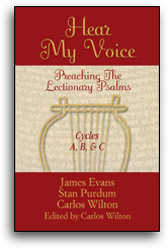
Hear My Voice
Preaching The Lectionary Psalms for Cycles A, B, C
This psalm, titled "A Song Of Victory," has rich associations in Christian liturgy. Portions of it occur in all three lectionary cycles for Palm Sunday (Liturgy Of The Palms), as well as in all three cycles for Easter Day.
The reason for the Palm Sunday connection is plain to see: "Open to me the gates of righteousness, that I may enter through them and give thanks to the Lord" (v. 19).
Are the "gates of righteousness" really synonymous with the gates of Jerusalem, through which Jesus enters? The answer is yes -- for, by the time of Jesus, these words have become the liturgy for welcoming pilgrims to Jerusalem, particularly at Passover. They were sung responsively by pilgrims and Levites, as the pilgrims made their way up to the temple. Very likely, these are the very same words Jesus himself sang, as he and his entourage made their way into the city. To these words, the Levites habitually replied:
"This is the gate of the Lord; the righteous shall enter through it" (v. 20).
This psalm is the product of an institutionalized victory liturgy, through which the Jewish people recalled the military triumphs of their heroes of old. It is one of the Hallel, or "praise" psalms, traditionally sung at the most notable Jewish feasts, including Passover. Psalms 113-118 are known as "the Egyptian Hallel," because they recall the Lord's saving deeds of old, bringing the people safely through the Exodus.
The original situation of this individual song of thanksgiving is lost to history, but it possibly has royal associations. It is easy to see it as the song of a victorious king, entering the city in triumphal procession after defeating Israel's enemies. This king may be David himself.
"Open to me the gates of righteousness!" cries the king, in the victory liturgy.
"This is the gate of the Lord, the righteous shall enter through it" respond the sentries, atop the wall -- as other soldiers, below, unbar the great doors and swing them wide, to welcome "the festal procession" on its way up to the high altar, where the king will make a public sacrifice of thanksgiving.
Only a truly righteous king can call upon the Lord's favor in such a way: and only a truly righteous king knows the importance of returning to the Lord after the victory, to give thanks. Whether or not this is the original situation of the psalm, it is impossible to say; but it surely would have created such associations in the minds of those who would later sing it liturgically.
"Save us, we beseech you!" cry the people, in verse 25 -- the "save us" is the Hebrew yesha, etymological root of the names "Joshua" and "Jesus." The messianic associations are plain to see. Joshua bears the name given him by Moses in Numbers 13:16 -- and Jesus, in turn, is named for Joshua. The New Testament cry, "Hosanna!" is a transliterated form of the Hebrew yesha, in a particularly emphatic form.
In preaching on this festival day, it is always important -- whether choosing Palms or Passion texts -- to avoid the pitfall of emphasizing the triumph and avoiding the tragedy. Even this Liturgy of the Palms reading contains, from the Christian perspective, a shadow of that which is to come: "The stone that the builders rejected has become the chief cornerstone" (v. 22).
In many churches, Palm Sunday is a day of festive celebration. Yet that celebration ought properly to be tempered by a reminder of the grim fate that awaited Jesus, on the other side of the city gates.
-- C. W.
The reason for the Palm Sunday connection is plain to see: "Open to me the gates of righteousness, that I may enter through them and give thanks to the Lord" (v. 19).
Are the "gates of righteousness" really synonymous with the gates of Jerusalem, through which Jesus enters? The answer is yes -- for, by the time of Jesus, these words have become the liturgy for welcoming pilgrims to Jerusalem, particularly at Passover. They were sung responsively by pilgrims and Levites, as the pilgrims made their way up to the temple. Very likely, these are the very same words Jesus himself sang, as he and his entourage made their way into the city. To these words, the Levites habitually replied:
"This is the gate of the Lord; the righteous shall enter through it" (v. 20).
This psalm is the product of an institutionalized victory liturgy, through which the Jewish people recalled the military triumphs of their heroes of old. It is one of the Hallel, or "praise" psalms, traditionally sung at the most notable Jewish feasts, including Passover. Psalms 113-118 are known as "the Egyptian Hallel," because they recall the Lord's saving deeds of old, bringing the people safely through the Exodus.
The original situation of this individual song of thanksgiving is lost to history, but it possibly has royal associations. It is easy to see it as the song of a victorious king, entering the city in triumphal procession after defeating Israel's enemies. This king may be David himself.
"Open to me the gates of righteousness!" cries the king, in the victory liturgy.
"This is the gate of the Lord, the righteous shall enter through it" respond the sentries, atop the wall -- as other soldiers, below, unbar the great doors and swing them wide, to welcome "the festal procession" on its way up to the high altar, where the king will make a public sacrifice of thanksgiving.
Only a truly righteous king can call upon the Lord's favor in such a way: and only a truly righteous king knows the importance of returning to the Lord after the victory, to give thanks. Whether or not this is the original situation of the psalm, it is impossible to say; but it surely would have created such associations in the minds of those who would later sing it liturgically.
"Save us, we beseech you!" cry the people, in verse 25 -- the "save us" is the Hebrew yesha, etymological root of the names "Joshua" and "Jesus." The messianic associations are plain to see. Joshua bears the name given him by Moses in Numbers 13:16 -- and Jesus, in turn, is named for Joshua. The New Testament cry, "Hosanna!" is a transliterated form of the Hebrew yesha, in a particularly emphatic form.
In preaching on this festival day, it is always important -- whether choosing Palms or Passion texts -- to avoid the pitfall of emphasizing the triumph and avoiding the tragedy. Even this Liturgy of the Palms reading contains, from the Christian perspective, a shadow of that which is to come: "The stone that the builders rejected has become the chief cornerstone" (v. 22).
In many churches, Palm Sunday is a day of festive celebration. Yet that celebration ought properly to be tempered by a reminder of the grim fate that awaited Jesus, on the other side of the city gates.
-- C. W.
