
Epiphany 2 / Ordinary Time 2
Preaching
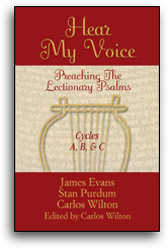
Hear My Voice
Preaching The Lectionary Psalms for Cycles A, B, C
If we wanted to give a name to this psalm, we might call it "A Song of Exuberant Praise." The psalmist is unrestrained in voicing his praise to God. And the list of things for which God is praised is impressively exhaustive. Within the scope of five short verses, God is praised for steadfastness, faithfulness, righteousness, judgment, and salvation. These divine qualities affect not only human existence but also extend to the heavens, clouds, mountains, the great deep, and even animals.
The true significance for the psalmist, of course, is the way in which these qualities of divine character affect human life. The range of God's character creates a shelter, like the wings of a great bird, under which her young might hide and find protection or comfort. God's love and grace create a feast that nurtures human life and creates hope. God's goodness is the very source of life itself. And God's great power provides protection from anyone who would seek to disturb the faithful. Salvation is for God's people. They are the focus of all God's goodness.
It is not that other parts of creation are unimportant. We ought to know by now the interrelated nature of our existence with the natural order. We do not stand alone as living beings on this planet. Our life is part of a life system that we ignore or damage at our peril, but the psalmist draws ever-narrowing lines from the far reaches of creation to a focal point in human existence. The salvation God offers is offered to us.
Of course, there is good reason for this narrowed focus, both theologically and scientifically. God has given humankind a singular role to play in creation. It is human beings who bear the image of God. It is human beings who have been entrusted with the care and stewardship of the earth. This is what is meant by "dominion" (Genesis 1:26). God wants us to care for the earth, not dominate it.
Because of this unique calling and relationship to the created order -- at least the part of it we occupy -- it is necessary to first redeem the human mind and spirit, so the other beloved features of God's creation may also be cared for. God reveals in Jesus what human life is supposed to look like. Our commitment to this vision redeems us and restores our broken humanity. Once we are healed, then it becomes possible for us to work for the fulfillment of the psalmist's vision, that God can "save humans and animals alike" (v. 6).
-- J. E.
The true significance for the psalmist, of course, is the way in which these qualities of divine character affect human life. The range of God's character creates a shelter, like the wings of a great bird, under which her young might hide and find protection or comfort. God's love and grace create a feast that nurtures human life and creates hope. God's goodness is the very source of life itself. And God's great power provides protection from anyone who would seek to disturb the faithful. Salvation is for God's people. They are the focus of all God's goodness.
It is not that other parts of creation are unimportant. We ought to know by now the interrelated nature of our existence with the natural order. We do not stand alone as living beings on this planet. Our life is part of a life system that we ignore or damage at our peril, but the psalmist draws ever-narrowing lines from the far reaches of creation to a focal point in human existence. The salvation God offers is offered to us.
Of course, there is good reason for this narrowed focus, both theologically and scientifically. God has given humankind a singular role to play in creation. It is human beings who bear the image of God. It is human beings who have been entrusted with the care and stewardship of the earth. This is what is meant by "dominion" (Genesis 1:26). God wants us to care for the earth, not dominate it.
Because of this unique calling and relationship to the created order -- at least the part of it we occupy -- it is necessary to first redeem the human mind and spirit, so the other beloved features of God's creation may also be cared for. God reveals in Jesus what human life is supposed to look like. Our commitment to this vision redeems us and restores our broken humanity. Once we are healed, then it becomes possible for us to work for the fulfillment of the psalmist's vision, that God can "save humans and animals alike" (v. 6).
-- J. E.
