
Epiphany 4
Preaching
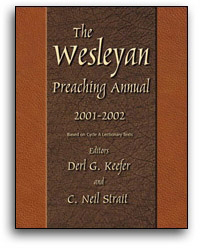
THE WESLEYAN PREACHING ANNUAL 2001--2002
WORSHIP HELPS
CALL TO WORSHIP
A symphony in worship is about to begin. A melody is from God. The harmony from His people. Come everyone, hear the music that God and people make together.
OFFERING THOUGHT
Dear God, You have demonstrated Your giving power through Jesus. Oh, how much we need to emulate Your giving. Amen.
BENEDICTION
May the God who gives endurance and encouragement give His spirit of harmony among all of you to bring praise and glory to His Son Jesus Christ. That with one heart and one voice we may sing in tune with each other and Him this week.
SERMON BRIEFS
What Does God Require?
Micah 6:1--8
Introduction
People often say they wish they could know what God wanted them to do. They are usually looking for God to lay out a specific assignment or course of action. However, God can't make His will any clearer to us than He does in Micah 6. He says to us, "This is the way I want you to live."
In chapters four and five, the prophet Micah describes the sins of the people as well as God's future plans and judgment against them. He also pictures a day when His people will repent and receive the promised blessings. Chapter 6 continues God's arguments against His chosen people in the form of a lawsuit - the prophet is the prosecuting attorney for God. He concludes the sixth chapter with three commandments for living.
I. God begins His case. (vv. 1--5)
A. Court is called into session (vv. 1--2). The people are challenged to plead their case before the Almighty with the everlasting foundations of the earth and the mountains serving as the jury.
B. Consider how I saved you from bondage (vv. 3--6). I miraculously delivered you from Egypt; I threw off your tyranny of slavery; I gave you excellent leaders in Moses, Aaron and Miriam.
C. Remember how I protected you in the wilderness (v. 5). I turned the curses of Balak and Balaam into blessings. The children of Israel multiplied rapidly in spite of the harsh conditions and the judgment of God on them because of the sins of some of the people with Moabite women (Numbers 25; 31:15--18).
II. The people respond. (vv. 5--6)
The people respond by asking the prophet if the presentation of thousands of first born male calves, thousands of rams, ten thousand barrels of oil or even the sacrifice of their first born child would be enough to satisfy the wrath of God. Of course, none of the above would be enough payment nor would it be what God was looking for from them. The attitude of the people who asked these questions is not fully known. Their responses may be similar to some today.
A. Sarcastically? "What does God expect of us anyway? We are only human. He knows we don't always do things right."
B. In repentance? "We could never bring enough to atone for our sin."
C. Humanistically? "What can we do to get ourselves out of this mess? We can do it all by ourselves."
III. The answer is given. (v. 8)
Micah is very concise in his response to the people: "Here is what the Lord expects." In the third century Rabbi Simlai noted that Moses gave 365 prohibitions and 248 positive commands; Psalm 15 reduced them to eleven; the prophet Isaiah made them six in 33:14, 15; Micah 6:8 groups them into three; and another prophet, Habakkuk, reduces them all to one, namely - "The just shall live by faith."
A. "To act justly." To live honestly and fairly in all our dealings with people. This is best summed up in keeping the "Golden Rule" - "Do unto others as you would want them to do to you." For example, the book of Proverbs has numerous notations about not cheating on the weight when selling produce, not giving an untrue witness in a lawsuit, or not moving the property line boundary stones of a neighbor.
B. "To love mercy." This characteristic takes us a step beyond "acting justly." This is the "second mile" or the "grace" phase. Justice gives us what the law demands, but mercy is evidenced by what Christ did for us on the cross. The cross is what we deserved, but mercy stepped in and took our place.
C. "To walk humbly with your God." This is to live with a "bowed head" in a recognition of our devotion and gratitude for God's goodness. This is in contrast to the religious leaders encountered by Stephen at his trial and stoning. Stephen describes his persecutors as "stiff--necked people, with uncircumcised hearts and ears" who "always resist the Holy Spirit" (Acts 7:51). The humble person walks in the "fear of the Lord" with an attitude of the heart acknowledging God's sovereignty and ultimate rule over us.
Conclusion
Charles Sheldon, in the book In His Steps, describes the efforts of Edward Norman to ask, "What would Jesus do?" before every decision he made. This course of action became severely tested, when as the editor of the local newspaper, he had to set advertising policies for the paper. He wondered if Jesus would allow liquor and tobacco advertising if He were the editor. His dilemma was further tested during an election where the liquor interests were involved. He reached the conclusion not to promote these products. His decision turned even some of his employees against him and many people cancelled their subscription to the paper. It was a costly decision. Was he right? What does God require of us? Making such decisions is made easier by remembering every day to "act justly," "love mercy," and "walk humbly with God."
Bill Hossler
A Godlike Spirit
Matthew 5:1--12
If we are right with God, we will be right with men. If we are wrong with God, we will wrong men. Our top priority is a proper relationship with God, but this can never be separated from a right relationship with men.
In our relationship with people, God is both the enabler and the pattern. The second section of the Beatitudes, find this pattern in God. If you are going to be happy be like God! Take note of His example! Christ's sermon on the mount portrays for us our need.
I. A Godlike spirit includes mercy. (v. 7)
What does mercy mean? The RSV renders this word "steadfast love." It is a word which embraces love plus loyalty. It implies an ability to share vicariously the experiences of others because of a profound appreciation of them as persons. Only those who extend this kind of intelligent goodwill are capable of receiving it.
God shared vicariously with each of us by sharing our physical lives. He became man in Christ. Paul writing to the Philippians in the great kenosis passage says, "Your attitude should be the kind that was shown us by Jesus Christ, who, though he was God, did not demand and cling to his rights as God, but laid aside his mighty power and glory, taking the disguise of a slave and becoming like men. And he humbled himself even further, going so far as actually to die a criminal's death on a cross" (Philippians 2:5--8 NIV).
He did not lay aside the insignia of his majesty, the outward manifestations of His deity ... He laid down His divine glory but not His divine nature. He became human because of His mercy, His compassion for humankind.
We share vicariously in His death when we come to Him as our savior. When we participate in that death we become as Howard Kee says in the Interpreter's Commentary, "Transformed in the deepest level of our life." But you see that is mercy, for then we have the right to eternal life. When we are transformed - and that comes by faith or trusting in Jesus.
God's mercy initiates salvation, but we must reach out our hands to gather it in.
II. A Godlike spirit includes purity. (v. 8)
Heart has a wider meaning in Biblical language than in modern speech. We use it as a figurative word for the center of emotions. The Bible uses it for that and more. Heart includes the whole inner life of men - the will, thoughts, purposes of life, and the emotions.
J.B. Phillips has translated this Beatitude: "Happy are the utterly sincere." Purity of heart is integrity of character, honesty of heart: It is the single--mindedness of the consecrated life! It means to have the whole personality concentrated on God. In our theological framework from the Biblical viewpoint - you need to be sanctified wholly!
III. A Godlike spirit includes peacemaking. (v. 9)
A peacemaker is the kind of person who creates peace in any group - church, job, sports field, etc. This very act is one of logic and reasonableness as well as dedication to Christ. His attitudes, actions and words preserve friendship and destroy discord. He overcomes evil with good and establishes peace among everyone. Others take their cue from him. He makes peace more by being what he is than by doing something.
Peacemakers are not passive. Wherever there is a cause of trouble, he seeks to eliminate it. He seeks to abolish poverty that leads to human discord. He attempts to help men find a true adjustment to life. Selfishness and self--centeredness are the primary cause of trouble. The peacemaker sets the model of genuine concern for others. A peacemaker is viewed as a "Son of God." Don't you want to be known as such?
IV. A Godlike spirit includes persecution. (v. 10)
There He goes again! Poor, merciful, mourning, all this and now PERSECUTION! I've observed people wearing their piousness on their shoulder. Church historians record those who deliberately courted a martyr's death, hoping it would bring them great reward in heaven.
Jesus did not mean for us to seek persecution - He didn't tell His disciples to do that - He knew it would come to us inevitably in our unrighteous world.
Evil bombards those serving the Savior. A disciple of Jesus will eventually face persecution. It may come in various forms - physical, ridicule, snubbing, etc. That, my friend, is the time we must put our trust in God. Our faith in Him. Our hope and our hurts. That's when we take hands off and give it and the "persecutor" to God.
Conclusion
Tough sermon, isn't it? It's not my sermon - but His!
Derl G. Keefer
CALL TO WORSHIP
A symphony in worship is about to begin. A melody is from God. The harmony from His people. Come everyone, hear the music that God and people make together.
OFFERING THOUGHT
Dear God, You have demonstrated Your giving power through Jesus. Oh, how much we need to emulate Your giving. Amen.
BENEDICTION
May the God who gives endurance and encouragement give His spirit of harmony among all of you to bring praise and glory to His Son Jesus Christ. That with one heart and one voice we may sing in tune with each other and Him this week.
SERMON BRIEFS
What Does God Require?
Micah 6:1--8
Introduction
People often say they wish they could know what God wanted them to do. They are usually looking for God to lay out a specific assignment or course of action. However, God can't make His will any clearer to us than He does in Micah 6. He says to us, "This is the way I want you to live."
In chapters four and five, the prophet Micah describes the sins of the people as well as God's future plans and judgment against them. He also pictures a day when His people will repent and receive the promised blessings. Chapter 6 continues God's arguments against His chosen people in the form of a lawsuit - the prophet is the prosecuting attorney for God. He concludes the sixth chapter with three commandments for living.
I. God begins His case. (vv. 1--5)
A. Court is called into session (vv. 1--2). The people are challenged to plead their case before the Almighty with the everlasting foundations of the earth and the mountains serving as the jury.
B. Consider how I saved you from bondage (vv. 3--6). I miraculously delivered you from Egypt; I threw off your tyranny of slavery; I gave you excellent leaders in Moses, Aaron and Miriam.
C. Remember how I protected you in the wilderness (v. 5). I turned the curses of Balak and Balaam into blessings. The children of Israel multiplied rapidly in spite of the harsh conditions and the judgment of God on them because of the sins of some of the people with Moabite women (Numbers 25; 31:15--18).
II. The people respond. (vv. 5--6)
The people respond by asking the prophet if the presentation of thousands of first born male calves, thousands of rams, ten thousand barrels of oil or even the sacrifice of their first born child would be enough to satisfy the wrath of God. Of course, none of the above would be enough payment nor would it be what God was looking for from them. The attitude of the people who asked these questions is not fully known. Their responses may be similar to some today.
A. Sarcastically? "What does God expect of us anyway? We are only human. He knows we don't always do things right."
B. In repentance? "We could never bring enough to atone for our sin."
C. Humanistically? "What can we do to get ourselves out of this mess? We can do it all by ourselves."
III. The answer is given. (v. 8)
Micah is very concise in his response to the people: "Here is what the Lord expects." In the third century Rabbi Simlai noted that Moses gave 365 prohibitions and 248 positive commands; Psalm 15 reduced them to eleven; the prophet Isaiah made them six in 33:14, 15; Micah 6:8 groups them into three; and another prophet, Habakkuk, reduces them all to one, namely - "The just shall live by faith."
A. "To act justly." To live honestly and fairly in all our dealings with people. This is best summed up in keeping the "Golden Rule" - "Do unto others as you would want them to do to you." For example, the book of Proverbs has numerous notations about not cheating on the weight when selling produce, not giving an untrue witness in a lawsuit, or not moving the property line boundary stones of a neighbor.
B. "To love mercy." This characteristic takes us a step beyond "acting justly." This is the "second mile" or the "grace" phase. Justice gives us what the law demands, but mercy is evidenced by what Christ did for us on the cross. The cross is what we deserved, but mercy stepped in and took our place.
C. "To walk humbly with your God." This is to live with a "bowed head" in a recognition of our devotion and gratitude for God's goodness. This is in contrast to the religious leaders encountered by Stephen at his trial and stoning. Stephen describes his persecutors as "stiff--necked people, with uncircumcised hearts and ears" who "always resist the Holy Spirit" (Acts 7:51). The humble person walks in the "fear of the Lord" with an attitude of the heart acknowledging God's sovereignty and ultimate rule over us.
Conclusion
Charles Sheldon, in the book In His Steps, describes the efforts of Edward Norman to ask, "What would Jesus do?" before every decision he made. This course of action became severely tested, when as the editor of the local newspaper, he had to set advertising policies for the paper. He wondered if Jesus would allow liquor and tobacco advertising if He were the editor. His dilemma was further tested during an election where the liquor interests were involved. He reached the conclusion not to promote these products. His decision turned even some of his employees against him and many people cancelled their subscription to the paper. It was a costly decision. Was he right? What does God require of us? Making such decisions is made easier by remembering every day to "act justly," "love mercy," and "walk humbly with God."
Bill Hossler
A Godlike Spirit
Matthew 5:1--12
If we are right with God, we will be right with men. If we are wrong with God, we will wrong men. Our top priority is a proper relationship with God, but this can never be separated from a right relationship with men.
In our relationship with people, God is both the enabler and the pattern. The second section of the Beatitudes, find this pattern in God. If you are going to be happy be like God! Take note of His example! Christ's sermon on the mount portrays for us our need.
I. A Godlike spirit includes mercy. (v. 7)
What does mercy mean? The RSV renders this word "steadfast love." It is a word which embraces love plus loyalty. It implies an ability to share vicariously the experiences of others because of a profound appreciation of them as persons. Only those who extend this kind of intelligent goodwill are capable of receiving it.
God shared vicariously with each of us by sharing our physical lives. He became man in Christ. Paul writing to the Philippians in the great kenosis passage says, "Your attitude should be the kind that was shown us by Jesus Christ, who, though he was God, did not demand and cling to his rights as God, but laid aside his mighty power and glory, taking the disguise of a slave and becoming like men. And he humbled himself even further, going so far as actually to die a criminal's death on a cross" (Philippians 2:5--8 NIV).
He did not lay aside the insignia of his majesty, the outward manifestations of His deity ... He laid down His divine glory but not His divine nature. He became human because of His mercy, His compassion for humankind.
We share vicariously in His death when we come to Him as our savior. When we participate in that death we become as Howard Kee says in the Interpreter's Commentary, "Transformed in the deepest level of our life." But you see that is mercy, for then we have the right to eternal life. When we are transformed - and that comes by faith or trusting in Jesus.
God's mercy initiates salvation, but we must reach out our hands to gather it in.
II. A Godlike spirit includes purity. (v. 8)
Heart has a wider meaning in Biblical language than in modern speech. We use it as a figurative word for the center of emotions. The Bible uses it for that and more. Heart includes the whole inner life of men - the will, thoughts, purposes of life, and the emotions.
J.B. Phillips has translated this Beatitude: "Happy are the utterly sincere." Purity of heart is integrity of character, honesty of heart: It is the single--mindedness of the consecrated life! It means to have the whole personality concentrated on God. In our theological framework from the Biblical viewpoint - you need to be sanctified wholly!
III. A Godlike spirit includes peacemaking. (v. 9)
A peacemaker is the kind of person who creates peace in any group - church, job, sports field, etc. This very act is one of logic and reasonableness as well as dedication to Christ. His attitudes, actions and words preserve friendship and destroy discord. He overcomes evil with good and establishes peace among everyone. Others take their cue from him. He makes peace more by being what he is than by doing something.
Peacemakers are not passive. Wherever there is a cause of trouble, he seeks to eliminate it. He seeks to abolish poverty that leads to human discord. He attempts to help men find a true adjustment to life. Selfishness and self--centeredness are the primary cause of trouble. The peacemaker sets the model of genuine concern for others. A peacemaker is viewed as a "Son of God." Don't you want to be known as such?
IV. A Godlike spirit includes persecution. (v. 10)
There He goes again! Poor, merciful, mourning, all this and now PERSECUTION! I've observed people wearing their piousness on their shoulder. Church historians record those who deliberately courted a martyr's death, hoping it would bring them great reward in heaven.
Jesus did not mean for us to seek persecution - He didn't tell His disciples to do that - He knew it would come to us inevitably in our unrighteous world.
Evil bombards those serving the Savior. A disciple of Jesus will eventually face persecution. It may come in various forms - physical, ridicule, snubbing, etc. That, my friend, is the time we must put our trust in God. Our faith in Him. Our hope and our hurts. That's when we take hands off and give it and the "persecutor" to God.
Conclusion
Tough sermon, isn't it? It's not my sermon - but His!
Derl G. Keefer
