
Epiphany 4/Ordinary Time 4
Preaching
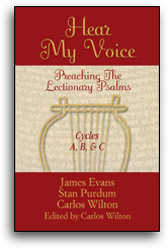
Hear My Voice
Preaching The Lectionary Psalms for Cycles A, B, C
(See Proper 16/Pentecost 14/Ordinary Time 21, Cycle C, for an alternative approach.)
The power and importance of the psalms lies partly in their honesty. The elements of worship represented in the psalms include the kinds of things we would expect: praise, joy, devotion, prayer, and so forth. However, within the context of worship, the psalms are also able to contain emotions and experiences that we do not often hear in our worship services. The psalmists of old felt the freedom to offer complaint, lament, protest, and even despair. Psalm 71 is an example of this sort of honest worship. It is the lament of an individual who cries out for God's help (vv. 1-4) but at the same time expresses affirmation and trust in God's goodness (vv. 3-5).
The cries for help dominate the first four verses: "deliver me ... rescue me ... save me ... rescue me...." This repetition may suggest the degree of suffering that the psalmist is experiencing.
If that is true, then the repetition of God's qualities also represent the degree of trust and faith the psalmist has in God. God is variously portrayed as "rock of refuge ... strong fortress ... my rock ... my fortress."
Clearly, the psalmist understood, perhaps firsthand, the destabilizing power of distress. Pastoral care specialists point out that when a person is in crisis their entire body can change. Sleep patterns can become disrupted, appetite may increase or decrease, blood pressure sometimes goes up, and so on. Living through a traumatic event or crisis may create a sense that the whole world is shifting under our feet.
The psalmist addresses this sense of shift and instability by portraying God as a safe and solid refuge. The whole world may shake and fall apart, but the shelter of the Lord is immovable. We remain safe under his care.
This psalm, with its promise of shelter, is used three times in the lectionary cycle -- once during Holy Week and once during Epiphany. This makes perfect sense. As God is revealed in Jesus, the promise of a shelter, safe and strong, is not rooted in some abstract image of God high above the heavens, distant and removed from our hurts and fears. God becomes known to us in a most concrete fashion -- as the Word made flesh.
The Word made flesh becomes the stabilizing influence not only for our individual lives but for the whole world. The Word also becomes part of the focus of our praise and adoration. And, if we have the honest courage, the Word made flesh also becomes the one to hear our complaints and our laments. Or as the prophet noted, "He has borne all our sorrows."
-- J. E.
The power and importance of the psalms lies partly in their honesty. The elements of worship represented in the psalms include the kinds of things we would expect: praise, joy, devotion, prayer, and so forth. However, within the context of worship, the psalms are also able to contain emotions and experiences that we do not often hear in our worship services. The psalmists of old felt the freedom to offer complaint, lament, protest, and even despair. Psalm 71 is an example of this sort of honest worship. It is the lament of an individual who cries out for God's help (vv. 1-4) but at the same time expresses affirmation and trust in God's goodness (vv. 3-5).
The cries for help dominate the first four verses: "deliver me ... rescue me ... save me ... rescue me...." This repetition may suggest the degree of suffering that the psalmist is experiencing.
If that is true, then the repetition of God's qualities also represent the degree of trust and faith the psalmist has in God. God is variously portrayed as "rock of refuge ... strong fortress ... my rock ... my fortress."
Clearly, the psalmist understood, perhaps firsthand, the destabilizing power of distress. Pastoral care specialists point out that when a person is in crisis their entire body can change. Sleep patterns can become disrupted, appetite may increase or decrease, blood pressure sometimes goes up, and so on. Living through a traumatic event or crisis may create a sense that the whole world is shifting under our feet.
The psalmist addresses this sense of shift and instability by portraying God as a safe and solid refuge. The whole world may shake and fall apart, but the shelter of the Lord is immovable. We remain safe under his care.
This psalm, with its promise of shelter, is used three times in the lectionary cycle -- once during Holy Week and once during Epiphany. This makes perfect sense. As God is revealed in Jesus, the promise of a shelter, safe and strong, is not rooted in some abstract image of God high above the heavens, distant and removed from our hurts and fears. God becomes known to us in a most concrete fashion -- as the Word made flesh.
The Word made flesh becomes the stabilizing influence not only for our individual lives but for the whole world. The Word also becomes part of the focus of our praise and adoration. And, if we have the honest courage, the Word made flesh also becomes the one to hear our complaints and our laments. Or as the prophet noted, "He has borne all our sorrows."
-- J. E.
