
Epiphany 6/Ordinary Time 6
Preaching
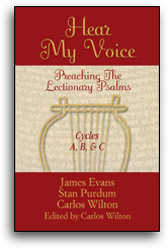
Hear My Voice
Preaching The Lectionary Psalms for Cycles A, B, C
There was a school crossing guard in Florida who had grown very frustrated with the many drivers who would race through his school zone at full speed. He thought he had tried everything to get them to slow down, until he finally happened upon a solution that worked. The crossing guard took a blow dryer and wrapped it in electrical tape, making it look like a radar gun. He discovered that all he had to do was point it at approaching car, and the drivers slowed down instantly.
"It's almost comical," he told a newspaper reporter. "It's amazing how well it works."
Such is the power of the law to restrain human behavior. While the drivers' response may demonstrate a grudging respect for legal consequences, the author of the lengthy Psalm 119 is speaking, in its opening verses, about a sort of respect for the law that goes far beyond mere compliance. "Happy are those," he testifies, "whose way is blameless, who walk in the law of the Lord" (v. 1).
"Walking in the law of the Lord" goes far beyond simply fearing the cost of a speeding ticket. The verb "walking" implies that the law accompanies the faithful through every moment of life. We could just as well say, "living, eating, and breathing God's Law" -- for such is the whole-life outlook of this and many other psalms that celebrate the advantages of taking the Torah deeply to heart. The Torah, indicated here by a great many synonyms -- among them "decrees," "precepts," "statutes," "commandments," and "ordinances" -- is the Lord's greatest gift to the human race. Following God's Law brings numerous benefits.
There is an old Jewish story about a child who rebelled against studying the Talmud. His parents tried everything, and finally brought him to the rabbi in despair. The child feared the rabbi, who had been described by his parents as something of an ogre.
As the child and his parents stood before him, the rabbi did his best to live up to that reputation. "What is the trouble?" he roared.
"Our son doesn't like to study the Talmud," the parents replied, in fear.
"What?" screamed the rabbi, turning his wrath on the young boy. "You don't like to study the Talmud?" The rabbi ordered the parents to leave their son with him.
Then he turned toward the trembling child, picked him up, sat down in an overstuffed chair, and simply held the boy in his arms. For the longest time, the rabbi cuddled the boy. In time, the child's racing heartbeat calmed, and after a while he became aware that his own heart and the rabbi's were beating in sync with each other. They stayed that way for about an hour, until the parents hesitantly knocked at the door. The rabbi carefully set the child down, smiled, and winked at him, then stomped over to the door in a most fearsome way. Violently, he pulled the door open and announced gruffly, "Now the child will study the Talmud!"
It turned out he was right. The child grew up to become one of the most renowned Talmudic scholars in all the land. When someone asked him, late in life, where he had first learned to love the law, he replied, "It was when the rabbi held me next to his heart."
-- C. W.
"It's almost comical," he told a newspaper reporter. "It's amazing how well it works."
Such is the power of the law to restrain human behavior. While the drivers' response may demonstrate a grudging respect for legal consequences, the author of the lengthy Psalm 119 is speaking, in its opening verses, about a sort of respect for the law that goes far beyond mere compliance. "Happy are those," he testifies, "whose way is blameless, who walk in the law of the Lord" (v. 1).
"Walking in the law of the Lord" goes far beyond simply fearing the cost of a speeding ticket. The verb "walking" implies that the law accompanies the faithful through every moment of life. We could just as well say, "living, eating, and breathing God's Law" -- for such is the whole-life outlook of this and many other psalms that celebrate the advantages of taking the Torah deeply to heart. The Torah, indicated here by a great many synonyms -- among them "decrees," "precepts," "statutes," "commandments," and "ordinances" -- is the Lord's greatest gift to the human race. Following God's Law brings numerous benefits.
There is an old Jewish story about a child who rebelled against studying the Talmud. His parents tried everything, and finally brought him to the rabbi in despair. The child feared the rabbi, who had been described by his parents as something of an ogre.
As the child and his parents stood before him, the rabbi did his best to live up to that reputation. "What is the trouble?" he roared.
"Our son doesn't like to study the Talmud," the parents replied, in fear.
"What?" screamed the rabbi, turning his wrath on the young boy. "You don't like to study the Talmud?" The rabbi ordered the parents to leave their son with him.
Then he turned toward the trembling child, picked him up, sat down in an overstuffed chair, and simply held the boy in his arms. For the longest time, the rabbi cuddled the boy. In time, the child's racing heartbeat calmed, and after a while he became aware that his own heart and the rabbi's were beating in sync with each other. They stayed that way for about an hour, until the parents hesitantly knocked at the door. The rabbi carefully set the child down, smiled, and winked at him, then stomped over to the door in a most fearsome way. Violently, he pulled the door open and announced gruffly, "Now the child will study the Talmud!"
It turned out he was right. The child grew up to become one of the most renowned Talmudic scholars in all the land. When someone asked him, late in life, where he had first learned to love the law, he replied, "It was when the rabbi held me next to his heart."
-- C. W.
