
Epiphany
Worship
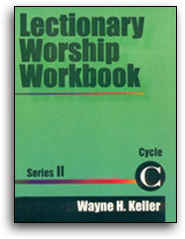
Lectionary Worship Workbook
Series II, Cycle C Gospel Texts
Liturgical Color: Green
(January 6 to the Beginning of Lent)
The Epiphany season varies in length, depending on the date of Easter, and continues to Ash Wednesday. The difference, created in the length of the year, is compensated for in the Pentecost season.
Epiphany, the oldest festival of the church year, originally a pagan festival to the sun-god, was taken over by the church and packed with new meaning. The pagan festival celebrated the birth of Aeon in the night between January 5th and 6th. From that day, the sun appeared longer each day. Eventually, due to errors in measuring time, the first day of winter shifted to an earlier date; January 6 was retained as the date for this festival.
By the fourth century, the first day of winter occurred on December 25, and a new pagan sun-festival was instituted. Christmas later replaced this latter festival. Both Christmas and Epiphany thus originated from a sun-festival held on the first day of winter. The first day of winter now normally occurs on December 21, but the festivals emerging from previous winter solstices remain as they were.
The word "epiphany" means "to show." In its root form, the word often was used to describe the dawn and the appearances of the gods to people. The word "manifestation" also describes Epiphany, and refers to the demonstration of the Glory of God's sending Jesus the Christ into the world. Until the institution of Christmas in the fourth century, both the birth and baptism of Jesus were commemorated on Epiphany. With the celebration of Jesus' birth at Christmas, the Eastern Church (Byzantine) restricted Epiphany to the celebration of Jesus' baptism. In the Western Church (Rome), however, Epiphany became associated with the coming of the Wise Men. Because the Wise Men were not Jews, the importance of Epiphany's message deals with the revealing of Christ to the Gentiles. Therefore, the Epiphany season has become a time for emphasis on the church's missionary task.
Two symbols which focus on Epiphany are the Cross and Crown. The Crown represents the Wise Men who came to Jesus. Also the Crown proclaims the fact that Christ is King, not only of Israel, but of all who put their trust in him for new and eternal life.
* * *
Because this season is so unfamiliar to most church members, include the Epiphany and Baptism Of The Lord Scriptures: Psalm 72; Ephesians 3:1-12; Psalm 29; Isaiah 61:1-4; 42:1-7; Acts 8:14-17, 10:34-38; and Luke 3:15-17, 22-22. Encourage people to read these during the week, in preparation for the rest of the Epiphany season.
In addition, note carefully the Stewardship Challenge concerning the Epiphany Stars and the messages on the stars. I suggest that congregations use this idea every Epiphany season. The stars and their messages will add a whole new dimension to this season.
Directions for the Epiphany Stars: Throughout Epiphany, prepare three-inch stars on green paper. On each star, place a word that describes a quality of life. For example: awe, choice, daring, exuberance, commitment, and so on. (I have lost the source of this idea; I recall that it appeared in the Presbyterian [U.S.A.] magazine some years ago. You may want to track it down by writing the Louisville office. See Appendix I for address.) Place the stars in the offering plate so no one can see what's printed on them. Pass around the offering plate each Sunday. Each person gets only one star during Epiphany. Suggest that the star they get may be a quality they have or that they need to develop. Invite one or two people each week to share an event or experience around their star.
(January 6 to the Beginning of Lent)
The Epiphany season varies in length, depending on the date of Easter, and continues to Ash Wednesday. The difference, created in the length of the year, is compensated for in the Pentecost season.
Epiphany, the oldest festival of the church year, originally a pagan festival to the sun-god, was taken over by the church and packed with new meaning. The pagan festival celebrated the birth of Aeon in the night between January 5th and 6th. From that day, the sun appeared longer each day. Eventually, due to errors in measuring time, the first day of winter shifted to an earlier date; January 6 was retained as the date for this festival.
By the fourth century, the first day of winter occurred on December 25, and a new pagan sun-festival was instituted. Christmas later replaced this latter festival. Both Christmas and Epiphany thus originated from a sun-festival held on the first day of winter. The first day of winter now normally occurs on December 21, but the festivals emerging from previous winter solstices remain as they were.
The word "epiphany" means "to show." In its root form, the word often was used to describe the dawn and the appearances of the gods to people. The word "manifestation" also describes Epiphany, and refers to the demonstration of the Glory of God's sending Jesus the Christ into the world. Until the institution of Christmas in the fourth century, both the birth and baptism of Jesus were commemorated on Epiphany. With the celebration of Jesus' birth at Christmas, the Eastern Church (Byzantine) restricted Epiphany to the celebration of Jesus' baptism. In the Western Church (Rome), however, Epiphany became associated with the coming of the Wise Men. Because the Wise Men were not Jews, the importance of Epiphany's message deals with the revealing of Christ to the Gentiles. Therefore, the Epiphany season has become a time for emphasis on the church's missionary task.
Two symbols which focus on Epiphany are the Cross and Crown. The Crown represents the Wise Men who came to Jesus. Also the Crown proclaims the fact that Christ is King, not only of Israel, but of all who put their trust in him for new and eternal life.
* * *
Because this season is so unfamiliar to most church members, include the Epiphany and Baptism Of The Lord Scriptures: Psalm 72; Ephesians 3:1-12; Psalm 29; Isaiah 61:1-4; 42:1-7; Acts 8:14-17, 10:34-38; and Luke 3:15-17, 22-22. Encourage people to read these during the week, in preparation for the rest of the Epiphany season.
In addition, note carefully the Stewardship Challenge concerning the Epiphany Stars and the messages on the stars. I suggest that congregations use this idea every Epiphany season. The stars and their messages will add a whole new dimension to this season.
Directions for the Epiphany Stars: Throughout Epiphany, prepare three-inch stars on green paper. On each star, place a word that describes a quality of life. For example: awe, choice, daring, exuberance, commitment, and so on. (I have lost the source of this idea; I recall that it appeared in the Presbyterian [U.S.A.] magazine some years ago. You may want to track it down by writing the Louisville office. See Appendix I for address.) Place the stars in the offering plate so no one can see what's printed on them. Pass around the offering plate each Sunday. Each person gets only one star during Epiphany. Suggest that the star they get may be a quality they have or that they need to develop. Invite one or two people each week to share an event or experience around their star.
