
The Epiphany of Our Lord
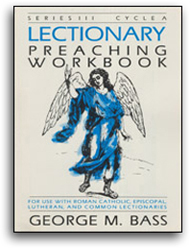
Preaching
Lectionary Preaching Workbook
Series III, Cycle A
The church year theological clue
The Epiphany was originally a unitive festival, an observation of Jesus' birth, his baptism, and the first miracle he performed at Cana; Coelius Sedulius' fifth century hymn, "When Christ's Appearing Was Made Known," (Hymn 85, LBW) illustrates this three-fold nature of the Epiphany. Twelfth Night now concludes the Christmas season, the First Sunday after the Epiphany commemorates the Baptism of Our Lord, and the first miracle at Cana is assigned to the Second Sunday after the Epiphany only in Cycle/Year C. As it is now constituted, the liturgical function of this festival, which brings the lections into homiletical focus, is to celebrate Jesus' incarnation as God's revelation as Messiah and to affirm that he came into the world for the benefit of all people; he comes to do for humanity what persons cannot do for themselves, to win salvation for them.
The Prayer of the Day - A classic collect that has again been modernized in language ("nations" instead of "Gentiles," "glory" rather than "beauty," etc.), but retains the basic theme and evangelical theology of Epiphany ("revealed your Son by the leading of a star") and its eschatological thrust ("to know your presence in our lives" and "bring us at last to the full vision of your glory"). Hence, the collect puts the Nativity and details of the infancy story of Christ into proper perspective by addressing the prayer to the "Lord God."
The Psalm of the Day - Psalm 72 - This psalm was first used on the Second Sunday in Advent, but for a slightly different purpose. Verse 7 is highlighted during Advent, "In his time shall the righteous flourish; there shall be an abundance of peace till the moon shall be no more," but verse 11 is emphasized for the Epiphany, "All kings shall bow down before him, and all the nations do him service." When these verses are used as antiphons on the Second Sunday in Advent and for the Epiphany of Our Lord, respectively, they accent different themes in the psalm by bringing them into sharp relief. The first reveals what the reign of the "king's son" will be like, while the second points out the scope of his reign. It should also be noted that verses 15-19 are optional in the Advent selection, but the whole psalm is appointed for Epiphany.
The Psalm Prayer
Almighty God, you gave the kingdom of justice andpeace to David and his descendant, our Lord Jesus Christ. Extend this kingdom to every nation, so that through your Son the poor may receive justice, the destitute relief, and the people of the earth peace in the name of him who lives and reigns with you and the Holy Spirit, one God, now and forever.
The readings:
Isaiah 60:1-6
The church has taken this pericope, which originally referred to Israel's return from the exile in Babylon, and put it into a Christian context. Jesus, to the church, is the "light (that) has come," and in him God's "glory is rising on you (and the whole world." Christ is the light that shines in the darkness and the one to whom all nations shall come. He has staked his claim in the world; all people and all things are his, gold and incense will be brought to him, and the name of God will be praised. After all, it is God who delivered the Israelites from the captivity in Babyon, and it is God who has sent Jesus into the world to free all people from sin and bring to the earth the kingdom of God. (Note: In the older Roman missal, as well as some Lutheran lectionaries, this reading was employed as the epistle for the Epiphany. Archbishop Cranmer was probably the first one to replace this lesson with a New Testament epistle. His choice was Ephesians 3.)
Ephesians 3:1-12
Paul makes the connection between Isaiah 60 and the Epiphany itself clear, and he understands his mission to be to communicate the good news of God's revelation, his light, in Jesus' advent, and to declare to the "nations" - Gentiles, as well as Jews - that salvation has come through the grace of God in Christ and that it is meant for all. Just as John the Baptizer was close to death when he sent his disciples to Jesus, asking, "Are you the one who should come, or should we look for someone else?", so Paul was close to death when he sent this letter with one of his disciples to the church at Ephesus. The difference between them - and both of them died the same way, by being beheaded - was that John was uncertain about the identity of Jesus Christ while Paul was absolutely positive that Jesus was the Christ of God, the long-awaited Messiah. He had not only been party to the establishment of the church, but he had also witnessed to the now-elusive unity of the church that brought Jew and Gentile into the body of Christ.
The Gospel - Matthew 2:1-12
This is the third section of Matthew 2 to be used in the lectionary but, chronologically, it is the very beginning of the Epiphany story. In Matthew's year, it is used with about the same frequency as the pericope for the Holy Innocents Day; the reading (verses 13-18) for the First Sunday after Christmas is read every three years, and is, therefore, treated homiletically more often than the other two parts of Chapter 2. Matthew incorporates the various signs - the star that led the Magi to Jerusalem and Bethlehem, the gifts they brought and presented to the Child, Bethlehem, Herod, etc. - and divine visitations, replete with angels who give warnings and guidance to the Magi and, later, to Joseph. The point of the story is to show how Jesus is the Epiphany, God's revelation of himself and his intentions for the entire world.
A sermon on the Gospel, Matthew 2:1-12 - "The Star that Shines Forever."
Phyllis McGinley, in Stones from a Glass House, published a poem which, despite some biblical inaccuracies, demonstrates that she understands what the Epiphany is all about:
In Palestine, in Palestine,
The flocks unsheltered sleep.
Though night-long still,
On every hill,
A watch the shepherds keep.
And people walk with living fear,
Lest singing as it fell,
Should shine upon some midnight clear,
The star that is a shell.
Hanging on the wall beside my desk, is a painting by a former student, Pastor Ron Bock, showing a shepherd on a very dark night, with sheep gathered around his feet, his shepherd's crook over his head, looking up, obviously in wonder, at a single bright star in the sky. Epiphany is real and true - the star is no "shell" - because God sent Jesus into the world to fulfill his long-standing promise of a Messiah. The story of the star, which was the same star the shepherds had seen, inspired and led the Magi "from the east" to Jerusalem and an audience with King Herod, finally directed them to Bethlehem, where they found the baby Jesus, worshipped him, and gave him gold, frankincense, and myrrh. That it was God's will that they should have a part in this drama receives impetus from God's intervention by way of a dream that sent them home by a route that would avoid another meeting with Herod, in order to protect the Christ child from a jealous, if not mad, despot. Our spiritual stance, for Epiphany and its season, is that of those who watch, wonder, and worship.
1. The Epiphany Star is no "shell;" through it, God beckoned Magi "from the east," not merely as star-watchers who might only wonder about it, but to travel to Jerusalem/ Bethlehem to find and worship the child born as "the King of the Jews."
2. The star continues - through the Word - to shine in the darkness of the world to light up the way out of earth's night into the new day, through Jesus Christ, which brings believers to full communion with God, the Father.
As a star, God's holy Word
Leads us to our King and Lord;
Brightly from its sacred pages
Shall this light throughout the ages
Shine upon our path of life.
(Verse 6 of Nikolai Grundtvig's hymn "Bright and Glorious is the Sky," Hymn 75, LBW).
3. In the full light of the day, "the star that is no shell" shines and makes the day brighter as it reflects the glory of the Lord God in Jesus Christ so that as we worship him, we give him the gift of ourselves.
4. The church exists as a fellowship of believers who worship Jesus Christ, their Lord and Savior, but who also tell the story of Jesus to others so that the star might also shine upon them and light up the darkness of their lives.
An Old Testament sermon, Isaiah 60 - "The Son and God's Morning."
1. In Jesus Christ, the light of the Lord has surely come upon the earth; a new day is dawning.
2. Sin has been defeated by Jesus' perfect obedience, but its darkness has yet to be eradicated from the world.
3. As the Good News is told to all people, more and more will turn and "come to Christ," their Lord and God.
4. That great day is coming when everyone who exists will bring gifts to Christ and sing praises to the God who is Creator and Father of all.
A Second Lesson sermon, Ephesians 3:1-12 - "The 'Swan Song' of a Faithful Apostle."
1. The mystery of the gospel was incarnate in Paul. Probably a prisoner facing execution in Rome, he sings his "swan song" about the glorious gospel which has been entrusted to him. He is faithful to Christ, when a word or two of denial could save his life.
2. With the revelation of God's mystery in the person of Jesus Christ, the secrets of God's plan of salvation are made known to all who hear the gospel; Christ came for the sake of the whole wide world.
3. Through the grace of God, all who believe are made members of the church, the body of Christ, and come to know how great God really is.
4. Epiphany teaches us to sing a new song, even a "swan song," if we must.
The Epiphany was originally a unitive festival, an observation of Jesus' birth, his baptism, and the first miracle he performed at Cana; Coelius Sedulius' fifth century hymn, "When Christ's Appearing Was Made Known," (Hymn 85, LBW) illustrates this three-fold nature of the Epiphany. Twelfth Night now concludes the Christmas season, the First Sunday after the Epiphany commemorates the Baptism of Our Lord, and the first miracle at Cana is assigned to the Second Sunday after the Epiphany only in Cycle/Year C. As it is now constituted, the liturgical function of this festival, which brings the lections into homiletical focus, is to celebrate Jesus' incarnation as God's revelation as Messiah and to affirm that he came into the world for the benefit of all people; he comes to do for humanity what persons cannot do for themselves, to win salvation for them.
The Prayer of the Day - A classic collect that has again been modernized in language ("nations" instead of "Gentiles," "glory" rather than "beauty," etc.), but retains the basic theme and evangelical theology of Epiphany ("revealed your Son by the leading of a star") and its eschatological thrust ("to know your presence in our lives" and "bring us at last to the full vision of your glory"). Hence, the collect puts the Nativity and details of the infancy story of Christ into proper perspective by addressing the prayer to the "Lord God."
The Psalm of the Day - Psalm 72 - This psalm was first used on the Second Sunday in Advent, but for a slightly different purpose. Verse 7 is highlighted during Advent, "In his time shall the righteous flourish; there shall be an abundance of peace till the moon shall be no more," but verse 11 is emphasized for the Epiphany, "All kings shall bow down before him, and all the nations do him service." When these verses are used as antiphons on the Second Sunday in Advent and for the Epiphany of Our Lord, respectively, they accent different themes in the psalm by bringing them into sharp relief. The first reveals what the reign of the "king's son" will be like, while the second points out the scope of his reign. It should also be noted that verses 15-19 are optional in the Advent selection, but the whole psalm is appointed for Epiphany.
The Psalm Prayer
Almighty God, you gave the kingdom of justice andpeace to David and his descendant, our Lord Jesus Christ. Extend this kingdom to every nation, so that through your Son the poor may receive justice, the destitute relief, and the people of the earth peace in the name of him who lives and reigns with you and the Holy Spirit, one God, now and forever.
The readings:
Isaiah 60:1-6
The church has taken this pericope, which originally referred to Israel's return from the exile in Babylon, and put it into a Christian context. Jesus, to the church, is the "light (that) has come," and in him God's "glory is rising on you (and the whole world." Christ is the light that shines in the darkness and the one to whom all nations shall come. He has staked his claim in the world; all people and all things are his, gold and incense will be brought to him, and the name of God will be praised. After all, it is God who delivered the Israelites from the captivity in Babyon, and it is God who has sent Jesus into the world to free all people from sin and bring to the earth the kingdom of God. (Note: In the older Roman missal, as well as some Lutheran lectionaries, this reading was employed as the epistle for the Epiphany. Archbishop Cranmer was probably the first one to replace this lesson with a New Testament epistle. His choice was Ephesians 3.)
Ephesians 3:1-12
Paul makes the connection between Isaiah 60 and the Epiphany itself clear, and he understands his mission to be to communicate the good news of God's revelation, his light, in Jesus' advent, and to declare to the "nations" - Gentiles, as well as Jews - that salvation has come through the grace of God in Christ and that it is meant for all. Just as John the Baptizer was close to death when he sent his disciples to Jesus, asking, "Are you the one who should come, or should we look for someone else?", so Paul was close to death when he sent this letter with one of his disciples to the church at Ephesus. The difference between them - and both of them died the same way, by being beheaded - was that John was uncertain about the identity of Jesus Christ while Paul was absolutely positive that Jesus was the Christ of God, the long-awaited Messiah. He had not only been party to the establishment of the church, but he had also witnessed to the now-elusive unity of the church that brought Jew and Gentile into the body of Christ.
The Gospel - Matthew 2:1-12
This is the third section of Matthew 2 to be used in the lectionary but, chronologically, it is the very beginning of the Epiphany story. In Matthew's year, it is used with about the same frequency as the pericope for the Holy Innocents Day; the reading (verses 13-18) for the First Sunday after Christmas is read every three years, and is, therefore, treated homiletically more often than the other two parts of Chapter 2. Matthew incorporates the various signs - the star that led the Magi to Jerusalem and Bethlehem, the gifts they brought and presented to the Child, Bethlehem, Herod, etc. - and divine visitations, replete with angels who give warnings and guidance to the Magi and, later, to Joseph. The point of the story is to show how Jesus is the Epiphany, God's revelation of himself and his intentions for the entire world.
A sermon on the Gospel, Matthew 2:1-12 - "The Star that Shines Forever."
Phyllis McGinley, in Stones from a Glass House, published a poem which, despite some biblical inaccuracies, demonstrates that she understands what the Epiphany is all about:
In Palestine, in Palestine,
The flocks unsheltered sleep.
Though night-long still,
On every hill,
A watch the shepherds keep.
And people walk with living fear,
Lest singing as it fell,
Should shine upon some midnight clear,
The star that is a shell.
Hanging on the wall beside my desk, is a painting by a former student, Pastor Ron Bock, showing a shepherd on a very dark night, with sheep gathered around his feet, his shepherd's crook over his head, looking up, obviously in wonder, at a single bright star in the sky. Epiphany is real and true - the star is no "shell" - because God sent Jesus into the world to fulfill his long-standing promise of a Messiah. The story of the star, which was the same star the shepherds had seen, inspired and led the Magi "from the east" to Jerusalem and an audience with King Herod, finally directed them to Bethlehem, where they found the baby Jesus, worshipped him, and gave him gold, frankincense, and myrrh. That it was God's will that they should have a part in this drama receives impetus from God's intervention by way of a dream that sent them home by a route that would avoid another meeting with Herod, in order to protect the Christ child from a jealous, if not mad, despot. Our spiritual stance, for Epiphany and its season, is that of those who watch, wonder, and worship.
1. The Epiphany Star is no "shell;" through it, God beckoned Magi "from the east," not merely as star-watchers who might only wonder about it, but to travel to Jerusalem/ Bethlehem to find and worship the child born as "the King of the Jews."
2. The star continues - through the Word - to shine in the darkness of the world to light up the way out of earth's night into the new day, through Jesus Christ, which brings believers to full communion with God, the Father.
As a star, God's holy Word
Leads us to our King and Lord;
Brightly from its sacred pages
Shall this light throughout the ages
Shine upon our path of life.
(Verse 6 of Nikolai Grundtvig's hymn "Bright and Glorious is the Sky," Hymn 75, LBW).
3. In the full light of the day, "the star that is no shell" shines and makes the day brighter as it reflects the glory of the Lord God in Jesus Christ so that as we worship him, we give him the gift of ourselves.
4. The church exists as a fellowship of believers who worship Jesus Christ, their Lord and Savior, but who also tell the story of Jesus to others so that the star might also shine upon them and light up the darkness of their lives.
An Old Testament sermon, Isaiah 60 - "The Son and God's Morning."
1. In Jesus Christ, the light of the Lord has surely come upon the earth; a new day is dawning.
2. Sin has been defeated by Jesus' perfect obedience, but its darkness has yet to be eradicated from the world.
3. As the Good News is told to all people, more and more will turn and "come to Christ," their Lord and God.
4. That great day is coming when everyone who exists will bring gifts to Christ and sing praises to the God who is Creator and Father of all.
A Second Lesson sermon, Ephesians 3:1-12 - "The 'Swan Song' of a Faithful Apostle."
1. The mystery of the gospel was incarnate in Paul. Probably a prisoner facing execution in Rome, he sings his "swan song" about the glorious gospel which has been entrusted to him. He is faithful to Christ, when a word or two of denial could save his life.
2. With the revelation of God's mystery in the person of Jesus Christ, the secrets of God's plan of salvation are made known to all who hear the gospel; Christ came for the sake of the whole wide world.
3. Through the grace of God, all who believe are made members of the church, the body of Christ, and come to know how great God really is.
4. Epiphany teaches us to sing a new song, even a "swan song," if we must.
