
Forgiving And Not Forgetting
Sermon
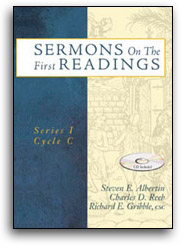
Sermons On The First Readings
Series I, Cycle C
Someone has wronged you, betrayed you, stabbed you in the back. You are angry, fuming, ready to strangle them. You complain to a trusted friend about what has happened to you. The friend listens patiently and then offers you his/her sage advice. "Steve, you have got to move on with your life. Continuing to stew about this is just going to eat you up. Why don't you just forgive and forget?"
Forgive and forget! Ask someone at the coffee shop or at the water cooler in the office what forgiveness means and that is probably what he will tell you. To forgive means to forget about it. To forgive means to stop remembering the hurt or the injustice done to you and put it behind you. To forgive means to move on with your life and live as if the hurt never happened.
People who offer such advice probably think they are being helpful. They probably think their advice is even comforting. They think that forgetting is at the heart of forgiveness. But how mistaken they are! To think that forgiving is forgetting is perverse. It distorts the true nature of forgiveness. It trivializes the hurt that it is meant to heal. It deprives forgiveness of its true redeeming power. And ultimately such forgetting is humanly impossible. We might think that we are being helpful and comforting by telling someone to forgive and forget. But we are actually saddling them with a huge burden and an impossible demand.
A recent event illustrates just this point. The notorious Oklahoma City bomber, Tim McVeigh, announced to the media that he was not going to prolong the appeal of his death sentence. He hated life in prison. He just wanted to be executed as soon as possible. He got his wish on June 11, 2002. What made this announcement so bizarre was that he also requested that his execution be televised to all of America. Pundits have speculated as to why he made this request. Was this another act of defiance on the part of this unrepentant terrorist? Was this his way to undermine the validity of the death sentence by showing to everyone its brutality? Some of the more adventuresome talk show hosts speculated that we ought to make his execution available on a pay-per-view basis and then give the money to the victims' families. I was also surprised to find out that over 250 people were granted "ringside seats" to view the spectacle.
This all goes to show that people just can't forgive and forget, especially the families of the victims. The hurt inflicted by Tim McVeigh was just too great to forget. The only way to bring closure to this experience and healing to the pain of the victims' families is to see justice done. The killer must pay for his crime. There will be no forgetting. In fact, to forget would imply that the lives of those victims didn't matter. To forget trivializes the lives of those who died in the bombing disaster.
Probably the place where the advice "forgive and forget" seems most absurd is in the context of family life. Try to tell brothers and sisters to "forgive and forget" after they have just had a bitter disagreement. They can't simply just "forgive and forget," because they have got to keep living every day under the same roof with this person whose very presence continues to remind them of the hurt that was inflicted on them.
Try to tell a wife or a husband to "forgive and forget" when their spouse has been unfaithful to them. A grievous betrayal has been committed. A sacred trust has been violated. If the marriage means anything, the sin cannot simply be forgotten. To forget means that those marriage vows weren't all that important to begin with. Because the marriage meant so much, the hurt cannot simply be forgotten. That is why the wounded spouse demands justice. She has a right to demand her "pound of flesh." Or he has a right to make her pay for her betrayal. To tell them to "forgive and forget" somehow makes a mockery of their marriage and belittles the depth of their pain. Unfortunately, in such back and forth sparring, each trying to assert one's rights, each seeking to get what one deserves, each looking to "get back and get even," the marriage is often destroyed. But could it have been any different? Was there ever really any other choice when it is so impossible to "forgive and forget?"
If there was ever anyone who had every right in the world to "get back and get even," to get his "pound of flesh," and to make his demands for justice, it was Joseph in today's First Reading. Today's reading is from near the conclusion of the dramatic story of Joseph and his brothers. It is a wonderful Horatio Alger type of story where the loser becomes a hero. It is a story that has captured the imagination of many ever since those days when they first heard it as a child in Sunday school or dressed up in costumes to portray it in Vacation Bible School.
Joseph had been "wronged" by his brothers. Jealous of Joseph's ability to interpret dreams and of his popularity with his father, Jacob, the brothers fake Joseph's death and sell him into slavery. Joseph gets carried off to Egypt where he undergoes an amazing series of successes and failures. He manages to become a leading servant in the house of a wealthy Egyptian by the name of Potiphar. But when he refuses the seductive advances of Potiphar's wife, who then falsely accuses Joseph of improper sexual advances, he is thrown into prison. But while in prison Joseph's extraordinary ability to interpret dreams leads to his miraculous release and his eventual rise to second in command in all of Egypt. It is indeed a marvelous story of a slave's improbable rise to power. It is no wonder that Tim Rice and Andrew Lloyd Weber took the story, put it to music, and made it one of the most popular musical's of the last generation, Joseph and the Amazing Technicolor Dreamcoat.
Meanwhile, back at home there is a great famine in the land. Joseph's family is on verge of starvation. Jacob has heard that there is plenty of food available in Egypt and sends his sons to purchase some. When the brothers arrive in Egypt, they do not know that they will be dealing with the brother they had sold into slavery. Joseph immediately recognizes them but chooses not to reveal his identity to them. Surely, Joseph remembers what his brothers had done to him. Surely, Joseph remembers the hurt and pain they had unjustly inflicted upon him. Surely, Joseph has thought about "getting back and getting even," about settling the score with his despicable and hateful brothers, about getting his "pound of flesh" and making them pay for what they had done to him. Perhaps that is why Joseph repeatedly "tested" his brothers by imprisoning them as spies, placing money in their sacks then accusing them of theft, and finally planting a silver cup in Benjamin's sack in order to justify the arrest of Jacob's youngest son. Joseph is torn between wanting to help them and wanting to pay them back.
That brings us to the beginning of today's First Reading. The brothers are completely at the mercy of Joseph, who they still do not know is the brother whom they had so grievously wronged. But Joseph knows who they are and Joseph remembers. These are the brothers who hated him, who had wanted to kill him, who had sentenced him to a life that was supposed to have been worse than death. He had every right in the world to demand justice, to seek his pound of flesh, to "get back and get even." And if he had done that, none of us would have blamed him. For we know that most of the time that is precisely the way we treat others who have wronged us. We have a right, a holy right, a godly entitlement to justice!
Finally, Joseph just can't keep his secret any longer. He reveals his identity: "I am Joseph." But the question still remains. What will he do to his enemies? That they were his brothers, of his own flesh and blood, made their betrayal of him even more despicable. And his brothers know it. They are scared, frightened, fearful of what Joseph has every right to do to them. "But his brothers could not answer him, so dismayed were they at his presence."
Joseph could have just forgotten what had happened. "Oh, just forget it guys. What you did to me doesn't matter because I really didn't care all that much about you and my father. We can't live in the past. So let's just move on with our lives. Forgive and forget!" But Joseph didn't say that, because he couldn't say that. His family and especially his relationship to his father had meant far too much to him to say now that it didn't matter.
"Come closer to me," Joseph tells his brothers. The terror must now have been pounding in their hearts. This is the brother whom they once tried to kill. This is the brother who is now one of the most powerful men in the world. And now he wants to see the whites of their eyes. He wants them close enough to hear the words they were terrified to hear: that he had not forgotten what they had done to him.
"I am your brother, Joseph, whom you sold into Egypt."
Joseph was not going to forgive and forget. Joseph was not going to let sleeping dogs lie. Joseph remembered. And they, like we, are sure that he is going to make them pay for what they had done.
And that is when the story shocks and surprises us! Right when we expect this story to end like all the other great stories of human life, where the scales of justice are balanced, where good is rewarded and evil is punished, where getting back and getting even is all that matters, this story takes an unexpected twist. Joseph does not forget the past but remembers it in a new way! He looks back on what his brothers did to him, their hatred, their selling him into slavery and all of the intervening years of turmoil, and sees it in a new way. He sees it as God's way of preserving their lives!
"God sent me before you to preserve life."
For if Joseph had not been sold into slavery, he would never have made it to Egypt where he could rise to his important position and be able to save his brothers and beloved father, Jacob, from starvation. What the brothers had meant for evil, God has transformed and redeemed for good!
Joseph had been transformed by the grace of God so that he could remember his past in a new way. Because God had rescued him from one catastrophe after another, he was able break this world's vicious cycle of always having to "get back and get even." He no longer had to count his brothers' sins against them. He no longer had to make them pay for what they had done to him. Instead, he could now forgive them!
What Joseph did seems humanly impossible. He willingly forgoes and gives up his right, his God-given right, to seek justice! Any anger and disgust he had with his brothers he chooses to keep to himself. He is the one who suffers and not his brothers. He pays rather than his brothers. He sacrifices. He "bites his own tongue" and "bites the bullet" instead of taking out his anger and wrath on his brothers. He could have made his brothers pay for their crime, and no reader of this story would have blamed him. But that would have been still more of the "same old same old." It would have been just one more chapter in the same old story of the world's captivity to the cycle of vengeance and getting even. But the cycle had been broken for Joseph. God had reversed the inevitable for him. God had redeemed his damnable story of treachery and betrayal and turned it into a marvelous story of rescue and redemption. As the direct beneficiary of such divine intervention, Joseph too had been changed and transformed. He too could now become a partner with God in reversing and changing this world of paybacks and revenge by forgiving. He, like God, could choose to remember the past in a new way.
In the surprising forgiveness of his brothers by Joseph, we see a foreshadowing, a foretelling, of the same kind of forgiveness God worked in Jesus and continues to work among us today. Through Jesus' death and resurrection God forgives the sins of the world. This forgiving, like Joseph's forgiving, is not forgetting. God is not some sleepy old man in the sky who is oblivious to our sins. God is not like some enabling parent who always overlooks the alcohol abuse of his teenager. God is not happy with our sin, our betrayals, and our violence. But God loves us. Therefore, he will not just look the other way and pretend these things never happened. He cannot and will not forget our sin. But then what does he do with our sin? Like the sins of Joseph's brothers, it demands justice. Someone must pay. The consequences cannot just be ignored.
So, like Joseph, God chooses to forgive not by forgetting but instead by remembering in a new way. Instead of holding our sins against us and making us pay, God "bites his tongue." God "bites the bullet." God chooses to give up his right to demand justice from us. Instead God is the one who "pays." God is the one who sacrifices. God is the one who suffers. And God does that by directing his anger with our sins and his hunger for a "pound of flesh" upon himself, upon his "only begotten Son," upon the crucified Jesus. Jesus dies "for us" and suffers the punishment intended for us. And our sins are forgiven.
Every time we begin our worship on a Sunday morning with the words of confession and forgiveness, the story of Joseph's forgiveness of his brothers and of God's forgiveness of the world through Jesus' death and resurrection are acted out again in our midst. Our sins are not forgotten. God remembers them. "If we say we have no sin, we deceive ourselves, and the truth is not in us." We remember them. "We confess that we are in bondage to sin and cannot free ourselves." But then we are told the glorious good news that God has chosen to remember them in a new way. What we intended for evil, God has turned into good. How? He "has given his Son to die for us and, for his sake, forgives us all our sins."
God in his mercy chooses to remember our sins in a new way and forgives us.
Once Joseph realized this, everything changed for him. He was able to break the "same old same old" cycle of revenge and "getting back by getting even." He was able to be a partner with God in changing the world. He forgave his brothers. Likewise, because God has chosen to forgive but not forget our sins, we can join Joseph in changing the world. We can forgive and break the painful and deadly cycle of "getting back and getting even" that so torments this world of ours.
This is the new kind of life that Jesus describes in today's Gospel. These are not demands that we "gotta" do in order to be a disciple of Jesus. On the contrary, they are gifts, possibilities, opportunities, where we can partner with God through Jesus in redeeming the world. What the world meant for evil, destruction, hatred, cursing, abuse, exploitation, and violence, we can change and transform into goodness and life. By refusing to demand our "pound of flesh," by refusing to "get back by getting even," but instead choosing to "bite the bullet," to turn the other cheek, to be generous, to love our enemies, to be merciful as our Father is merciful, and to forgive but not forget, a new world begins to take shape in the midst of the old. The kingdom of God begins to arrive. And what the world meant for evil, God has transformed into good.
Forgive and forget! Ask someone at the coffee shop or at the water cooler in the office what forgiveness means and that is probably what he will tell you. To forgive means to forget about it. To forgive means to stop remembering the hurt or the injustice done to you and put it behind you. To forgive means to move on with your life and live as if the hurt never happened.
People who offer such advice probably think they are being helpful. They probably think their advice is even comforting. They think that forgetting is at the heart of forgiveness. But how mistaken they are! To think that forgiving is forgetting is perverse. It distorts the true nature of forgiveness. It trivializes the hurt that it is meant to heal. It deprives forgiveness of its true redeeming power. And ultimately such forgetting is humanly impossible. We might think that we are being helpful and comforting by telling someone to forgive and forget. But we are actually saddling them with a huge burden and an impossible demand.
A recent event illustrates just this point. The notorious Oklahoma City bomber, Tim McVeigh, announced to the media that he was not going to prolong the appeal of his death sentence. He hated life in prison. He just wanted to be executed as soon as possible. He got his wish on June 11, 2002. What made this announcement so bizarre was that he also requested that his execution be televised to all of America. Pundits have speculated as to why he made this request. Was this another act of defiance on the part of this unrepentant terrorist? Was this his way to undermine the validity of the death sentence by showing to everyone its brutality? Some of the more adventuresome talk show hosts speculated that we ought to make his execution available on a pay-per-view basis and then give the money to the victims' families. I was also surprised to find out that over 250 people were granted "ringside seats" to view the spectacle.
This all goes to show that people just can't forgive and forget, especially the families of the victims. The hurt inflicted by Tim McVeigh was just too great to forget. The only way to bring closure to this experience and healing to the pain of the victims' families is to see justice done. The killer must pay for his crime. There will be no forgetting. In fact, to forget would imply that the lives of those victims didn't matter. To forget trivializes the lives of those who died in the bombing disaster.
Probably the place where the advice "forgive and forget" seems most absurd is in the context of family life. Try to tell brothers and sisters to "forgive and forget" after they have just had a bitter disagreement. They can't simply just "forgive and forget," because they have got to keep living every day under the same roof with this person whose very presence continues to remind them of the hurt that was inflicted on them.
Try to tell a wife or a husband to "forgive and forget" when their spouse has been unfaithful to them. A grievous betrayal has been committed. A sacred trust has been violated. If the marriage means anything, the sin cannot simply be forgotten. To forget means that those marriage vows weren't all that important to begin with. Because the marriage meant so much, the hurt cannot simply be forgotten. That is why the wounded spouse demands justice. She has a right to demand her "pound of flesh." Or he has a right to make her pay for her betrayal. To tell them to "forgive and forget" somehow makes a mockery of their marriage and belittles the depth of their pain. Unfortunately, in such back and forth sparring, each trying to assert one's rights, each seeking to get what one deserves, each looking to "get back and get even," the marriage is often destroyed. But could it have been any different? Was there ever really any other choice when it is so impossible to "forgive and forget?"
If there was ever anyone who had every right in the world to "get back and get even," to get his "pound of flesh," and to make his demands for justice, it was Joseph in today's First Reading. Today's reading is from near the conclusion of the dramatic story of Joseph and his brothers. It is a wonderful Horatio Alger type of story where the loser becomes a hero. It is a story that has captured the imagination of many ever since those days when they first heard it as a child in Sunday school or dressed up in costumes to portray it in Vacation Bible School.
Joseph had been "wronged" by his brothers. Jealous of Joseph's ability to interpret dreams and of his popularity with his father, Jacob, the brothers fake Joseph's death and sell him into slavery. Joseph gets carried off to Egypt where he undergoes an amazing series of successes and failures. He manages to become a leading servant in the house of a wealthy Egyptian by the name of Potiphar. But when he refuses the seductive advances of Potiphar's wife, who then falsely accuses Joseph of improper sexual advances, he is thrown into prison. But while in prison Joseph's extraordinary ability to interpret dreams leads to his miraculous release and his eventual rise to second in command in all of Egypt. It is indeed a marvelous story of a slave's improbable rise to power. It is no wonder that Tim Rice and Andrew Lloyd Weber took the story, put it to music, and made it one of the most popular musical's of the last generation, Joseph and the Amazing Technicolor Dreamcoat.
Meanwhile, back at home there is a great famine in the land. Joseph's family is on verge of starvation. Jacob has heard that there is plenty of food available in Egypt and sends his sons to purchase some. When the brothers arrive in Egypt, they do not know that they will be dealing with the brother they had sold into slavery. Joseph immediately recognizes them but chooses not to reveal his identity to them. Surely, Joseph remembers what his brothers had done to him. Surely, Joseph remembers the hurt and pain they had unjustly inflicted upon him. Surely, Joseph has thought about "getting back and getting even," about settling the score with his despicable and hateful brothers, about getting his "pound of flesh" and making them pay for what they had done to him. Perhaps that is why Joseph repeatedly "tested" his brothers by imprisoning them as spies, placing money in their sacks then accusing them of theft, and finally planting a silver cup in Benjamin's sack in order to justify the arrest of Jacob's youngest son. Joseph is torn between wanting to help them and wanting to pay them back.
That brings us to the beginning of today's First Reading. The brothers are completely at the mercy of Joseph, who they still do not know is the brother whom they had so grievously wronged. But Joseph knows who they are and Joseph remembers. These are the brothers who hated him, who had wanted to kill him, who had sentenced him to a life that was supposed to have been worse than death. He had every right in the world to demand justice, to seek his pound of flesh, to "get back and get even." And if he had done that, none of us would have blamed him. For we know that most of the time that is precisely the way we treat others who have wronged us. We have a right, a holy right, a godly entitlement to justice!
Finally, Joseph just can't keep his secret any longer. He reveals his identity: "I am Joseph." But the question still remains. What will he do to his enemies? That they were his brothers, of his own flesh and blood, made their betrayal of him even more despicable. And his brothers know it. They are scared, frightened, fearful of what Joseph has every right to do to them. "But his brothers could not answer him, so dismayed were they at his presence."
Joseph could have just forgotten what had happened. "Oh, just forget it guys. What you did to me doesn't matter because I really didn't care all that much about you and my father. We can't live in the past. So let's just move on with our lives. Forgive and forget!" But Joseph didn't say that, because he couldn't say that. His family and especially his relationship to his father had meant far too much to him to say now that it didn't matter.
"Come closer to me," Joseph tells his brothers. The terror must now have been pounding in their hearts. This is the brother whom they once tried to kill. This is the brother who is now one of the most powerful men in the world. And now he wants to see the whites of their eyes. He wants them close enough to hear the words they were terrified to hear: that he had not forgotten what they had done to him.
"I am your brother, Joseph, whom you sold into Egypt."
Joseph was not going to forgive and forget. Joseph was not going to let sleeping dogs lie. Joseph remembered. And they, like we, are sure that he is going to make them pay for what they had done.
And that is when the story shocks and surprises us! Right when we expect this story to end like all the other great stories of human life, where the scales of justice are balanced, where good is rewarded and evil is punished, where getting back and getting even is all that matters, this story takes an unexpected twist. Joseph does not forget the past but remembers it in a new way! He looks back on what his brothers did to him, their hatred, their selling him into slavery and all of the intervening years of turmoil, and sees it in a new way. He sees it as God's way of preserving their lives!
"God sent me before you to preserve life."
For if Joseph had not been sold into slavery, he would never have made it to Egypt where he could rise to his important position and be able to save his brothers and beloved father, Jacob, from starvation. What the brothers had meant for evil, God has transformed and redeemed for good!
Joseph had been transformed by the grace of God so that he could remember his past in a new way. Because God had rescued him from one catastrophe after another, he was able break this world's vicious cycle of always having to "get back and get even." He no longer had to count his brothers' sins against them. He no longer had to make them pay for what they had done to him. Instead, he could now forgive them!
What Joseph did seems humanly impossible. He willingly forgoes and gives up his right, his God-given right, to seek justice! Any anger and disgust he had with his brothers he chooses to keep to himself. He is the one who suffers and not his brothers. He pays rather than his brothers. He sacrifices. He "bites his own tongue" and "bites the bullet" instead of taking out his anger and wrath on his brothers. He could have made his brothers pay for their crime, and no reader of this story would have blamed him. But that would have been still more of the "same old same old." It would have been just one more chapter in the same old story of the world's captivity to the cycle of vengeance and getting even. But the cycle had been broken for Joseph. God had reversed the inevitable for him. God had redeemed his damnable story of treachery and betrayal and turned it into a marvelous story of rescue and redemption. As the direct beneficiary of such divine intervention, Joseph too had been changed and transformed. He too could now become a partner with God in reversing and changing this world of paybacks and revenge by forgiving. He, like God, could choose to remember the past in a new way.
In the surprising forgiveness of his brothers by Joseph, we see a foreshadowing, a foretelling, of the same kind of forgiveness God worked in Jesus and continues to work among us today. Through Jesus' death and resurrection God forgives the sins of the world. This forgiving, like Joseph's forgiving, is not forgetting. God is not some sleepy old man in the sky who is oblivious to our sins. God is not like some enabling parent who always overlooks the alcohol abuse of his teenager. God is not happy with our sin, our betrayals, and our violence. But God loves us. Therefore, he will not just look the other way and pretend these things never happened. He cannot and will not forget our sin. But then what does he do with our sin? Like the sins of Joseph's brothers, it demands justice. Someone must pay. The consequences cannot just be ignored.
So, like Joseph, God chooses to forgive not by forgetting but instead by remembering in a new way. Instead of holding our sins against us and making us pay, God "bites his tongue." God "bites the bullet." God chooses to give up his right to demand justice from us. Instead God is the one who "pays." God is the one who sacrifices. God is the one who suffers. And God does that by directing his anger with our sins and his hunger for a "pound of flesh" upon himself, upon his "only begotten Son," upon the crucified Jesus. Jesus dies "for us" and suffers the punishment intended for us. And our sins are forgiven.
Every time we begin our worship on a Sunday morning with the words of confession and forgiveness, the story of Joseph's forgiveness of his brothers and of God's forgiveness of the world through Jesus' death and resurrection are acted out again in our midst. Our sins are not forgotten. God remembers them. "If we say we have no sin, we deceive ourselves, and the truth is not in us." We remember them. "We confess that we are in bondage to sin and cannot free ourselves." But then we are told the glorious good news that God has chosen to remember them in a new way. What we intended for evil, God has turned into good. How? He "has given his Son to die for us and, for his sake, forgives us all our sins."
God in his mercy chooses to remember our sins in a new way and forgives us.
Once Joseph realized this, everything changed for him. He was able to break the "same old same old" cycle of revenge and "getting back by getting even." He was able to be a partner with God in changing the world. He forgave his brothers. Likewise, because God has chosen to forgive but not forget our sins, we can join Joseph in changing the world. We can forgive and break the painful and deadly cycle of "getting back and getting even" that so torments this world of ours.
This is the new kind of life that Jesus describes in today's Gospel. These are not demands that we "gotta" do in order to be a disciple of Jesus. On the contrary, they are gifts, possibilities, opportunities, where we can partner with God through Jesus in redeeming the world. What the world meant for evil, destruction, hatred, cursing, abuse, exploitation, and violence, we can change and transform into goodness and life. By refusing to demand our "pound of flesh," by refusing to "get back by getting even," but instead choosing to "bite the bullet," to turn the other cheek, to be generous, to love our enemies, to be merciful as our Father is merciful, and to forgive but not forget, a new world begins to take shape in the midst of the old. The kingdom of God begins to arrive. And what the world meant for evil, God has transformed into good.
