
The Future Of God
Sermon
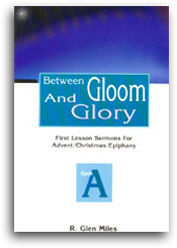
Between Gloom and Glory
First Lesson Sermons For Advent/Christmas/Epiphany
The text we have heard today is pleasant, maybe even reassuring. I wonder, though, how many of us will give it any significance once we leave the sanctuary? Do the words of Isaiah have any real meaning for us, or are they just far away thoughts from a time that no longer has any relevance for us today?
We Americans tend to be realists. We look at situations and attempt to understand what is happening and then, once the situation has been analyzed, determine our best course of action. In the prophecy we read today, Isaiah is proposing a whole new reality. The wolf will live with the lamb. The nursing child will play over the top of a snake's home and not be harmed. The leopard will lie down with the kid. Maybe even more amazing than these outrageous statements is the promise that the poor will be judged fairly. God will use righteousness and equity when dealing with them.
Really? Is this possible? Maybe animals that have been enemies for centuries could learn to live together (my cocker spaniel and my tabby cat figured out how to do that!), but the poor being judged fairly is an entirely different matter. This isn't reality. This isn't based on anything we have seen or witnessed before in our lifetimes, is it?
A preacher told a story about a woman he knew from the mountains of West Virginia. She had struggled all her life to get ahead but was always behind. She was only in her forties when he knew her but she looked 65 or older. He remembers one story that really described her life. There was to be a raffle at a local grocery store one summer. She bought a few of the one-dollar tickets in hopes of winning a certificate worth $150 of groceries. The day came for the drawing. She stood at the back of the crowd, hopeful. The groceries could be enough to get her and her family by for a couple of weeks. She might actually get ahead for a change. The numbers were read. In the front of the crowd, a woman jumped with joy. "It's me, it's me! I won!" The winner was dressed like a champion, too. Her tennis outfit was a designer brand. Her shoes, which were the latest style, easily cost her $125. In the back, the poor woman from the mountains uttered a well-worn truth, "Them that has, gets."1 Can you feel her bitterness?
Do we even dare to argue with her lifetime of experience?
Judge the poor with equity is the promise from Isaiah. Sure is nice to hear on a Sunday morning, but we all know that it is rarely true. Not in this world. Or is it?
Isaiah is not writing in a time of peaceful tranquility. He is not preaching in the midst of a secure and peaceful nation. It is a time of turmoil and despair. Families are being torn apart. Their world is being destroyed. Everything they have believed in and worshiped is being called into question. Their faith carries no validity. The promises of their leaders are empty words from empty heads. It is from this situation that Isaiah writes these words of unbelievable hope.
The hope is unbelievable because it comes in the face of what the people believed was an unchangeable reality. The reality of their situation is that life as they had known it is over. Their homes have been invaded. The Holy of Holies is a scrap heap of broken promises and failed dreams. The reality of their situation is death. Or, worse than that, a living hell. All hope should be lost.
As I said earlier, we tend to worship reality. Many of us want a Dragnet kind of faith. Some of you remember the television show Dragnet and its star, Sergeant Joe Friday. He wanted "nothing but the facts." He was the classic American. A self-made man. A man who lived in the real world. That is the kind of faith that many of us desire, a down-to-earth religion with no pie in the sky kind of illusions.
These words from Isaiah heard today could have been considered the facts of a new age, but in the reality of the day in which they were delivered the people could easily choose to ignore them. It would have been easy for them to think that Isaiah was crazy. Certainly he was paying attention to the realities of his world. Surely this prophecy was not a result of honest reflection concerning the political, social, and religious upheaval taking place, was it?
Could it be that he is looking at the future of God, and despite the disaster that surrounds him and his audience, he sees things from a different angle, the angle of vision that looks from the kingdom of heaven? Frederick Buechner wrote, "Even the saddest things can become, once we have made peace with them, a source of wisdom and strength for the journey that still lies ahead."2 Can that be true? Is it possible that the worst and most difficult moments and times in our lives can serve to become beacons on the road to hope? I wonder.
Gerald Sittser lost his daughter, wife, and mother in a car accident. He was driving their mini-van when a drunk driver lost control of his car and slammed into Sittser and his family. The pregnant wife of the drunk driver was also killed. Sittser and his other two children were seriously injured. In his book A Grace Disguised he tells the story of this horrific loss and the life he has lived since this terrible mishap. He wonders about the horror of the event and how he will survive. He shares with his readers the pain he felt at watching three generations die before him. He describes in the book the pain and the anguish he felt afterwards. When the drunk driver is found not guilty due to a lack of proof that he was the one behind the wheel, Sittser is enraged. The ridiculous verdict reminds him of the unfairness of it all. Neither he, nor his family, deserved this.
Yet, he wonders whether or not he deserved their lives either. He writes, "I am not sure I deserved to have them in the first place." He reflects on the wonderful gifts they had brought to him in their lives: the wife who loved him despite his weaknesses; the mother who cared and nurtured him even when he was a rebellious teen; the young daughter who had filled his life with joy and excitement. He reflects further and realizes that he did not deserve their loss, but he did not deserve their presence either. He writes, "On the face of it, living in a perfectly fair world appeals to me. But deeper reflection makes me wonder. In such a world I might never experience grace, especially the grace God gave me in the form of the three wonderful people whom I lost."3
I suspect that Sittser has read the prophet Isaiah, but even if he hasn't read these writings, he understands the hope from which Isaiah writes. In one of the most horrific situations imaginable Sittser discovers the disguised form of grace that comes most fully from God. He has discovered in the community of faith a new way of living, a new way of seeing. The pain is real, there is no denying its power, or its presence, but the grace that remains is a surprise that he could never imagine!
A hymn that we sing at this time of year begins, "O come, O come, Emmanuel, and ransom captive Israel, that mourns in lonely exile here." There it is again, the desperate, almost impossible, longing for God's presence. Those words describe the search for something holier than ourselves. It is a search that many make, even in the midst of lonely mourning and exile. Another woundrous hymn, "Joy To The World," reminds us of the fact that new hope comes from desperate situations: "No more let sins and sorrows grow, nor thorns infest the ground." How about "God Rest Ye Merry Gentlemen"? In this familiar old carol we can find references to "dismay, Satan's power, fear and Satan's might." In other words, if we listen closely to the music that is playing all around us, in the church, on our radios, our stereos and even in the malls, we will hear an echo of Isaiah's words. We will be presented with a picture of what it means to hope, even when all around us the world seems to be going to hell in a handbag.
The story of Christmas is the tale of God's love coming into an unjust world that is filled with fear, anger, violence, sin, and hate. It is the story of the impossible. It is a story written in blood as a reminder to all of us that God has not left us alone. It is a reminder that even in our loneliest, fear-filled moments, God does not abandon us.
Lovette Weems tells the story of a group of American Christians who travel to South America to work among the poor. When they arrive they are overwhelmed at the impoverished state of the country. Children are being buried everyday. There is hunger, political oppression, and poverty on every corner. The group is worn down emotionally by this new and depressing experience. One day, one of the local church leaders says to them, "You Americans, you only know how to help folk when you are winning ... We are hopeful not because we are winning. But we are hopeful because we are convinced that we are being faithful to what God is calling us to in this moment and because of that we have hope that when victory comes, it will be ours. It may come tomorrow. It may come in three hundred years. But when it comes, it will be ours."4
This hope will be ours, too, when we learn to look forward to the future of God. When we learn to look at our world and the people around us with the eyes of heaven, we will see among us the very people of God. We will see people who have faced the worst the world has to give and survived. We will see people who have faced the worst of themselves and lived to tell about that also.
The future of God is more than just a fairy tale of some impossible time when sworn enemies lie down together. It is also a time when all of us can turn and see for ourselves the surprising grace of God. To be sure, it may be hidden within the rubble of our lives or the torment of our pain, but it is there.
This new world of hope is very difficult to believe in. It is hard to imagine. It is difficult to put our faith in such a preposterous idea, a child leading the world to peace. God in human form come down to live among God's people. It makes no sense really. We want a practical faith. One that is built on reality, on hard driven facts. We want to put our faith in things that can be seen. We think that is what we want anyway. We believe we want a religion seated in the reality of the world. However, isn't it a fact that we have had those things? Haven't we already tried to find peace through powerful armies? Don't we still attempt to gain security through strong investments and secure financial portfolios? Haven't we sought to find satisfaction and new life through a whole library of self-help books and periodicals?
We have and the facts reveal that we are still far short of hope. We still have not found wholeness or security. Maybe the greatest gift we can give ourselves this season is the offering of a new hope. A hope based on the reality of those who follow this little child. Then, we just might discover, whether tomorrow or three hundred years from now, a world where "they will not hurt or destroy ... for the earth will be full of the knowledge of the Lord as the waters cover the sea."
____________
1. Attributed to Fred Craddock, source unknown.
2. Cited in A Grace Disguised: How the Soul Grows through Loss, Gerald L. Sittser (Grand Rapids, Michigan: Zondervan, 1996).
3. Ibid., p. 111-112.
4. Cited in Pulpit Resource, William Willimon, Vol. 23, No. 4, 1995, pp. 45-46.
We Americans tend to be realists. We look at situations and attempt to understand what is happening and then, once the situation has been analyzed, determine our best course of action. In the prophecy we read today, Isaiah is proposing a whole new reality. The wolf will live with the lamb. The nursing child will play over the top of a snake's home and not be harmed. The leopard will lie down with the kid. Maybe even more amazing than these outrageous statements is the promise that the poor will be judged fairly. God will use righteousness and equity when dealing with them.
Really? Is this possible? Maybe animals that have been enemies for centuries could learn to live together (my cocker spaniel and my tabby cat figured out how to do that!), but the poor being judged fairly is an entirely different matter. This isn't reality. This isn't based on anything we have seen or witnessed before in our lifetimes, is it?
A preacher told a story about a woman he knew from the mountains of West Virginia. She had struggled all her life to get ahead but was always behind. She was only in her forties when he knew her but she looked 65 or older. He remembers one story that really described her life. There was to be a raffle at a local grocery store one summer. She bought a few of the one-dollar tickets in hopes of winning a certificate worth $150 of groceries. The day came for the drawing. She stood at the back of the crowd, hopeful. The groceries could be enough to get her and her family by for a couple of weeks. She might actually get ahead for a change. The numbers were read. In the front of the crowd, a woman jumped with joy. "It's me, it's me! I won!" The winner was dressed like a champion, too. Her tennis outfit was a designer brand. Her shoes, which were the latest style, easily cost her $125. In the back, the poor woman from the mountains uttered a well-worn truth, "Them that has, gets."1 Can you feel her bitterness?
Do we even dare to argue with her lifetime of experience?
Judge the poor with equity is the promise from Isaiah. Sure is nice to hear on a Sunday morning, but we all know that it is rarely true. Not in this world. Or is it?
Isaiah is not writing in a time of peaceful tranquility. He is not preaching in the midst of a secure and peaceful nation. It is a time of turmoil and despair. Families are being torn apart. Their world is being destroyed. Everything they have believed in and worshiped is being called into question. Their faith carries no validity. The promises of their leaders are empty words from empty heads. It is from this situation that Isaiah writes these words of unbelievable hope.
The hope is unbelievable because it comes in the face of what the people believed was an unchangeable reality. The reality of their situation is that life as they had known it is over. Their homes have been invaded. The Holy of Holies is a scrap heap of broken promises and failed dreams. The reality of their situation is death. Or, worse than that, a living hell. All hope should be lost.
As I said earlier, we tend to worship reality. Many of us want a Dragnet kind of faith. Some of you remember the television show Dragnet and its star, Sergeant Joe Friday. He wanted "nothing but the facts." He was the classic American. A self-made man. A man who lived in the real world. That is the kind of faith that many of us desire, a down-to-earth religion with no pie in the sky kind of illusions.
These words from Isaiah heard today could have been considered the facts of a new age, but in the reality of the day in which they were delivered the people could easily choose to ignore them. It would have been easy for them to think that Isaiah was crazy. Certainly he was paying attention to the realities of his world. Surely this prophecy was not a result of honest reflection concerning the political, social, and religious upheaval taking place, was it?
Could it be that he is looking at the future of God, and despite the disaster that surrounds him and his audience, he sees things from a different angle, the angle of vision that looks from the kingdom of heaven? Frederick Buechner wrote, "Even the saddest things can become, once we have made peace with them, a source of wisdom and strength for the journey that still lies ahead."2 Can that be true? Is it possible that the worst and most difficult moments and times in our lives can serve to become beacons on the road to hope? I wonder.
Gerald Sittser lost his daughter, wife, and mother in a car accident. He was driving their mini-van when a drunk driver lost control of his car and slammed into Sittser and his family. The pregnant wife of the drunk driver was also killed. Sittser and his other two children were seriously injured. In his book A Grace Disguised he tells the story of this horrific loss and the life he has lived since this terrible mishap. He wonders about the horror of the event and how he will survive. He shares with his readers the pain he felt at watching three generations die before him. He describes in the book the pain and the anguish he felt afterwards. When the drunk driver is found not guilty due to a lack of proof that he was the one behind the wheel, Sittser is enraged. The ridiculous verdict reminds him of the unfairness of it all. Neither he, nor his family, deserved this.
Yet, he wonders whether or not he deserved their lives either. He writes, "I am not sure I deserved to have them in the first place." He reflects on the wonderful gifts they had brought to him in their lives: the wife who loved him despite his weaknesses; the mother who cared and nurtured him even when he was a rebellious teen; the young daughter who had filled his life with joy and excitement. He reflects further and realizes that he did not deserve their loss, but he did not deserve their presence either. He writes, "On the face of it, living in a perfectly fair world appeals to me. But deeper reflection makes me wonder. In such a world I might never experience grace, especially the grace God gave me in the form of the three wonderful people whom I lost."3
I suspect that Sittser has read the prophet Isaiah, but even if he hasn't read these writings, he understands the hope from which Isaiah writes. In one of the most horrific situations imaginable Sittser discovers the disguised form of grace that comes most fully from God. He has discovered in the community of faith a new way of living, a new way of seeing. The pain is real, there is no denying its power, or its presence, but the grace that remains is a surprise that he could never imagine!
A hymn that we sing at this time of year begins, "O come, O come, Emmanuel, and ransom captive Israel, that mourns in lonely exile here." There it is again, the desperate, almost impossible, longing for God's presence. Those words describe the search for something holier than ourselves. It is a search that many make, even in the midst of lonely mourning and exile. Another woundrous hymn, "Joy To The World," reminds us of the fact that new hope comes from desperate situations: "No more let sins and sorrows grow, nor thorns infest the ground." How about "God Rest Ye Merry Gentlemen"? In this familiar old carol we can find references to "dismay, Satan's power, fear and Satan's might." In other words, if we listen closely to the music that is playing all around us, in the church, on our radios, our stereos and even in the malls, we will hear an echo of Isaiah's words. We will be presented with a picture of what it means to hope, even when all around us the world seems to be going to hell in a handbag.
The story of Christmas is the tale of God's love coming into an unjust world that is filled with fear, anger, violence, sin, and hate. It is the story of the impossible. It is a story written in blood as a reminder to all of us that God has not left us alone. It is a reminder that even in our loneliest, fear-filled moments, God does not abandon us.
Lovette Weems tells the story of a group of American Christians who travel to South America to work among the poor. When they arrive they are overwhelmed at the impoverished state of the country. Children are being buried everyday. There is hunger, political oppression, and poverty on every corner. The group is worn down emotionally by this new and depressing experience. One day, one of the local church leaders says to them, "You Americans, you only know how to help folk when you are winning ... We are hopeful not because we are winning. But we are hopeful because we are convinced that we are being faithful to what God is calling us to in this moment and because of that we have hope that when victory comes, it will be ours. It may come tomorrow. It may come in three hundred years. But when it comes, it will be ours."4
This hope will be ours, too, when we learn to look forward to the future of God. When we learn to look at our world and the people around us with the eyes of heaven, we will see among us the very people of God. We will see people who have faced the worst the world has to give and survived. We will see people who have faced the worst of themselves and lived to tell about that also.
The future of God is more than just a fairy tale of some impossible time when sworn enemies lie down together. It is also a time when all of us can turn and see for ourselves the surprising grace of God. To be sure, it may be hidden within the rubble of our lives or the torment of our pain, but it is there.
This new world of hope is very difficult to believe in. It is hard to imagine. It is difficult to put our faith in such a preposterous idea, a child leading the world to peace. God in human form come down to live among God's people. It makes no sense really. We want a practical faith. One that is built on reality, on hard driven facts. We want to put our faith in things that can be seen. We think that is what we want anyway. We believe we want a religion seated in the reality of the world. However, isn't it a fact that we have had those things? Haven't we already tried to find peace through powerful armies? Don't we still attempt to gain security through strong investments and secure financial portfolios? Haven't we sought to find satisfaction and new life through a whole library of self-help books and periodicals?
We have and the facts reveal that we are still far short of hope. We still have not found wholeness or security. Maybe the greatest gift we can give ourselves this season is the offering of a new hope. A hope based on the reality of those who follow this little child. Then, we just might discover, whether tomorrow or three hundred years from now, a world where "they will not hurt or destroy ... for the earth will be full of the knowledge of the Lord as the waters cover the sea."
____________
1. Attributed to Fred Craddock, source unknown.
2. Cited in A Grace Disguised: How the Soul Grows through Loss, Gerald L. Sittser (Grand Rapids, Michigan: Zondervan, 1996).
3. Ibid., p. 111-112.
4. Cited in Pulpit Resource, William Willimon, Vol. 23, No. 4, 1995, pp. 45-46.
