
A Grave Reality
Sermon
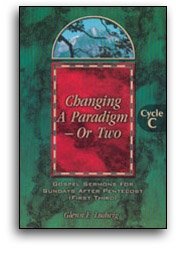
Changing A Paradigm -- Or Two
Gospel Sermons For Sundays After Pentecost (First Third) Cycle C
The widow of Nain, the Gospel story just read: Can you picture the scene?
"A man who had died was being carried out. He was his mother's only son, and she was a widow."
Can you picture it? Can you feel the pathos of her anguish, her hopelessness, her helplessness as she is left alone?
We know her, don't we? We've stood beside the various shapes and forms she has taken in her grief -- the widows and widowers, sons and daughters, mothers and fathers, grandsons and grandmothers. We have seen her, stood beside her, and in our own times, been her.
I have known her, from 26 years of standing on cold, hard cemetery ground. I have known her, seen her, stood beside her in all the forms and shapes she has taken. But none stands out today, amidst this story of Nain, like the widow of Nain I remember so well in a cemetery on a cold, bleak December day outside of Carlisle, Pennsylvania. There I witnessed the widow crumple to the ground, draping her arms around three caskets which held the men she loved. I heard her baleful cry: "My babies, my babies," amidst the howling wind as I tried to read the Psalm: "The Lord is my shepherd, I shall not want. He maketh me to lie down in green pastures ..." Only ... there were no green pastures in sight that day, only the dead of this earth in the dead of winter and a dying heart crying out in pain.
I remember it all so painfully clearly. It all began two days after Christmas, December 27, 1979. Twenty years ago. I was in my car on my way to get milk at a local store. The news was on the car radio and the announcer was talking about the tragic car accident that claimed the life of a father and his two small boys.
The newscaster cited the statistics: "These were York County's twenty-seventh, twenty-eighth, and twenty-ninth auto fatalities of the year."
I had missed the names and thought to myself -- how tragic this must be for the family and friends of this young man and his two boys. The joy of Christmas had the shadow of death cast upon it. The merriment of a season of peace and joy melted away by tears of grief and sorrow.
It wasn't until I got to my office that morning that I discovered that those statistics of a drunken driver who smashed into them head-on the night before were Carmen, and Jason and Nicholas, the husband and four- and two-year-old sons of Belinda Jean, known as BJ, a member of my parish.
They had been to visit Grandma for Christmas and were on their way back home in their little white Chevette, seat belts securely fastened, the boys in the back seat eating Christmas cookies from the two bags Grandma had prepared for them, chatting like friends instead of bickering like the two brothers and rivals for everyone's attention that they were.
BJ and Carmen were in the front seat sharing how much fun the vacation had been with BJ's parents. They were filled with the love of family known and times shared, of memories created and cherished, of the richness of good food consumed and the joy of watching grandparents watch grandsons open specially bought presents. BJ barely recalls seeing the headlights of the airborne car before it wiped out her family in one agonizing moment. She was hospitalized overnight with scrapes, bruises, and a broken wrist, but she was alive and suddenly the childless widow of Nain.
Carmen, Jason, and Nicholas were members of a Roman Catholic parish in Carlisle where they lived, but BJ had always remained a member of her childhood church, and I had gotten to know her over the years. The priest of the parish invited me to assist him in the funeral mass, and I accepted his gracious invitation.
It was cold on that day with a December wind that could cut you in half. The mass was long and yet somehow beautiful. BJ, weak from her own brush with death and weaker still from the agony of her loss, struggled bravely through the service. She kept looking at me with sad eyes that wanted answers. I looked back with sad eyes that wished they had them for her.
I visited BJ regularly in the weeks and months to follow. Bodily she healed very fast. We shared long, agonizing conversations about life's injustices and cruelties. This accident wasn't part of the script she had written for her life. What was she going to do? Why did this happen?
We never found answers to most of those questions.
In the biblical story of the widow of Nain, Jesus had compassion for the widow and brought her son back to life. "Do not weep," he told her. Then he touched the funeral bier, and said to the young man, "I say to you, rise!" The dead man sat up and began to speak, and Jesus gave him back to his mother.
BJ wanted to know where Jesus was this time. I sat like a deaf mute before such questions. You see, our stories of gravesides known and felt are blatant reminders of the shortness, the frailty, and the fickleness of this life.
As time wore on, the realities of life tugged BJ back into the world she didn't understand but needed to live in. On an impulse one day, I asked her if she would like to help with Vacation Bible School in June since she was still living with her parents as she decided her future. She thought about it for a moment and responded, surprisingly, "Yes."
We knew it wouldn't be easy for her. We talked about her feelings, her fears, the pain that came back when she even saw another child and was reminded of her own, but she knew she couldn't hide from the world forever.
I poked my head into the nursery on that first day. And I saw BJ sitting in a big old rocker we had in there, holding a little boy. There was a smile on her face and a tear trickling down her cheek as she taught them to sing, "Jesus loves me this I know." My heart sang with them and I recalled the anguished cry of a childless widow of Nain, "My babies, my babies," and I heard a new refrain coming from that broken but healing heart, "Jesus loves me this I know."1
Where was Jesus this time? Standing before the harsh reality of a grave, it is a question we often ask, is it not? The reality of the grave is a reality we all share. We will all die some day. We will all face the grave reality of our friends' and family's deaths. And perhaps, we too, will ask, "Where is Jesus this time?"
But there is more to tell this day. You see, if our bleak stories of birth, life, struggle, and death were the only story to be told, life would be a pitiful series of ups and downs, with little if any hope to be felt or clutched. But there is another story told -- a story that superimposes itself on top of ours, in a Word and water, and a sign of the cross on our heads.
Now, in the anguish of lost loved ones and hopelessness, now in the midst of our story's seeming end, we discover the Christ who stands beside an empty tomb on an Easter morning.
The reality of the grave and its pain is answered by God in the hope born when God's power broke the bonds of death with new life in Christ. Death is no longer the end of any story because Jesus Christ has come to change all of that. Life in Christ through baptism means life with him forever and ever and ever.
And, I would be bold to proclaim to you this day, it is only this hope that can give us the real strength to live our days. It is only this hope that can give us the courage to bury our dead.
"Where is Jesus this time?" as we stand beside the open graves of our loved ones in grief and sorrow, remembering the widow of Nain.
Where is Jesus? In the pain with us, for the cross was no joyful prize.
Where is Jesus? In the hope that life's living has to offer us in the midst of unanswered and unanswerable questions. BJ will never know why she lived while others died at the hands of a drunken driver. But she did discover something of why she had to keep going on -- "Jesus loves me this I know." BJ discovered that she had his love to share with other children of this world.
So do we, my friends in Christ, so do we. Amen.
____________
1. True personal story. Used with permission of the participants.
"A man who had died was being carried out. He was his mother's only son, and she was a widow."
Can you picture it? Can you feel the pathos of her anguish, her hopelessness, her helplessness as she is left alone?
We know her, don't we? We've stood beside the various shapes and forms she has taken in her grief -- the widows and widowers, sons and daughters, mothers and fathers, grandsons and grandmothers. We have seen her, stood beside her, and in our own times, been her.
I have known her, from 26 years of standing on cold, hard cemetery ground. I have known her, seen her, stood beside her in all the forms and shapes she has taken. But none stands out today, amidst this story of Nain, like the widow of Nain I remember so well in a cemetery on a cold, bleak December day outside of Carlisle, Pennsylvania. There I witnessed the widow crumple to the ground, draping her arms around three caskets which held the men she loved. I heard her baleful cry: "My babies, my babies," amidst the howling wind as I tried to read the Psalm: "The Lord is my shepherd, I shall not want. He maketh me to lie down in green pastures ..." Only ... there were no green pastures in sight that day, only the dead of this earth in the dead of winter and a dying heart crying out in pain.
I remember it all so painfully clearly. It all began two days after Christmas, December 27, 1979. Twenty years ago. I was in my car on my way to get milk at a local store. The news was on the car radio and the announcer was talking about the tragic car accident that claimed the life of a father and his two small boys.
The newscaster cited the statistics: "These were York County's twenty-seventh, twenty-eighth, and twenty-ninth auto fatalities of the year."
I had missed the names and thought to myself -- how tragic this must be for the family and friends of this young man and his two boys. The joy of Christmas had the shadow of death cast upon it. The merriment of a season of peace and joy melted away by tears of grief and sorrow.
It wasn't until I got to my office that morning that I discovered that those statistics of a drunken driver who smashed into them head-on the night before were Carmen, and Jason and Nicholas, the husband and four- and two-year-old sons of Belinda Jean, known as BJ, a member of my parish.
They had been to visit Grandma for Christmas and were on their way back home in their little white Chevette, seat belts securely fastened, the boys in the back seat eating Christmas cookies from the two bags Grandma had prepared for them, chatting like friends instead of bickering like the two brothers and rivals for everyone's attention that they were.
BJ and Carmen were in the front seat sharing how much fun the vacation had been with BJ's parents. They were filled with the love of family known and times shared, of memories created and cherished, of the richness of good food consumed and the joy of watching grandparents watch grandsons open specially bought presents. BJ barely recalls seeing the headlights of the airborne car before it wiped out her family in one agonizing moment. She was hospitalized overnight with scrapes, bruises, and a broken wrist, but she was alive and suddenly the childless widow of Nain.
Carmen, Jason, and Nicholas were members of a Roman Catholic parish in Carlisle where they lived, but BJ had always remained a member of her childhood church, and I had gotten to know her over the years. The priest of the parish invited me to assist him in the funeral mass, and I accepted his gracious invitation.
It was cold on that day with a December wind that could cut you in half. The mass was long and yet somehow beautiful. BJ, weak from her own brush with death and weaker still from the agony of her loss, struggled bravely through the service. She kept looking at me with sad eyes that wanted answers. I looked back with sad eyes that wished they had them for her.
I visited BJ regularly in the weeks and months to follow. Bodily she healed very fast. We shared long, agonizing conversations about life's injustices and cruelties. This accident wasn't part of the script she had written for her life. What was she going to do? Why did this happen?
We never found answers to most of those questions.
In the biblical story of the widow of Nain, Jesus had compassion for the widow and brought her son back to life. "Do not weep," he told her. Then he touched the funeral bier, and said to the young man, "I say to you, rise!" The dead man sat up and began to speak, and Jesus gave him back to his mother.
BJ wanted to know where Jesus was this time. I sat like a deaf mute before such questions. You see, our stories of gravesides known and felt are blatant reminders of the shortness, the frailty, and the fickleness of this life.
As time wore on, the realities of life tugged BJ back into the world she didn't understand but needed to live in. On an impulse one day, I asked her if she would like to help with Vacation Bible School in June since she was still living with her parents as she decided her future. She thought about it for a moment and responded, surprisingly, "Yes."
We knew it wouldn't be easy for her. We talked about her feelings, her fears, the pain that came back when she even saw another child and was reminded of her own, but she knew she couldn't hide from the world forever.
I poked my head into the nursery on that first day. And I saw BJ sitting in a big old rocker we had in there, holding a little boy. There was a smile on her face and a tear trickling down her cheek as she taught them to sing, "Jesus loves me this I know." My heart sang with them and I recalled the anguished cry of a childless widow of Nain, "My babies, my babies," and I heard a new refrain coming from that broken but healing heart, "Jesus loves me this I know."1
Where was Jesus this time? Standing before the harsh reality of a grave, it is a question we often ask, is it not? The reality of the grave is a reality we all share. We will all die some day. We will all face the grave reality of our friends' and family's deaths. And perhaps, we too, will ask, "Where is Jesus this time?"
But there is more to tell this day. You see, if our bleak stories of birth, life, struggle, and death were the only story to be told, life would be a pitiful series of ups and downs, with little if any hope to be felt or clutched. But there is another story told -- a story that superimposes itself on top of ours, in a Word and water, and a sign of the cross on our heads.
Now, in the anguish of lost loved ones and hopelessness, now in the midst of our story's seeming end, we discover the Christ who stands beside an empty tomb on an Easter morning.
The reality of the grave and its pain is answered by God in the hope born when God's power broke the bonds of death with new life in Christ. Death is no longer the end of any story because Jesus Christ has come to change all of that. Life in Christ through baptism means life with him forever and ever and ever.
And, I would be bold to proclaim to you this day, it is only this hope that can give us the real strength to live our days. It is only this hope that can give us the courage to bury our dead.
"Where is Jesus this time?" as we stand beside the open graves of our loved ones in grief and sorrow, remembering the widow of Nain.
Where is Jesus? In the pain with us, for the cross was no joyful prize.
Where is Jesus? In the hope that life's living has to offer us in the midst of unanswered and unanswerable questions. BJ will never know why she lived while others died at the hands of a drunken driver. But she did discover something of why she had to keep going on -- "Jesus loves me this I know." BJ discovered that she had his love to share with other children of this world.
So do we, my friends in Christ, so do we. Amen.
____________
1. True personal story. Used with permission of the participants.
