
Greed And Graciousness
Sermon
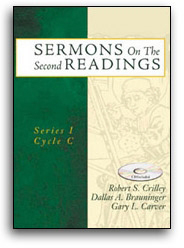
Sermons On The Second Readings
Series I, Cycle C
In July, 1975, the Nashville Banner ran an article about David Burroughs. David Burroughs was an art collector who just happened to stop by a garage sale. When he saw what he saw, he could not believe his eyes. There was an individual who was selling all of her possessions to join a commune. One of the possessions she was selling was a black and white lithograph that he purchased for $5. He thought that he knew what it was, but when he got home, he found his appraisal to be authentic. It was in fact an original Picasso. For $5 she sold a painting that was worth thousands and thousands of dollars for the cheap thrill, if you will, of joining a commune. She had something very valuable, but since she did not know its true value, she practically gave it or even squandered it away. She had it, but she just did not get it. She did not understand its true value.
Can this same dynamic be true of life as well? We can have this very precious gift from God called life, but failing to recognize its true value, we can piddle or squander it away. Some who have it just don't get it.
How do you measure the gift of life, anyway? How does one evaluate the value of life?
How many of you are pack rats? Never throw anything away! Never! Pack rats! In fact, I am firmly convinced there are three universal truths in the universe. Three constant facts. Number one is the existence of God. Number two is the existence of taxes and death. Those are really two things, but I list them as one -- one leads to the other! The third universal truth of which you can always be assured is this (now mark this down): If you ever throw anything away, you will need it in seven days! That is the universal truth. It will happen ... always!
Now I am a pack rat, and my parents are pack rats. A few weeks ago I was thankful for that. I was visiting my parents, and they had been cleaning out some old papers that they had "packed away." My father presented me with a canceled check dated April 28, 1946. That is the date on which their oldest son, and yours truly, was born. It is made out to F. W. McCorkle, who is the doctor who delivered me. That check is made out for $50. That was his fee for bringing me into the world. $50! There are many people who think my family has very solid grounds for a lawsuit of price gouging, especially in light of what they received. $50! That was what I was worth at the time. Hasn't changed a lot!
How do you measure the value of a life? Many measure today by the standard that you are what you own. He who has the most toys wins! Some even feel that what we have gained is a measure of our godliness, according to the "gospel of prosperity." The Bible even says that our pursuit of gain can interfere with our effort to be godly. "For the love of money is a root of all kinds of evil. Some people, eager for money, have wandered from the faith and pierced themselves with many griefs" (v. 10 NIV). Is Paul stating here that there are some who have it, but don't get it? Is he saying that there are some who possess life but do not understand its value?
Paul challenges Timothy to "take hold of life that is truly life" (v. 19). How does one take hold of life? How does one get it? Paul gives a three-part prescription to "get it." He gives Timothy something to be and something not to do, and he gives him something to do.
Paul exhorts Timothy to "be content." "But godliness with contentment is great gain" (v. 6 NIV). While some have it but don't get it, Paul seems just the opposite. He does not have it, but he sure has got it. He does not have it because he is in prison. Can one be any more powerless than to be in prison? But he seems to have it! He has contentment! He also writes to Philippi from prison: "I have learned to be content, whatever the circumstances" (4:11). From prison he urges Timothy to have a godliness with contentment. What is the context of this contentment?
Now, this is not a morbid resignation to fate whereby one passively accepts one's circumstances with no effort to better them. Paul continued to fight his way aggressively through the Roman court system with determination. This also is not a contentment that looks for an excuse for laziness. Some of the greatest writings in the New Testament, yes, even in all of literature came from Paul while he was imprisoned. He was busier than ever, thank you! This also is not a contentment that is a derivative of a masochistic tendency to feel sorry for oneself or to take pleasure in pain. Just the opposite! Paul's letter to the Philippians is called his "epistle of joy"! In chapter 2, he does not know if he will be released from prison or if he will soon die. It does not matter, he says. God will use whichever the result for the proclamation of the gospel and, in that, Paul is happy.
In chapter 4, he states, "For the love of money is a root of all kinds of evil. Some people, eager for money, have wandered from the faith and pierced themselves with many griefs. But you, man of God, flee from all this, and pursue righteousness, godliness, faith, love, endurance, and gentleness. Fight the good fight of the faith. Take hold of the eternal life to which you were called when you made your good confession in the presence of many witnesses. In the sight of God, who gives life to everything, and of Christ Jesus, who while testifying before Pontius Pilate made the good confession" (vv. 10-13). Here Paul reveals the depth of his joy by implying that his contentment is a gift of God's grace and can only be received with gratitude and joy.
In our text, Paul then moves on to tell what this God-given gift of contentment is! It is a "godliness with contentment." The word for godliness can mean "piety" or the characteristic of one's life whose ultimate quest is for God. Here is a life that is centered in and proceeds from God. Here is an existence that enjoys life to the fullest without that constant lust and craving for more and more. Here is a life lived in grace and gratitude and is not ruined by the quest for that which one does not have. This is not a life that has "pierced itself with many griefs" (v. 10).
I love Carlyle Marney's paraphrase of Psalm 37:4. "Delight yourself in the Lord and he will teach your heart what you can afford to want." As another has said, "God can fix your wanter."
Dr. Wayne Oates, one of my professors at Southern Seminary, told the story of an evening that he and his wife spent in the home of an elderly couple in rural Kentucky as he served as their pastor while still a student. After an early evening meal, the two couples sat and chatted for a few minutes and then the man rose to speak. "Brother Oates, are you okay?"
"Yes, sir, we are."
"Brother Oates, are you or the missus sick?"
"Well, no, sir, we are not!"
"Well, Brother Oates, since you and your wife are not sick, me and the missus find no reason to sit up with you. We are going to bed. Make yourself at home. If you see anything you want, help yourself to it. If there is anything that you want that you do not find, come upstairs and wake us up. Then the missus and I will come downstairs and teach you how to do without it!" That's contentment!
Again this God-given gift of contentment is not a life-denying, sour-faced, black-drab existence. It is just the opposite. Paul exhorts Timothy to "put his hope in God, who richly provides us with everything for our enjoyment" (v. 17b). It is the same sentiment stated in the Jewish Talmud, which says, "In the world to come, each of us will be called to account for all the good things God put on earth which we refused to enjoy!" This contentment is a vibrancy and zest for life so characterized by Jesus himself. Our Lord enjoyed people and parties to the fullest. He also knew the value of solitude and silence with God. Jesus embodied that beautiful balance of a life that spends time with God and gives one's time for God. It is a life centered upon God, that finds its ultimate quest in deepening its relationship to God. It is a life of integrity and serendipitous peace. It is a life that is surrounded by and survived by people who care. It is a life of contentment, a life available to all who follow him who said, "I am come that you have full and abundant life" (John 10:10).
Paul, then, gives Timothy and us something not to do if we wish to accept God's gift of contentment. "But you, man of God, flee from all this ..." referring to the previous verses (v. 11). It was John Barrymore who said, "There is only one way to find a woman -- with your hat! Grab it and run!" There are times when the only course is to run. Paul said that we should flee from, run away from, certain things.
We should flee from the "temptation and trap" that sees money as the end of everything. We should run away from the notion, popular in his day and ours, that you are what you own. We should avoid the arrogant attitude of some who are rich in the things of this world (v. 17). We should remind ourselves that by the world's standards most Americans are in the top five percent of the richest people on the planet. We must flee from the pride and arrogance that allows us to think we somehow deserve what we have or have some kind of right to happiness. We must never fall into the temptation and trap to feel that we are blessed because we are better. This sermon is not titled "Godliness And Gain"!
The apostle continues his instruction by emphasizing that we should not put our hope in wealth, which is so uncertain (v. 17). The drive to attain more and more only feeds our insecurity, which is the source of our discontent anyway. We think that money will fill every empty space in our lives, and there is not enough money in the world to do that. When we constantly desire more in an age of plenty, we are like the dog described in one of Aesop's fables.
A dog was given a fine meaty bone by a friendly neighbor. On his way home, with the bone firmly between his teeth, the animal had to cross a bridge over a narrow stream. When he reached the middle of the bridge, the dog paused to look into the water and saw his own reflection magnified. Thinking that the other dog had a larger bone, the animal decided to take it by force. He leaned over and snapped at his own reflection. As he did so, the bone between his teeth fell into the water and was lost. Money cannot fill the empty space in our lives that was created by and reserved for God.
Paul proceeds by prescribing some things we can do, some attributes of character that we should definitely run to or pursue. "But you, man of God, flee from all this, and pursue righteousness, godliness, faith, love, endurance, and gentleness. Fight the good fight of the faith. Take hold of the eternal life to which you were called when you made your good confession in the presence of many witnesses" (vv. 11-12 NIV). We should run toward righteousness. Since God already has put us right with him, we should do what is good and right because we are in proper standing with him. We should seek godliness, a life oriented to and by the things of God. We should exemplify faith with a trust in the sufficiency of God's resources. We should love unconditionally as an act of the will, or better yet, allow him to love through us. We should show endurance or a patience through the inevitable trials of life. We should be known by our gentleness and meekness, which is kind and humble not weak and timid. These kinds of pursuits will produce the desired result of contentment.
They also will result in good deeds and generosity. Forrest Carter wrote a wonderful book, The Education of Little Tree, in which he tells the following story. It is the story of a young Native American boy named Little Tree. When Little Tree is left an orphan, he is sent to live with his Cherokee grandparents in the Smoky Mountains. Soon the grandfather begins to teach Little Tree about the way of his people.
One day grandfather and grandson went hunting. The old man dug a hole in the ground and made a turkey trap. When they returned hours later, six turkeys were gobbling in the trap.
All six turkeys were removed from the trap and their legs securely bound. As they lay squawking and flapping on the ground, the grandfather told Little Tree that they only needed three turkeys. Then he went on to explain that they should choose the three smallest and least likely to survive and set the others free to reproduce and provide food for someone else. In this graphic way Little Tree learned that the way of his people is to be as concerned with giving to life as much as taking from life.1 It is a lesson we would do well to learn today.
These kinds of lessons in contentment will result in practical deeds of good for others. It is a way to give back out of the gratitude we have for the abundance we have been given.
Thus, we seek silence and solitude through prayer, knowing that we cannot feed our souls with the husks of this world. We read to a child. We work on a Habitat House. We go without a meal and give the money to feed the poor. We adopt a family for the holidays. We share our faith with someone. We bring someone to church. We give something away. We simplify our lives. We better filter the voices that influence how we spend our time and money.
So, maybe it is true. Possibly there are some who have it and don't get it. And there may be some who don't have it but do, in fact, get it! But let's proceed to pronounce that there are some who don't have it and still don't get it and certainly there are those who have it and do, in fact, get it. Paul is not preaching that wealth, in itself, is evil. In fact, he states in Romans 12:8 that the ability to earn money and use it for godly purposes is a gift of the Holy Spirit! Some of the most selfish people I have ever known had the least. Maybe that is why they had little. Also, some of the most generous people I have ever known were people of means. There is no inherent value in poverty or evil in wealth. I think that Paul is saying here that we must take whatever we have, whether little or much, and use it for godly purposes in an attitude of gratitude and trust.
If you will permit me the prerogative, I feel that I must disagree with Paul a bit when he states that "we brought nothing into this world and we will take nothing out." Now, agreed! There are no pockets in shrouds and I have never seen a U-Haul following a hearse! I think Augustine had special insight when he said, "Nothing could be lost on earth save what one would be ashamed to take into heaven."
I do believe that there are some things that we take into heaven. I do believe that there are some intangible things we take with us. I think that we take a good reputation with us. I think that we take the faith that we have placed in Christ and put into action. I think that we take with us everything that we do in Jesus' name and spirit. We do lay up for ourselves treasures in heaven.
So, maybe there is some truth to it. Some get it and some don't.
Jesus once saw a woman in the Temple who gave two pennies. No big deal! No headlines. They certainly did not add another gate to the Temple with her gift. But Jesus got so excited about it that he said that she was giving more than anyone! Why? Possibly because he perceived that she was doing the same thing he was. She was giving all that she had -- just like he did. Do you think she got it?
A man in Bainbridge, Georgia, was working in his yard when he heard screams from a home nearby. He raced across the yards to discover the screams coming from an eleven-year-old being terrorized by a crazed intruder with a shotgun. The neighbor started toward the boy to help, but the intruder turned and shot the man at close range in the legs and chest.
After months of painful recovery, the man learned to walk again. He speaks of the incident and says, "I will never forget the look on that boy's face when he finally knew that I was going to help him." He was asked if he would do it again, knowing the cost. He said, "Yes, I'd do it again. Our neighbor is the next person that we meet. No theories, no experts; just the next person we meet."2 Think he got it?
Bruce Larson tells about a friend down in Montgomery, Alabama. A few years ago he told Bruce an unforgettable story of a summer vacation he had planned for his wife and children. He was unable to go himself because of business, but he helped them plan every day of a camping trip in the family station wagon from Montgomery all the way to California, up and down the West Coast, and then back to Montgomery.
He knew their route exactly and the precise time they would be crossing the Great Divide. So, the friend arranged to fly himself out to the nearest airport and hire a car and a driver to take him to a place which every car must pass. He sat by the side of the road for several hours waiting for the sight of that familiar station wagon. When it came into view, he stepped out on the road and put his thumb out to hitchhike a ride with the family who assumed he was 3,000 miles away.
Bruce said to him, "Coleman, I'm surprised they didn't drive off the road in terror or drop dead of a heart attack. What an incredible story. Why did you go to all that trouble?"
"Well, Bruce," he said, "someday I'm going to be dead and when that happens I want my kids and my wife to say, 'You know, Dad sure was a lot of fun.' "3
Think he got it? How about you? Are you getting it?
____________
1. Forrest Carter, The Education of Little Tree (Albuquerque: University of New Mexico Press, 1976), pp. 6-10.
2. Preaching, July-August, 1992, Volume VIII, Number 1 (Jacksonville: Preaching Resources, 1992), p. 48.
3. Bruce Larson, The One and Only You (Waco: Word, 1974), p. 84.
Can this same dynamic be true of life as well? We can have this very precious gift from God called life, but failing to recognize its true value, we can piddle or squander it away. Some who have it just don't get it.
How do you measure the gift of life, anyway? How does one evaluate the value of life?
How many of you are pack rats? Never throw anything away! Never! Pack rats! In fact, I am firmly convinced there are three universal truths in the universe. Three constant facts. Number one is the existence of God. Number two is the existence of taxes and death. Those are really two things, but I list them as one -- one leads to the other! The third universal truth of which you can always be assured is this (now mark this down): If you ever throw anything away, you will need it in seven days! That is the universal truth. It will happen ... always!
Now I am a pack rat, and my parents are pack rats. A few weeks ago I was thankful for that. I was visiting my parents, and they had been cleaning out some old papers that they had "packed away." My father presented me with a canceled check dated April 28, 1946. That is the date on which their oldest son, and yours truly, was born. It is made out to F. W. McCorkle, who is the doctor who delivered me. That check is made out for $50. That was his fee for bringing me into the world. $50! There are many people who think my family has very solid grounds for a lawsuit of price gouging, especially in light of what they received. $50! That was what I was worth at the time. Hasn't changed a lot!
How do you measure the value of a life? Many measure today by the standard that you are what you own. He who has the most toys wins! Some even feel that what we have gained is a measure of our godliness, according to the "gospel of prosperity." The Bible even says that our pursuit of gain can interfere with our effort to be godly. "For the love of money is a root of all kinds of evil. Some people, eager for money, have wandered from the faith and pierced themselves with many griefs" (v. 10 NIV). Is Paul stating here that there are some who have it, but don't get it? Is he saying that there are some who possess life but do not understand its value?
Paul challenges Timothy to "take hold of life that is truly life" (v. 19). How does one take hold of life? How does one get it? Paul gives a three-part prescription to "get it." He gives Timothy something to be and something not to do, and he gives him something to do.
Paul exhorts Timothy to "be content." "But godliness with contentment is great gain" (v. 6 NIV). While some have it but don't get it, Paul seems just the opposite. He does not have it, but he sure has got it. He does not have it because he is in prison. Can one be any more powerless than to be in prison? But he seems to have it! He has contentment! He also writes to Philippi from prison: "I have learned to be content, whatever the circumstances" (4:11). From prison he urges Timothy to have a godliness with contentment. What is the context of this contentment?
Now, this is not a morbid resignation to fate whereby one passively accepts one's circumstances with no effort to better them. Paul continued to fight his way aggressively through the Roman court system with determination. This also is not a contentment that looks for an excuse for laziness. Some of the greatest writings in the New Testament, yes, even in all of literature came from Paul while he was imprisoned. He was busier than ever, thank you! This also is not a contentment that is a derivative of a masochistic tendency to feel sorry for oneself or to take pleasure in pain. Just the opposite! Paul's letter to the Philippians is called his "epistle of joy"! In chapter 2, he does not know if he will be released from prison or if he will soon die. It does not matter, he says. God will use whichever the result for the proclamation of the gospel and, in that, Paul is happy.
In chapter 4, he states, "For the love of money is a root of all kinds of evil. Some people, eager for money, have wandered from the faith and pierced themselves with many griefs. But you, man of God, flee from all this, and pursue righteousness, godliness, faith, love, endurance, and gentleness. Fight the good fight of the faith. Take hold of the eternal life to which you were called when you made your good confession in the presence of many witnesses. In the sight of God, who gives life to everything, and of Christ Jesus, who while testifying before Pontius Pilate made the good confession" (vv. 10-13). Here Paul reveals the depth of his joy by implying that his contentment is a gift of God's grace and can only be received with gratitude and joy.
In our text, Paul then moves on to tell what this God-given gift of contentment is! It is a "godliness with contentment." The word for godliness can mean "piety" or the characteristic of one's life whose ultimate quest is for God. Here is a life that is centered in and proceeds from God. Here is an existence that enjoys life to the fullest without that constant lust and craving for more and more. Here is a life lived in grace and gratitude and is not ruined by the quest for that which one does not have. This is not a life that has "pierced itself with many griefs" (v. 10).
I love Carlyle Marney's paraphrase of Psalm 37:4. "Delight yourself in the Lord and he will teach your heart what you can afford to want." As another has said, "God can fix your wanter."
Dr. Wayne Oates, one of my professors at Southern Seminary, told the story of an evening that he and his wife spent in the home of an elderly couple in rural Kentucky as he served as their pastor while still a student. After an early evening meal, the two couples sat and chatted for a few minutes and then the man rose to speak. "Brother Oates, are you okay?"
"Yes, sir, we are."
"Brother Oates, are you or the missus sick?"
"Well, no, sir, we are not!"
"Well, Brother Oates, since you and your wife are not sick, me and the missus find no reason to sit up with you. We are going to bed. Make yourself at home. If you see anything you want, help yourself to it. If there is anything that you want that you do not find, come upstairs and wake us up. Then the missus and I will come downstairs and teach you how to do without it!" That's contentment!
Again this God-given gift of contentment is not a life-denying, sour-faced, black-drab existence. It is just the opposite. Paul exhorts Timothy to "put his hope in God, who richly provides us with everything for our enjoyment" (v. 17b). It is the same sentiment stated in the Jewish Talmud, which says, "In the world to come, each of us will be called to account for all the good things God put on earth which we refused to enjoy!" This contentment is a vibrancy and zest for life so characterized by Jesus himself. Our Lord enjoyed people and parties to the fullest. He also knew the value of solitude and silence with God. Jesus embodied that beautiful balance of a life that spends time with God and gives one's time for God. It is a life centered upon God, that finds its ultimate quest in deepening its relationship to God. It is a life of integrity and serendipitous peace. It is a life that is surrounded by and survived by people who care. It is a life of contentment, a life available to all who follow him who said, "I am come that you have full and abundant life" (John 10:10).
Paul, then, gives Timothy and us something not to do if we wish to accept God's gift of contentment. "But you, man of God, flee from all this ..." referring to the previous verses (v. 11). It was John Barrymore who said, "There is only one way to find a woman -- with your hat! Grab it and run!" There are times when the only course is to run. Paul said that we should flee from, run away from, certain things.
We should flee from the "temptation and trap" that sees money as the end of everything. We should run away from the notion, popular in his day and ours, that you are what you own. We should avoid the arrogant attitude of some who are rich in the things of this world (v. 17). We should remind ourselves that by the world's standards most Americans are in the top five percent of the richest people on the planet. We must flee from the pride and arrogance that allows us to think we somehow deserve what we have or have some kind of right to happiness. We must never fall into the temptation and trap to feel that we are blessed because we are better. This sermon is not titled "Godliness And Gain"!
The apostle continues his instruction by emphasizing that we should not put our hope in wealth, which is so uncertain (v. 17). The drive to attain more and more only feeds our insecurity, which is the source of our discontent anyway. We think that money will fill every empty space in our lives, and there is not enough money in the world to do that. When we constantly desire more in an age of plenty, we are like the dog described in one of Aesop's fables.
A dog was given a fine meaty bone by a friendly neighbor. On his way home, with the bone firmly between his teeth, the animal had to cross a bridge over a narrow stream. When he reached the middle of the bridge, the dog paused to look into the water and saw his own reflection magnified. Thinking that the other dog had a larger bone, the animal decided to take it by force. He leaned over and snapped at his own reflection. As he did so, the bone between his teeth fell into the water and was lost. Money cannot fill the empty space in our lives that was created by and reserved for God.
Paul proceeds by prescribing some things we can do, some attributes of character that we should definitely run to or pursue. "But you, man of God, flee from all this, and pursue righteousness, godliness, faith, love, endurance, and gentleness. Fight the good fight of the faith. Take hold of the eternal life to which you were called when you made your good confession in the presence of many witnesses" (vv. 11-12 NIV). We should run toward righteousness. Since God already has put us right with him, we should do what is good and right because we are in proper standing with him. We should seek godliness, a life oriented to and by the things of God. We should exemplify faith with a trust in the sufficiency of God's resources. We should love unconditionally as an act of the will, or better yet, allow him to love through us. We should show endurance or a patience through the inevitable trials of life. We should be known by our gentleness and meekness, which is kind and humble not weak and timid. These kinds of pursuits will produce the desired result of contentment.
They also will result in good deeds and generosity. Forrest Carter wrote a wonderful book, The Education of Little Tree, in which he tells the following story. It is the story of a young Native American boy named Little Tree. When Little Tree is left an orphan, he is sent to live with his Cherokee grandparents in the Smoky Mountains. Soon the grandfather begins to teach Little Tree about the way of his people.
One day grandfather and grandson went hunting. The old man dug a hole in the ground and made a turkey trap. When they returned hours later, six turkeys were gobbling in the trap.
All six turkeys were removed from the trap and their legs securely bound. As they lay squawking and flapping on the ground, the grandfather told Little Tree that they only needed three turkeys. Then he went on to explain that they should choose the three smallest and least likely to survive and set the others free to reproduce and provide food for someone else. In this graphic way Little Tree learned that the way of his people is to be as concerned with giving to life as much as taking from life.1 It is a lesson we would do well to learn today.
These kinds of lessons in contentment will result in practical deeds of good for others. It is a way to give back out of the gratitude we have for the abundance we have been given.
Thus, we seek silence and solitude through prayer, knowing that we cannot feed our souls with the husks of this world. We read to a child. We work on a Habitat House. We go without a meal and give the money to feed the poor. We adopt a family for the holidays. We share our faith with someone. We bring someone to church. We give something away. We simplify our lives. We better filter the voices that influence how we spend our time and money.
So, maybe it is true. Possibly there are some who have it and don't get it. And there may be some who don't have it but do, in fact, get it! But let's proceed to pronounce that there are some who don't have it and still don't get it and certainly there are those who have it and do, in fact, get it. Paul is not preaching that wealth, in itself, is evil. In fact, he states in Romans 12:8 that the ability to earn money and use it for godly purposes is a gift of the Holy Spirit! Some of the most selfish people I have ever known had the least. Maybe that is why they had little. Also, some of the most generous people I have ever known were people of means. There is no inherent value in poverty or evil in wealth. I think that Paul is saying here that we must take whatever we have, whether little or much, and use it for godly purposes in an attitude of gratitude and trust.
If you will permit me the prerogative, I feel that I must disagree with Paul a bit when he states that "we brought nothing into this world and we will take nothing out." Now, agreed! There are no pockets in shrouds and I have never seen a U-Haul following a hearse! I think Augustine had special insight when he said, "Nothing could be lost on earth save what one would be ashamed to take into heaven."
I do believe that there are some things that we take into heaven. I do believe that there are some intangible things we take with us. I think that we take a good reputation with us. I think that we take the faith that we have placed in Christ and put into action. I think that we take with us everything that we do in Jesus' name and spirit. We do lay up for ourselves treasures in heaven.
So, maybe there is some truth to it. Some get it and some don't.
Jesus once saw a woman in the Temple who gave two pennies. No big deal! No headlines. They certainly did not add another gate to the Temple with her gift. But Jesus got so excited about it that he said that she was giving more than anyone! Why? Possibly because he perceived that she was doing the same thing he was. She was giving all that she had -- just like he did. Do you think she got it?
A man in Bainbridge, Georgia, was working in his yard when he heard screams from a home nearby. He raced across the yards to discover the screams coming from an eleven-year-old being terrorized by a crazed intruder with a shotgun. The neighbor started toward the boy to help, but the intruder turned and shot the man at close range in the legs and chest.
After months of painful recovery, the man learned to walk again. He speaks of the incident and says, "I will never forget the look on that boy's face when he finally knew that I was going to help him." He was asked if he would do it again, knowing the cost. He said, "Yes, I'd do it again. Our neighbor is the next person that we meet. No theories, no experts; just the next person we meet."2 Think he got it?
Bruce Larson tells about a friend down in Montgomery, Alabama. A few years ago he told Bruce an unforgettable story of a summer vacation he had planned for his wife and children. He was unable to go himself because of business, but he helped them plan every day of a camping trip in the family station wagon from Montgomery all the way to California, up and down the West Coast, and then back to Montgomery.
He knew their route exactly and the precise time they would be crossing the Great Divide. So, the friend arranged to fly himself out to the nearest airport and hire a car and a driver to take him to a place which every car must pass. He sat by the side of the road for several hours waiting for the sight of that familiar station wagon. When it came into view, he stepped out on the road and put his thumb out to hitchhike a ride with the family who assumed he was 3,000 miles away.
Bruce said to him, "Coleman, I'm surprised they didn't drive off the road in terror or drop dead of a heart attack. What an incredible story. Why did you go to all that trouble?"
"Well, Bruce," he said, "someday I'm going to be dead and when that happens I want my kids and my wife to say, 'You know, Dad sure was a lot of fun.' "3
Think he got it? How about you? Are you getting it?
____________
1. Forrest Carter, The Education of Little Tree (Albuquerque: University of New Mexico Press, 1976), pp. 6-10.
2. Preaching, July-August, 1992, Volume VIII, Number 1 (Jacksonville: Preaching Resources, 1992), p. 48.
3. Bruce Larson, The One and Only You (Waco: Word, 1974), p. 84.
