
Heads Will Roll
Stories
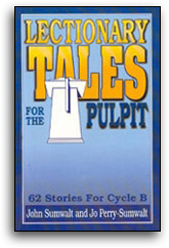
Lectionary Tales For The Pulpit
62 Stories For Cycle B
Both management and union leaders were angry with Amos Dresser. To management he was a whistleblower and to the union he was a snitch. Amos had committed the unpardonable sin of speaking the truth in a company where it was understood that certain production practices were never to be questioned or mentioned.
Amos broke the unspoken and unwritten rule. He asked questions of workers who became ill after coming into contact with illegal materials that were used in the manufacturing process. And when he discovered that the public was also endangered by the use of these contraband substances, Amos made a speech at a public meeting which was attended by members of the press. His charges about the company's use of illegal materials and the complicity of union leaders was front page news for several weeks. Amos appeared on three national talk shows and testified at a special legislative hearing at the state capitol. The company paid fines of several million dollars and the union president was defeated in the next election.
Still, the rank and file were generally displeased with Amos' public protestations. Some accused him of being a publicity seeker. Others said the company could have been held accountable without all the fuss of stories in the media. Amos reminded them that he was just a guy on the line who felt he had a duty to keep his co-workers and the public safe. "I want to do my job and be left alone," Amos said. But few believed him, and none of his co-workers called him friend.
When Amos' work was declared to be unacceptable in his next performance review, the supervisor insisted that the negative rating had nothing to do with Amos' public stand. And when Amos' section was down-sized and he was laid off without severance pay or pension benefits, no one spoke up to defend him. "That's what he gets for being a snitch," some of Amos' co-workers said behind his back. "That'll teach him to stick his neck out."
Amos broke the unspoken and unwritten rule. He asked questions of workers who became ill after coming into contact with illegal materials that were used in the manufacturing process. And when he discovered that the public was also endangered by the use of these contraband substances, Amos made a speech at a public meeting which was attended by members of the press. His charges about the company's use of illegal materials and the complicity of union leaders was front page news for several weeks. Amos appeared on three national talk shows and testified at a special legislative hearing at the state capitol. The company paid fines of several million dollars and the union president was defeated in the next election.
Still, the rank and file were generally displeased with Amos' public protestations. Some accused him of being a publicity seeker. Others said the company could have been held accountable without all the fuss of stories in the media. Amos reminded them that he was just a guy on the line who felt he had a duty to keep his co-workers and the public safe. "I want to do my job and be left alone," Amos said. But few believed him, and none of his co-workers called him friend.
When Amos' work was declared to be unacceptable in his next performance review, the supervisor insisted that the negative rating had nothing to do with Amos' public stand. And when Amos' section was down-sized and he was laid off without severance pay or pension benefits, no one spoke up to defend him. "That's what he gets for being a snitch," some of Amos' co-workers said behind his back. "That'll teach him to stick his neck out."
