
The Holy Trinity
Preaching
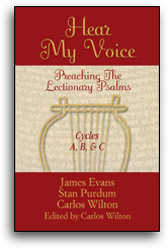
Hear My Voice
Preaching The Lectionary Psalms for Cycles A, B, C
(See Trinity Sunday, Cycle A, for an alternative approach.)
It's tough being a Christian. First, we are told that because of Adam and Eve, sin has entered the world. The power of sin affects all of us to the extent that Paul is forced to write, "All have sinned and fallen short of the glory of God" (Romans 3:23). As we look closely at the Adam and Eve narrative, we are surprised to discover that their sin was not some gratuitous act to indulge fleshy appetites; their sin was spiritual. They wanted to fully know "good and evil." This is an ancient Hebrew idiom meaning "everything." Adam and Eve wanted to know everything -- they wanted to know what God knew.
And so, because of their sin, we sin. Reflecting on this theological assertion, there have been many who have taken it to great extremes. Equating sin with the body, some of these have taken extraordinary steps to literally beat their flesh into submission. Self-inflicted wounds, starvation, prolonged exposure to harsh elements -- all these and more have been used by those who recognized they were sinners.
Even among those not so extreme in practice there remains a view of human nature that is less than appealing. Writing in the late nineteenth-century hymn "At The Cross," Isaac Watts ponders within the verses, "Would he devote that sacred head for such a worm as I?" And while the answer to the question is, "Yes" -- a tribute to God's grace -- the reality expressed in the hymn is that human beings are worms.
The author of Psalm 8 will have none of it. Without apology or restraint, the psalmist sings of the grandeur and power of God. He is aware, of course, of the wide distance that exists between the goodness of the creator and the fallen-ness of creation. He poses the question, "What are human beings that you are mindful of them, mortals that you care for them?"
The answer given is astounding: "Yet you have made them a little lower than God, and crowned them with glory and honor." Human beings are made just a little lower than God. The KJV translators found this idea completely untenable and translated the offending verse, "lower than angels."
But the psalmist's intent is clear. God loves us and has given us an honored place in the created order. We are co-creators with God, sharing in God's ability to conceive and manufacture. We share God's ability to reason and to love. We are, as it is expressed in the Latin, imago dei -- in the image of God.
This does not diminish the reality of sin. Nor does it reduce the effect of sin on our character. We can, by means of human evil, seriously distort God's image in us. What we cannot do, however, is so empty human life of value that God does not regard us or have hope for us. We are not worms. We are made in the image of God, only a little lower than God, and it is to that ideal that God calls us to live.
-- J. E.
It's tough being a Christian. First, we are told that because of Adam and Eve, sin has entered the world. The power of sin affects all of us to the extent that Paul is forced to write, "All have sinned and fallen short of the glory of God" (Romans 3:23). As we look closely at the Adam and Eve narrative, we are surprised to discover that their sin was not some gratuitous act to indulge fleshy appetites; their sin was spiritual. They wanted to fully know "good and evil." This is an ancient Hebrew idiom meaning "everything." Adam and Eve wanted to know everything -- they wanted to know what God knew.
And so, because of their sin, we sin. Reflecting on this theological assertion, there have been many who have taken it to great extremes. Equating sin with the body, some of these have taken extraordinary steps to literally beat their flesh into submission. Self-inflicted wounds, starvation, prolonged exposure to harsh elements -- all these and more have been used by those who recognized they were sinners.
Even among those not so extreme in practice there remains a view of human nature that is less than appealing. Writing in the late nineteenth-century hymn "At The Cross," Isaac Watts ponders within the verses, "Would he devote that sacred head for such a worm as I?" And while the answer to the question is, "Yes" -- a tribute to God's grace -- the reality expressed in the hymn is that human beings are worms.
The author of Psalm 8 will have none of it. Without apology or restraint, the psalmist sings of the grandeur and power of God. He is aware, of course, of the wide distance that exists between the goodness of the creator and the fallen-ness of creation. He poses the question, "What are human beings that you are mindful of them, mortals that you care for them?"
The answer given is astounding: "Yet you have made them a little lower than God, and crowned them with glory and honor." Human beings are made just a little lower than God. The KJV translators found this idea completely untenable and translated the offending verse, "lower than angels."
But the psalmist's intent is clear. God loves us and has given us an honored place in the created order. We are co-creators with God, sharing in God's ability to conceive and manufacture. We share God's ability to reason and to love. We are, as it is expressed in the Latin, imago dei -- in the image of God.
This does not diminish the reality of sin. Nor does it reduce the effect of sin on our character. We can, by means of human evil, seriously distort God's image in us. What we cannot do, however, is so empty human life of value that God does not regard us or have hope for us. We are not worms. We are made in the image of God, only a little lower than God, and it is to that ideal that God calls us to live.
-- J. E.
