
How To Become Joyful
Sermon
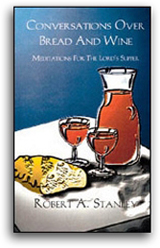
Conversations Over Bread And Wine
Meditations For The Lord's Supper
Reading the Bible is easy. What's tough is understanding it. And many who begin to discover that understanding may not come quickly soon stop reading it.
The truth is that there is no book in existence that is so widely owned and so seldom read as the Bible. And the chief reason most people don't read it much is because of the warped views and unrealistic ideas about the Bible they bring with them. Having heard all their lives that it is the Word of God, they come with the expectation that on every page is going to be some profound truth that veritably jumps out at them. And they are shocked to discover that one can read page after page and nothing of inspiration appears. They come expecting every part of it to be of equal value and are troubled when forced to admit that such is not the case. They come believing that because it is the Bible their souls are going to be fed, and the food will be delivered to them like a meal is served by a waitress. And they are not happy to learn that, not only is the food not handed to them on a platter, it is not even cooked. Or picked. Or maybe even planted yet. That is work they have to do before their souls can be fed. They come wanting everything in the Bible to be sweetness and light, and are disappointed to discover that some of it is a bitter pill that gets caught in the throat. They come, especially to the New Testament, believing that here they will find total clarity, truth laid out for them as a doting wife lays out matching shirt and socks for her husband. But what they find instead is that everything is still in the drawer and needs to be sorted out. And the tendency of many people, upon discovering that reading and understanding scripture requires effort, is to give up and put the Bible aside for another day.
But if I have learned anything through the years, the first lesson is that any effort we make in the study of the Bible is worth the struggle; and the second is that some of God's greatest truths are to be found in the most difficult and obscure places. Certainly there is meat for the soul in passages easily read, like Jesus' words: "Come to me all who labor and are heavy--laden and I will give you rest." But there are profound lessons to be learned from struggling with some of the shocking, hard--to--explain teachings of Jesus, like that strange story recorded in Matthew 22.
Its focus, you recall, is on a king who prepared a feast for his son's wedding, invited guests, and sent servants to summon those who had been invited. When the invited guests refused to come, the king had them put to death. Then he invited people off the street, strangers, anybody who would come, to be guests at the feast. Finally, when the hall was filled, the king himself arrived. Seeing a man who was not properly dressed for the occasion, he ordered his servants to bind the man hand and foot and cast him out.
That's the parable - strange, indeed! And baffling! But it takes us right to the heart of the Christian gospel, the Good News. It propels us there in the very first line where Jesus sets the parable in the context of a wedding feast. The Kingdom of God, he said, is like the joyful celebration of a wedding feast.
That simile appears over and over in the teachings of Jesus - the Kingdom of God as a wedding feast. And if not that, then the rule of God is like a joyous banquet that celebrates the return of a son from the far country. Or it is like the joy of a poor widow who, after desperate searching, finds a coin she lost and invites in friends to celebrate. Or again it is like the rejoicing of a shepherd who, leaving the flock to search for a stray sheep, finds it and brings it back safely to the fold. If there is one theme in Jesus' teaching that dominates all others, it is the message that life in the Kingdom of God is the most joyous, uplifting, energizing experience we humans can know. That teaching is reiterated again and again in the New Testament! When we live under the reign of God we are not asked to do what is contrary to our well--being, defies our basic nature, and precludes our happiness. Rather, the life in the Kingdom, obedience to Christ, leads to our highest fulfillment. It is what we humans were made for. And so going God's way is not drudgery; it is not a life of grim struggle and grudging resolution. It is, instead, a life of joy, peace, and happiness - like a feast!
That is the setting, you see, for what follows in the story. According to the parable, the guests who originally were invited to the wedding feast chose not to come. There were other things they preferred doing. And their choice, we are told, led to their destruction! Later, when the people who had been invited off the street arrived and filled the banquet hall, one man, according to the story, was not properly dressed for the occasion, and he was cast out.
It is the "destruction" part of the story and especially the "casting out" of the man improperly dressed that shocks us. Why, we wonder, would Jesus tell such a story? It sounds so terribly unfair! Reading it and imagining the scene in the context of our times, we assume that this guest must have come dressed in ordinary garb, something like jeans and a t--shirt. But what else could he do since he had just been called in from the street? There wasn't time to rent a tuxedo and probably he couldn't have afforded it anyway. To order the man thrown out seems like a heartless, unjust response from the king. And for Jesus to have told such a story seems insensitive.
But we misunderstood what was involved. According to the customs of first century Palestine, a wedding garment was not necessarily an inexpensive outfit. It could be everyday clothing. But when a person went to a wedding, he was expected to clean his clothes as much as possible and to decorate them with ribbons or flowers, anything festive, so that his dress itself would express something of the mood befitting the occasion.
And that is the whole point of the story. Here was a man who came to the wedding, but nothing about him suggested that he was there to celebrate. It wouldn't have taken much - just a ribbon or a flower, anything; but, in fact, he did nothing to mark himself as a celebrant. Did he forget what custom dictated? Had he come because he was afraid to say "no" to the king's invitation? Had something in his life put him in a dour mood? Whatever the reason, there was in him no spirit of celebration or joy. And that, according to Jesus, made him unacceptable, the point being that joylessness is always a travesty! In this world unjoyful obedience is equivalent to disobedience.
Let me repeat that so that it is fixed in your mind: Unjoyful obedience is equivalent to disobedience! And if anyone says, "That can't be true. It's much too harsh. It's too stringent! Surely it is enough that a person does what is asked, even if he does it kicking and screaming. God doesn't care about how we feel; it is what we do that counts!" then listen to these other words of Jesus. "Unless your righteousness exceeds that of the scribes and Pharisees, you will never enter the Kingdom of God" (Matthew 5:20). Too many people miss the impact of this statement of Jesus by imagining that the scribes and Pharisees were villainous hypocrites. The very words "scribes" and "Pharisees" are generally spoken with contempt, and we thank God that we are not like them.
But it isn't quite that simple. They were men of genuine piety and devotion, ardent in their loyalty to God and rigorous in personal discipline. They were men of prayer. They tithed, giving ten percent of everything they had. Religion for them was not just ritual observance. They were intensely sincere and earnest. Jesus' problem with them was not with what they were doing but with what motivated their actions, or perhaps, more accurately, with what did not motivate their actions. A sense of duty? They had that. Belief in the Law? There could be no question about their loyalty to the Law. Commitment to God? No one was more committed than the scribes and Pharisees. But joyful obedience, life lived in an outpouring of thankfulness for God's goodness and the celebration of God's love? There was none of that! And Jesus said that unless a person has it, we can never enter the Kingdom of God. The righteousness that exceeds that of the scribes and Pharisees, you see, is the righteousness that is motivated by gratitude, not duty, and by love, not obligation. Unless there is in us a grateful, joyful loyalty to God, we too miss the Kingdom.
I wonder, does that say anything about your faith walk and mine? Take worship, for example. Do we come to worship because we long to celebrate the goodness of God and rejoice in our Creator's kindness and mercy, or do we worship out of a sense of duty or because it is "the thing to do"? Or giving. Do we give because it is expected, because membership in the church obligates us to make a pledge? Or do we give because we know that God is the owner of all things and by our giving we can say thanks for all that has been entrusted to us? Or our service. Is it grudgingly given, or is it the joyful outpouring of the self, motivated by the understanding that we have been so richly blessed?
Joyful, grateful, celebrative obedience! That's what Jesus said God wants. But how does one give that? We can change our actions, but how do we change our motives? It is not possible by some act of the will to make oneself joyful. I can put on a happy face, but that is far different from a rejoicing spirit. If God asks me to give money to a poor beggar, I can do that. But if I am asked to have a deep affection for the beggar and to give joyfully, I am helpless to do that. No amount of effort on my part can make me enjoy what I do not really want to do. It would seem that we are trapped by a dilemma: what God wants may not be in our power to give.
But what we cannot do for ourselves, God can do for us. And this is how it happens. Our lives by nature are curved in on themselves. Basically we are selfish, self--centered individuals. But still we are loved and accepted by God. Loved and accepted - just as we are! There isn't anything we can do, and nothing we must do, to earn that love. God's forgiveness is offered freely. That is the meaning of divine grace! And as the truth of it begins to dawn upon our consciousness, bondage to the self starts to fall away and we are set free to love - because first we have been loved. Loved and accepted by God, we begin to experience a joy in doing God's will. And a life of commitment to Christ is no longer a duty to be performed, but an act of celebration and gratitude.
That is what genuine faith is all about. It is joyful, grateful obedience to God. And that, finally, is what God is seeking to bring about in the lives of all his people.
The truth is that there is no book in existence that is so widely owned and so seldom read as the Bible. And the chief reason most people don't read it much is because of the warped views and unrealistic ideas about the Bible they bring with them. Having heard all their lives that it is the Word of God, they come with the expectation that on every page is going to be some profound truth that veritably jumps out at them. And they are shocked to discover that one can read page after page and nothing of inspiration appears. They come expecting every part of it to be of equal value and are troubled when forced to admit that such is not the case. They come believing that because it is the Bible their souls are going to be fed, and the food will be delivered to them like a meal is served by a waitress. And they are not happy to learn that, not only is the food not handed to them on a platter, it is not even cooked. Or picked. Or maybe even planted yet. That is work they have to do before their souls can be fed. They come wanting everything in the Bible to be sweetness and light, and are disappointed to discover that some of it is a bitter pill that gets caught in the throat. They come, especially to the New Testament, believing that here they will find total clarity, truth laid out for them as a doting wife lays out matching shirt and socks for her husband. But what they find instead is that everything is still in the drawer and needs to be sorted out. And the tendency of many people, upon discovering that reading and understanding scripture requires effort, is to give up and put the Bible aside for another day.
But if I have learned anything through the years, the first lesson is that any effort we make in the study of the Bible is worth the struggle; and the second is that some of God's greatest truths are to be found in the most difficult and obscure places. Certainly there is meat for the soul in passages easily read, like Jesus' words: "Come to me all who labor and are heavy--laden and I will give you rest." But there are profound lessons to be learned from struggling with some of the shocking, hard--to--explain teachings of Jesus, like that strange story recorded in Matthew 22.
Its focus, you recall, is on a king who prepared a feast for his son's wedding, invited guests, and sent servants to summon those who had been invited. When the invited guests refused to come, the king had them put to death. Then he invited people off the street, strangers, anybody who would come, to be guests at the feast. Finally, when the hall was filled, the king himself arrived. Seeing a man who was not properly dressed for the occasion, he ordered his servants to bind the man hand and foot and cast him out.
That's the parable - strange, indeed! And baffling! But it takes us right to the heart of the Christian gospel, the Good News. It propels us there in the very first line where Jesus sets the parable in the context of a wedding feast. The Kingdom of God, he said, is like the joyful celebration of a wedding feast.
That simile appears over and over in the teachings of Jesus - the Kingdom of God as a wedding feast. And if not that, then the rule of God is like a joyous banquet that celebrates the return of a son from the far country. Or it is like the joy of a poor widow who, after desperate searching, finds a coin she lost and invites in friends to celebrate. Or again it is like the rejoicing of a shepherd who, leaving the flock to search for a stray sheep, finds it and brings it back safely to the fold. If there is one theme in Jesus' teaching that dominates all others, it is the message that life in the Kingdom of God is the most joyous, uplifting, energizing experience we humans can know. That teaching is reiterated again and again in the New Testament! When we live under the reign of God we are not asked to do what is contrary to our well--being, defies our basic nature, and precludes our happiness. Rather, the life in the Kingdom, obedience to Christ, leads to our highest fulfillment. It is what we humans were made for. And so going God's way is not drudgery; it is not a life of grim struggle and grudging resolution. It is, instead, a life of joy, peace, and happiness - like a feast!
That is the setting, you see, for what follows in the story. According to the parable, the guests who originally were invited to the wedding feast chose not to come. There were other things they preferred doing. And their choice, we are told, led to their destruction! Later, when the people who had been invited off the street arrived and filled the banquet hall, one man, according to the story, was not properly dressed for the occasion, and he was cast out.
It is the "destruction" part of the story and especially the "casting out" of the man improperly dressed that shocks us. Why, we wonder, would Jesus tell such a story? It sounds so terribly unfair! Reading it and imagining the scene in the context of our times, we assume that this guest must have come dressed in ordinary garb, something like jeans and a t--shirt. But what else could he do since he had just been called in from the street? There wasn't time to rent a tuxedo and probably he couldn't have afforded it anyway. To order the man thrown out seems like a heartless, unjust response from the king. And for Jesus to have told such a story seems insensitive.
But we misunderstood what was involved. According to the customs of first century Palestine, a wedding garment was not necessarily an inexpensive outfit. It could be everyday clothing. But when a person went to a wedding, he was expected to clean his clothes as much as possible and to decorate them with ribbons or flowers, anything festive, so that his dress itself would express something of the mood befitting the occasion.
And that is the whole point of the story. Here was a man who came to the wedding, but nothing about him suggested that he was there to celebrate. It wouldn't have taken much - just a ribbon or a flower, anything; but, in fact, he did nothing to mark himself as a celebrant. Did he forget what custom dictated? Had he come because he was afraid to say "no" to the king's invitation? Had something in his life put him in a dour mood? Whatever the reason, there was in him no spirit of celebration or joy. And that, according to Jesus, made him unacceptable, the point being that joylessness is always a travesty! In this world unjoyful obedience is equivalent to disobedience.
Let me repeat that so that it is fixed in your mind: Unjoyful obedience is equivalent to disobedience! And if anyone says, "That can't be true. It's much too harsh. It's too stringent! Surely it is enough that a person does what is asked, even if he does it kicking and screaming. God doesn't care about how we feel; it is what we do that counts!" then listen to these other words of Jesus. "Unless your righteousness exceeds that of the scribes and Pharisees, you will never enter the Kingdom of God" (Matthew 5:20). Too many people miss the impact of this statement of Jesus by imagining that the scribes and Pharisees were villainous hypocrites. The very words "scribes" and "Pharisees" are generally spoken with contempt, and we thank God that we are not like them.
But it isn't quite that simple. They were men of genuine piety and devotion, ardent in their loyalty to God and rigorous in personal discipline. They were men of prayer. They tithed, giving ten percent of everything they had. Religion for them was not just ritual observance. They were intensely sincere and earnest. Jesus' problem with them was not with what they were doing but with what motivated their actions, or perhaps, more accurately, with what did not motivate their actions. A sense of duty? They had that. Belief in the Law? There could be no question about their loyalty to the Law. Commitment to God? No one was more committed than the scribes and Pharisees. But joyful obedience, life lived in an outpouring of thankfulness for God's goodness and the celebration of God's love? There was none of that! And Jesus said that unless a person has it, we can never enter the Kingdom of God. The righteousness that exceeds that of the scribes and Pharisees, you see, is the righteousness that is motivated by gratitude, not duty, and by love, not obligation. Unless there is in us a grateful, joyful loyalty to God, we too miss the Kingdom.
I wonder, does that say anything about your faith walk and mine? Take worship, for example. Do we come to worship because we long to celebrate the goodness of God and rejoice in our Creator's kindness and mercy, or do we worship out of a sense of duty or because it is "the thing to do"? Or giving. Do we give because it is expected, because membership in the church obligates us to make a pledge? Or do we give because we know that God is the owner of all things and by our giving we can say thanks for all that has been entrusted to us? Or our service. Is it grudgingly given, or is it the joyful outpouring of the self, motivated by the understanding that we have been so richly blessed?
Joyful, grateful, celebrative obedience! That's what Jesus said God wants. But how does one give that? We can change our actions, but how do we change our motives? It is not possible by some act of the will to make oneself joyful. I can put on a happy face, but that is far different from a rejoicing spirit. If God asks me to give money to a poor beggar, I can do that. But if I am asked to have a deep affection for the beggar and to give joyfully, I am helpless to do that. No amount of effort on my part can make me enjoy what I do not really want to do. It would seem that we are trapped by a dilemma: what God wants may not be in our power to give.
But what we cannot do for ourselves, God can do for us. And this is how it happens. Our lives by nature are curved in on themselves. Basically we are selfish, self--centered individuals. But still we are loved and accepted by God. Loved and accepted - just as we are! There isn't anything we can do, and nothing we must do, to earn that love. God's forgiveness is offered freely. That is the meaning of divine grace! And as the truth of it begins to dawn upon our consciousness, bondage to the self starts to fall away and we are set free to love - because first we have been loved. Loved and accepted by God, we begin to experience a joy in doing God's will. And a life of commitment to Christ is no longer a duty to be performed, but an act of celebration and gratitude.
That is what genuine faith is all about. It is joyful, grateful obedience to God. And that, finally, is what God is seeking to bring about in the lives of all his people.
