
Injustice And The Demonic: Dealing With Unfairness And Getting Free From Bondage
Adult study
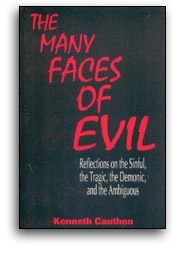
The Many Faces of Evil
Reflections On The Sinful, The Tragic, The Demonic, And The Ambiguous
"I don't care what the Bible says." He spoke in anger and exasperation. Still it was disturbing to hear a deacon in a Baptist church say these words. He, of course, did care. He was driven to this outburst by the frustration he felt. He had come to tell me that the deacons wanted to have a meeting. He refused to call it without inviting me. It seems that some of the brothers and sisters wanted to remove me from the pastorate of the church I had served for nearly two years. He chaired the Board of Deacons, and his integrity would not allow a gathering in my absence. With heavy heart he had come to tell me the purpose of the meeting and to invite me to be present. The uproar had come about because I had written some letters to the Atlanta newspapers and had preached a sermon that marked me as an integrationist. This was not a popular position in the prevailing climate in those days in rural Georgia. The surrounding issue was the 1954 decision of the Supreme Court outlawing segregation in the public schools.
When he advised me of the movement to have me ousted, a long and fruitless argument ensued. We quarrelled about the wisdom of what I had done in my letters and in the more recent sermon. The greater offense, according to him, was the letters. They advertised to the world what a deviant thinker occupied the pulpit in their town. It put the membership in a bad light, he said. I defended myself by an appeal to Scripture. "Show me on the basis of the Bible that I am wrong," I remonstrated, "and I will take it all back." I thought this would clinch the argument, or at least shift attention away from me to exegesis of the Book. Was I ever wrong! For it was then that this Baptist deacon startled me by saying, "I don't care what the Bible says; we are not going to permit our schools to be integrated!"
Before me stood a good man, a faithful Christian, admired and held in high esteem by everyone in that little town. He was the sort of person you would like to have as a neighbor. He would go out of his way to help you, regardless of your color. He was kind, considerate, friendly, and generous to a fault. He was old enough to be my father. I knew he loved me like a son. And I loved him. When it came to his attention that I had used a lot of gasoline doing my pastoral visitation to the sick in the community and in the Atlanta hospitals, he would quietly call me aside and invite me to stop by the station he ran for a free fill-up. Above all his integrity was beyond question. He was Chair of the deacons. He believed the Holy Word of God with all his heart. Yet here he was saying to the preacher who had angered him, "I don't care what the Bible says!"
This episode serves well as an introduction to two forms of social evil: injustice and the demonic. Segregation was an injustice because its effect was to deny to African-Americans the benefits to which they were entitled as human beings in the society to which they belonged and which their labors had helped to create. The commitment to segregation as a way of life also illustrated the power and the presence of the demonic. Both injustice and the demonic are evils that arise in the interconnectedness of individuals to each other in society and over the generations. With this introduction let me proceed to a more formal analysis.
INJUSTICE
Individuals are both relatively autonomous and deeply interdependent as they play out their social roles.1 Our actions are configured by the prevailing institutions in ways that feed into a systemic whole that may have consequences we neither intend nor can prevent or escape. My lawfully buying grapes may contribute to the support of a system oppressive to migrant workers thousands of miles away. On the other hand, we can in limited ways make choices that to some degree decrease the destructive effects of institutional patterns and contribute to reform. I may along with others boycott grapes to put pressure on producers and lobby for legislation to benefit the workers. Beyond that individuals can choose to refuse to cooperate with social institutions and practices and join reform or revolutionary groups to bring about systemic change. Nevertheless, some of our actions will always have unwanted and unintended evil consequences when channelled through social structures as we live out our lives as citizens and workers in our everyday roles. It is impossible to live a completely pure life that does no evil to anyone. As Reinhold Niebuhr pointed out, even Jesus could incarnate perfect love only by becoming powerless on the cross, symbolically and literally lifted above the ambiguities and complexities of interconnected life in society.2
Injustice refers to the deprivation of rights, privileges, and opportunities to which persons have a rightful claim as free and equal members of society. It is the denial of the personal and social goods to which we are entitled. Injustice is itself one form of suffering. It denies the enjoyment that comes from full participation in a community to which ideally we contribute according to our abilities and receive according to our just claims.3 Injustice is not the mere sum total of the actions of individuals acting wrongfully against their neighbors. It is also manifested in the institutions and patterns of social life. Racial, ethnic, and cultural minorities, along with women and the poor, are especially subject to deep-rooted, long-standing prejudices that pollute the social atmosphere and rob them as individuals and as groups of opportunities and benefits. Society is nearly always organized in ways that systemically help some and unfairly harm others, even when individuals act lawfully within the given structures. Even in democracies, the rich and powerful repeatedly manage to arrange things through money and influence so that the outcome of transactions within the social system preserves and promotes their interests. They are often aided and abetted by the moderately well off who believe (perhaps
rightly) they have more to gain in prestige, psychic identity, or economic advantages by becoming the allies of the elite than by identifying with the plight of the poor, the lower classes, and the outcasts. As long as they are doing well, those in the broad center cannot be easily enlisted massively on the side of the worst off, since the changes necessary to eradicate poverty and primary need fully would be costly to the middle class as well as to the wealthy. In matters relating to race, gender, ethnic identity, culture, religion, and nationality, people of all classes may unite against their counterparts.
The varieties and sources of injustice are too numerous to outline here. Oppression takes a multitude of forms peculiar to given societies. The worst expressions involve the coercive and cruel subjugation of certain groups and individuals to the interests and aims of others who have the power to impose their will with impunity. No one has analyzed the social evils of modern industrial societies and the conflicts among nation-states more profoundly than Reinhold Niebuhr. However, in his preoccupation with the complexities and ambiguities of collective evil, he neglected the positive moral force exerted on individuals by group standards (or gave the impression he did). Societies are generally more moral in the norms and values they seek to inculcate in their citizens than are some members of the group. It is in their relationship to other collectives that races, classes, and nations are often more immoral than many of the individuals who compose them. Many individuals and subgroups may live by ideals that are superior to generally accepted standards. Societies tend to punish those whose behavior is too far below its rules and approved practices (sinners and criminals) and those who live too high above them (prophets and saints) when they challenge the established order of things. Jesus is an example of the latter; the thieves crucified with him exemplify the former. It is in their relationship to each other that races, classes, religious groups, and nations may be more immoral than the average of the individuals who compose them.4
THE DEMONIC
The category of the demonic is complex. In the background is the myth of superhuman or non-human bad spirits who produce suffering and evil in human affairs but whose own fallenness is a product originally of their own choice. The New Testament is replete with references to demonic powers.5 In this essay the demonic refers to a structural power of evil originating in the past and operating effectively and systemically in human life and history in the present. The demonic is the destructive power of the past living on in the present as a configuration of harmful influence. As such it constitutes a pattern of forces that functions in individuals, in institutions, and in societies to produce evil that may be beyond the simple or immediate capacity of individual free choice to avoid or overcome. Yet since the evil arises from the contingencies of human freedom and not from natural necessities, the demonic can be overcome, at least in part, because of the capacity of creative self-transcendence in human beings.6
Let us return to the story of the deacon who disavowed the authority of Scripture if it meant that segregation - that unjust system - had to go. The author of Ephesians in the New Testament provides a point of entry. The writer uses the imagery of battle between opposing forces to interpret situations like this. Believers are to put on the whole armor of God in order to resist the wiles of the devil. Then comes the crucial insight.
For we are not contending against flesh and blood, but against the principalities, against the powers, against the world rulers of this present darkness, against the spiritual hosts of wickedness in the heavenly places (Ephesians 6:12 RSV).
For modern ears, the notion that bad spirits inhabit the heavens and do mischief on earth is strange. What can it mean for us?
I translate this reference to demonic powers into another idiom. The spiritual hosts of wickedness are destructive powers from the past living on to produce moral blindness or weakness that results in suffering and injustice. What we wrestle against is not bad invisible beings, not literal devils. Rather in this world we are enslaved by the continuing influence of those historical developments that create structural impediments to moral goodness. Segregation was a social arrangement that deprived African-Americans of freedom and equality. It was an instrument of racial domination. The many creators of this order over long periods of time invented an ideology to make it sound good, to give it moral status. The deacon was under demonic influence. He did not invent those evil ideas and practices but inherited them along with the accent in his speech. The demonic power lived on as he appropriated the past and embraced these unjust ideas and institutions as his own. He did so not knowing how evil the system was, even though the evidence was plain for all to see. He did so not knowing he was being deceived, not realizing that what he accepted as good was demonic. Not only was he infected, so were most white people in his time and place.
The injustice of slavery and segregation could not have survived as long as they did if they had been thought to be wrong. White church and white state and white society were all seduced by the lie that one race is better than another. In effect all conspired to promote the evil while calling it good. The power of these forces from the past was as real as literal devils. Moral blindness is a disease passed silently on from generation to generation. At last it afflicted the present generation. White Christians defended segregation under the illusion that they were innocent in doing so. So deeply enslaved were they by the evil powers that one of their number could say, "I don't care what the Bible says." That was the biggest lie of all.
The demonic enslaves people to perverse habits and excites and intensifies the potential for iniquity inherent in the human situation. Evil destructiveness originates in freedom united with destiny (given circumstances) and becomes a demonic power when it becomes embodied in personality structure and in social practices with tragic consequences. In these incarnate forms the demonic passes on from generation to generation. Those under its power may not be consciously aware that they are in bondage. The evil they suffer and the evil they do when demonically possessed is a tragic feature of their existence. The demonic as a structure cannot be willed away by a simple act of choice, although in individual cases it may be resisted. As a pattern of influence it must be exorcised through a process of liberation. It cannot be overcome by effortless, rational, moral decision making, since its victims are enslaved to the evil they do. Demonic possession may in a given situation be so effective as to weaken or even eliminate the capacity for the choice of good over evil. The demonic is worst of all when its expressions are called good, necessary, or even divinely sanctioned. Racism was and is a prime example of demonic forces at work in American history.
The evildoing that produces demonic structures arises in the past in the depths of the self preferentially oriented to its own good and excited by the imagined possibilities of self-aggrandizement in a context of anxious insecurity generated by the terrifying consciousness of finitude and mortality. Hence, contemplation of the future may fill us with dread. Anxiety is compounded by ignorance. Anxiety tempts the self toward egocentric actions to protect and fortify the self and thus to reduce existential dread, but freedom ratifies and exacerbates the urge.7 Original evil, then, is the product of finitude and freedom experienced as the fascinating enticement of inordinate self-love that leads to destructive consequences.
The forms of the demonic are many and diverse. It may be experienced by individuals as a compulsion or possession, an irresistible urge toward destructive actions known to be so and contrary to conscious intent. It may take the form of neurotic or criminal behavior springing from unknown unconscious forces rooted deeply in early childhood experiences. Parents who were abused as children may, despite their conscious intention, abuse their own. Individuals socialized into unjust social systems may in willing or invincible ignorance perpetuate them without ever being conscious of their demonic nature. Moreover, social systems may themselves be ambiguous, producing both creative and destructive results.
Seldom is evil deliberately done for its own sake but most often results from some idolatrous or overzealous or misguided pursuit of what is at least partly good. Circumstances shape but do not determine human decisions, although they may in some extreme cases. For example, slavery flourished in the South because of geographical and climatic conditions aided and abetted by the invention of the cotton gin - all of which combined to make cotton growing profitable and to generate support of slavery from nature (following Aristotle) and by divine sanction (following Scripture). Wherever the demonic manifests itself, it creates a bondage that produces evil in individual and communal life. Yet since it originates in freedom, it can be overcome through freedom, but only through liberating experiences of grace in which the destructive power of the past is recognized in the presence of alternatives whose promise of new life energizes choice and generates structural transformation.
The demonic is essential to the understanding of some of the worst evils that occur in individual and collective life. Susan Smith took her two young children down by a lakeside in South Carolina. She strapped them in their car seats and pushed the car into the water. Both were drowned. At first she peddled a wild tale about how an African-American man had abducted the children and drove away with them. Later, she confessed that she had done this evil thing to her own children. What twisted motives or perverted thoughts led her in a moment of desperation to think that killing these two little boys could in any way be a solution to her problems? What inner rage, frustrations, and hatreds born in her past experiences could have taken over her rational faculties and overwhelmed her moral sensibilities so completely that she could bring herself to commit this despicable deed?
We may never know all the relevant facts of her short life or what choices she made in response to her traumatic past that resulted in her own ruin and the destruction of two small children. The fact that her father committed suicide when Susan was six years old shortly after he and her mother had divorced undoubtedly is an important factor in shaping her character. She made an attempt to take her own life when she was thirteen and did so again five years later. It is reasonable to assume that she was possessed by some pernicious influences rooted in her own past that blinded her to the meaning of her murderous act and fascinated her irresistibly with the vile possibility that she proceeded to turn into fact when she killed her children. Yet we cannot rule out the extent to which this heinous crime was the personal creation of Susan Smith in that present moment rather than the consequence of demonic possession. We cannot always know for sure in particular instances the extent to which the demonic is at work or whether some awful sinful choice freshly originates evil out of the depths of a self-perverted human heart.
Susan Smith took deliberate action to kill her two young boys. In another state two little children died because of their mother's negligence and carelessness. Jennie Bain of McMinnville, Tennessee, was charged with leaving her young sons, the oldest not yet quite two years old, strapped in a hot car with the windows rolled up. Temperatures rose to at least 120 degrees, authorities said. The boys died from hyperthermia, overheating. She had entered a motel about 3:30 a.m. that morning to party with four males who had once been her coworkers in a factory. The little children, buckled in their car seats, remained in the car for ten hours. While she had checked on them periodically, apparently she fell asleep later on and left them unattended long enough for the heat of the day to kill them. Was this an act of pure negligence and carelessness on this occasion unrelated to her past life? Or had her own previous bad choices and a destructive life history created a pattern of irresponsible living that she had difficulty resisting? Was there a structural impediment in her character that operated as an evil, enslaving influence that played a part in her irresponsibility that day? We cannot know the extent to which past influences not of her own creation and habits born out of her own freedom combined to produce neglect that killed her children.
The identifying feature of the demonic that separates it from simple evil is that it is a persisting structural impediment in the personality or character structure of an individual or a systemic distortion of a social institution or practice. When it is present, the demonic factor constitutes an evil influence on those who come under its sway. Its vile allure may range from blinding people to the wrong they unintentionally do to being an irresistible impulse that impels people under a spell of fascination to do deliberately what otherwise would be unthinkable. Generations of white southerners accepted segregation and white supremacy doctrines as right, proper, and decent, never questioning what they were taught from infancy onward. They were oblivious to the evils of the system and the lies told in its support, although the evidence was plain to the liberated eye. Pedophiles and serial killers perform their evil work as the expression of a systematically distorted personality structure that overwhelms clear moral insight and normal inhibitions against doing violence to the innocent. In all cases the capacity to know and to do good and to avoid evil is hampered. The demonic tends to create a habit of evildoing in an individual or to weave a pattern of destructive values and practices into the culture that perniciously influences every new generation. Homophobia born of ignorance, cultural conditioning, and vague anxieties related to the alleged weirdness, unnatural character, and viscerally felt taboo associated with same-sex love must surely qualify as an example of demonic evil. Objective rational inquiry will not sustain the hatreds shown toward those who represent the sexually different - the threatening other who must be feared, repressed, and even destroyed.
The evils perpetrated during the Nazi era in Germany defy understanding unless we have recourse to the explanatory power of the demonic. Out of the chaos following World War I in Germany was born a movement led by Adolf Hitler that was destined to fill the world with blood, hate, and violence. The German leader was able to mobilize the frustrations, prejudices, felt injustices, and legitimate aspirations widespread among the masses into a powerful program promising liberation and national glory but that led to giant agonies and massive ruin. At the heart of the Nazi campaign were fatal distortions of truth and a fanatical glorification of blood and soil that produced disaster.
The Holocaust that destroyed six million Jews is only the most vivid symbol of the atrocities and horrors flowing from the ethnic and national idolatry that aroused hatred toward all who did not fit the Aryan standard of race and culture. A devilish power of monstrous proportions was unleashed in which truth, justice, and decency were systemically perverted in a creed that seduced millions of people into believing in the nobility of the Nazi cause. A leading philosopher of religion in this country indicated his belief that Germany would not resort to a Hitler or long tolerate a dictatorship because of the high educational standards that prevailed there!8 How easy it is to underestimate the power of the demonic in wreaking havoc on earth among those who presumably might be least susceptible to its wiles.
Daniel Day Williams tells about a young woman engaged to a German storm trooper who reports the excitement she felt in the early days of National Socialism. At a youth rally on the Rhine in the spring she is caught up in the delirium of the crowd and her own sense of commitment. She says, "A desire began to burgeon within me, to be permitted to help, like these women and girls in the great work of our leader, Adolf Hitler." She was trancelike in expectation of the evening assembly. There was the campfire, the songs, the prayers, the fervent speech by Hermann Goering. "The rustle of the Rhine sounds like a prayer for redemption from foreign despotism." Goering stood in the circle around the fire. She held a torch over his shoulder lighting up his face for the crowd to see. "Who could have been happier than I?"9
The demonic fascinates, excites, blinds, charms, possesses, entices to action, and generates fanatical passion. In the Nazi cause all was done in the interest of a perceived good that was in fact cunning evil in disguise. Nothing but an inner structural perversion of ideas, symbols, and values can account for the Hitler years. Demonic power was incarnate in great historical forces enslaving the minds and hearts of masses of people caught up in a situation that threatened doom but promised redemption if the moment were seized. Freedom and destiny, choice and circumstance, personal decision and historical fate unite in the creation and spread of demonic infection within individual lives and throughout a whole culture over time.
On November 4, 1995, Yigal Amir shot and killed Yitzhak Rabin. A longtime soldier, the Prime Minister of Israel was leaving a rally in Tel Aviv where he had been singing songs of peace. The 25-year-old law student said that he murdered Mr. Rabin in obedience to Jewish religious law. God, he claimed, inspired him to kill the leader of Israel who was negotiating a peace settlement with the Arabs. Because in the process he was promising to give up land that was believed to have been given them by God long ago, the Prime Minister had in the eyes of some Jewish extremists become a traitor who deserved death. All the elements that produce the demonic were here. A complicated past filled with conflict and hate had poisoned the present with virulent attitudes. In this atmosphere a young man, inheriting and reproducing malice arising out of a tragic history he did not create, could claim divine guidance in committing murder. He assassinated a person who had said, "Enough of blood and tears!" Yigal Amir murdered a leader who had dedicated himself to achieving reconciliation with ancient enemies against whom he himself had led armies into war. On the lawn of the White House in Washington, D.C., as television cameras beamed pictures around the world, Yitzhak Rabin had shaken the hand of Yasser Arafat, the leader of the Palestinian Liberation Organization, as they made a mutual pledge to end the violence between Jews and Arabs. For this and other acts of peacemaking, the demonic did its monstrous work through Yigal Amir to produce a killing that caused the world to mourn for a lost peacemaker and Noa Ben Artzi to weep bitter tears as she said a sad farewell to her beloved grandfather.
Was a tangled web of demonic powers involved in the outrage at Oklahoma City? Soon after this event we heard of extremist paramilitary groups full of hatred against the government who train with guns for a battle sure to come. They are suffused with paranoia about mostly imagined threats on the basis of bizarre interpretations of events current and past. In particular, the fiery end to the Branch Davidian compound in Waco, Texas, involving federal authorities confirms in their eyes their preposterous outlook. In this devilish stew are doubtless combined other ingredients to create a fanaticism beyond the reach of reason to persuade otherwise.10 The alleged perpetrators of the bombing at Oklahoma City appear to be of this ilk but too radical even for the organized militia groups themselves. Much is still unknown, but we can almost predict that the guilty parties were poisoned somewhere along the way by lies and distortions that evoked their own consent. Surely they were blinded by seductive influences not entirely of their own making that spring ultimately from perverted choices that led to a dreadful sickness of mind and spirit.
In so far as grotesque choices were made in the past by themselves or others that set in motion or contributed to a structured sequence of destructive events, the tragic destiny they now live out is demonic in character. For it would certainly appear that their own rationality and wills became enslaved to evil chimeras that made them immune to normal inhibitions against violence of such proportions. Did past influences originating in sinful actions enter into the formation of a depraved personality structure capable of breeding rancorous, baleful violence? What was their family life like particularly in the early years? What was their life like at home, at school, at work? Were they unloved, abused, hated, neglected, persecuted, made to feel they were trash? Has the past given them reason to fear enemies who would destroy them? Is their hate some form of self-protection from a painful history and the dread of destruction from some imagined foe? Only an intimate and detailed knowledge of the lives of these doomed souls could give particulars to these speculative questions.11 It is not unreasonable, however, to suspect the presence of the demonic at work in the horror of the Oklahoma City bombing.
Risk is always involved in identifying the demonic. For what suggests satanic seduction to one may symbolize angelic inspiration to another. Often it is only looking back from a liberated future that the power of the demonic can be seen clearly. Witness the belated recognition of Gov. George Wallace of Alabama that he had been wrong about segregation. Let us give him the benefit of the doubt and consider his repentance genuine, notwithstanding the fact that it became politically expedient for him to seek black votes. The Southern Baptist Convention in its 1995 meeting in Atlanta confessed to the sin of racism in its complicity with slavery and segregation. Consider the former Defense Secretary Robert McNamara as he writes three decades later that the Vietnam War was "wrong, terribly wrong." Was it mere ignorance and bad judgment on the part of "the brightest and the best" (David Halberstam) of American leaders that led to the Vietnam debacle, or was wisdom systemically perverted by inherited myths about Communism, the asinine excesses of the continuing cold war, and the overweening expressions of nationalistic pride? Most German people today acknowledge in sorrow the evils of the Nazi period. Courage is required to take the risk of identifying and opposing the demonic in the light of the best we know up to now.
The demonic and the tragic are often interwoven with each other. What is demonic in the malefactors means tragedy for them and tragedy for the victims as well. The demonic originates in choice or involves an element of choice among the factors that generate and sustain its destructive power. The tragic refers to suffering its victims cannot avoid or redeem. To this we now turn.
1. Some material in this section is taken from my Theological Biology (Lewiston: Edwin Mellen Press, 1991), 260-262, with some revisions and additions.
2. See Reinhold Niebuhr, The Nature and Destiny of Man, (New York: Charles Scribner's Sons, 1949), 11:35-97.
3. See my Process Ethics: A Constructive System (Lewiston: The Edwin Mellen Press, 1984), and The Passion for Equality (Totowa, NJ: Rowman & Littlefield, 1987), for extensive discussions of the meaning of justice.
4. This is to say that the relationship between the morality of individuals and of groups is more complex than appeared in Niebuhr's early work Moral Man and immoral Society (New York: Charles Scribner's Sons, 1932). See also, The Nature and Destiny of Man and Faith and History (New York: Charles Scribner's Sons, 1949), as well as most any of his other numerous works on economic, social, and political forms of injustice.
5. See, for example, Mk. 5:1-18, 9:17-29; Rom. 8:38-39; 1 Cor. 2:2-8, 15:24-28; 2 Cor. 5:17; Eph. 1:3--2:10, 6:10-20; Phil. 2:9-11; Col. 1:13-20, 2:8-20; 2 Thess. 2:3-12; Heb. 2:10-18; 1 Pet. 5:8-10; Rev. 20-21.
6. See my Theological Biology, 173-174. I have been influenced by Tillich's understanding of the demonic as "a 'structure of evil' beyond the moral power of good will, producing social and individual tragedy precisely through the inseparable mixture of good and evil in every human act." The Protestant Era (Chicago: University of Chicago Press, 1948), xx-xxi. See also "The Demonic" in The interpretation of History (New York: Charles Scribner's Sons, 1936), and Daniel Day Williams, The Demonic and the Divine (Minneapolis: Fortress Press, 1990). Finally, see the notion of "superpersonal powers of evil" in Walter Rauschenbusch, A Theology for the Social Gospel (New York: The Macmillan Co., 1917), chapters VIII and IX.
7. My understanding of the human situation is indebted most to Reinhold Niebuhr, The Nature and Destiny of Man, 1:150-300. Niebuhr here sets forth his views regarding the origin of sin (original sin). In my view, the demonic is closely related to sin, but refers specifically to the incarnation of sinful acts in the past into structural forms that are transmitted from generation to generation in behavioral patterns of individuals and in social institutions and practices.
8. Eugene W. Lyman, The Meaning and Truth of Religion (New York: Charles Scribner's Sons, 1933), 443-444.
9. Williams, The Demonic and the Divine, 7.
10. See Garry Wills, "The New Revolutionaries," The New York Review of Books (August 10, 1995), 50-55.
11. We know some of the details of the troubled lives and traumas of Timothy McVeigh and Terry Nichols, both allegedly involved in the bombing. Both men, e.g., experienced a parental divorce and a disturbed family and work history in the midst of declining economic opportunity for blue-collar workers. See Dale Russakoff and Serge F. Kovaleski, "Two Angry Men," The Washington Post National Weekly Edition (July 24-30, 1995), 6-11. I assert no causal connection here. Thousands of other young men have had similar life histories but would never commit such a horrendous act. The crucial and defining moments in the deep recesses of the inner spirit of these two people in response to the external events of their lives are closed to our view.
When he advised me of the movement to have me ousted, a long and fruitless argument ensued. We quarrelled about the wisdom of what I had done in my letters and in the more recent sermon. The greater offense, according to him, was the letters. They advertised to the world what a deviant thinker occupied the pulpit in their town. It put the membership in a bad light, he said. I defended myself by an appeal to Scripture. "Show me on the basis of the Bible that I am wrong," I remonstrated, "and I will take it all back." I thought this would clinch the argument, or at least shift attention away from me to exegesis of the Book. Was I ever wrong! For it was then that this Baptist deacon startled me by saying, "I don't care what the Bible says; we are not going to permit our schools to be integrated!"
Before me stood a good man, a faithful Christian, admired and held in high esteem by everyone in that little town. He was the sort of person you would like to have as a neighbor. He would go out of his way to help you, regardless of your color. He was kind, considerate, friendly, and generous to a fault. He was old enough to be my father. I knew he loved me like a son. And I loved him. When it came to his attention that I had used a lot of gasoline doing my pastoral visitation to the sick in the community and in the Atlanta hospitals, he would quietly call me aside and invite me to stop by the station he ran for a free fill-up. Above all his integrity was beyond question. He was Chair of the deacons. He believed the Holy Word of God with all his heart. Yet here he was saying to the preacher who had angered him, "I don't care what the Bible says!"
This episode serves well as an introduction to two forms of social evil: injustice and the demonic. Segregation was an injustice because its effect was to deny to African-Americans the benefits to which they were entitled as human beings in the society to which they belonged and which their labors had helped to create. The commitment to segregation as a way of life also illustrated the power and the presence of the demonic. Both injustice and the demonic are evils that arise in the interconnectedness of individuals to each other in society and over the generations. With this introduction let me proceed to a more formal analysis.
INJUSTICE
Individuals are both relatively autonomous and deeply interdependent as they play out their social roles.1 Our actions are configured by the prevailing institutions in ways that feed into a systemic whole that may have consequences we neither intend nor can prevent or escape. My lawfully buying grapes may contribute to the support of a system oppressive to migrant workers thousands of miles away. On the other hand, we can in limited ways make choices that to some degree decrease the destructive effects of institutional patterns and contribute to reform. I may along with others boycott grapes to put pressure on producers and lobby for legislation to benefit the workers. Beyond that individuals can choose to refuse to cooperate with social institutions and practices and join reform or revolutionary groups to bring about systemic change. Nevertheless, some of our actions will always have unwanted and unintended evil consequences when channelled through social structures as we live out our lives as citizens and workers in our everyday roles. It is impossible to live a completely pure life that does no evil to anyone. As Reinhold Niebuhr pointed out, even Jesus could incarnate perfect love only by becoming powerless on the cross, symbolically and literally lifted above the ambiguities and complexities of interconnected life in society.2
Injustice refers to the deprivation of rights, privileges, and opportunities to which persons have a rightful claim as free and equal members of society. It is the denial of the personal and social goods to which we are entitled. Injustice is itself one form of suffering. It denies the enjoyment that comes from full participation in a community to which ideally we contribute according to our abilities and receive according to our just claims.3 Injustice is not the mere sum total of the actions of individuals acting wrongfully against their neighbors. It is also manifested in the institutions and patterns of social life. Racial, ethnic, and cultural minorities, along with women and the poor, are especially subject to deep-rooted, long-standing prejudices that pollute the social atmosphere and rob them as individuals and as groups of opportunities and benefits. Society is nearly always organized in ways that systemically help some and unfairly harm others, even when individuals act lawfully within the given structures. Even in democracies, the rich and powerful repeatedly manage to arrange things through money and influence so that the outcome of transactions within the social system preserves and promotes their interests. They are often aided and abetted by the moderately well off who believe (perhaps
rightly) they have more to gain in prestige, psychic identity, or economic advantages by becoming the allies of the elite than by identifying with the plight of the poor, the lower classes, and the outcasts. As long as they are doing well, those in the broad center cannot be easily enlisted massively on the side of the worst off, since the changes necessary to eradicate poverty and primary need fully would be costly to the middle class as well as to the wealthy. In matters relating to race, gender, ethnic identity, culture, religion, and nationality, people of all classes may unite against their counterparts.
The varieties and sources of injustice are too numerous to outline here. Oppression takes a multitude of forms peculiar to given societies. The worst expressions involve the coercive and cruel subjugation of certain groups and individuals to the interests and aims of others who have the power to impose their will with impunity. No one has analyzed the social evils of modern industrial societies and the conflicts among nation-states more profoundly than Reinhold Niebuhr. However, in his preoccupation with the complexities and ambiguities of collective evil, he neglected the positive moral force exerted on individuals by group standards (or gave the impression he did). Societies are generally more moral in the norms and values they seek to inculcate in their citizens than are some members of the group. It is in their relationship to other collectives that races, classes, and nations are often more immoral than many of the individuals who compose them. Many individuals and subgroups may live by ideals that are superior to generally accepted standards. Societies tend to punish those whose behavior is too far below its rules and approved practices (sinners and criminals) and those who live too high above them (prophets and saints) when they challenge the established order of things. Jesus is an example of the latter; the thieves crucified with him exemplify the former. It is in their relationship to each other that races, classes, religious groups, and nations may be more immoral than the average of the individuals who compose them.4
THE DEMONIC
The category of the demonic is complex. In the background is the myth of superhuman or non-human bad spirits who produce suffering and evil in human affairs but whose own fallenness is a product originally of their own choice. The New Testament is replete with references to demonic powers.5 In this essay the demonic refers to a structural power of evil originating in the past and operating effectively and systemically in human life and history in the present. The demonic is the destructive power of the past living on in the present as a configuration of harmful influence. As such it constitutes a pattern of forces that functions in individuals, in institutions, and in societies to produce evil that may be beyond the simple or immediate capacity of individual free choice to avoid or overcome. Yet since the evil arises from the contingencies of human freedom and not from natural necessities, the demonic can be overcome, at least in part, because of the capacity of creative self-transcendence in human beings.6
Let us return to the story of the deacon who disavowed the authority of Scripture if it meant that segregation - that unjust system - had to go. The author of Ephesians in the New Testament provides a point of entry. The writer uses the imagery of battle between opposing forces to interpret situations like this. Believers are to put on the whole armor of God in order to resist the wiles of the devil. Then comes the crucial insight.
For we are not contending against flesh and blood, but against the principalities, against the powers, against the world rulers of this present darkness, against the spiritual hosts of wickedness in the heavenly places (Ephesians 6:12 RSV).
For modern ears, the notion that bad spirits inhabit the heavens and do mischief on earth is strange. What can it mean for us?
I translate this reference to demonic powers into another idiom. The spiritual hosts of wickedness are destructive powers from the past living on to produce moral blindness or weakness that results in suffering and injustice. What we wrestle against is not bad invisible beings, not literal devils. Rather in this world we are enslaved by the continuing influence of those historical developments that create structural impediments to moral goodness. Segregation was a social arrangement that deprived African-Americans of freedom and equality. It was an instrument of racial domination. The many creators of this order over long periods of time invented an ideology to make it sound good, to give it moral status. The deacon was under demonic influence. He did not invent those evil ideas and practices but inherited them along with the accent in his speech. The demonic power lived on as he appropriated the past and embraced these unjust ideas and institutions as his own. He did so not knowing how evil the system was, even though the evidence was plain for all to see. He did so not knowing he was being deceived, not realizing that what he accepted as good was demonic. Not only was he infected, so were most white people in his time and place.
The injustice of slavery and segregation could not have survived as long as they did if they had been thought to be wrong. White church and white state and white society were all seduced by the lie that one race is better than another. In effect all conspired to promote the evil while calling it good. The power of these forces from the past was as real as literal devils. Moral blindness is a disease passed silently on from generation to generation. At last it afflicted the present generation. White Christians defended segregation under the illusion that they were innocent in doing so. So deeply enslaved were they by the evil powers that one of their number could say, "I don't care what the Bible says." That was the biggest lie of all.
The demonic enslaves people to perverse habits and excites and intensifies the potential for iniquity inherent in the human situation. Evil destructiveness originates in freedom united with destiny (given circumstances) and becomes a demonic power when it becomes embodied in personality structure and in social practices with tragic consequences. In these incarnate forms the demonic passes on from generation to generation. Those under its power may not be consciously aware that they are in bondage. The evil they suffer and the evil they do when demonically possessed is a tragic feature of their existence. The demonic as a structure cannot be willed away by a simple act of choice, although in individual cases it may be resisted. As a pattern of influence it must be exorcised through a process of liberation. It cannot be overcome by effortless, rational, moral decision making, since its victims are enslaved to the evil they do. Demonic possession may in a given situation be so effective as to weaken or even eliminate the capacity for the choice of good over evil. The demonic is worst of all when its expressions are called good, necessary, or even divinely sanctioned. Racism was and is a prime example of demonic forces at work in American history.
The evildoing that produces demonic structures arises in the past in the depths of the self preferentially oriented to its own good and excited by the imagined possibilities of self-aggrandizement in a context of anxious insecurity generated by the terrifying consciousness of finitude and mortality. Hence, contemplation of the future may fill us with dread. Anxiety is compounded by ignorance. Anxiety tempts the self toward egocentric actions to protect and fortify the self and thus to reduce existential dread, but freedom ratifies and exacerbates the urge.7 Original evil, then, is the product of finitude and freedom experienced as the fascinating enticement of inordinate self-love that leads to destructive consequences.
The forms of the demonic are many and diverse. It may be experienced by individuals as a compulsion or possession, an irresistible urge toward destructive actions known to be so and contrary to conscious intent. It may take the form of neurotic or criminal behavior springing from unknown unconscious forces rooted deeply in early childhood experiences. Parents who were abused as children may, despite their conscious intention, abuse their own. Individuals socialized into unjust social systems may in willing or invincible ignorance perpetuate them without ever being conscious of their demonic nature. Moreover, social systems may themselves be ambiguous, producing both creative and destructive results.
Seldom is evil deliberately done for its own sake but most often results from some idolatrous or overzealous or misguided pursuit of what is at least partly good. Circumstances shape but do not determine human decisions, although they may in some extreme cases. For example, slavery flourished in the South because of geographical and climatic conditions aided and abetted by the invention of the cotton gin - all of which combined to make cotton growing profitable and to generate support of slavery from nature (following Aristotle) and by divine sanction (following Scripture). Wherever the demonic manifests itself, it creates a bondage that produces evil in individual and communal life. Yet since it originates in freedom, it can be overcome through freedom, but only through liberating experiences of grace in which the destructive power of the past is recognized in the presence of alternatives whose promise of new life energizes choice and generates structural transformation.
The demonic is essential to the understanding of some of the worst evils that occur in individual and collective life. Susan Smith took her two young children down by a lakeside in South Carolina. She strapped them in their car seats and pushed the car into the water. Both were drowned. At first she peddled a wild tale about how an African-American man had abducted the children and drove away with them. Later, she confessed that she had done this evil thing to her own children. What twisted motives or perverted thoughts led her in a moment of desperation to think that killing these two little boys could in any way be a solution to her problems? What inner rage, frustrations, and hatreds born in her past experiences could have taken over her rational faculties and overwhelmed her moral sensibilities so completely that she could bring herself to commit this despicable deed?
We may never know all the relevant facts of her short life or what choices she made in response to her traumatic past that resulted in her own ruin and the destruction of two small children. The fact that her father committed suicide when Susan was six years old shortly after he and her mother had divorced undoubtedly is an important factor in shaping her character. She made an attempt to take her own life when she was thirteen and did so again five years later. It is reasonable to assume that she was possessed by some pernicious influences rooted in her own past that blinded her to the meaning of her murderous act and fascinated her irresistibly with the vile possibility that she proceeded to turn into fact when she killed her children. Yet we cannot rule out the extent to which this heinous crime was the personal creation of Susan Smith in that present moment rather than the consequence of demonic possession. We cannot always know for sure in particular instances the extent to which the demonic is at work or whether some awful sinful choice freshly originates evil out of the depths of a self-perverted human heart.
Susan Smith took deliberate action to kill her two young boys. In another state two little children died because of their mother's negligence and carelessness. Jennie Bain of McMinnville, Tennessee, was charged with leaving her young sons, the oldest not yet quite two years old, strapped in a hot car with the windows rolled up. Temperatures rose to at least 120 degrees, authorities said. The boys died from hyperthermia, overheating. She had entered a motel about 3:30 a.m. that morning to party with four males who had once been her coworkers in a factory. The little children, buckled in their car seats, remained in the car for ten hours. While she had checked on them periodically, apparently she fell asleep later on and left them unattended long enough for the heat of the day to kill them. Was this an act of pure negligence and carelessness on this occasion unrelated to her past life? Or had her own previous bad choices and a destructive life history created a pattern of irresponsible living that she had difficulty resisting? Was there a structural impediment in her character that operated as an evil, enslaving influence that played a part in her irresponsibility that day? We cannot know the extent to which past influences not of her own creation and habits born out of her own freedom combined to produce neglect that killed her children.
The identifying feature of the demonic that separates it from simple evil is that it is a persisting structural impediment in the personality or character structure of an individual or a systemic distortion of a social institution or practice. When it is present, the demonic factor constitutes an evil influence on those who come under its sway. Its vile allure may range from blinding people to the wrong they unintentionally do to being an irresistible impulse that impels people under a spell of fascination to do deliberately what otherwise would be unthinkable. Generations of white southerners accepted segregation and white supremacy doctrines as right, proper, and decent, never questioning what they were taught from infancy onward. They were oblivious to the evils of the system and the lies told in its support, although the evidence was plain to the liberated eye. Pedophiles and serial killers perform their evil work as the expression of a systematically distorted personality structure that overwhelms clear moral insight and normal inhibitions against doing violence to the innocent. In all cases the capacity to know and to do good and to avoid evil is hampered. The demonic tends to create a habit of evildoing in an individual or to weave a pattern of destructive values and practices into the culture that perniciously influences every new generation. Homophobia born of ignorance, cultural conditioning, and vague anxieties related to the alleged weirdness, unnatural character, and viscerally felt taboo associated with same-sex love must surely qualify as an example of demonic evil. Objective rational inquiry will not sustain the hatreds shown toward those who represent the sexually different - the threatening other who must be feared, repressed, and even destroyed.
The evils perpetrated during the Nazi era in Germany defy understanding unless we have recourse to the explanatory power of the demonic. Out of the chaos following World War I in Germany was born a movement led by Adolf Hitler that was destined to fill the world with blood, hate, and violence. The German leader was able to mobilize the frustrations, prejudices, felt injustices, and legitimate aspirations widespread among the masses into a powerful program promising liberation and national glory but that led to giant agonies and massive ruin. At the heart of the Nazi campaign were fatal distortions of truth and a fanatical glorification of blood and soil that produced disaster.
The Holocaust that destroyed six million Jews is only the most vivid symbol of the atrocities and horrors flowing from the ethnic and national idolatry that aroused hatred toward all who did not fit the Aryan standard of race and culture. A devilish power of monstrous proportions was unleashed in which truth, justice, and decency were systemically perverted in a creed that seduced millions of people into believing in the nobility of the Nazi cause. A leading philosopher of religion in this country indicated his belief that Germany would not resort to a Hitler or long tolerate a dictatorship because of the high educational standards that prevailed there!8 How easy it is to underestimate the power of the demonic in wreaking havoc on earth among those who presumably might be least susceptible to its wiles.
Daniel Day Williams tells about a young woman engaged to a German storm trooper who reports the excitement she felt in the early days of National Socialism. At a youth rally on the Rhine in the spring she is caught up in the delirium of the crowd and her own sense of commitment. She says, "A desire began to burgeon within me, to be permitted to help, like these women and girls in the great work of our leader, Adolf Hitler." She was trancelike in expectation of the evening assembly. There was the campfire, the songs, the prayers, the fervent speech by Hermann Goering. "The rustle of the Rhine sounds like a prayer for redemption from foreign despotism." Goering stood in the circle around the fire. She held a torch over his shoulder lighting up his face for the crowd to see. "Who could have been happier than I?"9
The demonic fascinates, excites, blinds, charms, possesses, entices to action, and generates fanatical passion. In the Nazi cause all was done in the interest of a perceived good that was in fact cunning evil in disguise. Nothing but an inner structural perversion of ideas, symbols, and values can account for the Hitler years. Demonic power was incarnate in great historical forces enslaving the minds and hearts of masses of people caught up in a situation that threatened doom but promised redemption if the moment were seized. Freedom and destiny, choice and circumstance, personal decision and historical fate unite in the creation and spread of demonic infection within individual lives and throughout a whole culture over time.
On November 4, 1995, Yigal Amir shot and killed Yitzhak Rabin. A longtime soldier, the Prime Minister of Israel was leaving a rally in Tel Aviv where he had been singing songs of peace. The 25-year-old law student said that he murdered Mr. Rabin in obedience to Jewish religious law. God, he claimed, inspired him to kill the leader of Israel who was negotiating a peace settlement with the Arabs. Because in the process he was promising to give up land that was believed to have been given them by God long ago, the Prime Minister had in the eyes of some Jewish extremists become a traitor who deserved death. All the elements that produce the demonic were here. A complicated past filled with conflict and hate had poisoned the present with virulent attitudes. In this atmosphere a young man, inheriting and reproducing malice arising out of a tragic history he did not create, could claim divine guidance in committing murder. He assassinated a person who had said, "Enough of blood and tears!" Yigal Amir murdered a leader who had dedicated himself to achieving reconciliation with ancient enemies against whom he himself had led armies into war. On the lawn of the White House in Washington, D.C., as television cameras beamed pictures around the world, Yitzhak Rabin had shaken the hand of Yasser Arafat, the leader of the Palestinian Liberation Organization, as they made a mutual pledge to end the violence between Jews and Arabs. For this and other acts of peacemaking, the demonic did its monstrous work through Yigal Amir to produce a killing that caused the world to mourn for a lost peacemaker and Noa Ben Artzi to weep bitter tears as she said a sad farewell to her beloved grandfather.
Was a tangled web of demonic powers involved in the outrage at Oklahoma City? Soon after this event we heard of extremist paramilitary groups full of hatred against the government who train with guns for a battle sure to come. They are suffused with paranoia about mostly imagined threats on the basis of bizarre interpretations of events current and past. In particular, the fiery end to the Branch Davidian compound in Waco, Texas, involving federal authorities confirms in their eyes their preposterous outlook. In this devilish stew are doubtless combined other ingredients to create a fanaticism beyond the reach of reason to persuade otherwise.10 The alleged perpetrators of the bombing at Oklahoma City appear to be of this ilk but too radical even for the organized militia groups themselves. Much is still unknown, but we can almost predict that the guilty parties were poisoned somewhere along the way by lies and distortions that evoked their own consent. Surely they were blinded by seductive influences not entirely of their own making that spring ultimately from perverted choices that led to a dreadful sickness of mind and spirit.
In so far as grotesque choices were made in the past by themselves or others that set in motion or contributed to a structured sequence of destructive events, the tragic destiny they now live out is demonic in character. For it would certainly appear that their own rationality and wills became enslaved to evil chimeras that made them immune to normal inhibitions against violence of such proportions. Did past influences originating in sinful actions enter into the formation of a depraved personality structure capable of breeding rancorous, baleful violence? What was their family life like particularly in the early years? What was their life like at home, at school, at work? Were they unloved, abused, hated, neglected, persecuted, made to feel they were trash? Has the past given them reason to fear enemies who would destroy them? Is their hate some form of self-protection from a painful history and the dread of destruction from some imagined foe? Only an intimate and detailed knowledge of the lives of these doomed souls could give particulars to these speculative questions.11 It is not unreasonable, however, to suspect the presence of the demonic at work in the horror of the Oklahoma City bombing.
Risk is always involved in identifying the demonic. For what suggests satanic seduction to one may symbolize angelic inspiration to another. Often it is only looking back from a liberated future that the power of the demonic can be seen clearly. Witness the belated recognition of Gov. George Wallace of Alabama that he had been wrong about segregation. Let us give him the benefit of the doubt and consider his repentance genuine, notwithstanding the fact that it became politically expedient for him to seek black votes. The Southern Baptist Convention in its 1995 meeting in Atlanta confessed to the sin of racism in its complicity with slavery and segregation. Consider the former Defense Secretary Robert McNamara as he writes three decades later that the Vietnam War was "wrong, terribly wrong." Was it mere ignorance and bad judgment on the part of "the brightest and the best" (David Halberstam) of American leaders that led to the Vietnam debacle, or was wisdom systemically perverted by inherited myths about Communism, the asinine excesses of the continuing cold war, and the overweening expressions of nationalistic pride? Most German people today acknowledge in sorrow the evils of the Nazi period. Courage is required to take the risk of identifying and opposing the demonic in the light of the best we know up to now.
The demonic and the tragic are often interwoven with each other. What is demonic in the malefactors means tragedy for them and tragedy for the victims as well. The demonic originates in choice or involves an element of choice among the factors that generate and sustain its destructive power. The tragic refers to suffering its victims cannot avoid or redeem. To this we now turn.
1. Some material in this section is taken from my Theological Biology (Lewiston: Edwin Mellen Press, 1991), 260-262, with some revisions and additions.
2. See Reinhold Niebuhr, The Nature and Destiny of Man, (New York: Charles Scribner's Sons, 1949), 11:35-97.
3. See my Process Ethics: A Constructive System (Lewiston: The Edwin Mellen Press, 1984), and The Passion for Equality (Totowa, NJ: Rowman & Littlefield, 1987), for extensive discussions of the meaning of justice.
4. This is to say that the relationship between the morality of individuals and of groups is more complex than appeared in Niebuhr's early work Moral Man and immoral Society (New York: Charles Scribner's Sons, 1932). See also, The Nature and Destiny of Man and Faith and History (New York: Charles Scribner's Sons, 1949), as well as most any of his other numerous works on economic, social, and political forms of injustice.
5. See, for example, Mk. 5:1-18, 9:17-29; Rom. 8:38-39; 1 Cor. 2:2-8, 15:24-28; 2 Cor. 5:17; Eph. 1:3--2:10, 6:10-20; Phil. 2:9-11; Col. 1:13-20, 2:8-20; 2 Thess. 2:3-12; Heb. 2:10-18; 1 Pet. 5:8-10; Rev. 20-21.
6. See my Theological Biology, 173-174. I have been influenced by Tillich's understanding of the demonic as "a 'structure of evil' beyond the moral power of good will, producing social and individual tragedy precisely through the inseparable mixture of good and evil in every human act." The Protestant Era (Chicago: University of Chicago Press, 1948), xx-xxi. See also "The Demonic" in The interpretation of History (New York: Charles Scribner's Sons, 1936), and Daniel Day Williams, The Demonic and the Divine (Minneapolis: Fortress Press, 1990). Finally, see the notion of "superpersonal powers of evil" in Walter Rauschenbusch, A Theology for the Social Gospel (New York: The Macmillan Co., 1917), chapters VIII and IX.
7. My understanding of the human situation is indebted most to Reinhold Niebuhr, The Nature and Destiny of Man, 1:150-300. Niebuhr here sets forth his views regarding the origin of sin (original sin). In my view, the demonic is closely related to sin, but refers specifically to the incarnation of sinful acts in the past into structural forms that are transmitted from generation to generation in behavioral patterns of individuals and in social institutions and practices.
8. Eugene W. Lyman, The Meaning and Truth of Religion (New York: Charles Scribner's Sons, 1933), 443-444.
9. Williams, The Demonic and the Divine, 7.
10. See Garry Wills, "The New Revolutionaries," The New York Review of Books (August 10, 1995), 50-55.
11. We know some of the details of the troubled lives and traumas of Timothy McVeigh and Terry Nichols, both allegedly involved in the bombing. Both men, e.g., experienced a parental divorce and a disturbed family and work history in the midst of declining economic opportunity for blue-collar workers. See Dale Russakoff and Serge F. Kovaleski, "Two Angry Men," The Washington Post National Weekly Edition (July 24-30, 1995), 6-11. I assert no causal connection here. Thousands of other young men have had similar life histories but would never commit such a horrendous act. The crucial and defining moments in the deep recesses of the inner spirit of these two people in response to the external events of their lives are closed to our view.

