The Insulting Bonds
Children's sermon
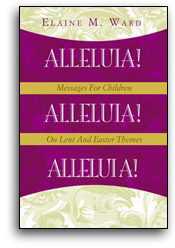
Alleluia!
Messages For Children On Lent And Easter Themes
After the crowd, with swords and clubs, and the Jewish police arrested Jesus, they bound him in chains so he would not escape. But even in chains in prison, Jesus was "free."
There once was a man who wrote poems and stories, and some day you might read Treasure Island or A Child's Garden of Verses. The man was Robert Louis Stevenson, who was sick all of his life, bound in chains and pains of illness. Even so, he wrote wonderful stories and poetry. He believed that within us all is a "golden chamber," and that even though we may be poor or sick or in prison on the outside, on the inside we are free.
Sara was a little princess because her father loved and treated her as if she were one, but when the war came, Sara was sent off to school, away from her father. There her doll Emily became her best friend, for as Sara said, "I think Emily can talk. At least I pretend I believe she can. And that makes it seem as if it were true." Sara used her imagination for hope.
When her father was killed and she was no longer a "princess," the headmistress moved her to the cold, rat-infested attic. There Sara became a princess "inside." She knew how a princess would act from stories and books she had read and from her imagination, and she treated others with the respect that royalty gives. By acting like a princess, Sara became one. First she pretended she was a soldier, and soldiers do not complain. When she was cold and tired and hungry, she pretended she was a prisoner, but still a princess inside.
"But how can you stand living in an attic, with rats and the cold wind blowing through the cracks?" her friend asked. Sara said, "If I pretend it's quite different, I can." "Oh, Sara," her friend whispered joyfully, "it's like a story." Sara agreed, saying, "Everything's a story. I am a story. You are a story. Somehow, something always happens. Just before things get to the very worst, it's as if the Magic, Mystery, did it. If I could only just remember that always."1
Talk together: Have you ever imagined or pretended your doll or stuffed animal or pet could talk? Why did Sara pretend? Do you think you would have liked Sara if you met her? Why?
No one can imprison your imagination or take it from you. When I am tired or lonely or sad, I imagine being in a beautiful place, or I talk with God and listen. We can do that anywhere, any time.
Prayer: Dear God, thank you for our minds and our bodies, for information and facts, for imagination and pretend and for prayer in your presence. Amen.
____________
1. Frances Hodgson Burnett, A Little Princess (New York: Puffin Books, 1905).
There once was a man who wrote poems and stories, and some day you might read Treasure Island or A Child's Garden of Verses. The man was Robert Louis Stevenson, who was sick all of his life, bound in chains and pains of illness. Even so, he wrote wonderful stories and poetry. He believed that within us all is a "golden chamber," and that even though we may be poor or sick or in prison on the outside, on the inside we are free.
Sara was a little princess because her father loved and treated her as if she were one, but when the war came, Sara was sent off to school, away from her father. There her doll Emily became her best friend, for as Sara said, "I think Emily can talk. At least I pretend I believe she can. And that makes it seem as if it were true." Sara used her imagination for hope.
When her father was killed and she was no longer a "princess," the headmistress moved her to the cold, rat-infested attic. There Sara became a princess "inside." She knew how a princess would act from stories and books she had read and from her imagination, and she treated others with the respect that royalty gives. By acting like a princess, Sara became one. First she pretended she was a soldier, and soldiers do not complain. When she was cold and tired and hungry, she pretended she was a prisoner, but still a princess inside.
"But how can you stand living in an attic, with rats and the cold wind blowing through the cracks?" her friend asked. Sara said, "If I pretend it's quite different, I can." "Oh, Sara," her friend whispered joyfully, "it's like a story." Sara agreed, saying, "Everything's a story. I am a story. You are a story. Somehow, something always happens. Just before things get to the very worst, it's as if the Magic, Mystery, did it. If I could only just remember that always."1
Talk together: Have you ever imagined or pretended your doll or stuffed animal or pet could talk? Why did Sara pretend? Do you think you would have liked Sara if you met her? Why?
No one can imprison your imagination or take it from you. When I am tired or lonely or sad, I imagine being in a beautiful place, or I talk with God and listen. We can do that anywhere, any time.
Prayer: Dear God, thank you for our minds and our bodies, for information and facts, for imagination and pretend and for prayer in your presence. Amen.
____________
1. Frances Hodgson Burnett, A Little Princess (New York: Puffin Books, 1905).