
Jesus, Our Shalom
Drama
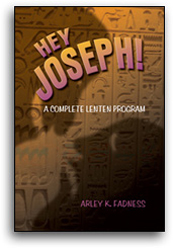
Hey Joseph!
A Complete Lenten Program
In a few moments through word and song, we re-live Jesus' last six hours. It was a reluctant Pilate who finally caved in. Loud shouting chief priests insisted and persisted. Certain Jews were convinced it was blasphemous for anyone to claim to be the Son of God. Such a person must die.
So it was not "business as usual" for six hours. "Far worse than the breaking of his body is the shredding of his heart. His own countrymen clamored for his demise. His own disciple planted the kiss of betrayal. His own friends ran for cover. And now his own heavenly Father turns his back on him leaving him alone."
One may ask, "Jesus do you give no thought to saving yourself? What keeps you there? What holds you to the cross? Nails don't hold gods to trees. What makes you stay?"1
What makes you stay?
1. His reply is, "I am your shalom." Paul put it this way: "But now in Christ Jesus you who once were far off have been brought near by the blood of Christ. For he is our peace ..." (Ephesians 2:13). There was no shalom. No peace. The dividing walls of hostility were high: between God and Adam; between Cain and Abel; between Joseph and his brothers; and between families, races, nationalities, and cultures. The dividing wall of sin was so high no one could climb over it or under it or around it.
The dividing wall had to be broken down. And a bridge built out of the rubble.
Jesus must do that. He must build shalom. Reconciliation. Peace. God to people. People to God and neighbor to neighbor.
It was through suffering that Jesus brought down the walls and ripped away the fences of division and hostililty.
The writer to the Hebrews wrote: "During the days of Jesus' life on earth, he offered up prayers and petitions with loud cries and tears to the one who could save him from death and he was heard because of his reverent submission. Although he was a son he learned obedience from what he suffered" (Hebrews 5:7-8).
Professor Walter Bruggeman said in a preaching series, "truth most often comes through pain." I surely am not attracted to that idea. But upon reflection I must admit it is true -- that truth comes through pain.
One can either loathe pain or learn from it. A. W. Tozer said, "It's doubtful whether God can bless a person greatly until He has hurt him deeply." I don't attribute pain to God but I affirm God's use of difficulty to open us up to faith and trust.
Joseph suffered the pain of slavery when his brothers sold him. Joseph suffered separation from his father and family. Joseph suffered punishment because of false charges brought against him. At the end however, Joseph could say to those of his flesh who failed him, "You intended to harm me, but God intended it for good to accomplish what is now being done, the saving of many lives" (Genesis 50:20).
Through suffering Jesus brings shalom.
2. The second answer to, "what made Jesus stay on the cross," was that by death Jesus slays death.
"Death. Death is the bully on the block. He catches you in the alley. He taunts you in the playground. He badgers you on the way home: 'You too will die someday.' You see him as he escorts the procession of hearse-led cars."2
He stands near the intensive care unit. He jabs you. "Your time is coming."
"Oh, we try to prove him wrong. We jog. We diet. We pump iron. We play golf. We try to escape it, knowing all along that we can at best postpone it."3
His goal is to "make you and me so afraid of dying that we can never learn to live. He'll steal the joy of your youth and the peace of your final years."4 So we don't face him alone. The bully is too big to fight by yourself. You need a big brother. "Jesus unmasked death and exposed him for who he really is -- a 98-pound weakling dressed up in a Charles Atlas suit."5
Johann Sebastian Bach wrote with good intentions, "Come Sweet Death." But the Apostle Paul was by far the better theologian when he called death -- in 1 Corinthians 15 -- the last enemy to be destroyed! Death is no friend.
We live in a death culture. Many bless Dr. Death who assists suicides in the name of compassion. We have an ever-expanding euthanasia movement. Convenience abortion abounds. Road rage threatens. Tornadoes and hurricanes strike without warning. Shootings in schools continue to occur.
It is true we all will die. But Jesus' death slays the permanence of death. Jesus gives life eternal by his grace to all who believe.
Michael Guido tells in his column Seeds From The Sower that when Lincoln's body was brought from Washington to Illinois for burial, it was taken through Albany. In the crowd was a mother and her boy. Raising him above her head, she shouted, "Son, take a good look at that man. He died for you."
On this bad Friday that we call good -- take a good look at Jesus. He died for us. He is our peace. He slayed death by his death and by what happened on Easter morn.
More about that on another day.
____________
1.aMax Lucado, Six Hours One Friday, Multnomah Books, p. 20.
2.aIbid., p. 131.
3.aIbid., p. 131.
4.aIbid., p. 131.
5.aIbid., p. 132.
So it was not "business as usual" for six hours. "Far worse than the breaking of his body is the shredding of his heart. His own countrymen clamored for his demise. His own disciple planted the kiss of betrayal. His own friends ran for cover. And now his own heavenly Father turns his back on him leaving him alone."
One may ask, "Jesus do you give no thought to saving yourself? What keeps you there? What holds you to the cross? Nails don't hold gods to trees. What makes you stay?"1
What makes you stay?
1. His reply is, "I am your shalom." Paul put it this way: "But now in Christ Jesus you who once were far off have been brought near by the blood of Christ. For he is our peace ..." (Ephesians 2:13). There was no shalom. No peace. The dividing walls of hostility were high: between God and Adam; between Cain and Abel; between Joseph and his brothers; and between families, races, nationalities, and cultures. The dividing wall of sin was so high no one could climb over it or under it or around it.
The dividing wall had to be broken down. And a bridge built out of the rubble.
Jesus must do that. He must build shalom. Reconciliation. Peace. God to people. People to God and neighbor to neighbor.
It was through suffering that Jesus brought down the walls and ripped away the fences of division and hostililty.
The writer to the Hebrews wrote: "During the days of Jesus' life on earth, he offered up prayers and petitions with loud cries and tears to the one who could save him from death and he was heard because of his reverent submission. Although he was a son he learned obedience from what he suffered" (Hebrews 5:7-8).
Professor Walter Bruggeman said in a preaching series, "truth most often comes through pain." I surely am not attracted to that idea. But upon reflection I must admit it is true -- that truth comes through pain.
One can either loathe pain or learn from it. A. W. Tozer said, "It's doubtful whether God can bless a person greatly until He has hurt him deeply." I don't attribute pain to God but I affirm God's use of difficulty to open us up to faith and trust.
Joseph suffered the pain of slavery when his brothers sold him. Joseph suffered separation from his father and family. Joseph suffered punishment because of false charges brought against him. At the end however, Joseph could say to those of his flesh who failed him, "You intended to harm me, but God intended it for good to accomplish what is now being done, the saving of many lives" (Genesis 50:20).
Through suffering Jesus brings shalom.
2. The second answer to, "what made Jesus stay on the cross," was that by death Jesus slays death.
"Death. Death is the bully on the block. He catches you in the alley. He taunts you in the playground. He badgers you on the way home: 'You too will die someday.' You see him as he escorts the procession of hearse-led cars."2
He stands near the intensive care unit. He jabs you. "Your time is coming."
"Oh, we try to prove him wrong. We jog. We diet. We pump iron. We play golf. We try to escape it, knowing all along that we can at best postpone it."3
His goal is to "make you and me so afraid of dying that we can never learn to live. He'll steal the joy of your youth and the peace of your final years."4 So we don't face him alone. The bully is too big to fight by yourself. You need a big brother. "Jesus unmasked death and exposed him for who he really is -- a 98-pound weakling dressed up in a Charles Atlas suit."5
Johann Sebastian Bach wrote with good intentions, "Come Sweet Death." But the Apostle Paul was by far the better theologian when he called death -- in 1 Corinthians 15 -- the last enemy to be destroyed! Death is no friend.
We live in a death culture. Many bless Dr. Death who assists suicides in the name of compassion. We have an ever-expanding euthanasia movement. Convenience abortion abounds. Road rage threatens. Tornadoes and hurricanes strike without warning. Shootings in schools continue to occur.
It is true we all will die. But Jesus' death slays the permanence of death. Jesus gives life eternal by his grace to all who believe.
Michael Guido tells in his column Seeds From The Sower that when Lincoln's body was brought from Washington to Illinois for burial, it was taken through Albany. In the crowd was a mother and her boy. Raising him above her head, she shouted, "Son, take a good look at that man. He died for you."
On this bad Friday that we call good -- take a good look at Jesus. He died for us. He is our peace. He slayed death by his death and by what happened on Easter morn.
More about that on another day.
____________
1.aMax Lucado, Six Hours One Friday, Multnomah Books, p. 20.
2.aIbid., p. 131.
3.aIbid., p. 131.
4.aIbid., p. 131.
5.aIbid., p. 132.
