
Jesus, a Prophet Without Honor Among His Own Friends
Worship
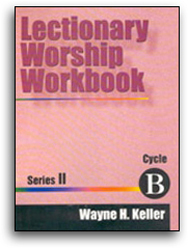
Lectionary Worship Workbook
Series II, Cycle B
Adoration
Pastoral Invitation (Pastor and Ministers)
Christ is risen! Surely you remember. Welcome to the corporate celebration of the community of faith. We worship corporately to acknowledge the power of God, and the lives of each other, to strengthen and encourage us, and to let the world know who God and we are -- in the name of God the Creator, Liberator, Sustainer, Energizer. And all the people said (your favorite praise word). If the people give a halfhearted response, keep repeating until they put some energy into their response.
P: Listen! (Wait) Do you hear God?
M: Yes, we hear God all around us.
P: Where do you hear God?
M: We hear God in the world -- in the headlines and bylines of the newspaper, in the questions of the doubter, in the tears of the bewildered, in the laughter of the children of all ages, in the gasps of the dying. (Ask the people to add their own.)
P: I invite us to celebrate the Presence and Power of this God who is alive. I invite us to become aware of this Jesus who could do little among his own people. I invite us to allow the Holy Spirit access to our personal lives and to the life of this congregation.
M: God, open us to your Presence and Power, and to accept responsibility for our actions.
Response
"Many and Great, O God, Are Thy Things," Dakota hymn, Joseph R. Renville, 1842; trans. R. Philip Franzier, 1953 (Sioux); harm. J. R. Murray, 1877.
Prayer of Adoration
Incorporate the idea that God wants to do mighty things with us, if we will open ourselves. Identify some of the barriers that keep God at a distance, as did the people in the Scripture.
Confession And Forgiveness
Introduction to the Act of Confession
Ask the people to write down some of the barriers that keep them from obedience; have them identify the feelings underneath those barriers. (Two minutes of silence.) Ask if any would be willing to share their discoveries. If no one responds, take the risk of sharing your own, which probably centers on fear, fear of hurting feelings, offending church givers, fear of not being liked, and so forth.
Response
"Piedad. Have Mercy, Lord, On Me," Marcelino Montoya; trans. George P. Simmonds, 1968; harm. Norman Parish, Jr. (b. 1932); arr. George P. Simmonds, 1964.
Introduction to the Act of Forgiveness
If we believe that God has forgiven us, then we have opened ourselves to the leading of the Holy Spirit. We honor Jesus the Christ in our lives. We are free to be his disciples in his world. How will we be Christ's people this coming week? (Ask the people for their responses; when we speak out loud, in public, we have a better chance of responding than if we only think these things within ourselves.)
Response
"O Let's Get On," Richard Avery and Don Marsh, The Avery and Marsh Songbook. (See Appendix I for address.)
Proclamation
Message with the Children of All Ages
Explore the first part of the scripture. Why do you suppose Jesus could do no miracles? (Give time to answer.) Give similar responses in our own lives. "Why should we listen to him/her? They're just children; we know them too well; they were our neighbors; we remember when ..." And notice the last line, "Jesus was amazed at their lack of faith." Leave it at that. No need to wrap up every message in a neat little package.
Reading of the Scripture
Read the last part of the scripture. Have "Jesus" walk out among the congregation. Have him select several people (prepared ahead of worship). As he selects these people, he gives them the instructions. Have the designated people leave the sanctuary, temporarily, preaching the news of repentance. Someone can then read the last line (v. 13).
Proclamation of the Good News
(1) Focus once again on the barriers to belief which those of Jesus' day had; and on the barriers which we have. (2) When we allow the Holy Spirit to overcome these barriers, we too can, will, move out in faithful obedience, perhaps not with the same velocity, or obvious results as the disciples; but we can, will, make a difference in people's lives.
Thanksgiving And Intercession
Bring together the thoughts of the message, and pray for the courage to obey.
Dedication
Stewardship Challenge
Our fears, for whatever reason, drive us into ourselves. The result is that we will get "all that I can while I can." That's the way of the world; I trust that it's not our way. We who call ourselves Christ's disciples are responsible because we are blessed. Do we give God the leftovers or the first fruits of our lives?
Hymn of Commitment
"We Give Thee But Thine Own," William Walsham How, c. 1858; Mason and Webb's Cantica Laudis, 1850.
Charge to the Congregation
A cartoon showed the people, joyous, rushing out of the sanctuary. Nothing was going to stop them. One groundskeeper said to the other, as they stopped momentarily to admire the scene (I have no idea why they were not in worship): "The reverend must have given 'em quite a pep talk today." So, now, it's time to go and to do and to be.
Meditation
"It's the set of the sail and not the gale that determines the way you go" (Author unknown). So, where is your mind set, on God, on self? We have only those two choices.
Music Possibilities In Addition To Those Already Suggested
Music for Preparation: "Come Now, Our Redeemer," J. S. Bach
Hymn of Adoration: "We Sing the Mighty Power of God," Isaac Watts, 1715; alt.
Response to the Older Testament: (Adult choir) "The Lord Is My Shepherd," Schubert.
Response to the Message with Children: "O Sing a New Song to the Lord," from Psalm 96; para. in the Scottish Psalter, 1650; alt.
Response to the Stewardship Challenge: (Adult choir) "Adorn Thyself, O My Soul," Karg-Elert.
Music for Dismissal: Use music based on one of the Psalms for the day.
Pastoral Invitation (Pastor and Ministers)
Christ is risen! Surely you remember. Welcome to the corporate celebration of the community of faith. We worship corporately to acknowledge the power of God, and the lives of each other, to strengthen and encourage us, and to let the world know who God and we are -- in the name of God the Creator, Liberator, Sustainer, Energizer. And all the people said (your favorite praise word). If the people give a halfhearted response, keep repeating until they put some energy into their response.
P: Listen! (Wait) Do you hear God?
M: Yes, we hear God all around us.
P: Where do you hear God?
M: We hear God in the world -- in the headlines and bylines of the newspaper, in the questions of the doubter, in the tears of the bewildered, in the laughter of the children of all ages, in the gasps of the dying. (Ask the people to add their own.)
P: I invite us to celebrate the Presence and Power of this God who is alive. I invite us to become aware of this Jesus who could do little among his own people. I invite us to allow the Holy Spirit access to our personal lives and to the life of this congregation.
M: God, open us to your Presence and Power, and to accept responsibility for our actions.
Response
"Many and Great, O God, Are Thy Things," Dakota hymn, Joseph R. Renville, 1842; trans. R. Philip Franzier, 1953 (Sioux); harm. J. R. Murray, 1877.
Prayer of Adoration
Incorporate the idea that God wants to do mighty things with us, if we will open ourselves. Identify some of the barriers that keep God at a distance, as did the people in the Scripture.
Confession And Forgiveness
Introduction to the Act of Confession
Ask the people to write down some of the barriers that keep them from obedience; have them identify the feelings underneath those barriers. (Two minutes of silence.) Ask if any would be willing to share their discoveries. If no one responds, take the risk of sharing your own, which probably centers on fear, fear of hurting feelings, offending church givers, fear of not being liked, and so forth.
Response
"Piedad. Have Mercy, Lord, On Me," Marcelino Montoya; trans. George P. Simmonds, 1968; harm. Norman Parish, Jr. (b. 1932); arr. George P. Simmonds, 1964.
Introduction to the Act of Forgiveness
If we believe that God has forgiven us, then we have opened ourselves to the leading of the Holy Spirit. We honor Jesus the Christ in our lives. We are free to be his disciples in his world. How will we be Christ's people this coming week? (Ask the people for their responses; when we speak out loud, in public, we have a better chance of responding than if we only think these things within ourselves.)
Response
"O Let's Get On," Richard Avery and Don Marsh, The Avery and Marsh Songbook. (See Appendix I for address.)
Proclamation
Message with the Children of All Ages
Explore the first part of the scripture. Why do you suppose Jesus could do no miracles? (Give time to answer.) Give similar responses in our own lives. "Why should we listen to him/her? They're just children; we know them too well; they were our neighbors; we remember when ..." And notice the last line, "Jesus was amazed at their lack of faith." Leave it at that. No need to wrap up every message in a neat little package.
Reading of the Scripture
Read the last part of the scripture. Have "Jesus" walk out among the congregation. Have him select several people (prepared ahead of worship). As he selects these people, he gives them the instructions. Have the designated people leave the sanctuary, temporarily, preaching the news of repentance. Someone can then read the last line (v. 13).
Proclamation of the Good News
(1) Focus once again on the barriers to belief which those of Jesus' day had; and on the barriers which we have. (2) When we allow the Holy Spirit to overcome these barriers, we too can, will, move out in faithful obedience, perhaps not with the same velocity, or obvious results as the disciples; but we can, will, make a difference in people's lives.
Thanksgiving And Intercession
Bring together the thoughts of the message, and pray for the courage to obey.
Dedication
Stewardship Challenge
Our fears, for whatever reason, drive us into ourselves. The result is that we will get "all that I can while I can." That's the way of the world; I trust that it's not our way. We who call ourselves Christ's disciples are responsible because we are blessed. Do we give God the leftovers or the first fruits of our lives?
Hymn of Commitment
"We Give Thee But Thine Own," William Walsham How, c. 1858; Mason and Webb's Cantica Laudis, 1850.
Charge to the Congregation
A cartoon showed the people, joyous, rushing out of the sanctuary. Nothing was going to stop them. One groundskeeper said to the other, as they stopped momentarily to admire the scene (I have no idea why they were not in worship): "The reverend must have given 'em quite a pep talk today." So, now, it's time to go and to do and to be.
Meditation
"It's the set of the sail and not the gale that determines the way you go" (Author unknown). So, where is your mind set, on God, on self? We have only those two choices.
Music Possibilities In Addition To Those Already Suggested
Music for Preparation: "Come Now, Our Redeemer," J. S. Bach
Hymn of Adoration: "We Sing the Mighty Power of God," Isaac Watts, 1715; alt.
Response to the Older Testament: (Adult choir) "The Lord Is My Shepherd," Schubert.
Response to the Message with Children: "O Sing a New Song to the Lord," from Psalm 96; para. in the Scottish Psalter, 1650; alt.
Response to the Stewardship Challenge: (Adult choir) "Adorn Thyself, O My Soul," Karg-Elert.
Music for Dismissal: Use music based on one of the Psalms for the day.
