
Lent 1
Sermon
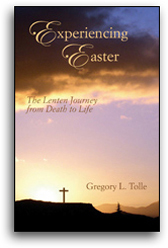
Experiencing Easter
The Lenten Journey of Death to Life
Object:
When you have come into the land that the Lord your God is giving you as an inheritance to possess, and you possess it, and settle in it, you shall take some of the first of all the fruit of the ground, which you harvest from the land that the Lord your God is giving you, and you shall put it in a basket and go to the place that the Lord your God will choose as a dwelling for his name. You shall go to the priest who is in office at that time, and say to him, "Today I declare to the Lord your God that I have come into the land that the Lord swore to our ancestors to give us." When the priest takes the basket from your hand and sets it down before the altar of the Lord your God, you shall make this response before the Lord your God: "A wandering Aramean was my ancestor; he went down into Egypt and lived there as an alien, few in number, and there he became a great nation, mighty and populous. When the Egyptians treated us harshly and afflicted us, by imposing hard labor on us, we cried to the Lord of our ancestors; the Lord heard our voice and saw our affliction, our toil, and our oppression. The Lord brought us out of Egypt with a mighty hand and an outstretched arm, with a terrifying display of power, and with signs and wonders; and he brought us into this place and gave us this land, a land flowing with milk and honey. So now I bring the first of the fruit of the ground that you, O Lord, have given me." You shall set it down before the Lord your God and bow down before the Lord your God. Then you, together with the Levites and the aliens who reside among you, shall celebrate with all the bounty that the Lord your God has given to you and to your house.
-- Deuteronomy 26:1-11
Experiencing Wilderness
A woman was trying to impress everyone at a party with her heritage. She said, "My family's ancestry is very old. It dates back to the days of King James." She then turned to another woman who was quietly sitting in a corner and asked very condescendingly, "How old is your family, dear?"
The woman calmly answered, "I can't really say for sure. All our family records were lost in Noah's flood."
We take great pride in our heritage, don't we? It is a part of who we are. But as important as heritage is in creating who we are, there are other more important factors.
A few years ago, I attended Minister's Week at my alma mater -- Brite Divinity School at Texas Christian University. Dr. Andy Lester presented a series of lectures on pastoral care for anger within the church. Dr. Lester's approach was built around what he termed "Narrative Theory."
In a nutshell, Narrative Theory is a belief that every person has events in their past that affect their present and their future. In the case of his lectures, anger was caused by past events. But Narrative Theory deals with more than just anger -- more than just negative events. All significant events are a part of our story. These stories help create us. They make us who we are. When we don't know our past, we are like amnesiacs; we've lost our identity. It's like we are in a wilderness, not knowing our way.
In today's scripture passage from Deuteronomy, Moses summarizes the story of the Hebrew people. While advising the people to be generous to God, he reminds them of their heritage by reciting an early creed -- like an ancient Hebrew Apostles' Creed. The creed recalled their history and heritage:
A wandering Aramean was my ancestor; he went down into Egypt and lived there as an alien, few in number, and there he became a great nation, mighty and populous. When the Egyptians treated us harshly and afflicted us, by imposing hard labor on us, we cried to the Lord, the God of our ancestors; the Lord heard our voice and saw our affliction, our toil, and our oppression. The Lord brought us out of Egypt with a mighty hand and an outstretched arm, with a terrifying display of power, and with signs and wonders; and he brought us into this place and gave us this land, a land flowing with milk and honey.
-- Deuteronomy 26:5b-9
Their story began with "a wandering Aramean" which was a reminder that their forefather was homeless and jobless. That would be Jacob, son of Isaac, son of Abraham. Jacob is the result of God's promise that Abraham would produce a great nation. The people grew great in Egypt before eventually becoming enslaved. Then God provided Moses to lead them out. But before arriving at the land of milk and honey, they spent forty years in the wilderness.
That story is our story as well. These are our ancestors, and this is our history. Like our ancestors, we find ourselves enslaved at times and wandering aimlessly in the wilderness. This is a part of the Lenten journey -- a recognition that we are enslaved to sin and that we wander in the wilderness in our attempt to make our way to the promised land.
We sometimes have the misconception that there is no wilderness within the Christian journey. We mistakenly believe that it will be all promised land and no wilderness. The truth is that the wilderness is a part of the journey. The promise is that God will guide us through the wilderness if we will trust God to guide us out.
This is the good news. God calls us out of the wilderness. At those times that we are lost and wandering aimlessly in life, God will provide guidance to the promised land.
Charisma magazine reported of such a wilderness coming out event. Three men from California were traveling to the Promise Keepers' "Stand in the Gap" rally in Washington DC, back in October 1997. While driving to the event, they passed a homeless man on their way out of town. They stopped and invited him to go with them. The man responded that he wasn't worthy of attending the event. He had left his family in Alabama sixteen years prior and hadn't seen them since.
The men explained that while they hadn't physically abandoned their families, they had failed in other ways. The purpose of the event was to repent for these failures and reconcile. This convinced the man to go.
As they arrived at the capital, the three Promise Keepers told the man that they would try to find a group from Alabama so he could talk to someone from his home state. Standing in the midst of one million men, the task seemed impossible, but the first group they met was from Alabama.
As the homeless man talked with the group from Alabama, he discovered one of the men was from his hometown. The two men then introduced themselves and discovered that they knew each other. The homeless man had just re-met the son he had abandoned sixteen years before. The two spent the day reconciling and praying together, then both returned home to Alabama.1
Talk about wilderness. This homeless man was like a wandering Aramean. And you can bet his son felt like he was in the wilderness for the past sixteen years. And yet both show their trust in God as they were seeking God through the Promise Keepers' event.
Does this story sound too incredible to be true? Some may think so -- just as people have been skeptical of God's intervention in the lives of biblical people.
But verse 8 reminds us that God leads us "with a mighty hand ... with terrifying display of power, and with signs and wonders." Think for a moment on the mighty and powerful signs of the exodus: plagues upon plagues and the parting of the Reed Sea. If God has the power for all that, can't God miraculously bring a man and his son out of the wilderness?
Unbelievable? Not to people of faith. To believers, the exodus story and the homeless man's story are incredible only in the amount of God's love displayed. They are a witness of God working in the midst of our painful lives.
There are countless stories of God's love and intercession in the wilderness of our lives. Renowned optimist, Zig Zigler, tells of one story connected with the classic movie Gone with the Wind and its more recent sequel, Scarlett. Sure we're all familiar with the story, but how many of us know that these tales of Rhett Butler and Scarlett O'Hara were loosely based on a true story?
Rhett's actual last name was Turnipseed and Scarlett was really Emelyn Louise Hannon. (Chalk one up for poetic license.) And, as portrayed in the movie, Rhett did walk out on her to join the Confederate Army. When the war was over, Rhett Turnipseed entered the wilderness as he became a drifter and a gambler. He ended up in Nashville where his life was turned around. On Easter morning in 1871, he attended a Methodist revival meeting and became a committed Christian.
Soon afterward, Rhett enrolled at Vanderbilt University and became a Methodist preacher. While a preacher, a young woman in his church ran away to St. Louis and became a prostitute. Rhett was concerned about her and rode to St. Louis to look for her. He found her at a house of ill repute where the madam was none other than Emelyn Louise Hannon -- the real Scarlett.
Emelyn refused to let Rhett see the young woman. So Rhett challenged her to a game of cards. If he won, the girl went free. If Emelyn won, the girl remained. Rhett won.
Actually, everyone won. The young girl eventually married and became a matriarch of an important family in Tennessee. Emelyn became so impressed with Rhett's transformation that she, too, became a Christian. Eventually, she opened a Methodist orphanage for Cherokee children.2
Just one more story of how God led people out of the wilderness and into the promised land. When we stop and reflect on life, we all have times that we have come out of the wilderness -- a story of how God has been a part of our life when we were wandering aimlessly.
It probably isn't as dramatic as those we've heard this morning. Most of us haven't been a compulsive gambler, a prostitute, a madam, a homeless person, or a slave in the land of Egypt. But we still have our story -- the story of how we've experienced God's love in the midst of painful times. We all have encountered hardships -- low points, but we can also recall how God pulled us through.
If we have not been slaves in Egypt, we have still been enslaved to sin.
If we have not been homeless, we have still had times when home was less than perfect.
If we have not been a prostitute, a madam, or a gambler, we have still compromised our ethics and taken what looked liked the easy way out.
Deuteronomy 26:7 says, "We cried to the Lord ... the Lord heard our voice and saw our affliction." This is a reminder of the good news: God hears our cries and sees our pain. This is why God wants to have a relationship with us -- to bring us out of the wilderness. To heal our pain and comfort our cries.
We have our wilderness-to-promised land story. True to Narrative Theory, those events have shaped us -- helped make us who we are. But what should we do with our story?
First, we remember our story and give thanks to God for the blessings we have been given. We have been led from the wilderness to the promised land. Lent is a wonderful time to reflect on where we've been and where we are going.
And secondly, consider how our story connects with the story. How does our entrance into the promised land connect with our entrance into the kingdom of God? Our story connects with tradition -- from Adam to the second Adam, known to us as Jesus Christ. Go back to wondrous story of scripture -- particularly the gospel of salvation. Read. Pray. Listen.
And then as we understand our testimony in light of the testament of Christ, we should repeat our story like a creed. Our story of God's gift of deliverance creates an opportunity for us to help and encourage others when they are in the wilderness. Just as Rhett Turnipseed's testimony and the homeless man's witness show the power and love of God, so does our story. You might think it is blasé, but it just might be the word somebody needs to hear -- and the only way they can hear the gospel.
So what's your story? Whatever it is, I praise God for the great things done in your life. I thank God for however you have been brought and nourished into Christian fellowship. Remember your story -- it is a part of who you are. Remember the gospel story, then share the story of deliverance! Amen.
____________
1. http://www.goodnewsmag.org/.
2. Zig Zigler, Something to Smile About (Nashville, Tennessee: Thomas Nelson, Inc., 1997), pp. 55-56.
-- Deuteronomy 26:1-11
Experiencing Wilderness
A woman was trying to impress everyone at a party with her heritage. She said, "My family's ancestry is very old. It dates back to the days of King James." She then turned to another woman who was quietly sitting in a corner and asked very condescendingly, "How old is your family, dear?"
The woman calmly answered, "I can't really say for sure. All our family records were lost in Noah's flood."
We take great pride in our heritage, don't we? It is a part of who we are. But as important as heritage is in creating who we are, there are other more important factors.
A few years ago, I attended Minister's Week at my alma mater -- Brite Divinity School at Texas Christian University. Dr. Andy Lester presented a series of lectures on pastoral care for anger within the church. Dr. Lester's approach was built around what he termed "Narrative Theory."
In a nutshell, Narrative Theory is a belief that every person has events in their past that affect their present and their future. In the case of his lectures, anger was caused by past events. But Narrative Theory deals with more than just anger -- more than just negative events. All significant events are a part of our story. These stories help create us. They make us who we are. When we don't know our past, we are like amnesiacs; we've lost our identity. It's like we are in a wilderness, not knowing our way.
In today's scripture passage from Deuteronomy, Moses summarizes the story of the Hebrew people. While advising the people to be generous to God, he reminds them of their heritage by reciting an early creed -- like an ancient Hebrew Apostles' Creed. The creed recalled their history and heritage:
A wandering Aramean was my ancestor; he went down into Egypt and lived there as an alien, few in number, and there he became a great nation, mighty and populous. When the Egyptians treated us harshly and afflicted us, by imposing hard labor on us, we cried to the Lord, the God of our ancestors; the Lord heard our voice and saw our affliction, our toil, and our oppression. The Lord brought us out of Egypt with a mighty hand and an outstretched arm, with a terrifying display of power, and with signs and wonders; and he brought us into this place and gave us this land, a land flowing with milk and honey.
-- Deuteronomy 26:5b-9
Their story began with "a wandering Aramean" which was a reminder that their forefather was homeless and jobless. That would be Jacob, son of Isaac, son of Abraham. Jacob is the result of God's promise that Abraham would produce a great nation. The people grew great in Egypt before eventually becoming enslaved. Then God provided Moses to lead them out. But before arriving at the land of milk and honey, they spent forty years in the wilderness.
That story is our story as well. These are our ancestors, and this is our history. Like our ancestors, we find ourselves enslaved at times and wandering aimlessly in the wilderness. This is a part of the Lenten journey -- a recognition that we are enslaved to sin and that we wander in the wilderness in our attempt to make our way to the promised land.
We sometimes have the misconception that there is no wilderness within the Christian journey. We mistakenly believe that it will be all promised land and no wilderness. The truth is that the wilderness is a part of the journey. The promise is that God will guide us through the wilderness if we will trust God to guide us out.
This is the good news. God calls us out of the wilderness. At those times that we are lost and wandering aimlessly in life, God will provide guidance to the promised land.
Charisma magazine reported of such a wilderness coming out event. Three men from California were traveling to the Promise Keepers' "Stand in the Gap" rally in Washington DC, back in October 1997. While driving to the event, they passed a homeless man on their way out of town. They stopped and invited him to go with them. The man responded that he wasn't worthy of attending the event. He had left his family in Alabama sixteen years prior and hadn't seen them since.
The men explained that while they hadn't physically abandoned their families, they had failed in other ways. The purpose of the event was to repent for these failures and reconcile. This convinced the man to go.
As they arrived at the capital, the three Promise Keepers told the man that they would try to find a group from Alabama so he could talk to someone from his home state. Standing in the midst of one million men, the task seemed impossible, but the first group they met was from Alabama.
As the homeless man talked with the group from Alabama, he discovered one of the men was from his hometown. The two men then introduced themselves and discovered that they knew each other. The homeless man had just re-met the son he had abandoned sixteen years before. The two spent the day reconciling and praying together, then both returned home to Alabama.1
Talk about wilderness. This homeless man was like a wandering Aramean. And you can bet his son felt like he was in the wilderness for the past sixteen years. And yet both show their trust in God as they were seeking God through the Promise Keepers' event.
Does this story sound too incredible to be true? Some may think so -- just as people have been skeptical of God's intervention in the lives of biblical people.
But verse 8 reminds us that God leads us "with a mighty hand ... with terrifying display of power, and with signs and wonders." Think for a moment on the mighty and powerful signs of the exodus: plagues upon plagues and the parting of the Reed Sea. If God has the power for all that, can't God miraculously bring a man and his son out of the wilderness?
Unbelievable? Not to people of faith. To believers, the exodus story and the homeless man's story are incredible only in the amount of God's love displayed. They are a witness of God working in the midst of our painful lives.
There are countless stories of God's love and intercession in the wilderness of our lives. Renowned optimist, Zig Zigler, tells of one story connected with the classic movie Gone with the Wind and its more recent sequel, Scarlett. Sure we're all familiar with the story, but how many of us know that these tales of Rhett Butler and Scarlett O'Hara were loosely based on a true story?
Rhett's actual last name was Turnipseed and Scarlett was really Emelyn Louise Hannon. (Chalk one up for poetic license.) And, as portrayed in the movie, Rhett did walk out on her to join the Confederate Army. When the war was over, Rhett Turnipseed entered the wilderness as he became a drifter and a gambler. He ended up in Nashville where his life was turned around. On Easter morning in 1871, he attended a Methodist revival meeting and became a committed Christian.
Soon afterward, Rhett enrolled at Vanderbilt University and became a Methodist preacher. While a preacher, a young woman in his church ran away to St. Louis and became a prostitute. Rhett was concerned about her and rode to St. Louis to look for her. He found her at a house of ill repute where the madam was none other than Emelyn Louise Hannon -- the real Scarlett.
Emelyn refused to let Rhett see the young woman. So Rhett challenged her to a game of cards. If he won, the girl went free. If Emelyn won, the girl remained. Rhett won.
Actually, everyone won. The young girl eventually married and became a matriarch of an important family in Tennessee. Emelyn became so impressed with Rhett's transformation that she, too, became a Christian. Eventually, she opened a Methodist orphanage for Cherokee children.2
Just one more story of how God led people out of the wilderness and into the promised land. When we stop and reflect on life, we all have times that we have come out of the wilderness -- a story of how God has been a part of our life when we were wandering aimlessly.
It probably isn't as dramatic as those we've heard this morning. Most of us haven't been a compulsive gambler, a prostitute, a madam, a homeless person, or a slave in the land of Egypt. But we still have our story -- the story of how we've experienced God's love in the midst of painful times. We all have encountered hardships -- low points, but we can also recall how God pulled us through.
If we have not been slaves in Egypt, we have still been enslaved to sin.
If we have not been homeless, we have still had times when home was less than perfect.
If we have not been a prostitute, a madam, or a gambler, we have still compromised our ethics and taken what looked liked the easy way out.
Deuteronomy 26:7 says, "We cried to the Lord ... the Lord heard our voice and saw our affliction." This is a reminder of the good news: God hears our cries and sees our pain. This is why God wants to have a relationship with us -- to bring us out of the wilderness. To heal our pain and comfort our cries.
We have our wilderness-to-promised land story. True to Narrative Theory, those events have shaped us -- helped make us who we are. But what should we do with our story?
First, we remember our story and give thanks to God for the blessings we have been given. We have been led from the wilderness to the promised land. Lent is a wonderful time to reflect on where we've been and where we are going.
And secondly, consider how our story connects with the story. How does our entrance into the promised land connect with our entrance into the kingdom of God? Our story connects with tradition -- from Adam to the second Adam, known to us as Jesus Christ. Go back to wondrous story of scripture -- particularly the gospel of salvation. Read. Pray. Listen.
And then as we understand our testimony in light of the testament of Christ, we should repeat our story like a creed. Our story of God's gift of deliverance creates an opportunity for us to help and encourage others when they are in the wilderness. Just as Rhett Turnipseed's testimony and the homeless man's witness show the power and love of God, so does our story. You might think it is blasé, but it just might be the word somebody needs to hear -- and the only way they can hear the gospel.
So what's your story? Whatever it is, I praise God for the great things done in your life. I thank God for however you have been brought and nourished into Christian fellowship. Remember your story -- it is a part of who you are. Remember the gospel story, then share the story of deliverance! Amen.
____________
1. http://www.goodnewsmag.org/.
2. Zig Zigler, Something to Smile About (Nashville, Tennessee: Thomas Nelson, Inc., 1997), pp. 55-56.
