Living The Word Of God
Sermon
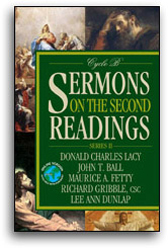
Sermons on the Second Readings
Series II, Cycle B
Mohandas Gandhi was born in Porbandar in the present state of Gujarat, India, on October 2, 1869. After completing his initial schooling he went to England where he earned a law degree from University College in London in 1891. He then returned to his native land and established a law practice in Bombay, but his lack of success led him to accept an invitation to go to South Africa to work for political rights for Indian immigrants in that land. He was appalled to discover the widespread denial of human rights and to realize that he was considered a member of an inferior race. He felt compelled to respond to this injustice. Thus, he remained in South Africa twenty years and was imprisoned several times for his views and verbal protests. Influenced by the Russian novelist, Leo Tolstoy, and the American essayist, Henry David Thoreau, he developed a system of nonviolent resistance, called satygraha, that became his hallmark.
He returned to India and immediately was drawn into the on-going struggle for home rule against the imperialist policy of England which ruled the land. When the British failed to make amends after their massacre of scores of Indians at Amritsar in 1920, he proclaimed an organized campaign of non-cooperation against the ruling government. Indians in public office resigned, children were withdrawn from schools, and thousands of citizens blocked streets in a protest heard round the world. He spoke little, but acted to secure justice for his people.
As the 1930s dawned, Gandhi continued to lead the campaign for freedom and proclaimed a new program of civil disobedience. He was arrested several times but only answered by initiating hunger strikes and championing the ascetic life. He never compromised his values of nonviolence, but rather, used his method successfully attracting world attention in the process. By 1944, the pressure he and his followers exerted was so great that Britain was ready to capitulate and grant independence. In 1947, after the end of World War II and following the division of the country into two, India for the Hindus and Pakistan for those practiced Islam, independence was granted. Riots, however, continued to engulf the country and, thus, as was his custom Gandhi began a fast asking for peace. On January 30, 1948, twelve days after his fast ceased, Mohandas Gandhi, known as Mahatma or "Great Soul" to his people, was assassinated as he walked to evening prayer. The world mourned the loss of one of its great men, one who acted on his beliefs to secure justice for all.
Mahatma Gandhi was a Hindu, but nonetheless he read the Christian scriptures and was highly influenced by them. He realized that it was necessary to put into action and to live the precepts of the scriptures. This he did well in leading a nation to sovereignty and a people to freedom. Gandhi brought hope to our world. He became the source of inspiration to many, including Martin Luther King, Jr., as an example of how to live the Word of God. Both men took Jesus' message of nonviolence and applied it to the situation of their lives. Rejecting violence and sordid behavior they became doers of the word. Today, as we begin to read the Letter of James, the apostle gives us the same message.
The Letter of James provides an important message of an active Christianity that is necessary for our contemporary world. It seems that the author of this letter was an official of the early church, but it is not certain it was James, "the brother of the Lord," although many scholars believe it was. The tract is more a sermon or written instruction as opposed to a letter. The one distinctive characteristic or theme that binds together the many short exhortations on faith is not theoretical or abstract. On the contrary, James calls for implementation in every aspect of one's life the message Jesus proclaimed. The letter serves to warn against the tendency toward an abstract and unfruitful practice of Christianity that threatened the local churches. James most likely was familiar with Jesus' words as recorded by Saint Matthew on the need to practice a religion of deeds not words: "Everyone then who hears these words of mine and acts on them will be like a wise man who built his house on rock. The rain fell, the floods came, and the winds blew and beat on that house, but it did not fall because it was built on rock. And everyone who hears these words of mine and does not act on them will be like a foolish man who built his house on sand. The rains fell, and the floods came, and the winds came and beat against that house, and it fell -- and great was its fall!" (Matthew 7:24-27).
The central message in this passage from James, namely that we must "be doers of the word," requires important preparations that the apostle outlines for his readers. In order to build the kingdom we must first realize that all are born for a purpose. James says that God gave us birth so we could be first fruits of his creation. In other words, God brought us into this world to be active; we are not here to sit around and allow others to be livers of the word while we observe from the sidelines. Armed with such knowledge we must stand away from the tendencies to laziness, complacency, or procrastination that exist in each one of us. Christianity is not for observers; it is best lived in a pro-active way.
James then provides more important advice on one's preparation to be good doers of the word. He says we cannot be active doers if we are always speaking. Thus he says, "be quick to listen, slow to speak, slow to anger," for none of these produce God's righteous. A Catholic nun once told me many years ago, "God gave us two ears and one mouth, so we should listen twice as much as we speak." James, I am sure, would say the same thing. Next, he suggests that we remove all sordidness and wickedness. These things impede our progress because they cause us to concentrate too much on our own needs and not those of others. We are to welcome the active message of the Gospel, which has the power to save.
With our preparations complete James says we are now ready to be a doer of the word, to live the Gospel message. People who simply listen and do not act, deceive only themselves; but they are not fooling God. James provides an image of how we deceive ourselves by self-observation in a mirror. When we look into the mirror we see all the imperfections, blemishes, and problems. If the user forgets what is seen in the mirror the situation cannot be corrected; things will remain in disarray. James is telling us that we must live the Word of God, as did Mahatma Gandhi, not only in what we say, but more especially in what we do. The apostle continues by saying that we cannot be true practitioners of the faith we profess if we cannot bridle our tongues. James would say, think before your speak. Furthermore, we are not simply to talk about what we will do, but to care for orphans and widows in their distress. Again, James must have remembered or been told about Jesus' words, "Truly I tell you, just as you did it for one of the least of these who are members of my family, you did it for me" (Matthew 25:40b). Any other approach is self-deception making our religion worthless.
Actualizing the precepts, ideals, and beliefs of any ideology, religion, or creed is difficult; it presents a significant challenge. The United States of America's foundational document, the Declaration of Independence, states that all people have the rights of "life, liberty, and the pursuit of happiness." Yet, we know from our study of history the many struggles our nation has endured, continuing today, to make this ideal a reality. The horrors of slavery and racial injustice that Abraham Lincoln's "Emancipation Proclamation" sought to end required the additional support of constitutional amendments and the work of many people, like one of Gandhi's disciples, Martin Luther King, Jr. However, the ideals expressed by Thomas Jefferson still are not fulfilled, not only for African-Americans, but many others who find themselves, often through circumstance alone, on the margins of American society, suffering social injustice in the midst of the wealthiest and most powerful nation in the history of the world. Immigrants suffer much injustice simply because they speak differently or practice different customs. Women fought long and hard for their right to vote and for greater equality in the workplace. As we all know, however, despite the positive strides, women are generally paid less for equal work performance, simply because they are female. We must admit that America does not live the ideal that the Declaration of Independence proposed.
In our lives of faith we strive for the ideal, but again we fall short. Jesus' message is clear but very challenging and, therefore, often not fully actualized. The British essayist, G. K. Chesterton, got it right back in 1910 when he wrote in What's Wrong with the World?: "The Christian ideal has not been tried and found wanting. It has been found difficult and left untried." We know the scriptures; we are aware of what is necessary, right, and wrong. We, too, often talk the talk but cannot adequately walk the walk. We say all the right things, but too often we cannot put into practice what we know is right and proper. Our failures make us hollow shells that need to be filled.
The hollowness that sometimes is the reality of our lives must be filled with lives of faith that not only speak but live God's Word. Sometimes things get in the way of our goal. Pride, laziness, preoccupation with other things, and feelings of inadequacy can all get in the way of our ability to live the Word of God. Thus, we must remove all obstacles so that we can hear the word clearly and then actualize what we hear.
Mahatma Gandhi came to his vocation in life rather suddenly and unexpectedly by observing injustice in South Africa. Seeing injustice first hand, he chose to act. He had the ability to listen and speak softly. He was able to keep his attention fixed on his mission and his call to action. Never a Christian, Gandhi nonetheless exemplified Jesus' call to action, as expressed by Saint James. Without knowing it, the fabled Indian freedom fighter took the advice of today's scripture and prepared himself properly to actualize the Christian message. Let us remove all obstacles that prevent us from hearing God's Word. Let us respond generously as doers of the word so that one day we will hear Jesus say to us, "Come, you that are blessed by my Father, inherit the kingdom prepared for you from the foundation of the world" (Matthew 25:34b).
He returned to India and immediately was drawn into the on-going struggle for home rule against the imperialist policy of England which ruled the land. When the British failed to make amends after their massacre of scores of Indians at Amritsar in 1920, he proclaimed an organized campaign of non-cooperation against the ruling government. Indians in public office resigned, children were withdrawn from schools, and thousands of citizens blocked streets in a protest heard round the world. He spoke little, but acted to secure justice for his people.
As the 1930s dawned, Gandhi continued to lead the campaign for freedom and proclaimed a new program of civil disobedience. He was arrested several times but only answered by initiating hunger strikes and championing the ascetic life. He never compromised his values of nonviolence, but rather, used his method successfully attracting world attention in the process. By 1944, the pressure he and his followers exerted was so great that Britain was ready to capitulate and grant independence. In 1947, after the end of World War II and following the division of the country into two, India for the Hindus and Pakistan for those practiced Islam, independence was granted. Riots, however, continued to engulf the country and, thus, as was his custom Gandhi began a fast asking for peace. On January 30, 1948, twelve days after his fast ceased, Mohandas Gandhi, known as Mahatma or "Great Soul" to his people, was assassinated as he walked to evening prayer. The world mourned the loss of one of its great men, one who acted on his beliefs to secure justice for all.
Mahatma Gandhi was a Hindu, but nonetheless he read the Christian scriptures and was highly influenced by them. He realized that it was necessary to put into action and to live the precepts of the scriptures. This he did well in leading a nation to sovereignty and a people to freedom. Gandhi brought hope to our world. He became the source of inspiration to many, including Martin Luther King, Jr., as an example of how to live the Word of God. Both men took Jesus' message of nonviolence and applied it to the situation of their lives. Rejecting violence and sordid behavior they became doers of the word. Today, as we begin to read the Letter of James, the apostle gives us the same message.
The Letter of James provides an important message of an active Christianity that is necessary for our contemporary world. It seems that the author of this letter was an official of the early church, but it is not certain it was James, "the brother of the Lord," although many scholars believe it was. The tract is more a sermon or written instruction as opposed to a letter. The one distinctive characteristic or theme that binds together the many short exhortations on faith is not theoretical or abstract. On the contrary, James calls for implementation in every aspect of one's life the message Jesus proclaimed. The letter serves to warn against the tendency toward an abstract and unfruitful practice of Christianity that threatened the local churches. James most likely was familiar with Jesus' words as recorded by Saint Matthew on the need to practice a religion of deeds not words: "Everyone then who hears these words of mine and acts on them will be like a wise man who built his house on rock. The rain fell, the floods came, and the winds blew and beat on that house, but it did not fall because it was built on rock. And everyone who hears these words of mine and does not act on them will be like a foolish man who built his house on sand. The rains fell, and the floods came, and the winds came and beat against that house, and it fell -- and great was its fall!" (Matthew 7:24-27).
The central message in this passage from James, namely that we must "be doers of the word," requires important preparations that the apostle outlines for his readers. In order to build the kingdom we must first realize that all are born for a purpose. James says that God gave us birth so we could be first fruits of his creation. In other words, God brought us into this world to be active; we are not here to sit around and allow others to be livers of the word while we observe from the sidelines. Armed with such knowledge we must stand away from the tendencies to laziness, complacency, or procrastination that exist in each one of us. Christianity is not for observers; it is best lived in a pro-active way.
James then provides more important advice on one's preparation to be good doers of the word. He says we cannot be active doers if we are always speaking. Thus he says, "be quick to listen, slow to speak, slow to anger," for none of these produce God's righteous. A Catholic nun once told me many years ago, "God gave us two ears and one mouth, so we should listen twice as much as we speak." James, I am sure, would say the same thing. Next, he suggests that we remove all sordidness and wickedness. These things impede our progress because they cause us to concentrate too much on our own needs and not those of others. We are to welcome the active message of the Gospel, which has the power to save.
With our preparations complete James says we are now ready to be a doer of the word, to live the Gospel message. People who simply listen and do not act, deceive only themselves; but they are not fooling God. James provides an image of how we deceive ourselves by self-observation in a mirror. When we look into the mirror we see all the imperfections, blemishes, and problems. If the user forgets what is seen in the mirror the situation cannot be corrected; things will remain in disarray. James is telling us that we must live the Word of God, as did Mahatma Gandhi, not only in what we say, but more especially in what we do. The apostle continues by saying that we cannot be true practitioners of the faith we profess if we cannot bridle our tongues. James would say, think before your speak. Furthermore, we are not simply to talk about what we will do, but to care for orphans and widows in their distress. Again, James must have remembered or been told about Jesus' words, "Truly I tell you, just as you did it for one of the least of these who are members of my family, you did it for me" (Matthew 25:40b). Any other approach is self-deception making our religion worthless.
Actualizing the precepts, ideals, and beliefs of any ideology, religion, or creed is difficult; it presents a significant challenge. The United States of America's foundational document, the Declaration of Independence, states that all people have the rights of "life, liberty, and the pursuit of happiness." Yet, we know from our study of history the many struggles our nation has endured, continuing today, to make this ideal a reality. The horrors of slavery and racial injustice that Abraham Lincoln's "Emancipation Proclamation" sought to end required the additional support of constitutional amendments and the work of many people, like one of Gandhi's disciples, Martin Luther King, Jr. However, the ideals expressed by Thomas Jefferson still are not fulfilled, not only for African-Americans, but many others who find themselves, often through circumstance alone, on the margins of American society, suffering social injustice in the midst of the wealthiest and most powerful nation in the history of the world. Immigrants suffer much injustice simply because they speak differently or practice different customs. Women fought long and hard for their right to vote and for greater equality in the workplace. As we all know, however, despite the positive strides, women are generally paid less for equal work performance, simply because they are female. We must admit that America does not live the ideal that the Declaration of Independence proposed.
In our lives of faith we strive for the ideal, but again we fall short. Jesus' message is clear but very challenging and, therefore, often not fully actualized. The British essayist, G. K. Chesterton, got it right back in 1910 when he wrote in What's Wrong with the World?: "The Christian ideal has not been tried and found wanting. It has been found difficult and left untried." We know the scriptures; we are aware of what is necessary, right, and wrong. We, too, often talk the talk but cannot adequately walk the walk. We say all the right things, but too often we cannot put into practice what we know is right and proper. Our failures make us hollow shells that need to be filled.
The hollowness that sometimes is the reality of our lives must be filled with lives of faith that not only speak but live God's Word. Sometimes things get in the way of our goal. Pride, laziness, preoccupation with other things, and feelings of inadequacy can all get in the way of our ability to live the Word of God. Thus, we must remove all obstacles so that we can hear the word clearly and then actualize what we hear.
Mahatma Gandhi came to his vocation in life rather suddenly and unexpectedly by observing injustice in South Africa. Seeing injustice first hand, he chose to act. He had the ability to listen and speak softly. He was able to keep his attention fixed on his mission and his call to action. Never a Christian, Gandhi nonetheless exemplified Jesus' call to action, as expressed by Saint James. Without knowing it, the fabled Indian freedom fighter took the advice of today's scripture and prepared himself properly to actualize the Christian message. Let us remove all obstacles that prevent us from hearing God's Word. Let us respond generously as doers of the word so that one day we will hear Jesus say to us, "Come, you that are blessed by my Father, inherit the kingdom prepared for you from the foundation of the world" (Matthew 25:34b).