
Metanoia: The Process Of Conversion
Sermon
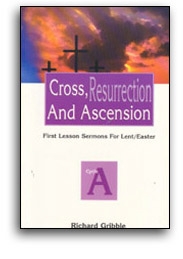
Cross, Resurrection, And Ascension
First Lesson Sermons For Lent/Easter
Is the life you lead one for which you want to be remembered? That very challenging and thought-provoking question certainly came to the mind of the famous Swedish scientist Alfred Nobel one day. In the common everyday exercise of reading the morning paper, Nobel discovered the challenge of God and the need for conversion before his very eyes.
Nobel was born in 1833 to a scientist and his wife. From his earliest days it was evident to everyone that Alfred was gifted intellectually. He read voraciously all that he could get his hands on; he excelled in literature. By the time he was fifteen he could read, write, and speak four languages besides his native Swedish. Although he showed promise in the "humanities," it was his love of science and his desire to be an inventor like his father that most excited him.
By his sixteenth birthday Nobel had exhausted the educational possibilities in his native district in Sweden. He decided to move away for more training. He first went to Paris and then across the Atlantic to the United States, where he spent four years studying science and
engineering principles, ideas that had become that much more important after the onset of the Industrial Revolution in the latter decades of the eighteenth century.
With his education complete, Nobel returned to his native land and began to experiment in his laboratory, creating an invention or two, but nothing of any significance. In the 1860s, however, he began to conduct experiments with nitroglycerin, a highly volatile and unstable substance. One experiment created an explosion in which Alfred's younger brother was killed. The experience crushed Nobel in one way, but in another it was the catalyst to find a way to harness the energy of this substance and make it of practical use to the world.
Nobel discovered a functional use of nitroglycerin, but it came quite accidentally. One day in his workshop, he noticed that some of the nitroglycerin, which is a liquid, had leeched into some packing material which surrounded the many bottles of chemicals sent him for his various experiments. Nobel found that this third substance, made from the initial two, had all the energy capacity and blasting potential of nitroglycerin, but it was stable and thus could be controlled. Without knowing it, Alfred Nobel had invited dynamite.
The uses of dynamite throughout the world made Nobel a rich and famous man overnight. Mountains could be blasted away to make room for railroads. Of equal use, however, was the placement of dynamite in bombs, projectiles, and other weapons of war. With patents received in 1867 and 1868, first in the United States and later in Great Britain, for dynamite and blasting caps, Nobel gained great notoriety. With the discovery of oil on land he owned in the state of Russia, Nobel became one of the richest men in the world. He could sit back, relax, and enjoy life.
Alfred's serenity came to an abrupt halt one day when he picked up the morning paper. The headline read, "Dynamite King Dies." The story and obituary in the paper were erroneous; he was very much alive and well. Nobel decided to read the article, however, in order to know what people would think of him after his death. Besides all the normal facts and dates of an obituary, Nobel read a description which labeled him as the "merchant of death." The expression disturbed the scientist greatly. Certainly the comment came in reference to his association with dynamite, but this did not lighten the blow. Nobel realized at that moment that the life he had led was not one for which he wanted to be remembered. He needed to change.
Something needed to be done to correct this situation. The past was history; its record was etched in stone. The future was something, however, over which Nobel had some control. Alfred was a rich man. How, he thought, could that money be put to a positive use? He decided to change his will and leave his vast fortune in trust to a committee which would select people annually who, in theory and practice, had made positive contributions to the furthering of humankind. Thus, in 1901, five years after his death, the first Nobel Prizes were awarded, initially in five areas: physics, chemistry, literature, medicine, and the famous Nobel Peace Prize. Later, in 1968 and thereafter, a prize in economics was added.
Alfred Nobel experienced conversion. God challenged him in many ways, but he never took the time, nor realized the significance of God's presence. After reading a false obituary, he was determined not to allow the presence of God to pass him by again!
Saint Peter, as the Acts of the Apostles clearly shows, was a different person after the resurrection. He was the same physical man but God had led him to conversion. Now it was his turn to lead others to their need for metanoia or change of heart. Peter challenged his fellow Jews to believe that Jesus was the promised Messiah, whom the people had long awaited, by shocking them. He tells them that they had responsibility in Jesus' death. Those who received this revelation openly sought a way to respond: "Brothers, what shall we do?" Peter tells them that they need to repent, to change their attitude and actions, and to be baptized. This metanoia or change of heart will lead to the remission of sins and will place them on the road to union with God. Peter further informs the people that conversion is their choice: "Save yourselves from this corrupt generation" (Acts 2:40b). God will give all people every opportunity to be transformed but the choice is always left to us.
Alfred Nobel, shocked by his description as "the merchant of death," changed overnight and will always be remembered for his promotion of intellectual pursuit. The Jews were challenged by Peter to seek conversion and discover through baptism the ways of Jesus. What will it take for us to find metanoia, change of heart, in our lives?
We all require conversion, the need to change attitudes and actions in our lives, but it will not happen overnight. Conversion is an on-going process. We might be able to say and truly mean that we have been converted, that we have given our life to the Lord and rejected sinful ways of the past. But we need always to be open to change and conversion; the dynamism of the world will not allow us to remain staid in any aspect of our lives. However, we hope we will not need to read a false obituary or feel the guilt with which Peter challenged his fellow Jews to know our need to enter this journey of metanoia.
Conversion in our lives comes in many forms. We must seek conversion in our attitudes -- to be more inclusive with all people, especially those we don't know or with whom we choose not to associate. We must learn greater tolerance of opinions while always upholding what is right in the eyes of God. We must seek transformation in our actions, always thinking before we speak or act. When we realize that what we do and say speaks to others of our beliefs and priorities, the importance of our actions and our need to execute them prudently becomes crystal clear. Conversion in method, how we do and say things, is also required. Confrontation, reprimand, and correction are many times the best response to a situation, but we can conduct ourselves in an angry and bitter way or with conciliation and gentleness. The method we use will make all the difference in the world in the final outcome.
During the Easter season we celebrate resurrection and rebirth. Baptism, the mark that signs us as Christians, is our sacramental conversion, but we all must continue on a daily basis to be re-baptized through a process of conversion, metanoia, our change of heart. The ways of society vie for our attention and can be a powerful temptation which draw us away from the Christian principles we hold and profess. Those who accept the power of Christ's resurrection need not wait for death to experience new life; it can be found today in our desire for conversion and the way we are drawn closer to God. Let us be open to change and not require some shock, like the experience of Alfred Nobel, to be converted. If we can experience metanoia, a change of heart each day, we will draw closer to Jesus and in the end find eternal life.
Nobel was born in 1833 to a scientist and his wife. From his earliest days it was evident to everyone that Alfred was gifted intellectually. He read voraciously all that he could get his hands on; he excelled in literature. By the time he was fifteen he could read, write, and speak four languages besides his native Swedish. Although he showed promise in the "humanities," it was his love of science and his desire to be an inventor like his father that most excited him.
By his sixteenth birthday Nobel had exhausted the educational possibilities in his native district in Sweden. He decided to move away for more training. He first went to Paris and then across the Atlantic to the United States, where he spent four years studying science and
engineering principles, ideas that had become that much more important after the onset of the Industrial Revolution in the latter decades of the eighteenth century.
With his education complete, Nobel returned to his native land and began to experiment in his laboratory, creating an invention or two, but nothing of any significance. In the 1860s, however, he began to conduct experiments with nitroglycerin, a highly volatile and unstable substance. One experiment created an explosion in which Alfred's younger brother was killed. The experience crushed Nobel in one way, but in another it was the catalyst to find a way to harness the energy of this substance and make it of practical use to the world.
Nobel discovered a functional use of nitroglycerin, but it came quite accidentally. One day in his workshop, he noticed that some of the nitroglycerin, which is a liquid, had leeched into some packing material which surrounded the many bottles of chemicals sent him for his various experiments. Nobel found that this third substance, made from the initial two, had all the energy capacity and blasting potential of nitroglycerin, but it was stable and thus could be controlled. Without knowing it, Alfred Nobel had invited dynamite.
The uses of dynamite throughout the world made Nobel a rich and famous man overnight. Mountains could be blasted away to make room for railroads. Of equal use, however, was the placement of dynamite in bombs, projectiles, and other weapons of war. With patents received in 1867 and 1868, first in the United States and later in Great Britain, for dynamite and blasting caps, Nobel gained great notoriety. With the discovery of oil on land he owned in the state of Russia, Nobel became one of the richest men in the world. He could sit back, relax, and enjoy life.
Alfred's serenity came to an abrupt halt one day when he picked up the morning paper. The headline read, "Dynamite King Dies." The story and obituary in the paper were erroneous; he was very much alive and well. Nobel decided to read the article, however, in order to know what people would think of him after his death. Besides all the normal facts and dates of an obituary, Nobel read a description which labeled him as the "merchant of death." The expression disturbed the scientist greatly. Certainly the comment came in reference to his association with dynamite, but this did not lighten the blow. Nobel realized at that moment that the life he had led was not one for which he wanted to be remembered. He needed to change.
Something needed to be done to correct this situation. The past was history; its record was etched in stone. The future was something, however, over which Nobel had some control. Alfred was a rich man. How, he thought, could that money be put to a positive use? He decided to change his will and leave his vast fortune in trust to a committee which would select people annually who, in theory and practice, had made positive contributions to the furthering of humankind. Thus, in 1901, five years after his death, the first Nobel Prizes were awarded, initially in five areas: physics, chemistry, literature, medicine, and the famous Nobel Peace Prize. Later, in 1968 and thereafter, a prize in economics was added.
Alfred Nobel experienced conversion. God challenged him in many ways, but he never took the time, nor realized the significance of God's presence. After reading a false obituary, he was determined not to allow the presence of God to pass him by again!
Saint Peter, as the Acts of the Apostles clearly shows, was a different person after the resurrection. He was the same physical man but God had led him to conversion. Now it was his turn to lead others to their need for metanoia or change of heart. Peter challenged his fellow Jews to believe that Jesus was the promised Messiah, whom the people had long awaited, by shocking them. He tells them that they had responsibility in Jesus' death. Those who received this revelation openly sought a way to respond: "Brothers, what shall we do?" Peter tells them that they need to repent, to change their attitude and actions, and to be baptized. This metanoia or change of heart will lead to the remission of sins and will place them on the road to union with God. Peter further informs the people that conversion is their choice: "Save yourselves from this corrupt generation" (Acts 2:40b). God will give all people every opportunity to be transformed but the choice is always left to us.
Alfred Nobel, shocked by his description as "the merchant of death," changed overnight and will always be remembered for his promotion of intellectual pursuit. The Jews were challenged by Peter to seek conversion and discover through baptism the ways of Jesus. What will it take for us to find metanoia, change of heart, in our lives?
We all require conversion, the need to change attitudes and actions in our lives, but it will not happen overnight. Conversion is an on-going process. We might be able to say and truly mean that we have been converted, that we have given our life to the Lord and rejected sinful ways of the past. But we need always to be open to change and conversion; the dynamism of the world will not allow us to remain staid in any aspect of our lives. However, we hope we will not need to read a false obituary or feel the guilt with which Peter challenged his fellow Jews to know our need to enter this journey of metanoia.
Conversion in our lives comes in many forms. We must seek conversion in our attitudes -- to be more inclusive with all people, especially those we don't know or with whom we choose not to associate. We must learn greater tolerance of opinions while always upholding what is right in the eyes of God. We must seek transformation in our actions, always thinking before we speak or act. When we realize that what we do and say speaks to others of our beliefs and priorities, the importance of our actions and our need to execute them prudently becomes crystal clear. Conversion in method, how we do and say things, is also required. Confrontation, reprimand, and correction are many times the best response to a situation, but we can conduct ourselves in an angry and bitter way or with conciliation and gentleness. The method we use will make all the difference in the world in the final outcome.
During the Easter season we celebrate resurrection and rebirth. Baptism, the mark that signs us as Christians, is our sacramental conversion, but we all must continue on a daily basis to be re-baptized through a process of conversion, metanoia, our change of heart. The ways of society vie for our attention and can be a powerful temptation which draw us away from the Christian principles we hold and profess. Those who accept the power of Christ's resurrection need not wait for death to experience new life; it can be found today in our desire for conversion and the way we are drawn closer to God. Let us be open to change and not require some shock, like the experience of Alfred Nobel, to be converted. If we can experience metanoia, a change of heart each day, we will draw closer to Jesus and in the end find eternal life.
