
Ninth Sunday After Pentecost
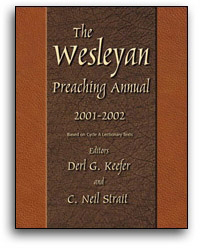
Preaching
THE WESLEYAN PREACHING ANNUAL 2001--2002
WORSHIP HELPS
CALL TO WORSHIP (Based on Psalm 30:4--5, 12)
Reader 1: All people! Sing your hearts out to God! Thank Him to His face!
Reader 2: His anger arises occasionally, but across eternity there is only love.
Reader 1: The nights of crying are over, for joy comes at daybreak!
OFFERING THOUGHT
Dear God, we are called to encourage one another by giving support to one another in Christ. Help us to meet our goal. Amen.
BENEDICTION
May the God who gave each of us tools of grace in the lives of others sustain us in action throughout our days. Amen!
SERMON BRIEFS
New Life In Christ
Romans 8:12--25
Heaven! We sing about it, dream about it, and long for it. But who wants to go right now? There may be a few who would sign up for the trip now, but not many. What good then, is a relationship with Christ today? How does new life in Christ affect me today? That seems to be the question Paul answers in these verses. He shows us two major answers to the all important question of what new life in Christ does for me today.
I. He shows us that new life in Christ means that we are led by the Spirit.
Paul carefully shows us what it means to be led by the Spirit.
Being led by the Spirit means we will put to death the misdeeds of the body (v. 13). This happens as we are obedient to the Spirit. As He leads us He takes us on a journey of refinement. We go through the refining process, which purges our life of things which displease God. Certainly this is not always an enjoyable process. But let us be clear of this: The goal of the church is not to make people happy. Rather, it is to make people better! Such is the refining process on which the Spirit leads us.
Being led by the Spirit also means that you have an intimate relationship with God (vv. 14--15). The proof of such a relationship is that you can call God the Creator "Abba Father." Think of it! The contemporary equivalent of the word "Abba" is "Daddy." As we follow the Spirit God, the Creator becomes known to us as Daddy. Why? Because in the obedient following of the Spirit our intimacy with God the Father grows and matures.
Being led by the Spirit further means we have assurance about our salvation (v. 16). Certainly stress, personality, and sickness can all bring about doubts. But under ordinary circumstances, as we follow the Spirit, there ought to be an assurance regarding our standing with God. This assurance, according to Paul, comes about through the inner witness of the Spirit. In our humanity, when doubts come, there is an interior testimony meeting that takes place. The Spirit of God testifies to your spirit that you are indeed His child. What joy to hear a testimony like that!
II. Next, Paul shows us that new life in Christ means we become future oriented.
We remember the past, but it no longer haunts us. We are the Redeemed and we look forward.
In our future oriented look we see that someday our present state of adoption will be completed (vv. 18--19). The parents had completed the legal requirements for adopting their baby born in Russia. They had seen pictures. They knew all about her. Ironically, since she still lived in Russia, they had never held her. What a dramatic moment it was when they watched their new baby being carried off the plane being placed in their arms! At last, the adoption was complete in every sense of the word. In our future oriented state, we look forward to the day when our adoption as a child of God is complete in every sense of the word. It is legally completed. The price has been paid through the shed blood of Jesus. The justice of God has been satisfied. But someday we will be held in His arms and the adoption will be completed!
In our future oriented look we see that someday our present earth will be recreated (vv. 20--22). God has taught us that we are stewards of creation. But the created order is in a state of decay that cannot be corrected by human effort. The environmentalists are fighting a losing battle. But someday there will be a recreation of this earth. We look forward to the day when the earth is revamped into the pristine condition it once had prior to the Fall. The liberation of planet earth from its present sate of decay is coming!
In our future oriented look we see that someday our present bodies will be remade (vv. 23--25). The redemption of our bodies is coming. Like all created things, they too will be remade. We look forward to the day when there is no need to take pills. We look forward to throwing away false teeth, canes, and glasses. We look forward to saying good--bye to cancer, heart--attacks, and headaches. All of this is possible as we experience new life in Christ.
With the tremendous impact upon our lives, why would anyone ignore the opportunity to experience new life in Christ? It impacts us as we are led by the Spirit. It transforms us as we become future oriented. Today allow Christ to give you the new life that only He can give!
Randall Hartman
The Parable Of The Weeds
Matthew 13:24--30
Introduction
In this passage we find a rather ordinary story with an important message for the followers of Christ. This is the Parable of Weeds. This story, like most of the parables of Jesus, comes straight out of the life and practices of his day. A man sowed his field with good grain, but as it began to grow, his servants suspected that there were weeds intermingled and brought word of this to the farmer with a question concerning the weeds, "Do you want us to go and pull them up?" (v. 28). The farmer's reply sets the stage and introduces the drama of the parable.
Anyone who has planted a garden can identify with the problems described in this brief parable. The parable suggests three primary things.
I. It recognizes that in this fallen world there is the intermingling of the good and bad together.
The field presents a vivid picture of the world in which we live and bear witness to Christ. Part of what this means is that as believers we are surrounded with influences and forces which, if unchecked, can inhibit our spiritual growth and influence.
II. There is a caution about being judgmental and/or trying too hard to separate the good from the bad.
There are times when it may be difficult to distinguish between the wheat and the weeds and other times when one can clearly distinguish, but to try to destroy the weeds may also do great harm to the wheat, "... while you are pulling the weeds, you may root up the wheat with them" (v. 29). Regardless of the best of intentions, rendering harsh judgments can do more harm than good.
Illustration: A man once said that his tailor was the wisest person he knew because the tailor took his measurements anew each time he saw the man. How easy it is to judge a person once and assume that he or she is the same from then on, but how unfair that would be for people can and do change. That is particularly true of individuals who come to faith in Christ. Think of the slave trader named John Newton who was transformed by grace so that he became a minister and hymn writer, best known for his hymn, "Amazing Grace."
We should not be too quick to classify folks or to judge them. In fact the parable seems to say two important things about judgment. First that judgment belongs to God and second that judgment will come at the end. Judgment is not hasty but it does come.
III. The final judgment comes at harvest and that judgment ultimately rests with God alone.
This results in quite a contrast between the good and bad, for the weeds are burned and the wheat is saved and brought into the owner's barn.
Illustration: The interior of Orthodox churches in Russia are almost always covered with paintings of scenes from the Bible. They cover all four walls and the ceiling. Generally on the inside back wall is a painting of the last judgment. This serves as a graphic reminder, one sees when leaving the church.
Conclusion
A little later in the chapter, Jesus is asked to explain the parable of the weeds. Note carefully verses 36--43. The sower is the Christ himself. The field is the world and the good seed designates the followers of Christ - "sons of the kingdom" (v. 38). The weeds are those who oppose the gospel and the enemy who "sows" them is the devil. The harvest is to come at the end of the age with the angels of God doing the separating. Judgment belongs to God.
This parable serves as an appeal from Jesus for His servants to defer judgment. The final discrimination is to be left with God. He will not allow evil to go unpunished but neither will he be unjust or harsh with those who are faithful.
This parable is a picture of the kingdom. Jesus is sowing (sending out His followers into the world). The powers of Satan will work actively against this, but in the end - the Church will prevail!
John Bowling
CALL TO WORSHIP (Based on Psalm 30:4--5, 12)
Reader 1: All people! Sing your hearts out to God! Thank Him to His face!
Reader 2: His anger arises occasionally, but across eternity there is only love.
Reader 1: The nights of crying are over, for joy comes at daybreak!
OFFERING THOUGHT
Dear God, we are called to encourage one another by giving support to one another in Christ. Help us to meet our goal. Amen.
BENEDICTION
May the God who gave each of us tools of grace in the lives of others sustain us in action throughout our days. Amen!
SERMON BRIEFS
New Life In Christ
Romans 8:12--25
Heaven! We sing about it, dream about it, and long for it. But who wants to go right now? There may be a few who would sign up for the trip now, but not many. What good then, is a relationship with Christ today? How does new life in Christ affect me today? That seems to be the question Paul answers in these verses. He shows us two major answers to the all important question of what new life in Christ does for me today.
I. He shows us that new life in Christ means that we are led by the Spirit.
Paul carefully shows us what it means to be led by the Spirit.
Being led by the Spirit means we will put to death the misdeeds of the body (v. 13). This happens as we are obedient to the Spirit. As He leads us He takes us on a journey of refinement. We go through the refining process, which purges our life of things which displease God. Certainly this is not always an enjoyable process. But let us be clear of this: The goal of the church is not to make people happy. Rather, it is to make people better! Such is the refining process on which the Spirit leads us.
Being led by the Spirit also means that you have an intimate relationship with God (vv. 14--15). The proof of such a relationship is that you can call God the Creator "Abba Father." Think of it! The contemporary equivalent of the word "Abba" is "Daddy." As we follow the Spirit God, the Creator becomes known to us as Daddy. Why? Because in the obedient following of the Spirit our intimacy with God the Father grows and matures.
Being led by the Spirit further means we have assurance about our salvation (v. 16). Certainly stress, personality, and sickness can all bring about doubts. But under ordinary circumstances, as we follow the Spirit, there ought to be an assurance regarding our standing with God. This assurance, according to Paul, comes about through the inner witness of the Spirit. In our humanity, when doubts come, there is an interior testimony meeting that takes place. The Spirit of God testifies to your spirit that you are indeed His child. What joy to hear a testimony like that!
II. Next, Paul shows us that new life in Christ means we become future oriented.
We remember the past, but it no longer haunts us. We are the Redeemed and we look forward.
In our future oriented look we see that someday our present state of adoption will be completed (vv. 18--19). The parents had completed the legal requirements for adopting their baby born in Russia. They had seen pictures. They knew all about her. Ironically, since she still lived in Russia, they had never held her. What a dramatic moment it was when they watched their new baby being carried off the plane being placed in their arms! At last, the adoption was complete in every sense of the word. In our future oriented state, we look forward to the day when our adoption as a child of God is complete in every sense of the word. It is legally completed. The price has been paid through the shed blood of Jesus. The justice of God has been satisfied. But someday we will be held in His arms and the adoption will be completed!
In our future oriented look we see that someday our present earth will be recreated (vv. 20--22). God has taught us that we are stewards of creation. But the created order is in a state of decay that cannot be corrected by human effort. The environmentalists are fighting a losing battle. But someday there will be a recreation of this earth. We look forward to the day when the earth is revamped into the pristine condition it once had prior to the Fall. The liberation of planet earth from its present sate of decay is coming!
In our future oriented look we see that someday our present bodies will be remade (vv. 23--25). The redemption of our bodies is coming. Like all created things, they too will be remade. We look forward to the day when there is no need to take pills. We look forward to throwing away false teeth, canes, and glasses. We look forward to saying good--bye to cancer, heart--attacks, and headaches. All of this is possible as we experience new life in Christ.
With the tremendous impact upon our lives, why would anyone ignore the opportunity to experience new life in Christ? It impacts us as we are led by the Spirit. It transforms us as we become future oriented. Today allow Christ to give you the new life that only He can give!
Randall Hartman
The Parable Of The Weeds
Matthew 13:24--30
Introduction
In this passage we find a rather ordinary story with an important message for the followers of Christ. This is the Parable of Weeds. This story, like most of the parables of Jesus, comes straight out of the life and practices of his day. A man sowed his field with good grain, but as it began to grow, his servants suspected that there were weeds intermingled and brought word of this to the farmer with a question concerning the weeds, "Do you want us to go and pull them up?" (v. 28). The farmer's reply sets the stage and introduces the drama of the parable.
Anyone who has planted a garden can identify with the problems described in this brief parable. The parable suggests three primary things.
I. It recognizes that in this fallen world there is the intermingling of the good and bad together.
The field presents a vivid picture of the world in which we live and bear witness to Christ. Part of what this means is that as believers we are surrounded with influences and forces which, if unchecked, can inhibit our spiritual growth and influence.
II. There is a caution about being judgmental and/or trying too hard to separate the good from the bad.
There are times when it may be difficult to distinguish between the wheat and the weeds and other times when one can clearly distinguish, but to try to destroy the weeds may also do great harm to the wheat, "... while you are pulling the weeds, you may root up the wheat with them" (v. 29). Regardless of the best of intentions, rendering harsh judgments can do more harm than good.
Illustration: A man once said that his tailor was the wisest person he knew because the tailor took his measurements anew each time he saw the man. How easy it is to judge a person once and assume that he or she is the same from then on, but how unfair that would be for people can and do change. That is particularly true of individuals who come to faith in Christ. Think of the slave trader named John Newton who was transformed by grace so that he became a minister and hymn writer, best known for his hymn, "Amazing Grace."
We should not be too quick to classify folks or to judge them. In fact the parable seems to say two important things about judgment. First that judgment belongs to God and second that judgment will come at the end. Judgment is not hasty but it does come.
III. The final judgment comes at harvest and that judgment ultimately rests with God alone.
This results in quite a contrast between the good and bad, for the weeds are burned and the wheat is saved and brought into the owner's barn.
Illustration: The interior of Orthodox churches in Russia are almost always covered with paintings of scenes from the Bible. They cover all four walls and the ceiling. Generally on the inside back wall is a painting of the last judgment. This serves as a graphic reminder, one sees when leaving the church.
Conclusion
A little later in the chapter, Jesus is asked to explain the parable of the weeds. Note carefully verses 36--43. The sower is the Christ himself. The field is the world and the good seed designates the followers of Christ - "sons of the kingdom" (v. 38). The weeds are those who oppose the gospel and the enemy who "sows" them is the devil. The harvest is to come at the end of the age with the angels of God doing the separating. Judgment belongs to God.
This parable serves as an appeal from Jesus for His servants to defer judgment. The final discrimination is to be left with God. He will not allow evil to go unpunished but neither will he be unjust or harsh with those who are faithful.
This parable is a picture of the kingdom. Jesus is sowing (sending out His followers into the world). The powers of Satan will work actively against this, but in the end - the Church will prevail!
John Bowling
