
A Note To Fearful Hearts
Sermon
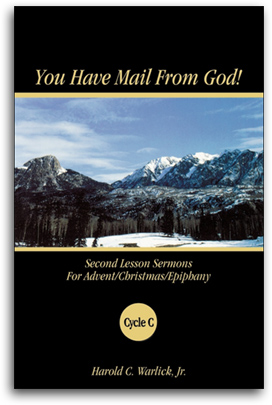
You Have Mail From God!
Second Lesson Sermons For Advent/Christmas/Epiphany Cycle C
The frail, tired woman had experienced a sleepless night in her hospital bed. Aged wrinkles marked her face as she prepared to greet another day of tests, medications, and well-meaning visitors. It was early. The little rays of sunshine had just begun to dance through the cracks in the window blinds.
She heard him next door. Every morning he practiced the same routine. He was a preacher. His clerical collar and oversized cross hanging from the big chain around his neck informed everyone of his status.
He wasn't her minister. Actually, he wasn't anyone's minister. But he thought he was everyone's minister. He had retired a few years earlier and his voluntary rounds in the hospital provided him with a boost to his flagging self-esteem. He would visit every patient on the hall, asking them if they "would like to have a prayer." Then, in a booming voice he would break the quiet peace of the morning hour with a recitation that would weave portions of 1 Corinthians 15 in and out of its verbiage. He always concluded, "Since Christ has risen we know that should we fall asleep we will not be lost ... Amen." Then, his duty done, the old preacher would hurry on to the next room, once again to repeat his litany.
This particular morning the frail, tired woman had had enough. Into her room he barged, ever at the ready to begin the self-selected ritual. "Would you like to have a prayer?" he intoned.
She painfully turned her head to stare him full in the face. "Sure, go ahead," she responded, "if it will make you feel better!"
He failed to grasp the meaning of her words and plowed ahead, reciting the prayer, and touching all the bases -- "In him we will be raised ... first fruits ... those who have fallen asleep...." Then, as always, he pivoted and hurried on to the next room. She knew he would be back again the next day. His ego needed it. But she would try to make him feel as comfortable as possible.
If Christ is raised from the dead, so are we! If Christ is not raised, then neither are we. These ancient words are not meant simply as words of comfort in funeral settings. Nor are they ammunition to prop up a preacher's flagging sense of importance. They are words to address fearful hearts.
Is it all a terrible lie? Do we live under a misguided delusion? How do we see beyond the horizon of rational thought? Is this some creed from the past whose recitation is supposed to make us feel better?
Perhaps a fourth grade student said it best when she wrote to her teacher: "Laugh and the world laughs with you. Cry, and ? someone yells, 'Shut up!' " If the resurrection is not real, then all our hopes in Christ do, indeed, leave us as people to be pitied more than all people. Instead of a final victory, we will resemble little children who incessantly cry out for a parent in the middle of the dark night with a fearful heart only to hear the sharp retort thundering its way down the corridors of eternity, "Shut up and go back to sleep!"
In a world dominated by Greek reason, Paul had to argue for the actual resurrection of Jesus. The Greeks had carefully separated the body from the soul. It was a small leap for certain rationalists to argue that spirit was good and flesh was evil, both created by gods that had nothing to do with each other. Since Jesus was a part of God, then, obviously he could have never been a flesh and blood human being. How could God die? In short, there was no resurrection for there had been no death. This rational thought, filled with oriental influences and Greek mystery religions, focused on mysteries instead of realities when it came to religious expressions. Paul's focus on a bodily death and bodily resurrection must have been quite difficult for first-century converts to Christianity to understand. It was, perhaps, even more difficult for them to grasp than for us. Yet the great scandal of the resurrection of the dead remains the central belief of fearful hearts in every age, including ours.
In Letters to a Young Poet, Rainer Maria Rilke noted that "people have oriented all their solutions toward the easy and toward the easiest side of the easy; but it is clear that we must hold to what is difficult." When it comes to believing in the resurrection of the dead we share a common experience with the early Corinthians. We are, in our own way, new converts. In fact, in a rational and scientific world we must be converted and re-converted to this essential belief in each passing moment.
This forward-looking belief breaks the bounds of simple thought. It is anarchic in that it has not learned restraint. "Christ has been raised from the dead, the first fruits of those who have fallen asleep." This hope is a rebellious expression in our world, as well as in Paul's.
Paul's insistence that Christ died and was raised from the dead moves God from a backstage deity to a front-stage performer in human experience. God gets involved in humankind. God is fully in the human Jesus. God, then, is fully involved in all humans who die or have fallen asleep.
Paul's assertion about the resurrection is a message to fearful hearts in every age. Note that Paul is giving an answer to a question about fear -- not a fear of death but a fear of performance. People in Corinth are not worried about death. They are fearful that their belief in Christ will turn out to be a fraud! The Greek world valued the opinions of others and so does our world. Essentially the issue is the same: fear of being shown up as a fraud, ignorant, a dolt! For all who are driven by a fear that someday their belief in the Christ will be exposed as inept and misguided, Paul's note is direct. The issue cannot be avoided.
If Christ has not been raised, our faith is futile. We are to be pitied. Such is the nature of faith -- it is always a leap. When we believe, no explanation is necessary. When we do not believe, no explanation is satisfactory.
Christ is raised as we shall be raised -- is this a great affirmation or the greatest fraud of all time? Let's be honest. On this we have wagered much. All or nothing! It demands a revolutionary response. It is a risk to believe in the resurrection.
Remember what Fred Craddock calls "The Reuben Option." Reuben is the oldest son of Jacob and is out among his brothers who are fed up with the youngest, Joseph. The brothers want to kill him. But Reuben is afraid. As the oldest, he knows that the father will most likely blame him. And, to be certain, he feels a small sense of morality in the matter. Murder is a heavy burden to bear, even if you can justify it to yourself on the basis of little Joseph's arrogant behavior. But Reuben also wants to look good in the eyes of his brothers. He takes a stand but he doesn't go far enough. Reuben tries to cover all his bases. He stands for all of us when we try to hedge, to get what we want and look good doing it. "Let's sell him," becomes Reuben's response. "Send him far away and we're rid of him." Reuben tries to keep everybody happy. He doesn't let justice get in the way of his personal ambition.
How to believe in the great affirmation but protect against the great deception? That's the formula many try to work out. To leap wholeheartedly in faith toward the resurrected Christ demands a radical lifestyle -- a total involvement with humankind. You can't remain distant from the things that are contaminated in this world and those people who are sinful, like the Jewish holiness code did. You can't be apathetic like the Greek philosophers, avoiding the extremes of passion because reaching out to others always leads to disappointment. You have to understand that if the resurrection of Christ is the first fruits for a resurrection for all, then the great affirmation demands our all. We can't hedge all bets and cover our backside.
Affirmation or deception? Only our lives will tell. So be it!
She heard him next door. Every morning he practiced the same routine. He was a preacher. His clerical collar and oversized cross hanging from the big chain around his neck informed everyone of his status.
He wasn't her minister. Actually, he wasn't anyone's minister. But he thought he was everyone's minister. He had retired a few years earlier and his voluntary rounds in the hospital provided him with a boost to his flagging self-esteem. He would visit every patient on the hall, asking them if they "would like to have a prayer." Then, in a booming voice he would break the quiet peace of the morning hour with a recitation that would weave portions of 1 Corinthians 15 in and out of its verbiage. He always concluded, "Since Christ has risen we know that should we fall asleep we will not be lost ... Amen." Then, his duty done, the old preacher would hurry on to the next room, once again to repeat his litany.
This particular morning the frail, tired woman had had enough. Into her room he barged, ever at the ready to begin the self-selected ritual. "Would you like to have a prayer?" he intoned.
She painfully turned her head to stare him full in the face. "Sure, go ahead," she responded, "if it will make you feel better!"
He failed to grasp the meaning of her words and plowed ahead, reciting the prayer, and touching all the bases -- "In him we will be raised ... first fruits ... those who have fallen asleep...." Then, as always, he pivoted and hurried on to the next room. She knew he would be back again the next day. His ego needed it. But she would try to make him feel as comfortable as possible.
If Christ is raised from the dead, so are we! If Christ is not raised, then neither are we. These ancient words are not meant simply as words of comfort in funeral settings. Nor are they ammunition to prop up a preacher's flagging sense of importance. They are words to address fearful hearts.
Is it all a terrible lie? Do we live under a misguided delusion? How do we see beyond the horizon of rational thought? Is this some creed from the past whose recitation is supposed to make us feel better?
Perhaps a fourth grade student said it best when she wrote to her teacher: "Laugh and the world laughs with you. Cry, and ? someone yells, 'Shut up!' " If the resurrection is not real, then all our hopes in Christ do, indeed, leave us as people to be pitied more than all people. Instead of a final victory, we will resemble little children who incessantly cry out for a parent in the middle of the dark night with a fearful heart only to hear the sharp retort thundering its way down the corridors of eternity, "Shut up and go back to sleep!"
In a world dominated by Greek reason, Paul had to argue for the actual resurrection of Jesus. The Greeks had carefully separated the body from the soul. It was a small leap for certain rationalists to argue that spirit was good and flesh was evil, both created by gods that had nothing to do with each other. Since Jesus was a part of God, then, obviously he could have never been a flesh and blood human being. How could God die? In short, there was no resurrection for there had been no death. This rational thought, filled with oriental influences and Greek mystery religions, focused on mysteries instead of realities when it came to religious expressions. Paul's focus on a bodily death and bodily resurrection must have been quite difficult for first-century converts to Christianity to understand. It was, perhaps, even more difficult for them to grasp than for us. Yet the great scandal of the resurrection of the dead remains the central belief of fearful hearts in every age, including ours.
In Letters to a Young Poet, Rainer Maria Rilke noted that "people have oriented all their solutions toward the easy and toward the easiest side of the easy; but it is clear that we must hold to what is difficult." When it comes to believing in the resurrection of the dead we share a common experience with the early Corinthians. We are, in our own way, new converts. In fact, in a rational and scientific world we must be converted and re-converted to this essential belief in each passing moment.
This forward-looking belief breaks the bounds of simple thought. It is anarchic in that it has not learned restraint. "Christ has been raised from the dead, the first fruits of those who have fallen asleep." This hope is a rebellious expression in our world, as well as in Paul's.
Paul's insistence that Christ died and was raised from the dead moves God from a backstage deity to a front-stage performer in human experience. God gets involved in humankind. God is fully in the human Jesus. God, then, is fully involved in all humans who die or have fallen asleep.
Paul's assertion about the resurrection is a message to fearful hearts in every age. Note that Paul is giving an answer to a question about fear -- not a fear of death but a fear of performance. People in Corinth are not worried about death. They are fearful that their belief in Christ will turn out to be a fraud! The Greek world valued the opinions of others and so does our world. Essentially the issue is the same: fear of being shown up as a fraud, ignorant, a dolt! For all who are driven by a fear that someday their belief in the Christ will be exposed as inept and misguided, Paul's note is direct. The issue cannot be avoided.
If Christ has not been raised, our faith is futile. We are to be pitied. Such is the nature of faith -- it is always a leap. When we believe, no explanation is necessary. When we do not believe, no explanation is satisfactory.
Christ is raised as we shall be raised -- is this a great affirmation or the greatest fraud of all time? Let's be honest. On this we have wagered much. All or nothing! It demands a revolutionary response. It is a risk to believe in the resurrection.
Remember what Fred Craddock calls "The Reuben Option." Reuben is the oldest son of Jacob and is out among his brothers who are fed up with the youngest, Joseph. The brothers want to kill him. But Reuben is afraid. As the oldest, he knows that the father will most likely blame him. And, to be certain, he feels a small sense of morality in the matter. Murder is a heavy burden to bear, even if you can justify it to yourself on the basis of little Joseph's arrogant behavior. But Reuben also wants to look good in the eyes of his brothers. He takes a stand but he doesn't go far enough. Reuben tries to cover all his bases. He stands for all of us when we try to hedge, to get what we want and look good doing it. "Let's sell him," becomes Reuben's response. "Send him far away and we're rid of him." Reuben tries to keep everybody happy. He doesn't let justice get in the way of his personal ambition.
How to believe in the great affirmation but protect against the great deception? That's the formula many try to work out. To leap wholeheartedly in faith toward the resurrected Christ demands a radical lifestyle -- a total involvement with humankind. You can't remain distant from the things that are contaminated in this world and those people who are sinful, like the Jewish holiness code did. You can't be apathetic like the Greek philosophers, avoiding the extremes of passion because reaching out to others always leads to disappointment. You have to understand that if the resurrection of Christ is the first fruits for a resurrection for all, then the great affirmation demands our all. We can't hedge all bets and cover our backside.
Affirmation or deception? Only our lives will tell. So be it!
