
Proper 11
Preaching
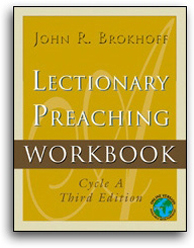
Lectionary Preaching Workbook
Cycle A, THIRD EDITION
THE LESSONS
Lesson 1: Genesis 28:10--19a (C)
Jacob dreams of a ladder extending to heaven and has an experience with Yahweh. Jacob steals his father's blessing from Esau. When their mother hears of Esau's plan to kill Jacob as soon as Isaac dies, she advises Jacob to flee to her brother, Laban. Jacob flees and on his way to Laban, when night comes, he lies down to sleep, using a stone for a pillow. He experiences forsakenness - alone, estranged from his family, in a strange land, and his future uncertain. In this extremity, God comes and promises to protect and prosper him. Jacob awakens with amazement that God is with and for him.
Lesson 1: Wisdom 12:13, 16--19 (RC, E)
Making judgments in a godly way.
Lesson 2: Romans 8:12--25 (C); Romans 8:18--25 (E)
Both creation and creatures groan for redemption. Paul sees redemption in its cosmic perspective. With Adam the whole creation fell and the ground was cursed. It is in a state of decay and the whole creation groans for redemption from its bondage of decay and death. Nature is tooth and fang and it exists on the principle of "dog eat dog." Paul sees the release of nature's bondage when there will be a new heaven and a new earth at the time of the Parousia. Humanity's sin pollutes nature, ravishes the good earth, and threatens creatures with extinction. Human beings share in this longing for redemption which by faith in Christ we now experience in part. With creation we long for the full redemption of our bodies when Christ returns.
Lesson 2: Romans 8:26--27 (RC)
The Spirit intercedes for those who do not know how to pray.
Gospel: Matthew 13:24--30, 36--43 (C, E); Matthew 13:24--43 (RC)
The parable of the wheat and weeds and Jesus' explanation of its meaning. Jesus gives this parable because he is criticized for associating with sinners and outcasts (vv. 24--30). The allegorical explanation of the parable is the product of the early church as the parable applied to it in its day (vv. 36--40). The parable teaches that we are not to judge who is a true or false Christian. We are not to weed out the weeds because in doing so, we would destroy the wheat. On the day of judgment God will judge and separate the weeds and the wheat. Until that time comes the church needs to have patience and forbearance of the weeds among the wheat.
Psalm Of The Day
Psalm 139:1--12, 23--24 (C) - "Where can I go from your spirit?" (v. 7).
Psalm 86:11--17 (RC, E) - "Teach me thy way, O Lord" (v. 11a).
Prayer Of The Day
"Pour out upon us, O Lord, the spirit to think and do what is right, that we, who cannot even exist without you, may have the strength to live according to your will."
Hymn Of The Day
"On What Has Now Been Sown"
THEOLOGICAL REFLECTIONS
Gospel: Matthew 13:24--30, 36--43
1. Kingdom of heaven (v. 24). The wheat (good) and the weeds (bad) are in the kingdom, not in the world. We could understand it if the parable applied to the world where there are all kinds of people. The kingdom of heaven is the kingdom of God, and the kingdom of God is God's realm, God's people, the church. The church of God consists of good and evil, wheat and weeds.
2. Sleeping (v. 25). Who was "sleeping"? Only the farmer in whose field tares were sown? "While men were sleeping." This means probably society or the church in general. While we are asleep to moral and spiritual values, the dirty work is done. If we were awake, alert, and watching, evil could be resisted.
3. Enemy (vv. 25, 28). We are not told much about "the enemy." Later in verse 39 he is identified as the devil who is the personification of the evil power in the world. We are not told where he came from, nor where he went after sowing the weeds. Is this not the case with our understanding of evil? We do not know the origin of evil, nor the end of evil. All we know is that evil is a reality in our world, a reality to be resisted and rejected.
4. Weeds (v. 26). Weeds are darnel which so closely resembles wheat that it is very difficult to differentiate the one from the other. True and false Christians in the church are so similar that it is hard to tell which is which. Thus, we are in no position to say who of our church members is wheat and who is a weed. This should prevent Christians from being judgmental.
5. Grow together (v. 30). The wheat and the weeds are to be allowed to exist side by side. The weeds are not to be removed, for it would do more harm than good. Like the servants in the parable, we want to get rid of the undesirables, the inactives, the troublemakers in a congregation. We often wish they would transfer to another church or we hope there will soon be some first--class funerals. Can we permit members to remain when they are willful breakers of the Ten Commandments, such adulterers, murderers, and thieves? Where shall we draw the line?
Lesson 1: Genesis 28:10--19a (C)
1. Stones (v. 11). Jacob used a stone for a pillow and still he slept! But it was not a sound sleep, for he had dreams the night he ran away from home. He made his bed by cheating his brother of his birthright and his father's blessing, and now he must lie in it: the hard, cold ground with a stone for a pillow! It was a stone of loneliness, rejection, and hostility. Even here in this condition God came to him with words of comfort and assurance. In the depth of our existence God comes to us.
2. Ladder (v. 12). It is often called "Jacob's ladder," and youth love to sing, "We are climbing Jacob's Ladder." A Christian never climbs Jacob's ladder. Jacob did not attempt to go up the ladder he saw in his dream. It was a ladder let down from heaven. Angels were on it and they were ascending and descending. This is a figurative way of saying that God came down to Jacob, and there was communication between God and Jacob. Prayer and worship are a two--way street: God and persons are in dialogue.
3. Place (v. 11). This word is repeatedly used in this pericope. It is the place where God and humans meet. For Jacob the place may have been a shrine at Bethel or in the fields under the open skies. It does not matter whether the place is "awesome" because of the glory of God's presence. It becomes a house of God because a house is where one lives. If God is there, the place is the gate of heaven, for heaven is being in the presence of God.
Lesson 2: Romans 8:12--25 (C); Romans 8:18--25 (E)
1. Creation (vv. 19--22). Creation as well as man (male and female) needs redemption. Until that time creation is in travail yearning to be delivered from decay. Man and creation are inseparable: both need redemption. Creation's redemption, however, depends upon man's prior redemption. In the beginning God placed creation under the dominance of man who, since the fall, has abused, misused, and polluted nature. Sinful man has not been a good steward of creation. Only when man is redeemed will he care for creation. Until that time, creation is waiting for man's redemption.
2. Total (v. 23). Paul says we are waiting for adoption as sons of God, "The redemption of our bodies." Have we not been adopted as sons by faith in Christ? Are we not justified by grace? Surely we have, but Paul probably is referring here to our total redemption, soul and body. It is now a matter of sanctification, the redemption of our bodies. Salvation is a process. We begin it by justification, and then we groan in travail to bring the entire person under the Lordship of Christ.
Lesson 2: Romans 8:26--27 (RC)
1. Weakness (v. 26). It is characteristic of humanity to be weak. The particular weakness in this case is our ignorance and inability to properly pray. The Spirit becomes our Advocate to help us. He prays for us. We often ask friends to pray for us. Ever ask God the Spirit to pray for you? Here we see the imminence and transcendence of God. It reminds us of Jesus, Son of God, praying in Gethsemane to the Father in heaven.
2. Prayer without words (v. 26). Prayer is more than words. It is intimate communication with God. The thoughts and feelings do not have to be verbalized. They go beyond words to sighs. It is not glossolalia. It is no language at all - spirit with Spirit.
PREACHING POSSIBILITIES
Gospel: Matthew 13:24--30, 36--43
1. Holy Tares! 13:24--30
Need: When a child is especially unmanageable, we say he is a "holy terror." There are people in the church who can be called "holy tares." In the text, the "tares," are the "weeds." They are members of the church, "holy" people, who are weeds rather than wheat. Often a non--churchman gives as an excuse for not joining a church, "There are hypocrites in the church." This sermon is to admit, as Jesus taught in the parable, that there are hypocrites in the church. It is a mixture of wheat and weeds, good and bad, genuine and hypocritical people.
Outline: Yes, we do have holy tares in the church.
a. They appear to be Christian - "weeds" (darnel) - v. 26.
b. They are tolerated by true Christians - v. 30.
c. They face a future judgment - v. 30.
2. What Shall We Do About Unworthy Christians? 13:24--30.
Need: A practical problem in every church is the existence of members who are "weeds," the work of the devil. Should they be disciplined? Should they be tried and if found guilty, expelled? What church has the courage to do so? In this parable Jesus teaches us to allow the weeds to remain until harvest time. How far can we practice this? Shall the church tolerate members who are anti--Christian: adulterers, thieves, murderers? The text helps us to deal with this problem.
Outline: What shall we do with false Christians?
a. Judge them? - v. 26. The weeds (darnel) are so much like the wheat that only God can tell the difference. Who is to judge who is and who is not a sinner?
b. Expel them - vv. 28, 29. Jesus teaches that expulsion does more harm than good. Can we live with false Christians in the church? How long can we tolerate their opposition to the progress of the church?
c. Commit them to God? - v. 30. On judgment day God will destroy false Christians, the weeds.
3. Are You A Weed? 13:24--26
Need: According to this parable every church consists of wheat and weeds. Who is to determine who are weeds? Who are we to judge? Since Jesus teaches that we should allow the weeds to remain, why try to decide who are weeds? Only God knows who are genuine believers, members of the invisible church. But, should not a weed be converted into wheat? Only the individual can conclude that he is a weed and thus needs to repent. This sermon is to help the worship to examine himself in order to learn if he is a weed in need of repentance.
Outline: Consider the weeds!
a. Weeds look like wheat - hypocrites.
b. Weeds produce no fruit or flowers - unproductive.
c. Weeds are selfish - choke the good seed.
Lesson 1: Genesis 28:10--19a (C)
1. Where Is God When It Hurts? 28:10--17
Need: Life may be like a bed of stone. Jacob took a stone for a pillow. Could anything be harder or more uncomfortable? The stone represents the hardships of life. In Jacob's case it was having to leave home and family because Esau threatened his life. Jacob was a refugee in a strange land, and not a soul was there to comfort him. His future was unknown. He was forsaken and hated. Where is God at a time like this when you hurt, even though as it was in Jacob's case, it is your own fault?
Outline: Where is God when you hurt?
a. He comes to you in the night of your life - v. 13.
b. He communicates with you - v. 13: "descending and ascending."
c. He promises to bless you - v. 15.
2. Surprised by God! 28:16--17
Need: Jacob was surprised that God was present. He thought he was alone and far from God because God, he thought, was restricted to his geographical area. Are we surprised to find God in places other than in a church? Would you be surprised to find God in a cocktail lounge, in a jail, in nature, in a hospital? God comes to people wherever and whenever they are in need, regardless of the place.
Outline: When God comes to you -
a. Be aware of his presence - v. 16.
b. Be reverent - v. 17; "afraid," "awesome."
c. Be cognizant of his significance - v. 17: "house of God," "Gate of heaven."
Lesson 1: Wisdom 12:13, 16--19 (RC, E)
Judge And Be Judged. 12:13, 16--19
Need: Judgment is a part of life. Daily we are judged on our work, performance, and learning. We, too, are constantly judging others by making evaluations of people, clothing, cultural tastes, etc. Are we making good judgments? How shall we fare when we experience God's judgment of our lives?
Outline: Are you the judge or the judged?
a. Who are you to judge - v. 13.
b. If you judge, be kindhearted - v. 19.
c. To escape judgment, repent - v. 19.
Lesson 2: Romans 8:12--25 (C); Romans 8:18--25 (E)
1. Creator, Creation, And Creature. 8:18--23
Need: In this passage we have the cosmic dimension of redemption. The creature and creation are both in need of redemption. Until that is accomplished, both wait and groan for redemption. This sermon is relevant to today's concern for environment. It is an opportunity to give a theological perspective to the problem and to our relation to creation.
Outline: In this passage we see -
a. The Creator of creation and creature.
b. The creature and creation in need of redemption - vv. 19, 20.
1. Creature's fall into sin.
2. Creation's bondage to decay.
c. The Creator's redemption of creation and creature - vv. 21--23.
1. Creation's liberation from decay.
2. Creature's adoption as sons of God.
2. Temporary Loss For Permanent Gain. 8:18--23
Need: We live in an interim period. Now we have suffering, later permanent glory. Now we are children of God but not fully. In this transitional period on earth, we wait, groan, and long for the end of pilgrimage. What we endure today is a temporary loss for a permanent gain of glory as children of God. This, according to the text, is a case for both people and nature. Now the whole creation is in travail but in the end there is birth as God's offspring.
Outline: In this period of temporary loss -
a. We wait for redemption - vv. 19, 23.
b. We groan because of suffering - vv. 22, 23.
c. We long for permanent gain - v. 19.
Lesson 2: Romans 8:26--27 (RC)
Let God Do Your Praying. 8:26--27
Need: For many, praying is an impossible task. Not knowing how to pray we often use prayers learned in childhood as a substitute for our prayers, or we ask others to pray for us. We go to church and let the pastor do our praying. The disciples felt their inadequacy in praying and asked Jesus to teach them how to pray. In this pericope, Paul faces up to the same issue. He suggests that we allow the spirit to do our praying.
Outline: Why let God the Spirit do our praying?
a. He alone knows how to pray - v. 26.
b. He wants to help us - v. 26.
c. He knows the will of God - v. 27.
Lesson 1: Genesis 28:10--19a (C)
Jacob dreams of a ladder extending to heaven and has an experience with Yahweh. Jacob steals his father's blessing from Esau. When their mother hears of Esau's plan to kill Jacob as soon as Isaac dies, she advises Jacob to flee to her brother, Laban. Jacob flees and on his way to Laban, when night comes, he lies down to sleep, using a stone for a pillow. He experiences forsakenness - alone, estranged from his family, in a strange land, and his future uncertain. In this extremity, God comes and promises to protect and prosper him. Jacob awakens with amazement that God is with and for him.
Lesson 1: Wisdom 12:13, 16--19 (RC, E)
Making judgments in a godly way.
Lesson 2: Romans 8:12--25 (C); Romans 8:18--25 (E)
Both creation and creatures groan for redemption. Paul sees redemption in its cosmic perspective. With Adam the whole creation fell and the ground was cursed. It is in a state of decay and the whole creation groans for redemption from its bondage of decay and death. Nature is tooth and fang and it exists on the principle of "dog eat dog." Paul sees the release of nature's bondage when there will be a new heaven and a new earth at the time of the Parousia. Humanity's sin pollutes nature, ravishes the good earth, and threatens creatures with extinction. Human beings share in this longing for redemption which by faith in Christ we now experience in part. With creation we long for the full redemption of our bodies when Christ returns.
Lesson 2: Romans 8:26--27 (RC)
The Spirit intercedes for those who do not know how to pray.
Gospel: Matthew 13:24--30, 36--43 (C, E); Matthew 13:24--43 (RC)
The parable of the wheat and weeds and Jesus' explanation of its meaning. Jesus gives this parable because he is criticized for associating with sinners and outcasts (vv. 24--30). The allegorical explanation of the parable is the product of the early church as the parable applied to it in its day (vv. 36--40). The parable teaches that we are not to judge who is a true or false Christian. We are not to weed out the weeds because in doing so, we would destroy the wheat. On the day of judgment God will judge and separate the weeds and the wheat. Until that time comes the church needs to have patience and forbearance of the weeds among the wheat.
Psalm Of The Day
Psalm 139:1--12, 23--24 (C) - "Where can I go from your spirit?" (v. 7).
Psalm 86:11--17 (RC, E) - "Teach me thy way, O Lord" (v. 11a).
Prayer Of The Day
"Pour out upon us, O Lord, the spirit to think and do what is right, that we, who cannot even exist without you, may have the strength to live according to your will."
Hymn Of The Day
"On What Has Now Been Sown"
THEOLOGICAL REFLECTIONS
Gospel: Matthew 13:24--30, 36--43
1. Kingdom of heaven (v. 24). The wheat (good) and the weeds (bad) are in the kingdom, not in the world. We could understand it if the parable applied to the world where there are all kinds of people. The kingdom of heaven is the kingdom of God, and the kingdom of God is God's realm, God's people, the church. The church of God consists of good and evil, wheat and weeds.
2. Sleeping (v. 25). Who was "sleeping"? Only the farmer in whose field tares were sown? "While men were sleeping." This means probably society or the church in general. While we are asleep to moral and spiritual values, the dirty work is done. If we were awake, alert, and watching, evil could be resisted.
3. Enemy (vv. 25, 28). We are not told much about "the enemy." Later in verse 39 he is identified as the devil who is the personification of the evil power in the world. We are not told where he came from, nor where he went after sowing the weeds. Is this not the case with our understanding of evil? We do not know the origin of evil, nor the end of evil. All we know is that evil is a reality in our world, a reality to be resisted and rejected.
4. Weeds (v. 26). Weeds are darnel which so closely resembles wheat that it is very difficult to differentiate the one from the other. True and false Christians in the church are so similar that it is hard to tell which is which. Thus, we are in no position to say who of our church members is wheat and who is a weed. This should prevent Christians from being judgmental.
5. Grow together (v. 30). The wheat and the weeds are to be allowed to exist side by side. The weeds are not to be removed, for it would do more harm than good. Like the servants in the parable, we want to get rid of the undesirables, the inactives, the troublemakers in a congregation. We often wish they would transfer to another church or we hope there will soon be some first--class funerals. Can we permit members to remain when they are willful breakers of the Ten Commandments, such adulterers, murderers, and thieves? Where shall we draw the line?
Lesson 1: Genesis 28:10--19a (C)
1. Stones (v. 11). Jacob used a stone for a pillow and still he slept! But it was not a sound sleep, for he had dreams the night he ran away from home. He made his bed by cheating his brother of his birthright and his father's blessing, and now he must lie in it: the hard, cold ground with a stone for a pillow! It was a stone of loneliness, rejection, and hostility. Even here in this condition God came to him with words of comfort and assurance. In the depth of our existence God comes to us.
2. Ladder (v. 12). It is often called "Jacob's ladder," and youth love to sing, "We are climbing Jacob's Ladder." A Christian never climbs Jacob's ladder. Jacob did not attempt to go up the ladder he saw in his dream. It was a ladder let down from heaven. Angels were on it and they were ascending and descending. This is a figurative way of saying that God came down to Jacob, and there was communication between God and Jacob. Prayer and worship are a two--way street: God and persons are in dialogue.
3. Place (v. 11). This word is repeatedly used in this pericope. It is the place where God and humans meet. For Jacob the place may have been a shrine at Bethel or in the fields under the open skies. It does not matter whether the place is "awesome" because of the glory of God's presence. It becomes a house of God because a house is where one lives. If God is there, the place is the gate of heaven, for heaven is being in the presence of God.
Lesson 2: Romans 8:12--25 (C); Romans 8:18--25 (E)
1. Creation (vv. 19--22). Creation as well as man (male and female) needs redemption. Until that time creation is in travail yearning to be delivered from decay. Man and creation are inseparable: both need redemption. Creation's redemption, however, depends upon man's prior redemption. In the beginning God placed creation under the dominance of man who, since the fall, has abused, misused, and polluted nature. Sinful man has not been a good steward of creation. Only when man is redeemed will he care for creation. Until that time, creation is waiting for man's redemption.
2. Total (v. 23). Paul says we are waiting for adoption as sons of God, "The redemption of our bodies." Have we not been adopted as sons by faith in Christ? Are we not justified by grace? Surely we have, but Paul probably is referring here to our total redemption, soul and body. It is now a matter of sanctification, the redemption of our bodies. Salvation is a process. We begin it by justification, and then we groan in travail to bring the entire person under the Lordship of Christ.
Lesson 2: Romans 8:26--27 (RC)
1. Weakness (v. 26). It is characteristic of humanity to be weak. The particular weakness in this case is our ignorance and inability to properly pray. The Spirit becomes our Advocate to help us. He prays for us. We often ask friends to pray for us. Ever ask God the Spirit to pray for you? Here we see the imminence and transcendence of God. It reminds us of Jesus, Son of God, praying in Gethsemane to the Father in heaven.
2. Prayer without words (v. 26). Prayer is more than words. It is intimate communication with God. The thoughts and feelings do not have to be verbalized. They go beyond words to sighs. It is not glossolalia. It is no language at all - spirit with Spirit.
PREACHING POSSIBILITIES
Gospel: Matthew 13:24--30, 36--43
1. Holy Tares! 13:24--30
Need: When a child is especially unmanageable, we say he is a "holy terror." There are people in the church who can be called "holy tares." In the text, the "tares," are the "weeds." They are members of the church, "holy" people, who are weeds rather than wheat. Often a non--churchman gives as an excuse for not joining a church, "There are hypocrites in the church." This sermon is to admit, as Jesus taught in the parable, that there are hypocrites in the church. It is a mixture of wheat and weeds, good and bad, genuine and hypocritical people.
Outline: Yes, we do have holy tares in the church.
a. They appear to be Christian - "weeds" (darnel) - v. 26.
b. They are tolerated by true Christians - v. 30.
c. They face a future judgment - v. 30.
2. What Shall We Do About Unworthy Christians? 13:24--30.
Need: A practical problem in every church is the existence of members who are "weeds," the work of the devil. Should they be disciplined? Should they be tried and if found guilty, expelled? What church has the courage to do so? In this parable Jesus teaches us to allow the weeds to remain until harvest time. How far can we practice this? Shall the church tolerate members who are anti--Christian: adulterers, thieves, murderers? The text helps us to deal with this problem.
Outline: What shall we do with false Christians?
a. Judge them? - v. 26. The weeds (darnel) are so much like the wheat that only God can tell the difference. Who is to judge who is and who is not a sinner?
b. Expel them - vv. 28, 29. Jesus teaches that expulsion does more harm than good. Can we live with false Christians in the church? How long can we tolerate their opposition to the progress of the church?
c. Commit them to God? - v. 30. On judgment day God will destroy false Christians, the weeds.
3. Are You A Weed? 13:24--26
Need: According to this parable every church consists of wheat and weeds. Who is to determine who are weeds? Who are we to judge? Since Jesus teaches that we should allow the weeds to remain, why try to decide who are weeds? Only God knows who are genuine believers, members of the invisible church. But, should not a weed be converted into wheat? Only the individual can conclude that he is a weed and thus needs to repent. This sermon is to help the worship to examine himself in order to learn if he is a weed in need of repentance.
Outline: Consider the weeds!
a. Weeds look like wheat - hypocrites.
b. Weeds produce no fruit or flowers - unproductive.
c. Weeds are selfish - choke the good seed.
Lesson 1: Genesis 28:10--19a (C)
1. Where Is God When It Hurts? 28:10--17
Need: Life may be like a bed of stone. Jacob took a stone for a pillow. Could anything be harder or more uncomfortable? The stone represents the hardships of life. In Jacob's case it was having to leave home and family because Esau threatened his life. Jacob was a refugee in a strange land, and not a soul was there to comfort him. His future was unknown. He was forsaken and hated. Where is God at a time like this when you hurt, even though as it was in Jacob's case, it is your own fault?
Outline: Where is God when you hurt?
a. He comes to you in the night of your life - v. 13.
b. He communicates with you - v. 13: "descending and ascending."
c. He promises to bless you - v. 15.
2. Surprised by God! 28:16--17
Need: Jacob was surprised that God was present. He thought he was alone and far from God because God, he thought, was restricted to his geographical area. Are we surprised to find God in places other than in a church? Would you be surprised to find God in a cocktail lounge, in a jail, in nature, in a hospital? God comes to people wherever and whenever they are in need, regardless of the place.
Outline: When God comes to you -
a. Be aware of his presence - v. 16.
b. Be reverent - v. 17; "afraid," "awesome."
c. Be cognizant of his significance - v. 17: "house of God," "Gate of heaven."
Lesson 1: Wisdom 12:13, 16--19 (RC, E)
Judge And Be Judged. 12:13, 16--19
Need: Judgment is a part of life. Daily we are judged on our work, performance, and learning. We, too, are constantly judging others by making evaluations of people, clothing, cultural tastes, etc. Are we making good judgments? How shall we fare when we experience God's judgment of our lives?
Outline: Are you the judge or the judged?
a. Who are you to judge - v. 13.
b. If you judge, be kindhearted - v. 19.
c. To escape judgment, repent - v. 19.
Lesson 2: Romans 8:12--25 (C); Romans 8:18--25 (E)
1. Creator, Creation, And Creature. 8:18--23
Need: In this passage we have the cosmic dimension of redemption. The creature and creation are both in need of redemption. Until that is accomplished, both wait and groan for redemption. This sermon is relevant to today's concern for environment. It is an opportunity to give a theological perspective to the problem and to our relation to creation.
Outline: In this passage we see -
a. The Creator of creation and creature.
b. The creature and creation in need of redemption - vv. 19, 20.
1. Creature's fall into sin.
2. Creation's bondage to decay.
c. The Creator's redemption of creation and creature - vv. 21--23.
1. Creation's liberation from decay.
2. Creature's adoption as sons of God.
2. Temporary Loss For Permanent Gain. 8:18--23
Need: We live in an interim period. Now we have suffering, later permanent glory. Now we are children of God but not fully. In this transitional period on earth, we wait, groan, and long for the end of pilgrimage. What we endure today is a temporary loss for a permanent gain of glory as children of God. This, according to the text, is a case for both people and nature. Now the whole creation is in travail but in the end there is birth as God's offspring.
Outline: In this period of temporary loss -
a. We wait for redemption - vv. 19, 23.
b. We groan because of suffering - vv. 22, 23.
c. We long for permanent gain - v. 19.
Lesson 2: Romans 8:26--27 (RC)
Let God Do Your Praying. 8:26--27
Need: For many, praying is an impossible task. Not knowing how to pray we often use prayers learned in childhood as a substitute for our prayers, or we ask others to pray for us. We go to church and let the pastor do our praying. The disciples felt their inadequacy in praying and asked Jesus to teach them how to pray. In this pericope, Paul faces up to the same issue. He suggests that we allow the spirit to do our praying.
Outline: Why let God the Spirit do our praying?
a. He alone knows how to pray - v. 26.
b. He wants to help us - v. 26.
c. He knows the will of God - v. 27.
