Proper 11 / Pentecost 6 / Ordinary Time 16
Preaching
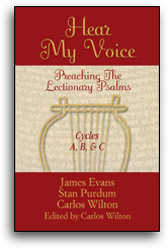
Hear My Voice
Preaching The Lectionary Psalms for Cycles A, B, C
We are not surprised when we learn about crooks and robbers boasting about "mischief done against the godly" or "plotting destruction" all day long. The image we have in our minds about who "bad" people are, and how they conduct themselves, make such accusations completely plausible. We are less inclined to believe such things about leaders, especially respected leaders among us. We have difficulty believing someone with wealth and power would deliberately plot to do someone else harm. That's why political scandal is front-page news and convenience store hold-ups are found in the metro section on page eleven.
But the psalmist will not allow us this misinformed luxury. The "mighty one" of whom he writes has wealth and power -- but is just as much a crook and thief as even the humblest pickpocket.
In ancient Israel, this was startling. Wealth was viewed as the proof of God's blessing. God conferred power on those who deserve it. But the prophets, and many psalmists, did not embrace this accepted wisdom. The wealthy and powerful, because they have greater resources, also have greater responsibility. Their wealth and power are not just for their private use. God expects them to use their resources to care for the weak and the vulnerable. The failure to do so amounts to stealing from the poor that which God intends for their care. The rich are merely caretakers and stewards of God's bounty.
Wealth and power are powerful lures. It takes great integrity to deal with these resources faithfully. Because there is so much power involved with these resources, it is easy to begin trusting in wealth as the true source of life and security. Or, as the psalmist puts it, "See the one who would not take refuge in God, but trusted in abundant riches and sought refuge in wealth!" (v. 7).
Once we lose the perspective created by a commitment to God and God's way, all ethical bets are off. When having and keeping power and wealth become the chief goal of life, a mindset develops that believes it is acceptable to do whatever it takes to maintain a privileged position. That's when the mischief against the godly begins to take form.
The remedy is not to live in poverty, but rather to live in dependence on God's truth. That is the meaning behind the psalmist's use of the imagery of the olive tree. "I am like a green olive tree in the house of God. I trust in the steadfast love of God forever and ever" (v. 8). A life that is rooted in God's truth, in the practices of worship ("in God's house"), and in the ethical practices growing out of worship is a life that is alive, vital, and growing -- green!
But a life rooted in wealth, power, and self-gratification is a life going nowhere. It is life dependent on constantly manipulating circumstances in order to maintain the status quo. Life rooted in God does not grapple for life or sustenance or standing. God's care flows into our life freely and abundantly. We stand in freedom and peace and proclaim the goodness of God's name because "it is good" (v. 9).
-- J. E.
But the psalmist will not allow us this misinformed luxury. The "mighty one" of whom he writes has wealth and power -- but is just as much a crook and thief as even the humblest pickpocket.
In ancient Israel, this was startling. Wealth was viewed as the proof of God's blessing. God conferred power on those who deserve it. But the prophets, and many psalmists, did not embrace this accepted wisdom. The wealthy and powerful, because they have greater resources, also have greater responsibility. Their wealth and power are not just for their private use. God expects them to use their resources to care for the weak and the vulnerable. The failure to do so amounts to stealing from the poor that which God intends for their care. The rich are merely caretakers and stewards of God's bounty.
Wealth and power are powerful lures. It takes great integrity to deal with these resources faithfully. Because there is so much power involved with these resources, it is easy to begin trusting in wealth as the true source of life and security. Or, as the psalmist puts it, "See the one who would not take refuge in God, but trusted in abundant riches and sought refuge in wealth!" (v. 7).
Once we lose the perspective created by a commitment to God and God's way, all ethical bets are off. When having and keeping power and wealth become the chief goal of life, a mindset develops that believes it is acceptable to do whatever it takes to maintain a privileged position. That's when the mischief against the godly begins to take form.
The remedy is not to live in poverty, but rather to live in dependence on God's truth. That is the meaning behind the psalmist's use of the imagery of the olive tree. "I am like a green olive tree in the house of God. I trust in the steadfast love of God forever and ever" (v. 8). A life that is rooted in God's truth, in the practices of worship ("in God's house"), and in the ethical practices growing out of worship is a life that is alive, vital, and growing -- green!
But a life rooted in wealth, power, and self-gratification is a life going nowhere. It is life dependent on constantly manipulating circumstances in order to maintain the status quo. Life rooted in God does not grapple for life or sustenance or standing. God's care flows into our life freely and abundantly. We stand in freedom and peace and proclaim the goodness of God's name because "it is good" (v. 9).
-- J. E.