
Proper 13
Preaching
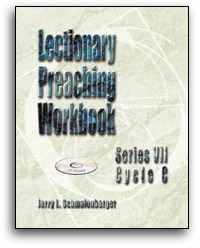
Lectionary Preaching Workbook
Series VII Cycle C
Seasonal Theme
Jesus' acts of compassion and teaching ministry.
Theme For The Day
Our need to resist greed and to practice a lifestyle of Christian stewardship.
Old Testament Lesson
Hosea 11:1-11
Like A Loving Father
A great passage begins about the depth and the nature of God's love. A father-son love is used in this passage to illustrate God's love for us. Even though Israel was like a son to God and God continually called the son, the son gave in to the attraction of Baal worship. Verses 3 and 4 contain the fatherly patience and care for his son. In verses 5 and 7 the son matures as Israel but refuses to return to his parent -- so stern discipline is applied.
Verses 8 and 9 have the climax of the passage. Like a loving parent, instead of punishing Israel like those cities such as Sodom and Gomorrah which were destroyed (Deuteronomy 29:23), the father's compassion grows warm and tender. Here is redemptive love rather than human vengeance. This parent will not come in wrath (v. 9b) but in love.
So God the father of Israel will return his son from Egyptian-Assyrian domination to their homes again. So God causes good to come out of what we humans would consider evil (v. 11).
The passage is rich with metaphors, including the major one of God being the father and loving God's son, Israel.
New Testament Lesson
Colossians 3:1-11
New Life In Christ
The first part of this reading is the reading for Easter, series A. I have previously suggested you do a sermon series on these Second Lessons from Colossians and given an outline of sermon moves for this reading in the "heads up" note on page 145. Let's take it in outline form:
1. In baptism we die and rise again. So there ought be a new life after baptism because now our thoughts are set on heavenly things. We have a new set of values (vv. 1-4).
2. A great name for Jesus Christ: your (or our) life (v. 4). See Philippians 1:21.
3. The ethical section of the letter begins. We must kill our evil practices (see Romans 8:13). So a radical shift of our values must take place (vv. 5-9a).
4. The baptism practice of removing the old garments and putting on a new white robe afterward (vv. 9, 10).
5. To become a Christian is to remove the barriers which divide us humans. Racism, sexism, nationalism, ageism, classism, all this stuff is gone. Christ is in all of us and we are all united in Christ (v. 11). A great verse!
The Gospel
Luke 12:13-21
The Parable Of The Rich Fool
Today we have a parable of Jesus which is easily told in either contemporary context or in Palestinian context as Jesus told it. It's a warning about greed and life's abundance of possessions. In a culture where many display bumper stickers reading, "The one with the most toys wins," it is for us and for now.
It was a common custom to ask rabbis to settle disputes about money, thus the question in verse 13. Jesus used the occasion to teach his disciples about stewardship of possessions and to give a specific warning of how the desire to acquire possessions and keep them was not the good life. This will be a hard sell in the U.S.!
William Barclay tells us two things about this farmer whose land produced so abundantly.
1. He never saw beyond himself. This is the opposite of the disciple's life and Christian values. It is in giving away that we experience unexpected joy. Barclay continues with, "The Romans had a proverb which said that possessions were like sea water; the more a person drank the thirstier that person became."
2. The second thing about this rich farmer is that he never saw beyond this world. All his plans were done on the basis of life here and now. The person who lives like this his/her whole life is in for a cruel shock.
Preaching Possibilities
A. Under the theme of "three things you can be certain of about the Christian life" we can connect all three of these readings together.
1. Hosea -- God loves us like a loving parent loves his/her child.
2. Colossians -- Life in Christ after baptism is a whole new ball game.
3. Luke -- the great joy of life for Christians is in the practice of holistic stewardship.
B. Of the three readings I like so much the Hosea metaphor of God loving like a parent one's child. It will extend all the way through using the Second Reading and the parable in Luke as examples. Any parent preaching on this Old Testament passage will have plenty of examples from his or her own family life growing up and, if permissible from one's children, from their own parenting. As far as sermon preparation and delivery, "It's a piece of cake."
C. Please see page 145 for an outline of sermon moves if you preach on Colossians alone. It is also a rich text.
D. However, because I believe we neglect the subject of Christian financial stewardship except when we are in our annual drive for pledges, I'll go with the Gospel.
Possible Outline Of Sermon Moves
A. Introduction: Jesus told his disciples a story which really speaks to me and I think ought to you also. The story has to do with greed, a self-centered collection of possessions, and Christian financial stewardship. I'll read it from Luke's account and then imagine how it might go if it were told today in our community.
B. Read the parable from a visible Bible. (So people can see where it's coming from.)
C. Retell the parable in your context: "The owner of a bread store had a marvelous increase in sales, so he decided to double the size of his store...."
D. Tell what you see right away in this story.
1. Life's satisfaction is not really in acquiring many possessions. Greed is a big part of our human nature. Relate an example from below.
2. It is in giving away we know the joy of discipleship. Relate an example from below.
3. Our best priorities come from seeing beyond this world. Our planning ought always to consider that we live here for a short time and the rest in eternity. Relate an example.
E. Confess to your congregation how hard it is for you to follow this parable's advice in your own life.
F. List some steps you believe all should take because of today's Gospel: tithe, share, travel light.
G. Frame your sermon by repeating in reverse order your main points and then refer to your contemporary telling of the parable, giving it a different ending.
Prayer For The Day
Dear Holy Parent who loves and forgives us like a loving Father with his children, teach us to share and to be good stewards of the abundance you shower down upon us. Help us to fight off the greed, which continually wants more and more and resists our giving away that which could bring real joy. And please help us to know when we have enough. In Jesus' name. Amen.
Possible Metaphors And Stories
In Hong Kong, there is an advertisement for Swiss watches, which is a good example of Christian stewardship. The picture is a father hugging his son with the caption: "You never actually own a Patek Philippe watch, you merely look after it for the next generation."
An article in USA Today: "McThief Probe"
"A customer at the Euclid, Ohio, McDonald's drive-up window was mistakenly handed the day's cash receipts. The company sometimes conceals the 'take' for the day in one of their regular paper bags to foil thieves. The person receiving the bag of money may not have committed any crime according to the authorities."
God drops undeserved gifts on us, too.
Douglas John Hall writes regarding stewardship: "Stewardship does not describe any one dimension of the Christian life, it describes the whole posture called Christian. The stewardship of all believers -- stewardship is the church's mission."
Life on the farm always had unwritten rules I observed and followed, and I assumed everyone did. Whenever our neighbor, Grace Miller, baked, she would send over a pie for us. I always had the task of returning the pie pan to the Millers. My mother always filled it with something like cookies when she sent it back -- never an empty pan. And when my father borrowed a tool like a mower, we always cleaned and oiled it before I drove the Model A Ford we used for a truck to tow it back.
That's the way it ought to be in our practice of stewardship. We return a little of all which has been given us.
Jesus' acts of compassion and teaching ministry.
Theme For The Day
Our need to resist greed and to practice a lifestyle of Christian stewardship.
Old Testament Lesson
Hosea 11:1-11
Like A Loving Father
A great passage begins about the depth and the nature of God's love. A father-son love is used in this passage to illustrate God's love for us. Even though Israel was like a son to God and God continually called the son, the son gave in to the attraction of Baal worship. Verses 3 and 4 contain the fatherly patience and care for his son. In verses 5 and 7 the son matures as Israel but refuses to return to his parent -- so stern discipline is applied.
Verses 8 and 9 have the climax of the passage. Like a loving parent, instead of punishing Israel like those cities such as Sodom and Gomorrah which were destroyed (Deuteronomy 29:23), the father's compassion grows warm and tender. Here is redemptive love rather than human vengeance. This parent will not come in wrath (v. 9b) but in love.
So God the father of Israel will return his son from Egyptian-Assyrian domination to their homes again. So God causes good to come out of what we humans would consider evil (v. 11).
The passage is rich with metaphors, including the major one of God being the father and loving God's son, Israel.
New Testament Lesson
Colossians 3:1-11
New Life In Christ
The first part of this reading is the reading for Easter, series A. I have previously suggested you do a sermon series on these Second Lessons from Colossians and given an outline of sermon moves for this reading in the "heads up" note on page 145. Let's take it in outline form:
1. In baptism we die and rise again. So there ought be a new life after baptism because now our thoughts are set on heavenly things. We have a new set of values (vv. 1-4).
2. A great name for Jesus Christ: your (or our) life (v. 4). See Philippians 1:21.
3. The ethical section of the letter begins. We must kill our evil practices (see Romans 8:13). So a radical shift of our values must take place (vv. 5-9a).
4. The baptism practice of removing the old garments and putting on a new white robe afterward (vv. 9, 10).
5. To become a Christian is to remove the barriers which divide us humans. Racism, sexism, nationalism, ageism, classism, all this stuff is gone. Christ is in all of us and we are all united in Christ (v. 11). A great verse!
The Gospel
Luke 12:13-21
The Parable Of The Rich Fool
Today we have a parable of Jesus which is easily told in either contemporary context or in Palestinian context as Jesus told it. It's a warning about greed and life's abundance of possessions. In a culture where many display bumper stickers reading, "The one with the most toys wins," it is for us and for now.
It was a common custom to ask rabbis to settle disputes about money, thus the question in verse 13. Jesus used the occasion to teach his disciples about stewardship of possessions and to give a specific warning of how the desire to acquire possessions and keep them was not the good life. This will be a hard sell in the U.S.!
William Barclay tells us two things about this farmer whose land produced so abundantly.
1. He never saw beyond himself. This is the opposite of the disciple's life and Christian values. It is in giving away that we experience unexpected joy. Barclay continues with, "The Romans had a proverb which said that possessions were like sea water; the more a person drank the thirstier that person became."
2. The second thing about this rich farmer is that he never saw beyond this world. All his plans were done on the basis of life here and now. The person who lives like this his/her whole life is in for a cruel shock.
Preaching Possibilities
A. Under the theme of "three things you can be certain of about the Christian life" we can connect all three of these readings together.
1. Hosea -- God loves us like a loving parent loves his/her child.
2. Colossians -- Life in Christ after baptism is a whole new ball game.
3. Luke -- the great joy of life for Christians is in the practice of holistic stewardship.
B. Of the three readings I like so much the Hosea metaphor of God loving like a parent one's child. It will extend all the way through using the Second Reading and the parable in Luke as examples. Any parent preaching on this Old Testament passage will have plenty of examples from his or her own family life growing up and, if permissible from one's children, from their own parenting. As far as sermon preparation and delivery, "It's a piece of cake."
C. Please see page 145 for an outline of sermon moves if you preach on Colossians alone. It is also a rich text.
D. However, because I believe we neglect the subject of Christian financial stewardship except when we are in our annual drive for pledges, I'll go with the Gospel.
Possible Outline Of Sermon Moves
A. Introduction: Jesus told his disciples a story which really speaks to me and I think ought to you also. The story has to do with greed, a self-centered collection of possessions, and Christian financial stewardship. I'll read it from Luke's account and then imagine how it might go if it were told today in our community.
B. Read the parable from a visible Bible. (So people can see where it's coming from.)
C. Retell the parable in your context: "The owner of a bread store had a marvelous increase in sales, so he decided to double the size of his store...."
D. Tell what you see right away in this story.
1. Life's satisfaction is not really in acquiring many possessions. Greed is a big part of our human nature. Relate an example from below.
2. It is in giving away we know the joy of discipleship. Relate an example from below.
3. Our best priorities come from seeing beyond this world. Our planning ought always to consider that we live here for a short time and the rest in eternity. Relate an example.
E. Confess to your congregation how hard it is for you to follow this parable's advice in your own life.
F. List some steps you believe all should take because of today's Gospel: tithe, share, travel light.
G. Frame your sermon by repeating in reverse order your main points and then refer to your contemporary telling of the parable, giving it a different ending.
Prayer For The Day
Dear Holy Parent who loves and forgives us like a loving Father with his children, teach us to share and to be good stewards of the abundance you shower down upon us. Help us to fight off the greed, which continually wants more and more and resists our giving away that which could bring real joy. And please help us to know when we have enough. In Jesus' name. Amen.
Possible Metaphors And Stories
In Hong Kong, there is an advertisement for Swiss watches, which is a good example of Christian stewardship. The picture is a father hugging his son with the caption: "You never actually own a Patek Philippe watch, you merely look after it for the next generation."
An article in USA Today: "McThief Probe"
"A customer at the Euclid, Ohio, McDonald's drive-up window was mistakenly handed the day's cash receipts. The company sometimes conceals the 'take' for the day in one of their regular paper bags to foil thieves. The person receiving the bag of money may not have committed any crime according to the authorities."
God drops undeserved gifts on us, too.
Douglas John Hall writes regarding stewardship: "Stewardship does not describe any one dimension of the Christian life, it describes the whole posture called Christian. The stewardship of all believers -- stewardship is the church's mission."
Life on the farm always had unwritten rules I observed and followed, and I assumed everyone did. Whenever our neighbor, Grace Miller, baked, she would send over a pie for us. I always had the task of returning the pie pan to the Millers. My mother always filled it with something like cookies when she sent it back -- never an empty pan. And when my father borrowed a tool like a mower, we always cleaned and oiled it before I drove the Model A Ford we used for a truck to tow it back.
That's the way it ought to be in our practice of stewardship. We return a little of all which has been given us.
