
Proper 13 / Pentecost 11 / Ordinary Time 18
Preaching
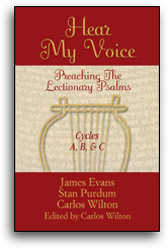
Hear My Voice
Preaching The Lectionary Psalms for Cycles A, B, C
(See Ash Wednesday, Cycle A, and Lent 5, Cycle B, for alternative approaches.)
Psalm 51 is revered as one of the most moving and memorable examples of penitence found in the Bible. The superscription attributes the psalm to David himself at the time when the prophet Nathan confronted the king with his adultery with Bathsheba. Whether or not David wrote (or spoke) these words, they certainly reflect a proper sense of remorse in the face of moral failure.
There are many elements in this psalm that are important. Two themes of special significance deserve consideration. The first has to do with God as the injured party, and the other with the locus of salvation.
The first of these important themes is expressed in verse 4: "Against you, you alone, have I sinned, and done what is evil in your sight."
God is the norm and reason for human behavior. As a result, failure to live as God has directed is an attack on and an affront to God's character. This is not to say that others are not hurt by our sin, but God is the one who suffers most of all. If nothing else, the cross has taught us that.
The other important theme concerning the locus of salvation is expressed in verse 12: "Restore to me the joy of your salvation." The burden of guilt dulls our capacity for joy. Life loses its vitality as our failure erodes our ability to be happy. We seek release from our guilt that the joy might return. Or, as the psalmist puts it: "let the bones that you have crushed rejoice" (v. 8).
However, given our individualism engendered in us by western culture, we anticipate the psalmist's writing, "Restore the joy of my salvation." For us salvation is our possession. We receive it, we have it, we find it, and we lose it, and so on.
But the psalmist will have none of this. Salvation belongs to God. We don't possess it. Salvation is a relationship into which we enter and live.
Both these themes establish the priority of God in the relationship. Our sin is against God. Our salvation is God's. Only the failure is ours, and it threatens to empty our lives of joy and purpose. Thankfully, God is gracious, loving, and merciful. The Lord is quick to restore those who repent.
-- J. E.
Psalm 51 is revered as one of the most moving and memorable examples of penitence found in the Bible. The superscription attributes the psalm to David himself at the time when the prophet Nathan confronted the king with his adultery with Bathsheba. Whether or not David wrote (or spoke) these words, they certainly reflect a proper sense of remorse in the face of moral failure.
There are many elements in this psalm that are important. Two themes of special significance deserve consideration. The first has to do with God as the injured party, and the other with the locus of salvation.
The first of these important themes is expressed in verse 4: "Against you, you alone, have I sinned, and done what is evil in your sight."
God is the norm and reason for human behavior. As a result, failure to live as God has directed is an attack on and an affront to God's character. This is not to say that others are not hurt by our sin, but God is the one who suffers most of all. If nothing else, the cross has taught us that.
The other important theme concerning the locus of salvation is expressed in verse 12: "Restore to me the joy of your salvation." The burden of guilt dulls our capacity for joy. Life loses its vitality as our failure erodes our ability to be happy. We seek release from our guilt that the joy might return. Or, as the psalmist puts it: "let the bones that you have crushed rejoice" (v. 8).
However, given our individualism engendered in us by western culture, we anticipate the psalmist's writing, "Restore the joy of my salvation." For us salvation is our possession. We receive it, we have it, we find it, and we lose it, and so on.
But the psalmist will have none of this. Salvation belongs to God. We don't possess it. Salvation is a relationship into which we enter and live.
Both these themes establish the priority of God in the relationship. Our sin is against God. Our salvation is God's. Only the failure is ours, and it threatens to empty our lives of joy and purpose. Thankfully, God is gracious, loving, and merciful. The Lord is quick to restore those who repent.
-- J. E.
