
Psalm 147:1-11, 20c
Preaching
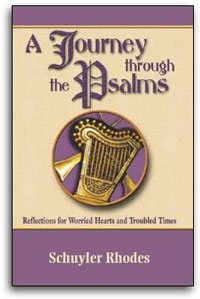
A Journey Through the Psalms: Reflections for Worried Hearts and Troubled Times
Preaching the Psalms Cycles A, B, C
Sometimes life gets to be simply too much. Virtually anyone can nod his or her head in weary agreement to this assertion. People work many more hours and handle more responsibilities than they did only a few years ago. Mention a forty-hour work week to most people, and a bemused smile comes back at you. Irony, it seems, isn't dead after all. Add to this the towering stack of personal and family obligations, community responsibilities, and financial commitments ... and it can cause someone to collapse under the collective weight of it all.
Clergy and health care professionals see this often in relatives who must care for family members in long-term illnesses. They see it, too, in single parenting situations where the demands of children and career stretch and pull a person to the tearing point. In fact, stress is almost a pandemic. It isn't that love goes away. It's simply that the burden can sometimes be more than even the strongest person can handle.
That's when it's good to collapse into a pew and give it all to God.
"How good it is to sing praises to our God!" (v. 1). How wonderful it is to release our cares and burdens in an avalanche of praise to one who can shoulder the things we cannot manage by ourselves. This God can bind up a broken heart (v. 3). This God can heal my wounds and lift me up when I've been beaten down by life's demands (v. 6). In fact, this God can do it all. From numbering the stars (v. 4), to casting down the wicked (v. 6b); from designing clouds, to feeding the livestock, this God has it together.
No matter how stressed or how tense we get. No matter how tightly wound our lives cause us to feel, there is one who is greater than it all. There is one who can take the burden and lighten the load.
Certainly the writer of this psalm didn't envision the chaos that makes up twenty-first-century life in America. But a brokenhearted and wounded people were something that the writer probably did know firsthand. The one who crafted this psalm probably didn't have to cope with many of the complexities and stresses that assail people today, but a people who were stretched to the breaking point, the psalmist likely did understand from personal experience.
Yet in the end, then and now, it's still God who is in charge. Whether you are downtrodden by invaders and held in exile, or imprisoned in stress-laden work that can, in fact, kill you, God is still God ... creator, covenant partner, healer, liberator ... God.
How good it is indeed to give praise to God!
Clergy and health care professionals see this often in relatives who must care for family members in long-term illnesses. They see it, too, in single parenting situations where the demands of children and career stretch and pull a person to the tearing point. In fact, stress is almost a pandemic. It isn't that love goes away. It's simply that the burden can sometimes be more than even the strongest person can handle.
That's when it's good to collapse into a pew and give it all to God.
"How good it is to sing praises to our God!" (v. 1). How wonderful it is to release our cares and burdens in an avalanche of praise to one who can shoulder the things we cannot manage by ourselves. This God can bind up a broken heart (v. 3). This God can heal my wounds and lift me up when I've been beaten down by life's demands (v. 6). In fact, this God can do it all. From numbering the stars (v. 4), to casting down the wicked (v. 6b); from designing clouds, to feeding the livestock, this God has it together.
No matter how stressed or how tense we get. No matter how tightly wound our lives cause us to feel, there is one who is greater than it all. There is one who can take the burden and lighten the load.
Certainly the writer of this psalm didn't envision the chaos that makes up twenty-first-century life in America. But a brokenhearted and wounded people were something that the writer probably did know firsthand. The one who crafted this psalm probably didn't have to cope with many of the complexities and stresses that assail people today, but a people who were stretched to the breaking point, the psalmist likely did understand from personal experience.
Yet in the end, then and now, it's still God who is in charge. Whether you are downtrodden by invaders and held in exile, or imprisoned in stress-laden work that can, in fact, kill you, God is still God ... creator, covenant partner, healer, liberator ... God.
How good it is indeed to give praise to God!
