
Psalm 71:1-6
Preaching
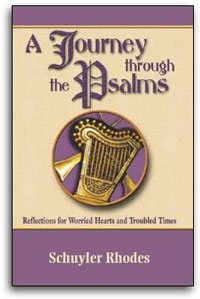
A Journey Through the Psalms: Reflections for Worried Hearts and Troubled Times
Preaching the Psalms Cycles A, B, C
Object:
Martin Luther wrote it. Many have sung it lustily on Sunday morning. "A mighty fortress is our God, a bulwark never failing!" Conjuring up God in this militaristic fashion gives some people pause. They see a fort bristling with weaponry and with armed soldiers at the ready. But this is not a fort in the sense that we may wish to use it for attack. It is a fort in the sense of a place of safety. "A rock of refuge."
It is a powerful thing indeed to conjure up images of a God who is a location of safety, a sanctuary for body and spirit. And for many this vision of God is operative. Perhaps it wouldn't hurt to take this understanding of the holy and see if it might go a little further. What would happen if the idea of refuge, of safety, of sanctuary was applied to the communities that are founded and built to worship and honor this God?
What if our local church communities were a "rock of refuge"? What if every church community committed itself to a Trinitarian concept of sanctuary?
This three-part formula would first include the church as sanctuary for the spirit. In this sense, our communities would be a safe place for people to become spiritually vulnerable so that they might stretch and grow into discipleship. The second sense of sanctuary would involve church as sanctuary for the heart. In this portion of our formula, people would be safe from criticism and ridicule; safe from wagging tongues and angry spirits. The last piece of this new Holy Trinity would be the notion of church as a sanctuary for the body. This means that the church pledges to keep people physically safe: no physical harm or abuse of any kind.
Such a fortress would be novel in society. There aren't very many places where people are safe in spirit, safe in their hearts, and physically safe all at the same time. Perhaps a beginning could be had in local churches. A covenant of sanctuary could be designed that would commit everyone in the church community to conduct themselves in a manner that would keep everyone safe.
Then, not only could we view our God as a safe haven, a rock, and a refuge, we could also create such safety within the folds of the communities that God has called us to build together.
It is a powerful thing indeed to conjure up images of a God who is a location of safety, a sanctuary for body and spirit. And for many this vision of God is operative. Perhaps it wouldn't hurt to take this understanding of the holy and see if it might go a little further. What would happen if the idea of refuge, of safety, of sanctuary was applied to the communities that are founded and built to worship and honor this God?
What if our local church communities were a "rock of refuge"? What if every church community committed itself to a Trinitarian concept of sanctuary?
This three-part formula would first include the church as sanctuary for the spirit. In this sense, our communities would be a safe place for people to become spiritually vulnerable so that they might stretch and grow into discipleship. The second sense of sanctuary would involve church as sanctuary for the heart. In this portion of our formula, people would be safe from criticism and ridicule; safe from wagging tongues and angry spirits. The last piece of this new Holy Trinity would be the notion of church as a sanctuary for the body. This means that the church pledges to keep people physically safe: no physical harm or abuse of any kind.
Such a fortress would be novel in society. There aren't very many places where people are safe in spirit, safe in their hearts, and physically safe all at the same time. Perhaps a beginning could be had in local churches. A covenant of sanctuary could be designed that would commit everyone in the church community to conduct themselves in a manner that would keep everyone safe.
Then, not only could we view our God as a safe haven, a rock, and a refuge, we could also create such safety within the folds of the communities that God has called us to build together.
