
Psalm 8
Preaching
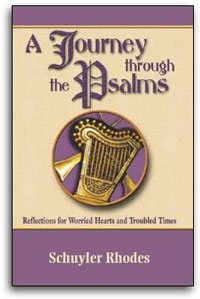
A Journey Through the Psalms: Reflections for Worried Hearts and Troubled Times
Preaching the Psalms Cycles A, B, C
Object:
"What are human beings that you are mindful of them, mortals that you care for them...?"
Verse 4 of this psalm traverses centuries of theological questing in a single phrase. Its simple, stark question strips away the layered tradition and addled pretense and goes right to the core of a fundamental human struggle.
It goes something like this. If, God is God -- if this God is the creator; the one -- if this God created everything including worlds and things we have yet to imagine, then what are we? The existential question looms larger than a Samuel Becket play. Indeed, as the psalmist puts it, why should God be mindful ... of us at all? And truly, the question has merit. The sheer magnitude of the concept of a creator God sets the writer back on heels of humility and conjures up intermingling scenes of confusion and wonderment.
But in these days of robotics and nano-technology things seem somehow different. As we step into the uncharted territory of interplanetary travel, cloning, and other strange scientific adventures, we no longer see ourselves in the same light as this writer saw (him)self. Today, when global communication comes with the click of a mouse, when world economies are intertwined, and the very ground upon which we stand is changing, the truth is that humanity is not so easily awed as once it was. As we watch creation falter in the face of human activity, the thought occurs to some that perhaps God isn't so great after all.
And herein lies the crux of the issue for people of faith in this so-called post-modern day. Perhaps it can best be voiced, not by a statement, but by a question -- this question: What becomes of people who lose their sense of awe? In this psalm, that sense of amazement and astonishment at the width and breadth of the reality of God is palpable. It brings on a powerful sense of thankfulness and gratitude as the author lets a slow breath escape in simple, powerful language.
Without awe, without a sense of wonder at something or someone much larger than ourselves, we run the serious risk of trying to play God. Without awe, arrogance moves in and makes itself comfortable. Without awe, ice caps melt. Without awe, genocide slips by unnoticed -- unattended. Simply put, a people without awe are dangerous, and we have become that people.
One can't help but wonder what it might take to recapture a sense of awe; to read this psalm with an open and vulnerable heart. It's certainly worth a try. Read it. One more time with a contrite and broken heart (Psalm 51:17). Maybe, just maybe, we might reclaim the childlike sense of wonder and joy to which Jesus called his followers (Matthew 18:3), then and now.
Verse 4 of this psalm traverses centuries of theological questing in a single phrase. Its simple, stark question strips away the layered tradition and addled pretense and goes right to the core of a fundamental human struggle.
It goes something like this. If, God is God -- if this God is the creator; the one -- if this God created everything including worlds and things we have yet to imagine, then what are we? The existential question looms larger than a Samuel Becket play. Indeed, as the psalmist puts it, why should God be mindful ... of us at all? And truly, the question has merit. The sheer magnitude of the concept of a creator God sets the writer back on heels of humility and conjures up intermingling scenes of confusion and wonderment.
But in these days of robotics and nano-technology things seem somehow different. As we step into the uncharted territory of interplanetary travel, cloning, and other strange scientific adventures, we no longer see ourselves in the same light as this writer saw (him)self. Today, when global communication comes with the click of a mouse, when world economies are intertwined, and the very ground upon which we stand is changing, the truth is that humanity is not so easily awed as once it was. As we watch creation falter in the face of human activity, the thought occurs to some that perhaps God isn't so great after all.
And herein lies the crux of the issue for people of faith in this so-called post-modern day. Perhaps it can best be voiced, not by a statement, but by a question -- this question: What becomes of people who lose their sense of awe? In this psalm, that sense of amazement and astonishment at the width and breadth of the reality of God is palpable. It brings on a powerful sense of thankfulness and gratitude as the author lets a slow breath escape in simple, powerful language.
Without awe, without a sense of wonder at something or someone much larger than ourselves, we run the serious risk of trying to play God. Without awe, arrogance moves in and makes itself comfortable. Without awe, ice caps melt. Without awe, genocide slips by unnoticed -- unattended. Simply put, a people without awe are dangerous, and we have become that people.
One can't help but wonder what it might take to recapture a sense of awe; to read this psalm with an open and vulnerable heart. It's certainly worth a try. Read it. One more time with a contrite and broken heart (Psalm 51:17). Maybe, just maybe, we might reclaim the childlike sense of wonder and joy to which Jesus called his followers (Matthew 18:3), then and now.
