
Red Light, Green Light
Sermon
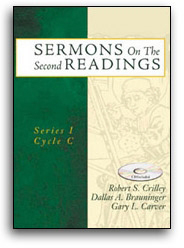
Sermons On The Second Readings
Series I, Cycle C
Only in a farming community would it happen ... Leader Dog Dolley and her partner had crossed the street at the corner of First National Bank and the Coast-To-Coast Store in West Point, Nebraska. Half a block later, the dog guide stopped short upon hearing someone huffing behind them.
It was the fellow from the hardware store. He was not sure she should trust her dog, he said. He had been looking out the window, he said, and wanted to be sure the woman knew her guide had disobeyed. The dog had crossed the street on a red light, he said.
With the absence of color recognition and the unavailability in most towns of bird chirping, that is, vocal walk signals, neither a dog guide nor its partner can know which light click means red and which indicates green. Instead, both the guide and the handler attend to other clues such as the movement of traffic parallel to their intended route, the absence of traffic sounds, or the pedestrian flow.
When approaching a crossing, a nonvisual person has little way of knowing how far the cycle of a traffic light has proceeded. The team must wait until the click sounds that indicates a signal change. At times, that brings a considerable wait.
The shopkeeper probably nodded his head in puzzlement when Dee explained that such a crossing is allowed by mutual consent. After waiting through one complete cycle of signal changes, if the team discerns that no traffic is coming, they cross the street.
The shopkeeper had been watching them work together, not attending to traffic conditions. He also had been too far away to have heard the second click of the signal box.
So finely tuned was the connection between this particular dog guide and its partner that, without full knowledge or precise understanding, they had in the same breath each started to move forward, proceeding together across the street.
The book of Revelation, also, is about making connections without complete understanding. Today's reading is the part of chapters 21 and 22 that draw together three symbolic strongholds long familiar to the people of John's time. These strongholds are the metaphors of light, the image of the river of the water of life, and the tree of life. They permeate scripture and point to hope.
Always, our God has been and is an interactive God. Always there is a two-way responsibility, the bond of keeping promises by both God and the human family. Always, the rainbow connection shows itself.
John beckons us in Revelation to recognize our human condition and to find in our lives the light and presence of God. He speaks of God as the new light and the lamp, a light so strong that "nations will walk by its light" and the rulers of "the earth will bring their glory into it" (v. 24). He reminds us of this heritage of light.
From the great light in the night that led the shepherds and wise folk to the manger to the great light of sunrise of Easter morning, we remember this light. Returning us to the Hebrew Scriptures, John draws us to the words of the writer of Isaiah with his theme of God's promise of purpose, "I am the Lord, I have called you in righteousness. I have taken you by the hand and kept you; I have given you as a covenant to the people, a light to the nations" (Isaiah 42:6).
John invites our ears to hear again the Psalmist sing of the hope that God's presence brings into the bleak times of our lives, "Even the darkness is not dark to you; the night is as bright as day, for darkness is as light to you" (Psalm 139:12).
John calls us back to the beginning when "God said, 'Let there be light'; and there was light. And God saw that the light was good" (Genesis 1:3-4). We recognize the light that comes into the sky as a rainbow of God's promise. It is an offering to us of a covenantal relationship. Our task is to make the connection between God's light and our light.
Always, the goal of our God has been and is the healing of nations and the healing of persons. In another connecting, the vision of hope must have been heartening to the first Christians. At the end of the first century, they were undergoing a second round of persecution by the Romans. Such constant struggle can bring death to the human spirit.
"[T]he river of the water of life," a full, crystal clear stream flanked on either side with "the tree of life" would have provided enough variety of fruit to get them through an entire year of changing seasons. It would sustain the spirit and their being in a difficult time. (See vv. 1-2.) Their story would be one of survival.
The book of Revelation stands in close connection with the Hebrew Scriptures. A large number of verses in Revelation comes from these earlier scriptures. The imagery of the river of the water of life and the tree of life is a direct replay of the vision of the Hebrew prophet Ezekiel. (See Ezekiel 47:12.) In the book of Ezekiel, another example of apocalyptic literature, God told Ezekiel about the equal division of the land for the inheritance of the twelve tribes of Israel. The source of this river was also a temple, the temple to be rebuilt after another season of persecution and desolation.
"See now," God also told these struggling, exiled people of Israel to whom disaster upon disaster came, "I am for you," (Ezekiel 36:9). Do the people of today's Israel reread the hardships and the promises of their heritage as we reread the hardships and promises told in Revelation? Do they also find a God who says, still, " 'I am for you,' and I will help you rebuild your lives"?
God has always entered and will always enter the turmoil and the mess. God nurtures, nourishes, and heals. God meets death with life. God counters starvation with the provision of health-giving food. God quenches thirst with good water, crystal clear.
What is more, the angel who showed John the river of the water of life and the tree of life invited him to look also at the leaves on that tree. The leaves "are for the healing of the nations" (v. 2).
This is a story of hope. It is the story of creation wanting to continue. God is a creating God. Again with this God who continually makes connections, there is a role of responsibility by the people. It is not just all given to the people. We will contribute. We have the charge to connect and to bring into this light "the glory and the honor of the nations" (Revelation 22:26).
Have you ever tuned to the Saturday afternoon opera on public radio after the musical story has already begun? You might not recognize the language, although some of the themes sound familiar to you. You have the choice of turning off the radio or sitting back to listen to the music with your heart. Should you choose the latter, you might find that you are imbibing the spirit of the opera. You might come to understand the story through its music at a level that needs no translation of word or explanation of libretto.
Similarly, a visit with the book of Revelation is not so much an attempt to unravel a puzzle of images and unusual happenings. It is more like choosing to sit back and listen with the heart, to acknowledge the scary parts without needing to understand them because we already know what it is like to be afraid. We already know the yearning of the human family because we are part of that fragile yet enduring family. We already have the capacity to feel the strength and trust of a faithful God because we have been given to recognize hope.
It was the fellow from the hardware store. He was not sure she should trust her dog, he said. He had been looking out the window, he said, and wanted to be sure the woman knew her guide had disobeyed. The dog had crossed the street on a red light, he said.
With the absence of color recognition and the unavailability in most towns of bird chirping, that is, vocal walk signals, neither a dog guide nor its partner can know which light click means red and which indicates green. Instead, both the guide and the handler attend to other clues such as the movement of traffic parallel to their intended route, the absence of traffic sounds, or the pedestrian flow.
When approaching a crossing, a nonvisual person has little way of knowing how far the cycle of a traffic light has proceeded. The team must wait until the click sounds that indicates a signal change. At times, that brings a considerable wait.
The shopkeeper probably nodded his head in puzzlement when Dee explained that such a crossing is allowed by mutual consent. After waiting through one complete cycle of signal changes, if the team discerns that no traffic is coming, they cross the street.
The shopkeeper had been watching them work together, not attending to traffic conditions. He also had been too far away to have heard the second click of the signal box.
So finely tuned was the connection between this particular dog guide and its partner that, without full knowledge or precise understanding, they had in the same breath each started to move forward, proceeding together across the street.
The book of Revelation, also, is about making connections without complete understanding. Today's reading is the part of chapters 21 and 22 that draw together three symbolic strongholds long familiar to the people of John's time. These strongholds are the metaphors of light, the image of the river of the water of life, and the tree of life. They permeate scripture and point to hope.
Always, our God has been and is an interactive God. Always there is a two-way responsibility, the bond of keeping promises by both God and the human family. Always, the rainbow connection shows itself.
John beckons us in Revelation to recognize our human condition and to find in our lives the light and presence of God. He speaks of God as the new light and the lamp, a light so strong that "nations will walk by its light" and the rulers of "the earth will bring their glory into it" (v. 24). He reminds us of this heritage of light.
From the great light in the night that led the shepherds and wise folk to the manger to the great light of sunrise of Easter morning, we remember this light. Returning us to the Hebrew Scriptures, John draws us to the words of the writer of Isaiah with his theme of God's promise of purpose, "I am the Lord, I have called you in righteousness. I have taken you by the hand and kept you; I have given you as a covenant to the people, a light to the nations" (Isaiah 42:6).
John invites our ears to hear again the Psalmist sing of the hope that God's presence brings into the bleak times of our lives, "Even the darkness is not dark to you; the night is as bright as day, for darkness is as light to you" (Psalm 139:12).
John calls us back to the beginning when "God said, 'Let there be light'; and there was light. And God saw that the light was good" (Genesis 1:3-4). We recognize the light that comes into the sky as a rainbow of God's promise. It is an offering to us of a covenantal relationship. Our task is to make the connection between God's light and our light.
Always, the goal of our God has been and is the healing of nations and the healing of persons. In another connecting, the vision of hope must have been heartening to the first Christians. At the end of the first century, they were undergoing a second round of persecution by the Romans. Such constant struggle can bring death to the human spirit.
"[T]he river of the water of life," a full, crystal clear stream flanked on either side with "the tree of life" would have provided enough variety of fruit to get them through an entire year of changing seasons. It would sustain the spirit and their being in a difficult time. (See vv. 1-2.) Their story would be one of survival.
The book of Revelation stands in close connection with the Hebrew Scriptures. A large number of verses in Revelation comes from these earlier scriptures. The imagery of the river of the water of life and the tree of life is a direct replay of the vision of the Hebrew prophet Ezekiel. (See Ezekiel 47:12.) In the book of Ezekiel, another example of apocalyptic literature, God told Ezekiel about the equal division of the land for the inheritance of the twelve tribes of Israel. The source of this river was also a temple, the temple to be rebuilt after another season of persecution and desolation.
"See now," God also told these struggling, exiled people of Israel to whom disaster upon disaster came, "I am for you," (Ezekiel 36:9). Do the people of today's Israel reread the hardships and the promises of their heritage as we reread the hardships and promises told in Revelation? Do they also find a God who says, still, " 'I am for you,' and I will help you rebuild your lives"?
God has always entered and will always enter the turmoil and the mess. God nurtures, nourishes, and heals. God meets death with life. God counters starvation with the provision of health-giving food. God quenches thirst with good water, crystal clear.
What is more, the angel who showed John the river of the water of life and the tree of life invited him to look also at the leaves on that tree. The leaves "are for the healing of the nations" (v. 2).
This is a story of hope. It is the story of creation wanting to continue. God is a creating God. Again with this God who continually makes connections, there is a role of responsibility by the people. It is not just all given to the people. We will contribute. We have the charge to connect and to bring into this light "the glory and the honor of the nations" (Revelation 22:26).
Have you ever tuned to the Saturday afternoon opera on public radio after the musical story has already begun? You might not recognize the language, although some of the themes sound familiar to you. You have the choice of turning off the radio or sitting back to listen to the music with your heart. Should you choose the latter, you might find that you are imbibing the spirit of the opera. You might come to understand the story through its music at a level that needs no translation of word or explanation of libretto.
Similarly, a visit with the book of Revelation is not so much an attempt to unravel a puzzle of images and unusual happenings. It is more like choosing to sit back and listen with the heart, to acknowledge the scary parts without needing to understand them because we already know what it is like to be afraid. We already know the yearning of the human family because we are part of that fragile yet enduring family. We already have the capacity to feel the strength and trust of a faithful God because we have been given to recognize hope.
