
Remember Your Baptism
Stories
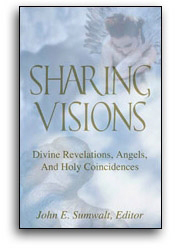
Sharing Visions
Divine Revelations, Angels, And Holy Coincidences
It was 1984. I was sitting in the front row in a classroom in Nashville, listening to Dr. Bruce Rigdon speak on Orthodox Spirituality. He was sharing about a Greek Orthodox baptism on the isle of Crete in which he participated as the godfather of Demetri, the son of a close colleague.
The sacrament of baptism began at home, where Demetri was scrubbed with a brush in soap and water, dressed, and then brought to the church with his family. The ceremony and liturgy began outside the church doors where everyone gathered with the family and priest. All were asked, "Why are you here?"
They responded by turning to the west and saying they were called to renounce death, sin, and the demonic. Then, turning to the east, the community pledged themselves in their responsibility to help bring Demetri up as a member of the kingdom of Christ. Then the priest knocked three times on the door to enter the sanctuary where the baptismal font was situated. In this little church, it was a huge wooden scrub bucket.
The water was poured in by the ladies of that congregation, making certain it was the right temperature for the infant, and then the water was blessed by the priest. Demetri's clothes were removed and Demetri was dunked three times in the water and lifted up three times as the priest proclaimed, above the child's protesting wails:
Demetri ... Child of God!
Demetri ... Child of God!
Demetri ... Child of God!
If the child had not screamed, they would have pinched him to make him cry, because the first thing one listens for in the trauma of natural birth is the cry of the child, that says, in essence, "Here I am ... alive!"
Then Demetri was dried and the royal robe was put on him, and he was taken to the front of the sanctuary to be presented to the icons. The Orthodox believe that the icons are the visible presence of the Lord and of all the saints, which they portray. The priest took him to the icon of Saint John and presented him as he said, "Blessed Saint John, Demetri, Child of God"; next to Saint Paul, "Blessed Saint Paul, Demetri, Child of God," and on to each of the icons, and then finally back to the gathered community, because the gathered community are also icons, who, along with us, also bear the image of God. And once more he said, "Brothers and Sisters in Christ, Demetri, Child of God."
Demetri had now entered a new loyalty. He had been scrubbed, cleaned, and purified. He had entered the death and resurrection of Christ. He belonged to a new family -- the church -- the body of Christ. Now that was a lot, but only the beginning.
In the early church, for centuries, three things were always kept together -- baptism, anointing with oil, and the Lord's Supper. So the congregation, with the priest, offered prayers that the Holy Spirit would now descend upon this child and fill him and confirm his baptism, as it is the Spirit who confirms. And that promise of God was sealed by the making of the sign of the cross in holy oil on Demetri's forehead, hands, the back of his neck, and his feet. All symbolized that the gift of the Spirit was given to him and compels him to grow into a servant of God.
Then Demetri was taken to the altar, and together with the people of God, he celebrated the Lord's Supper, and was the first served. Demetri's mouth was opened to receive a spoon of wine with pieces of bread in it. From that moment on, Demetri was welcomed at the Lord's table so he could learn what it means to be a servant of Christ, just as we are invited to our earthly family's table where we learn what it means to be part of our families.
Well, the story of Demetri's baptism was one powerful story for this female! Bruce Rigdon had given me the gift of hearing, for the first time, the liturgy and meaning of my own baptism in the Greek Orthodox Church in Milwaukee when I was an infant.
I found tears were running down my face as I listened to the words that were pronounced at my own baptism: the words that claimed me as God's child. I had never heard them before. I hadn't even known that I needed to hear them, until that moment -- to hear about the grace of God that was given to me forever, as well as the claim of God on my life.
When the lecture was over, a member of the community came up behind me to return some sun tanning oil he had borrowed, and held it playfully over my head, saying, "Theonia, I anoint you with oil," or something like that. He had no idea what I had experienced through this lecture. But the words started my sobbing, and my covenant group of seven saw what was happening and gathered around me in a huddle while the tears rolled out of my soul -- tears of healing and of joy!
That night in our covenant group, after the sharing of the day and where we had heard God speaking to us, they said they wanted to do something for me after Night Prayer.
We went to Night Prayers in the Upper Room Chapel, where a life-size carving of Leonardo da Vinci's portrayal of the Last Supper hangs across the front. After everyone else had left, my covenant group took me up to the chancel, in front of the communion table, and told me to lie down on my back on the floor. The seven of them then proceeded to lift me up, above their heads, three times (which is no small feat!), as they said,
Theonia ... Child of God!
Theonia ... Child of God!
Theonia ... Child of God!
What a gift they gave me that night. More than the act itself, even, was their love and understanding of my life, and what hearing those words would mean to me. I didn't need to be rebaptized, but I certainly did need to remember my baptism and to claim again the power of the grace of my baptism -- that no matter what, without any qualifiers, I was and always would be a Child of God -- a daughter of God, accepted completely, always and forever: not needing to do a thing to earn it: just remember it, accept it, claim it, and live out of it ... the power and grace of my own baptism.
That was, and is, my true identity. That is our true identity, each of us, no matter what has happened in our lives. We all need to remember our baptisms every day of our lives: to remember who and whose we are -- a child of God, loved unconditionally -- to remember that grace of our baptism with thanksgiving. We are called not only to remember that, but to accept it, claim it, and live out of it! Amen.
The sacrament of baptism began at home, where Demetri was scrubbed with a brush in soap and water, dressed, and then brought to the church with his family. The ceremony and liturgy began outside the church doors where everyone gathered with the family and priest. All were asked, "Why are you here?"
They responded by turning to the west and saying they were called to renounce death, sin, and the demonic. Then, turning to the east, the community pledged themselves in their responsibility to help bring Demetri up as a member of the kingdom of Christ. Then the priest knocked three times on the door to enter the sanctuary where the baptismal font was situated. In this little church, it was a huge wooden scrub bucket.
The water was poured in by the ladies of that congregation, making certain it was the right temperature for the infant, and then the water was blessed by the priest. Demetri's clothes were removed and Demetri was dunked three times in the water and lifted up three times as the priest proclaimed, above the child's protesting wails:
Demetri ... Child of God!
Demetri ... Child of God!
Demetri ... Child of God!
If the child had not screamed, they would have pinched him to make him cry, because the first thing one listens for in the trauma of natural birth is the cry of the child, that says, in essence, "Here I am ... alive!"
Then Demetri was dried and the royal robe was put on him, and he was taken to the front of the sanctuary to be presented to the icons. The Orthodox believe that the icons are the visible presence of the Lord and of all the saints, which they portray. The priest took him to the icon of Saint John and presented him as he said, "Blessed Saint John, Demetri, Child of God"; next to Saint Paul, "Blessed Saint Paul, Demetri, Child of God," and on to each of the icons, and then finally back to the gathered community, because the gathered community are also icons, who, along with us, also bear the image of God. And once more he said, "Brothers and Sisters in Christ, Demetri, Child of God."
Demetri had now entered a new loyalty. He had been scrubbed, cleaned, and purified. He had entered the death and resurrection of Christ. He belonged to a new family -- the church -- the body of Christ. Now that was a lot, but only the beginning.
In the early church, for centuries, three things were always kept together -- baptism, anointing with oil, and the Lord's Supper. So the congregation, with the priest, offered prayers that the Holy Spirit would now descend upon this child and fill him and confirm his baptism, as it is the Spirit who confirms. And that promise of God was sealed by the making of the sign of the cross in holy oil on Demetri's forehead, hands, the back of his neck, and his feet. All symbolized that the gift of the Spirit was given to him and compels him to grow into a servant of God.
Then Demetri was taken to the altar, and together with the people of God, he celebrated the Lord's Supper, and was the first served. Demetri's mouth was opened to receive a spoon of wine with pieces of bread in it. From that moment on, Demetri was welcomed at the Lord's table so he could learn what it means to be a servant of Christ, just as we are invited to our earthly family's table where we learn what it means to be part of our families.
Well, the story of Demetri's baptism was one powerful story for this female! Bruce Rigdon had given me the gift of hearing, for the first time, the liturgy and meaning of my own baptism in the Greek Orthodox Church in Milwaukee when I was an infant.
I found tears were running down my face as I listened to the words that were pronounced at my own baptism: the words that claimed me as God's child. I had never heard them before. I hadn't even known that I needed to hear them, until that moment -- to hear about the grace of God that was given to me forever, as well as the claim of God on my life.
When the lecture was over, a member of the community came up behind me to return some sun tanning oil he had borrowed, and held it playfully over my head, saying, "Theonia, I anoint you with oil," or something like that. He had no idea what I had experienced through this lecture. But the words started my sobbing, and my covenant group of seven saw what was happening and gathered around me in a huddle while the tears rolled out of my soul -- tears of healing and of joy!
That night in our covenant group, after the sharing of the day and where we had heard God speaking to us, they said they wanted to do something for me after Night Prayer.
We went to Night Prayers in the Upper Room Chapel, where a life-size carving of Leonardo da Vinci's portrayal of the Last Supper hangs across the front. After everyone else had left, my covenant group took me up to the chancel, in front of the communion table, and told me to lie down on my back on the floor. The seven of them then proceeded to lift me up, above their heads, three times (which is no small feat!), as they said,
Theonia ... Child of God!
Theonia ... Child of God!
Theonia ... Child of God!
What a gift they gave me that night. More than the act itself, even, was their love and understanding of my life, and what hearing those words would mean to me. I didn't need to be rebaptized, but I certainly did need to remember my baptism and to claim again the power of the grace of my baptism -- that no matter what, without any qualifiers, I was and always would be a Child of God -- a daughter of God, accepted completely, always and forever: not needing to do a thing to earn it: just remember it, accept it, claim it, and live out of it ... the power and grace of my own baptism.
That was, and is, my true identity. That is our true identity, each of us, no matter what has happened in our lives. We all need to remember our baptisms every day of our lives: to remember who and whose we are -- a child of God, loved unconditionally -- to remember that grace of our baptism with thanksgiving. We are called not only to remember that, but to accept it, claim it, and live out of it! Amen.
