
Remembering The Deceased
Worship
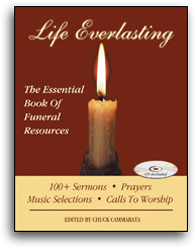
Life Everlasting
The Essential Book of Funeral Resources
Object:
There are many ways for us to remember the deceased at the funeral home, the church, and during the service. One of my favorite ways is through the use of photographs. In our area, funeral directors have begun to encourage families to put together a collage of photos to be displayed at the funeral home, that tell the story of the life of the deceased. We have discovered that going through old photos and putting together the collage is very healing for the families, and is a wonderful help to people who come to the funeral home to pay respects. The process of putting these displays together, and the viewing of them at the funeral home, sparks memories, discussions, storytelling, laughter, and tears. It is all part of the healing process. If the funeral director does not suggest it, you might. Don't be afraid that it will add one more burden to the family. I initially thought that would be the case, but it turns out that it is much more a help than a hindrance.
Other items that can be displayed at the funeral home that will have the same effect, are medals and honors won by the deceased, hobby items, old keepsakes, a favorite old hat or other item of clothing. Just get the family thinking and they will come up with ideas.
Another very helpful way to remember the deceased is to recruit people who knew her to talk about her at the service. Years ago, as I began my ministry, my wife's grandfather passed away. I was asked by his family to lead a time of remembrance for him. I had never done anything like that so I just started by telling a couple brief stories about Grandpa and then asking others if they had any memories they would like to share. There were many who shared. It turned out to be a memorable and beautiful time. We heard things about Grandpa that some of us had never known. There were tears and laughter. It brought the family together, and initiated a day of storytelling about Grandpa that I am convinced was wonderfully healing for everyone involved.
Since that day, I have been encouraging family members and friends (especially at the funerals of people I did not know well) to take some time to jot down a few thoughts about their loved one, and to share some of these thoughts at the funeral service. In my years of ministry, I have never had someone say anything inappropriate during one of these times, and I have had many people tell me that this was the highlight of the service for them. It is a highlight, I think, because it is real. Often pastors are asked to do funerals for those they knew only casually, or not at all. I always found it somewhat phony to talk about a person I did not know. But when those who knew him do the sharing, it is genuine, and the listeners feel as if the person is truly being remembered and honored.
Pastors, I encourage you to make this a part of as many services as you can. You can help people to prepare by asking them the same questions you would have asked them if you were gathering information about the deceased to share yourself. Ask questions like: "What did you love about her?" "What lessons did she teach you?" "What was his best quality?" "How did she make you laugh?" "What about him drove you crazy?" "What will you miss the most?" These questions will lead to lots of memories that can be shared.
At the service, I usually begin by saying something like this, "There will be a time to share your memories of Joe this morning. I know that it is scary to stand and talk in front of a group at a time like this. Tears are always a possibility, but please do not let that prevent you from sharing a memory or comment. Tears speak volumes about our love. You will not regret sharing." I do this at the beginning of the service to give people a chance to think. Then, after opening prayers and scripture readings, I invite one of those who was recruited ahead of time to come and begin the sharing time. I then open it up for others to share as they feel comfortable. It is always a helpful time, and often a beautiful time.
Other items that can be displayed at the funeral home that will have the same effect, are medals and honors won by the deceased, hobby items, old keepsakes, a favorite old hat or other item of clothing. Just get the family thinking and they will come up with ideas.
Another very helpful way to remember the deceased is to recruit people who knew her to talk about her at the service. Years ago, as I began my ministry, my wife's grandfather passed away. I was asked by his family to lead a time of remembrance for him. I had never done anything like that so I just started by telling a couple brief stories about Grandpa and then asking others if they had any memories they would like to share. There were many who shared. It turned out to be a memorable and beautiful time. We heard things about Grandpa that some of us had never known. There were tears and laughter. It brought the family together, and initiated a day of storytelling about Grandpa that I am convinced was wonderfully healing for everyone involved.
Since that day, I have been encouraging family members and friends (especially at the funerals of people I did not know well) to take some time to jot down a few thoughts about their loved one, and to share some of these thoughts at the funeral service. In my years of ministry, I have never had someone say anything inappropriate during one of these times, and I have had many people tell me that this was the highlight of the service for them. It is a highlight, I think, because it is real. Often pastors are asked to do funerals for those they knew only casually, or not at all. I always found it somewhat phony to talk about a person I did not know. But when those who knew him do the sharing, it is genuine, and the listeners feel as if the person is truly being remembered and honored.
Pastors, I encourage you to make this a part of as many services as you can. You can help people to prepare by asking them the same questions you would have asked them if you were gathering information about the deceased to share yourself. Ask questions like: "What did you love about her?" "What lessons did she teach you?" "What was his best quality?" "How did she make you laugh?" "What about him drove you crazy?" "What will you miss the most?" These questions will lead to lots of memories that can be shared.
At the service, I usually begin by saying something like this, "There will be a time to share your memories of Joe this morning. I know that it is scary to stand and talk in front of a group at a time like this. Tears are always a possibility, but please do not let that prevent you from sharing a memory or comment. Tears speak volumes about our love. You will not regret sharing." I do this at the beginning of the service to give people a chance to think. Then, after opening prayers and scripture readings, I invite one of those who was recruited ahead of time to come and begin the sharing time. I then open it up for others to share as they feel comfortable. It is always a helpful time, and often a beautiful time.
