
The Rich Young Man, His and the Disciples' Surprise
Worship
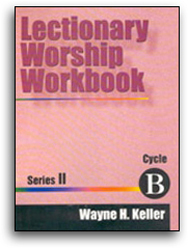
Lectionary Worship Workbook
Series II, Cycle B
Celebrating God's Presence And Power
Pastoral and Congregational Invitation (Pastor and Ministers)
P: Is everybody happy? Joyful? Victorious? Hilarious? If not, why not? We live on the A.D. side of the resurrection, not the B.C. side. Therefore, we know that the battle is won. Christ has defeated sin, death, the grave. We may have sad moments. We need not lead sad lives. Life in Christ is a great adventure! So, rejoice!
M: We come from the bland sameness of daily life, preoccupied with little concerns which do not count ultimately, and the frustrations of ineffectiveness in a world aflame with crises and urgent concerns.
P: Jesus the Christ has made us partners in liberating the world.
M: We come to receive a vision and plan for significant living, a purpose to lift up your presence, and a power to change the world, beginning with ourselves and the people in our lives.
P: We are a new breed of humanity set free to be the Master's people. I invite us to worship with joy and praise. Christ is here! And all the people reverently shouted (your favorite praise word or words).
Hymn of Praise
"Our God, Our Help in Ages Past," Isaac Watts, 1719; alt.; attr. William Croft, 1708.
Prayer of Praise
Bring together the ideas expressed in the invitation to worship.
Celebrating Our Forgiveness
Call to Confession
Briefly introduce the scripture, pointing out what kept the young man from the kingdom. Then ask, "What behavior of yours most often keeps God out of your life and decisions?" (Thirty seconds of silence.) "What investment do you have in keeping God out?" (Silence.) "What are you afraid to let God change? That unhealthy liason?" (Pause briefly after each suggestion.) "Gossiping about one's neighbors? Opening your pocketbook for the right causes? Giving up your 'fun' times? What?" (Silence.) "What would need to happen to you to let God in?" (Silence.)
Prayer of Confession
With openness of heart and mind, I acknowledge before you, God, the thoughts I often allow to enter my mind and to influence my actions. I confess Lord, that I allow my mind to wander down unproductive ways; that I deceive myself about where my obvious duties lie; that, by concealing my real motives, I pretend and fake my way through life; that my honesty, sometimes, is only a matter of policy; that my affection for my friends, sometimes, is only a refined form of self-interest; that often my sparing of my enemy, sometimes, is due to nothing more than cowardice; that, sometimes, I do good deeds only to be seen of others, and shun evil deeds only because I fear that someone may find me out; that I, sometimes, refer to myself as your disciple, and live as though it were not true; that I, sometimes, make a verbal profession of faith, and do not follow through in consistent witness. Holy God, let the fire of your love enter my heart, and burn up my false concept of salvation, and make my heart and mind that of a little child. (Author unknown, revised.)
Response
"Lord, Jesus, Think on Me," Synesius of Cyrene (c. 370-414); trans. Allen W. Chatfield, 1876; Daman's Psalmes, 1579; alt.
Call to Pardon (Pastor and Ministers)
God in Christ calls us to face the truth about ourselves, as the first dimension of forgiveness. As Sister Corita once wrote, despite the fact that God knows us better than we know ourselves, "God knows us through and through and likes us still and all." God, however, is not some doting grandfather in the upstairs bedroom, who, no matter how we act, glibly says, "I forgive." God expects us to change; and God makes change possible through the Christ who makes all things new, not renovated, or revised.
P: Remember the good news of our liberation.
M: In Christ, our self-worth has been declared.
P: We have been forgiven, accepted, received.
M: Christ has forgiven the past. Christ has given the present new meaning. Christ has filled the future with opportunities.
P: I invite us to live fully and responsibly. In Christ, we are free. In Christ, we are responsible.
M: Indeed we are! So be it! It's true!
Response
"Amen Chorus" from "Lilies of the Field."
Celebrating God's Word
Message with the Children of All Ages
Tell the story of the rich young man in a way that the children understand. Point out that the disciples were amazed, and asked, "Who can ever be a part of God's kingdom?" Focus on God's grace to enter the kingdom, and not our actions. Make sure that they understand that new actions follow when we know that God receives us, unconditionally.
Reading of the Gospel
Read from The Cotton Patch Version by Clarence Jordan. If possible, get his cassette tapes, in which he translates many of the parables, and stories of Jesus.
Proclamation of the Good News
You may want to develop the message about these ideas: (1) our willingness to face reality; (2) the radical (of or from the root) nature of salvation (wholeness, healing, integration). David Head in his book of prayers says, "We welcome a vague benevolence, but cannot tolerate the pure purpose of a dying God."
Celebrating Our Obedience
Stewardship Challenge
When we hear, or read, the story of the rich young man, do we put ourselves in his place; or rather, do we complain that we are a part of the world's poor? I recall reading one time that if our income is more than 25,000 dollars per year, we are in the top twenty percent of the world's population.
Response
One minute of silence; ask if anyone wants to respond to the challenge.
Hymn of Commitment
"O for a Thousand Tongues to Sing," Charles Wesley, 1738; alt.; Carl Gotthelf Glaser, 1828; arr. Lowell Mason, 1839. Before singing, remind the people that, to pray for a thousand tongues is one thing; to use the one we have is quite another. Change "me"Êand "my" to "us" and "our."
Charge to the Congregation
Perhaps you can find a similar example: A former participating nonmember of the church I was serving responded to my question about why she no longer participated with us. Immediately, she said, "I don't like the informal worship." She paused briefly, and then added, "That's not the real reason; I don't want to be that committed."
Meditation
"The supreme happiness (I prefer "joy" because happiness in our society is tied up in owning and having things) of life is the conviction of being loved for yourself, or, more correctly, being loved in spite of yourself" (Victor Hugo). The rich young man had no idea how to understand the belief that Christianity begins, first and foremost, with an act of receiving.
Music Possibilities In Addition To Those Already Suggested
Music for Preparation: "Supplication," Asper.
Response to the Pardon: "Dear Lord and Father of Mankind." (See Proper 8.)
Response to the Proclamation: "A New Creature," words and music by John F. Wilson, from Man Alive, Hope Publishing Company. (See Appendix I for address.)
Hymn of Commitment: "God's Word Is Like a Flaming Sword," Carl Bernhard Grave, 1825; trans. by Catherine Winkworth, 1855; alt., 1972.
Response to the Stewardship Challenge: "Andante," Czerny.
Music for Dismissal: "Postlude," Dramer.
Pastoral and Congregational Invitation (Pastor and Ministers)
P: Is everybody happy? Joyful? Victorious? Hilarious? If not, why not? We live on the A.D. side of the resurrection, not the B.C. side. Therefore, we know that the battle is won. Christ has defeated sin, death, the grave. We may have sad moments. We need not lead sad lives. Life in Christ is a great adventure! So, rejoice!
M: We come from the bland sameness of daily life, preoccupied with little concerns which do not count ultimately, and the frustrations of ineffectiveness in a world aflame with crises and urgent concerns.
P: Jesus the Christ has made us partners in liberating the world.
M: We come to receive a vision and plan for significant living, a purpose to lift up your presence, and a power to change the world, beginning with ourselves and the people in our lives.
P: We are a new breed of humanity set free to be the Master's people. I invite us to worship with joy and praise. Christ is here! And all the people reverently shouted (your favorite praise word or words).
Hymn of Praise
"Our God, Our Help in Ages Past," Isaac Watts, 1719; alt.; attr. William Croft, 1708.
Prayer of Praise
Bring together the ideas expressed in the invitation to worship.
Celebrating Our Forgiveness
Call to Confession
Briefly introduce the scripture, pointing out what kept the young man from the kingdom. Then ask, "What behavior of yours most often keeps God out of your life and decisions?" (Thirty seconds of silence.) "What investment do you have in keeping God out?" (Silence.) "What are you afraid to let God change? That unhealthy liason?" (Pause briefly after each suggestion.) "Gossiping about one's neighbors? Opening your pocketbook for the right causes? Giving up your 'fun' times? What?" (Silence.) "What would need to happen to you to let God in?" (Silence.)
Prayer of Confession
With openness of heart and mind, I acknowledge before you, God, the thoughts I often allow to enter my mind and to influence my actions. I confess Lord, that I allow my mind to wander down unproductive ways; that I deceive myself about where my obvious duties lie; that, by concealing my real motives, I pretend and fake my way through life; that my honesty, sometimes, is only a matter of policy; that my affection for my friends, sometimes, is only a refined form of self-interest; that often my sparing of my enemy, sometimes, is due to nothing more than cowardice; that, sometimes, I do good deeds only to be seen of others, and shun evil deeds only because I fear that someone may find me out; that I, sometimes, refer to myself as your disciple, and live as though it were not true; that I, sometimes, make a verbal profession of faith, and do not follow through in consistent witness. Holy God, let the fire of your love enter my heart, and burn up my false concept of salvation, and make my heart and mind that of a little child. (Author unknown, revised.)
Response
"Lord, Jesus, Think on Me," Synesius of Cyrene (c. 370-414); trans. Allen W. Chatfield, 1876; Daman's Psalmes, 1579; alt.
Call to Pardon (Pastor and Ministers)
God in Christ calls us to face the truth about ourselves, as the first dimension of forgiveness. As Sister Corita once wrote, despite the fact that God knows us better than we know ourselves, "God knows us through and through and likes us still and all." God, however, is not some doting grandfather in the upstairs bedroom, who, no matter how we act, glibly says, "I forgive." God expects us to change; and God makes change possible through the Christ who makes all things new, not renovated, or revised.
P: Remember the good news of our liberation.
M: In Christ, our self-worth has been declared.
P: We have been forgiven, accepted, received.
M: Christ has forgiven the past. Christ has given the present new meaning. Christ has filled the future with opportunities.
P: I invite us to live fully and responsibly. In Christ, we are free. In Christ, we are responsible.
M: Indeed we are! So be it! It's true!
Response
"Amen Chorus" from "Lilies of the Field."
Celebrating God's Word
Message with the Children of All Ages
Tell the story of the rich young man in a way that the children understand. Point out that the disciples were amazed, and asked, "Who can ever be a part of God's kingdom?" Focus on God's grace to enter the kingdom, and not our actions. Make sure that they understand that new actions follow when we know that God receives us, unconditionally.
Reading of the Gospel
Read from The Cotton Patch Version by Clarence Jordan. If possible, get his cassette tapes, in which he translates many of the parables, and stories of Jesus.
Proclamation of the Good News
You may want to develop the message about these ideas: (1) our willingness to face reality; (2) the radical (of or from the root) nature of salvation (wholeness, healing, integration). David Head in his book of prayers says, "We welcome a vague benevolence, but cannot tolerate the pure purpose of a dying God."
Celebrating Our Obedience
Stewardship Challenge
When we hear, or read, the story of the rich young man, do we put ourselves in his place; or rather, do we complain that we are a part of the world's poor? I recall reading one time that if our income is more than 25,000 dollars per year, we are in the top twenty percent of the world's population.
Response
One minute of silence; ask if anyone wants to respond to the challenge.
Hymn of Commitment
"O for a Thousand Tongues to Sing," Charles Wesley, 1738; alt.; Carl Gotthelf Glaser, 1828; arr. Lowell Mason, 1839. Before singing, remind the people that, to pray for a thousand tongues is one thing; to use the one we have is quite another. Change "me"Êand "my" to "us" and "our."
Charge to the Congregation
Perhaps you can find a similar example: A former participating nonmember of the church I was serving responded to my question about why she no longer participated with us. Immediately, she said, "I don't like the informal worship." She paused briefly, and then added, "That's not the real reason; I don't want to be that committed."
Meditation
"The supreme happiness (I prefer "joy" because happiness in our society is tied up in owning and having things) of life is the conviction of being loved for yourself, or, more correctly, being loved in spite of yourself" (Victor Hugo). The rich young man had no idea how to understand the belief that Christianity begins, first and foremost, with an act of receiving.
Music Possibilities In Addition To Those Already Suggested
Music for Preparation: "Supplication," Asper.
Response to the Pardon: "Dear Lord and Father of Mankind." (See Proper 8.)
Response to the Proclamation: "A New Creature," words and music by John F. Wilson, from Man Alive, Hope Publishing Company. (See Appendix I for address.)
Hymn of Commitment: "God's Word Is Like a Flaming Sword," Carl Bernhard Grave, 1825; trans. by Catherine Winkworth, 1855; alt., 1972.
Response to the Stewardship Challenge: "Andante," Czerny.
Music for Dismissal: "Postlude," Dramer.
