The Sacrament Of War And Peace!
Sermon
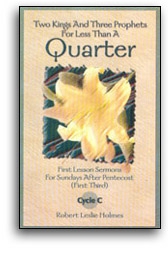
Two Kings And Three Prophets For Less Than A Quarter
First Lesson Sermons For Sundays After Pentecost (First Third) Cycle C
As dawn awakened one August morning over a tiny French village called Pielo, its citizens were herded into the village square to face a Nazi firing squad. It was 1944 and the enemy had routed out a small unit of French underground freedom fighters in the village the night before. Among the villagers was a fifteen-year-old boy. He did not really understand why, but he knew that the intention of the occupying forces was to shoot them all. He looked at the villagers all around him and realized that almost all of them were older than he was. They had lived a long time. He thought about how much life he was going to miss. More than anything else, the thought of being shot to death scared him. He wondered what might happen if he were shot and terribly wounded but did not die right away. Would he be able to bear the pain? What would the bullets feel like as they barreled through his body? All these and many other thoughts rushed through his mind. Suddenly a sound like an explosion somewhere in the distance caught his attention. It was followed by the noise of tanks approaching his village. Were more Nazis coming to hasten the slaughter? Or, could he be dreaming and this was a friendly force coming to their rescue? There had been rumors, coming mostly from the resistance, that help was on the way and perhaps freedom. A German officer barked out a command to his troops. In an instant the Nazi soldiers scattered to take cover in nearby buildings against a unit of American GIs that was at that moment rounding the corner and entering the village square. It was true! His greatest dream was coming true! He and his neighbors from the village were being rescued from the jaws of death. Corporal Bob Hamsley led the Americans. He shouted for the villagers to run and take cover. They did. For three hours there was shooting until finally fifty Nazis lay dead and another fifty were taken prisoner. Nearly half a century later the people of Pielo remembered that day in a special ceremony in the Village Square. The guest of honor at that ceremony was a man who had traveled back to Pielo from the United States. His name was Bob Hamsley, and the mayor of what was now the town of Pielo had invited him to receive the city key. Although they had met only briefly for one moment in time, that fifteen-year-old boy, now a grown man and mayor of his town, would never forget the day he almost died in a hail of Nazi bullets, nor the man who saved his life and brought peace to his village. As mayor, he had gone to great lengths to find him and invite him to this celebration of remembrance and freedom.
I tell this story because today's text from Genesis 14 was also born out of war and peace. A raiding enemy took prisoner Abram's nephew Lot. When Abram learned what had happened, he immediately rose up and tried to rescue him. War is always an ugly thing, but sometimes war is a necessary thing. There are times when circumstances beyond our control force us to get involved in situations we would rather avoid. Abram, despite his small number of soldiers and their lack of experience, was victorious and "King Melchizedek of Salem brought out bread and wine; he was priest of God Most High" (Genesis 14:18). So, you see that this sacrament was also born in war and, strangely enough, peace as well.
I. This Sacrament Was Born In War
It is true that King Melchizedek greeted Abram. Melchizedek means "King of righteousness." He was a man whose heart was tuned to God, and his character and his reputation reflected it. He was king of Salem, a word that is from the same root as shalom, meaning peace. Shalom is more than freedom from the disturbance of outside conflicts. It is peace within the soul. Salem, the region Melchizedek ruled, would eventually be called Jerusalem. Jerusalem means the City of Peace.
Melchizedek was at the same time a king and a priest and he was good at both jobs. In fact, he was so good that the highest honor that could be given to any priest after him was to be called "a priest forever according to the order of Melchizedek" (Psalm 110:4). A priest is an agent of righteousness and peace. The lesson that comes out of Melchizedek's life is, "Live for God and he will use you and raise you up."
There is another reason why I can say that this sacrament was born out of war. Another kingly priest, our Prince of Peace, Jesus Christ, instituted it. Jesus "took a loaf of bread, and after blessing it he broke it, gave it to them, and said, 'Take; this is my body.' Then he took a cup, and after giving thanks he gave it to them, and all of them drank from it. He said to them, 'This is my blood of the covenant, which is poured out for many. Truly I tell you, I will never again drink of the fruit of the vine until that day when I drink it new in the kingdom of God' " (Matthew 14:22-25). A war raged between heaven and hell, good and evil, righteousness and unrighteousness, God and Satan. Our Lord Jesus Christ came to bring it to a conclusion. He gives us his assurance that sufficient sacrifice has been made on his cross to atone for all our sins and bring us peace like none the world can ever offer. So in this sacrament we celebrate war. Yet, we also celebrate victory and peace.
II. This Sacrament Is Bathed In Victory
"Thanks be to God, who gives us the victory through our Lord Jesus Christ" (1 Corinthians 15:57). The victory is all ours because in his death on the cross, which we recall through this sacrament, we learn that the penalty for our sins was paid in full and that our peace with God has been made possible. Christ's death was followed by his resurrection. The resurrection of Jesus brings us victory over death and the grave. It promises us victory over sin for the Scriptures say, "If we confess our sins, he who is faithful and just will forgive us our sins and cleanse us from all unrighteousness" (1 John 1:9).
The strife is o'er, the battle done;
The victory of life is won;
Our song of triumph has begun.
Alleluia!
The powers of death had done their worst;
But Christ their legions hath dispersed;
Let shouts of holy joy outburst.
Alleluia!
Lord, by the stripes that wounded Thee;
From death's dread sting thy servants free;
That we may live and sing to Thee.
Alleluia!1
Do you know this victory? Have you given your life unto Almighty Christ our Priest and King? Have you given him your sins and claimed the forgiveness that is found only in him? If so, let us celebrate the victory as we participate together in the Sacrament in his name.
III. This Sacrament Brings Us Peace
"King Melchizedek of Salem brought out bread and wine." Salem, as I said, comes from the same Hebrew root as shalom, the ancient Hebrew word for peace. Despite its tragic history, Jerusalem is, in fact, the City of Peace. Thus, Melchizedek's title is truly "King of the peace place." Although he and Abram were strangers to each other, and although they were together only for this day and this meal, they became instant friends. Their peace was symbolized through the bread and wine in a moment Abram would never forget.
Jesus, the Lord at this table, is our King of Peace. He says, "My peace I give to you. I do not give to you as the world gives. Do not let your hearts be troubled, and do not let them be afraid" (John 14:27). In this Sacrament, Jesus Christ comes anew to offer you his peace through his blood shed on the cross.
Peace! Peace of mind and heart are still are our most precious and needed experiences. In his book, A Time to Heal, President Gerald Ford repeats a story he heard some years before when he was a young Congressman. During the 1948 civil war in Greece, a villager was planning to emigrate to the United States. Before he left he asked his weary, beleaguered, poverty-stricken neighbors what they would like him to send home once he arrived in America. "Would you like money? Food? Clothes?" "No," responded one of his neighbors, "you should send us a ton of tranquility."
A ton of peace! How much is that? I suspect what his neighbor wanted was the yoke of national war to be lifted off him and his friends in order that the people of Greece might find peace again. I would also suggest that there is a greater peace than the absence of conflict, however. It is the shalom peace that encompasses not only our outward circumstances but also our inner being. Wouldn't you like to know a peace like that? It is found in your Prince of Peace, Jesus. You can receive it now by faith as you participate at this table. "Since we are justified by faith, we have peace with God through our Lord Jesus Christ" (Romans 5:1). If you have never done it before, I invite you in Christ's name to make your peace with God today. It will be a day you will never forget.
____________
1. Latin hymn translated by Francis Pott (1861).
I tell this story because today's text from Genesis 14 was also born out of war and peace. A raiding enemy took prisoner Abram's nephew Lot. When Abram learned what had happened, he immediately rose up and tried to rescue him. War is always an ugly thing, but sometimes war is a necessary thing. There are times when circumstances beyond our control force us to get involved in situations we would rather avoid. Abram, despite his small number of soldiers and their lack of experience, was victorious and "King Melchizedek of Salem brought out bread and wine; he was priest of God Most High" (Genesis 14:18). So, you see that this sacrament was also born in war and, strangely enough, peace as well.
I. This Sacrament Was Born In War
It is true that King Melchizedek greeted Abram. Melchizedek means "King of righteousness." He was a man whose heart was tuned to God, and his character and his reputation reflected it. He was king of Salem, a word that is from the same root as shalom, meaning peace. Shalom is more than freedom from the disturbance of outside conflicts. It is peace within the soul. Salem, the region Melchizedek ruled, would eventually be called Jerusalem. Jerusalem means the City of Peace.
Melchizedek was at the same time a king and a priest and he was good at both jobs. In fact, he was so good that the highest honor that could be given to any priest after him was to be called "a priest forever according to the order of Melchizedek" (Psalm 110:4). A priest is an agent of righteousness and peace. The lesson that comes out of Melchizedek's life is, "Live for God and he will use you and raise you up."
There is another reason why I can say that this sacrament was born out of war. Another kingly priest, our Prince of Peace, Jesus Christ, instituted it. Jesus "took a loaf of bread, and after blessing it he broke it, gave it to them, and said, 'Take; this is my body.' Then he took a cup, and after giving thanks he gave it to them, and all of them drank from it. He said to them, 'This is my blood of the covenant, which is poured out for many. Truly I tell you, I will never again drink of the fruit of the vine until that day when I drink it new in the kingdom of God' " (Matthew 14:22-25). A war raged between heaven and hell, good and evil, righteousness and unrighteousness, God and Satan. Our Lord Jesus Christ came to bring it to a conclusion. He gives us his assurance that sufficient sacrifice has been made on his cross to atone for all our sins and bring us peace like none the world can ever offer. So in this sacrament we celebrate war. Yet, we also celebrate victory and peace.
II. This Sacrament Is Bathed In Victory
"Thanks be to God, who gives us the victory through our Lord Jesus Christ" (1 Corinthians 15:57). The victory is all ours because in his death on the cross, which we recall through this sacrament, we learn that the penalty for our sins was paid in full and that our peace with God has been made possible. Christ's death was followed by his resurrection. The resurrection of Jesus brings us victory over death and the grave. It promises us victory over sin for the Scriptures say, "If we confess our sins, he who is faithful and just will forgive us our sins and cleanse us from all unrighteousness" (1 John 1:9).
The strife is o'er, the battle done;
The victory of life is won;
Our song of triumph has begun.
Alleluia!
The powers of death had done their worst;
But Christ their legions hath dispersed;
Let shouts of holy joy outburst.
Alleluia!
Lord, by the stripes that wounded Thee;
From death's dread sting thy servants free;
That we may live and sing to Thee.
Alleluia!1
Do you know this victory? Have you given your life unto Almighty Christ our Priest and King? Have you given him your sins and claimed the forgiveness that is found only in him? If so, let us celebrate the victory as we participate together in the Sacrament in his name.
III. This Sacrament Brings Us Peace
"King Melchizedek of Salem brought out bread and wine." Salem, as I said, comes from the same Hebrew root as shalom, the ancient Hebrew word for peace. Despite its tragic history, Jerusalem is, in fact, the City of Peace. Thus, Melchizedek's title is truly "King of the peace place." Although he and Abram were strangers to each other, and although they were together only for this day and this meal, they became instant friends. Their peace was symbolized through the bread and wine in a moment Abram would never forget.
Jesus, the Lord at this table, is our King of Peace. He says, "My peace I give to you. I do not give to you as the world gives. Do not let your hearts be troubled, and do not let them be afraid" (John 14:27). In this Sacrament, Jesus Christ comes anew to offer you his peace through his blood shed on the cross.
Peace! Peace of mind and heart are still are our most precious and needed experiences. In his book, A Time to Heal, President Gerald Ford repeats a story he heard some years before when he was a young Congressman. During the 1948 civil war in Greece, a villager was planning to emigrate to the United States. Before he left he asked his weary, beleaguered, poverty-stricken neighbors what they would like him to send home once he arrived in America. "Would you like money? Food? Clothes?" "No," responded one of his neighbors, "you should send us a ton of tranquility."
A ton of peace! How much is that? I suspect what his neighbor wanted was the yoke of national war to be lifted off him and his friends in order that the people of Greece might find peace again. I would also suggest that there is a greater peace than the absence of conflict, however. It is the shalom peace that encompasses not only our outward circumstances but also our inner being. Wouldn't you like to know a peace like that? It is found in your Prince of Peace, Jesus. You can receive it now by faith as you participate at this table. "Since we are justified by faith, we have peace with God through our Lord Jesus Christ" (Romans 5:1). If you have never done it before, I invite you in Christ's name to make your peace with God today. It will be a day you will never forget.
____________
1. Latin hymn translated by Francis Pott (1861).