
Sunday Of The Passion
Preaching
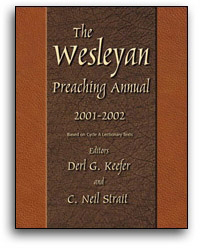
THE WESLEYAN PREACHING ANNUAL 2001--2002
WORSHIP HELPS
CALL TO WORSHIP
Leader: Come all people of the earth and seek the Lord while He may be found.
People: Call upon His name while He is still close.
Leader: Let those of you still in wickedness and sin
People: Abandon His ways,
Leader: And the evil persons their thoughts.
All: We will seek the Lord and find Him today.
OFFERING THOUGHT
Praise be to God Almighty! He graciously gives victory through Jesus, our Lord.
BENEDICTION
Don't forget to glorify Him with triumphant voices in the world this week. Make joyful praises in a world of doom for desperation cannot keep His people in gloom.
SERMON BRIEFS
How To Be A Suffering Servant
Isaiah 50:4--9
Where have all the suffering servants gone? We might entertain the idea of being a servant for the cause of Christ, but suffering? No, thanks! I think my mother is calling ...
But truthfully, God is looking for suffering servants. He is looking for people who are willing to suffer, if necessary, for the gospel. Remember, the basic tenant of the gospel is that it must be first bad news before it can be good news. Before someone needs a Savior they need to realize they are a sinner. Not surprisingly, people do not like the idea of being labeled a sinner. If you really let your light shine, people will see their true sinful condition. Don't be surprised if they make you suffer because your light revealed dirt in their life! In this passage, which points to Christ, we are taught by His example how to be a light--bearing suffering servant.
I. We are taught that to be a suffering servant you need to have a listening ear. (vv. 4--5)
Christ had His marching orders. He listened to the voice of God and never backed down from His calling. Jesus faced Gethsemane, the crowds, the trial, and the cross. The Lord's obedience brought intense suffering.
As suffering servants we need to have a listening ear. Meaning that, like Christ, we will be committed to obedience. Every parent knows that hearing is only part of having a listening ear. Many parents have asked their child, "Did you hear me?" Of course they heard, they just weren't being obedient. A listening ear means obedience to God. Regrettably, far too many Christians hear God but fail to be obedient. We automatically choose the easiest path. It is only through hearing and obeying God that we will put ourselves in situations that are risky for the cross!
II. We are taught that to be a suffering servant you need to have a willing heart. (v. 6)
This verse contains a stunning picture of cruelty. Take the words of this verse and allow yourself to paint a mental picture of what is happening. Why all this cruelty? It is simply because Christ embodies bad news before the good news: people are sinners that need a Savior.
Here is what commands our attention in this verse. Christ did not need to go through the suffering. He could have pulled the plug on the entire deal. Who could have blamed Him if He would have walked? But, He suffered willingly. The key phrase in verse 6 is "I offered my back ..." Willingness.
God needs Christians who are willing to suffer as they let their light shine. It has become an increasingly sickening sight to see Christians playing it safe in their holy huddle while people are on the road to hell! Take a stand. Be willing to suffer for the cross.
III. We are taught that to be a suffering servant you need to have a determined spirit. (v. 7)
Christ models a determined spirit. The image conjured up in this verse is powerful. The Lord set His face like flint. He made His decision in the Garden and never looked back. Nothing would keep Him from His appointed task.
Today's would be suffering servant must have the same determined spirit. Too often, as we let our light shine, we tremble at even a sidelong sneer. In those moments remind yourself of what is at stake. Remind yourself that unless you set your face like flint there may be some who will fail to be impacted with the Gospel! Ask God for a spirit of determination.
IV. We are taught that to be a suffering servant you need to have a solid foundation. (vv. 8--9)
The solid foundation for Christ was His Heavenly Father. The text uses the words, "sovereign Lord." There is no better foundation upon which to rest!
As you become a suffering servant, do not try to do so in your own strength. Do not rely upon methods and programs. But rest your efforts upon God. Let Him be your foundation. After all, what we are embarking upon is primarily a spiritual adventure. Letting your light shine is a Divine moment that needs Divine help.
William P. Merrill had it right when he penned these words: "Rise up, O church of God! Have done with lesser things. Give heart and mind and soul and strength to serve the King of kings." God needs an army of men and women who will be suffering servants who are willing to let their light shine regardless of the cost. Sign up for this army today!
Randall Hartman
Passion Sunday
Matthew 27:11--54
[The entire text for this Passion Sunday should be read expressively after some introductory remarks have been made. The introductory remarks will focus upon the literary bracketing which surrounds this narrative.]
Today is Palm Sunday - a day when we celebrate the Lord's triumphal entry into Jerusalem. On the Christian calendar, it is both Palm Sunday and also Passion Sunday - the day the church focuses upon the death of Jesus Christ. This passage for the day moves us to consider the Lord's passion and his death.
Often we read the passage of scripture and then proceed to preach. Today it is the reading of the text that will take much of our time.
Most scholars understand the writer of Matthew to have used the Gospel of Mark as his source. Throughout the Gospel, Matthew has taken many liberties in the way the Gospel of Mark is used. Sometimes events are re--ordered. Sometimes additional statements are added which Mark did not choose to mention. Sometimes the things we find in Mark's Gospel are deliberately omitted in Matthew's writings.
In this passage, it is impressive to notice how much Matthew remains faithful to the wording and to the ordering of Mark's Gospel. There are a few minor details which Matthew changes, but it seems most clear Matthew does not intend to change Mark's message about the crucifixion of Jesus. This probably reflects significant stability in the story of the crucifixion that had become standardized in the early church. The emphasis upon the crucifixion story is evidenced in the disproportionate description (50 percent or more) of the passion of Christ.
The early church seems to have been very careful in being clear about the crucifixion of Jesus Christ. While the Gospels of Matthew and Luke modify some of the details which surround the crucifixion, the basic story is carefully maintained, if not quoted word for word. We need to pay attention to the story as it has been preserved for hearing. We need to read it with the same understanding we see in Wesley's confession, "I the chief of sinners am, but Jesus died for me."
Before we read the text together, we need to pay attention to the stories of the characters that both precede and follow this passage of scripture. Before this passage, we see the same story of the end of Judas. Judas, one of the insiders, despairs of his life. It is with the chief priests and the elders of the people he has joined. The insider has joined the outsiders, and he cannot deal with the laws. He takes arms against a sea of troubles and ends his life in despair.
In the story of Jesus' crucifixion there are many characters brought to our attention. Matthew focuses the question for us through the narrative of Pilate. It asks the question: Why must Jesus die? Why should he die and Barabbas go free?
At the end of the story we hear the Roman centurion declare who this Jesus is. His declaration identifies Jesus as the Son of God. Then the story focuses on the women. They are listed with detail. Women in that society were nothing. They were the same as chattel. They were worse than outsiders. They were not even to be considered at all. In the gospel they are regarded differently.
Then there is a story of Joseph, the rich man from Arimathea. He's now called a disciple of Jesus. He provides all that is needed for Jesus' burial.
Before we read this marvelous passage from God's word, let me ask a few questions. Thinking about all these characters which surrounds the story: For whom did Jesus die? Following Pilate's logical question: Why did Jesus have to die? The third question worth asking as we read is: For whom did Jesus' death make a difference?
[Read the full text expressively and deliberately. Give full pause in those places where reflection is needed.]
Ron Dalton
CALL TO WORSHIP
Leader: Come all people of the earth and seek the Lord while He may be found.
People: Call upon His name while He is still close.
Leader: Let those of you still in wickedness and sin
People: Abandon His ways,
Leader: And the evil persons their thoughts.
All: We will seek the Lord and find Him today.
OFFERING THOUGHT
Praise be to God Almighty! He graciously gives victory through Jesus, our Lord.
BENEDICTION
Don't forget to glorify Him with triumphant voices in the world this week. Make joyful praises in a world of doom for desperation cannot keep His people in gloom.
SERMON BRIEFS
How To Be A Suffering Servant
Isaiah 50:4--9
Where have all the suffering servants gone? We might entertain the idea of being a servant for the cause of Christ, but suffering? No, thanks! I think my mother is calling ...
But truthfully, God is looking for suffering servants. He is looking for people who are willing to suffer, if necessary, for the gospel. Remember, the basic tenant of the gospel is that it must be first bad news before it can be good news. Before someone needs a Savior they need to realize they are a sinner. Not surprisingly, people do not like the idea of being labeled a sinner. If you really let your light shine, people will see their true sinful condition. Don't be surprised if they make you suffer because your light revealed dirt in their life! In this passage, which points to Christ, we are taught by His example how to be a light--bearing suffering servant.
I. We are taught that to be a suffering servant you need to have a listening ear. (vv. 4--5)
Christ had His marching orders. He listened to the voice of God and never backed down from His calling. Jesus faced Gethsemane, the crowds, the trial, and the cross. The Lord's obedience brought intense suffering.
As suffering servants we need to have a listening ear. Meaning that, like Christ, we will be committed to obedience. Every parent knows that hearing is only part of having a listening ear. Many parents have asked their child, "Did you hear me?" Of course they heard, they just weren't being obedient. A listening ear means obedience to God. Regrettably, far too many Christians hear God but fail to be obedient. We automatically choose the easiest path. It is only through hearing and obeying God that we will put ourselves in situations that are risky for the cross!
II. We are taught that to be a suffering servant you need to have a willing heart. (v. 6)
This verse contains a stunning picture of cruelty. Take the words of this verse and allow yourself to paint a mental picture of what is happening. Why all this cruelty? It is simply because Christ embodies bad news before the good news: people are sinners that need a Savior.
Here is what commands our attention in this verse. Christ did not need to go through the suffering. He could have pulled the plug on the entire deal. Who could have blamed Him if He would have walked? But, He suffered willingly. The key phrase in verse 6 is "I offered my back ..." Willingness.
God needs Christians who are willing to suffer as they let their light shine. It has become an increasingly sickening sight to see Christians playing it safe in their holy huddle while people are on the road to hell! Take a stand. Be willing to suffer for the cross.
III. We are taught that to be a suffering servant you need to have a determined spirit. (v. 7)
Christ models a determined spirit. The image conjured up in this verse is powerful. The Lord set His face like flint. He made His decision in the Garden and never looked back. Nothing would keep Him from His appointed task.
Today's would be suffering servant must have the same determined spirit. Too often, as we let our light shine, we tremble at even a sidelong sneer. In those moments remind yourself of what is at stake. Remind yourself that unless you set your face like flint there may be some who will fail to be impacted with the Gospel! Ask God for a spirit of determination.
IV. We are taught that to be a suffering servant you need to have a solid foundation. (vv. 8--9)
The solid foundation for Christ was His Heavenly Father. The text uses the words, "sovereign Lord." There is no better foundation upon which to rest!
As you become a suffering servant, do not try to do so in your own strength. Do not rely upon methods and programs. But rest your efforts upon God. Let Him be your foundation. After all, what we are embarking upon is primarily a spiritual adventure. Letting your light shine is a Divine moment that needs Divine help.
William P. Merrill had it right when he penned these words: "Rise up, O church of God! Have done with lesser things. Give heart and mind and soul and strength to serve the King of kings." God needs an army of men and women who will be suffering servants who are willing to let their light shine regardless of the cost. Sign up for this army today!
Randall Hartman
Passion Sunday
Matthew 27:11--54
[The entire text for this Passion Sunday should be read expressively after some introductory remarks have been made. The introductory remarks will focus upon the literary bracketing which surrounds this narrative.]
Today is Palm Sunday - a day when we celebrate the Lord's triumphal entry into Jerusalem. On the Christian calendar, it is both Palm Sunday and also Passion Sunday - the day the church focuses upon the death of Jesus Christ. This passage for the day moves us to consider the Lord's passion and his death.
Often we read the passage of scripture and then proceed to preach. Today it is the reading of the text that will take much of our time.
Most scholars understand the writer of Matthew to have used the Gospel of Mark as his source. Throughout the Gospel, Matthew has taken many liberties in the way the Gospel of Mark is used. Sometimes events are re--ordered. Sometimes additional statements are added which Mark did not choose to mention. Sometimes the things we find in Mark's Gospel are deliberately omitted in Matthew's writings.
In this passage, it is impressive to notice how much Matthew remains faithful to the wording and to the ordering of Mark's Gospel. There are a few minor details which Matthew changes, but it seems most clear Matthew does not intend to change Mark's message about the crucifixion of Jesus. This probably reflects significant stability in the story of the crucifixion that had become standardized in the early church. The emphasis upon the crucifixion story is evidenced in the disproportionate description (50 percent or more) of the passion of Christ.
The early church seems to have been very careful in being clear about the crucifixion of Jesus Christ. While the Gospels of Matthew and Luke modify some of the details which surround the crucifixion, the basic story is carefully maintained, if not quoted word for word. We need to pay attention to the story as it has been preserved for hearing. We need to read it with the same understanding we see in Wesley's confession, "I the chief of sinners am, but Jesus died for me."
Before we read the text together, we need to pay attention to the stories of the characters that both precede and follow this passage of scripture. Before this passage, we see the same story of the end of Judas. Judas, one of the insiders, despairs of his life. It is with the chief priests and the elders of the people he has joined. The insider has joined the outsiders, and he cannot deal with the laws. He takes arms against a sea of troubles and ends his life in despair.
In the story of Jesus' crucifixion there are many characters brought to our attention. Matthew focuses the question for us through the narrative of Pilate. It asks the question: Why must Jesus die? Why should he die and Barabbas go free?
At the end of the story we hear the Roman centurion declare who this Jesus is. His declaration identifies Jesus as the Son of God. Then the story focuses on the women. They are listed with detail. Women in that society were nothing. They were the same as chattel. They were worse than outsiders. They were not even to be considered at all. In the gospel they are regarded differently.
Then there is a story of Joseph, the rich man from Arimathea. He's now called a disciple of Jesus. He provides all that is needed for Jesus' burial.
Before we read this marvelous passage from God's word, let me ask a few questions. Thinking about all these characters which surrounds the story: For whom did Jesus die? Following Pilate's logical question: Why did Jesus have to die? The third question worth asking as we read is: For whom did Jesus' death make a difference?
[Read the full text expressively and deliberately. Give full pause in those places where reflection is needed.]
Ron Dalton
