
Transfiguration Of The Lord
Preaching
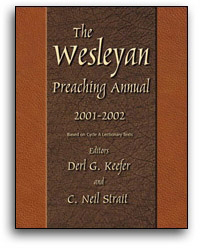
THE WESLEYAN PREACHING ANNUAL 2001--2002
WORSHIP HELPS
CALL TO WORSHIP
Leader: The nation is in an uproar, and the peoples are devising foolish plans.
People: God help us to cast off our foolishness and wake up to Your wise ways.
Leader: You are the King of the universe.
People: We come today to worship the great and holy King!
Leader: You have given us Your Son as a sacrifice and raised Him to rule the earth.
People: We come today to worship the Son who has been transfigured to glory!
All: Praise God from whom all life is transformed.
OFFERING THOUGHT
God notice those who give today. Observe that their motives are right and pure. They give because they love You with all of their heart. Honor them today. Amen.
BENEDICTION
May the God who changes the inward appearance from sin to holiness be exalted through your actions this week.
SERMON BRIEFS
The Holiness Of God
Psalm 99
Few of us will ever have the kind of awesome experience afforded Peter, James, and John on the Mount of Transfiguration. Matthew's description of the event states that for just a few moments Jesus was transfigured from fully man to fully God. Matthew states that Jesus' "face shone like the sun, and His clothes became as white as the light" (Matthew 17:2). Standing with Jesus were two who had already experienced life beyond death, and worshipped in the very presence of God.
Mountaintop experiences have always been a part of man's relationship with God. Biblical examples abound. Abraham met with God the Provider on the mountain where he took Isaac to be sacrificed. Moses met with God the Lawgiver on Mount Sinai. Jesus often met with God the Father on the hillsides and mountains in His times of prayer. These exciting times drew God and man near to each other when His will was clearly revealed.
Psalm 99 reflects David's own mountaintop experience, and suggests that it is the holiness of God that defines those wonderful times of fellowship with Him. He exhorts the people in verse 9 to "Exalt the Lord our God and worship at His holy mountain, for the Lord our God is holy." We are to go to the mountain, and there climb up into the holy presence of God Almighty seeking His will and receiving His numerous blessings.
I. The greatness of God (vv. 1--3)
The holiness of God will cause us to wonder at His greatness. David uses such words as "awesome," "exalted," "enthroned," "reigns," and speaks of nations trembling and the earth shaking. Having described God with such words, David sums it all up with one simple, straightforward statement, "He is holy." For David this one sentence says it all. God's greatness does not come from His power, but from the defining attribute of His character - His holiness. In Isaiah 6:1, Isaiah found himself face to face with the holiness of God and cried, "My eyes have seen the King, the Lord God Almighty." On the mountaintop we find the greatness of God shining through His holy demeanor.
II. The justice of God (vv. 4--5)
Another aspect of God's holy character becomes evident to David as he worships at the holy mount. God loves justice. The fact is God's holiness is the source of all justice. True equality flows from Him. Paul chisels away the barriers we erect when he writes in Romans 10:12: "For there is no difference between Jew and Gentile - the same Lord is Lord of all and richly blesses all who call on Him, for 'Everyone who calls on the name of the Lord will be saved.' "
David embraces this holy character trait of God's justice as something we can count on. In verse 4 he says God does "what is just and right." God did it for Jacob, and He will do the same for us. David says that when we come to the mountaintop, we discover God can be counted on. He is just because He is holy.
III. The faithfulness of God (vv. 6--7)
As David looks to the history of God's dealing with His people, he sees a God that has never failed to answer when approached. The experience of Moses and Aaron as they led God's people out of slavery and into the Promised Land was that God never failed, and always answered their cry for help. Even when Samuel called upon God as a child, God answered him faithfully and communicated His will to him. Whether it was a still, small voice or a pillar of cloud and fire, God was always there when His people needed Him.
Notice David's emphasis on their obedience to God's decrees and statutes. Jehovah's faithfulness is for those who are willing to commit themselves to His way through obedience. Faithful obedience to Him and His faithful response is His holiness.
IV. The forgiveness of God (vv. 8--9)
The hallmark of God's holy character is His forgiveness and mercy. Repeatedly Israel had forsaken Him, and left to worship other gods. Throughout the time of the Judges they would forget God, and slide into the sinful pagan cultures surrounding them. Often enduring the consequences of slavery and destruction that comes with such disobedience, they begged God to deliver them. And God responded by sending Ehud, Deborah, and Barak (Judges 3--5) to lead them out of their self--imposed oppression.
David was the recipient of this great gift of God's holiness, and sings heartily, "Praise the Lord, O my soul, and forget not all His benefits. He forgives all my sins and heals all my diseases; He redeems my life from the pit and crowns me with love and compassion" (Psalm 103:1--4). God forgives because He is holy.
James F. Pettitt
The Words Of Truth
2 Peter 1:16--21
The stories my sister and I have regarding our mother's many hospital experiences are legendary. The interesting thing is, they probably have little resemblance to the actual experiences. I recall a time when Linda was recounting a particularly humorous experience in the surgery waiting room, involving the two of us and a rather unkempt man who had been sleeping there for several hours. As it turned out, the man had no connection to anyone in surgery, but was homeless and had found a great place to stay. Even more interesting than the story, however, was her "version" of the story. By the time she was through telling it, I was scratching my head and wondering if I had been asleep the whole time myself. Her facts resembled my memories very little. Later when confronted, she admitted she had edited it to "make a good story even better."
It is natural for us to want to be accepted, or to have what we say make a greater impact. This tendency was obvious in the actions of one presidential candidate in an election year some time ago. Probably feeling he needed to be taken more seriously, he suggested in one instance that he had invented the internet, and in another situation claimed he had gone on a mission of compassion to a storm--devastated area of the country. Not long after both statements, several media sources revealed that both events were totally impossible and the statements untrue or misleading. He was forced to backtrack and recant.
I. Cleverly invented stories (v. 16)
Peter found himself accused of doing just such a thing. He had been preaching the awesome "power of Christ" (1:3) to enable us to live the Christian life, and the inevitable second coming of Christ (1:10--11) that makes living that life so important. Apparently, having preached these themes on many occasions (1:12--15), he hit on the nerves of some who did not believe. To discredit him, they suggested his stories were fabrications to enhance his standing among the people. While they may not have denied that Jesus lived (too many witnesses to do that), they simply stated that he was making up some "cleverly invented stories." Peter wrote to dispel this notion, and in doing so, gave us two good reasons why his words were the words of truth.
II. An eyewitness of the majesty of Christ
Peter states in verses 16 through 18 that he was actually present and witnessed the "majesty" of Christ Jesus. Central to this argument was his experience on the Mount of Transfiguration. What an awesome experience that must have been. For a few moments Peter saw Christ not only as fully man, but as fully God, and experienced the truth that this Jesus was the "King of kings and Lord of lords." This Jesus had power over death and the grave, evidenced by His communion with two who had been long dead. This Jesus was transfigured until Peter and the others could see He was more than they have ever imagined, Godly and Majestic in His Glory.
Not only did Peter see this great event, he heard the very voice of God. In one statement God forever (for Peter) answered the two questions to his faith the false teachers had raised. God proclaimed that Jesus was who He said He was ("this is my Son"), and confirmed that all Jesus had said and done were true ("with Him I am well pleased").
Peter says simply that he was there, he saw all the events he preached about, and he heard the very voice of God confirm the truth of his own message.
III. Fulfillment of prophecy
Peter recognized at this point some might still suggest that, even though he was there, he might be embellishing the story quite a bit. His interpretation might be just that, his interpretation. Therefore, Peter took his argument one step further. His experiences, all that he heard Jesus say and do, were consistent with "the word of the prophets" (v. 19). As these words of the prophets were "from God" and inspired "by the Holy Spirit" of God, and since his preaching conformed to those words, then he was preaching the truth. The presence of Elijah on the mountain affirmed that Jesus was the Christ of prophecy.
Peter then so beautifully described the effect of the preaching of these truths. When Christ and the truths Peter has preached about Him were viewed from the perspective of Old Testament prophecy, that "shining light" dispelled all doubt and exposed the lie of all denial. As the dawning of the morning sun illuminates the whole world so that it may seem as it is, so the "morning star" rises in our hearts, illuminating the truths of the Word of God regarding Jesus Christ.
James F. Pettitt
CALL TO WORSHIP
Leader: The nation is in an uproar, and the peoples are devising foolish plans.
People: God help us to cast off our foolishness and wake up to Your wise ways.
Leader: You are the King of the universe.
People: We come today to worship the great and holy King!
Leader: You have given us Your Son as a sacrifice and raised Him to rule the earth.
People: We come today to worship the Son who has been transfigured to glory!
All: Praise God from whom all life is transformed.
OFFERING THOUGHT
God notice those who give today. Observe that their motives are right and pure. They give because they love You with all of their heart. Honor them today. Amen.
BENEDICTION
May the God who changes the inward appearance from sin to holiness be exalted through your actions this week.
SERMON BRIEFS
The Holiness Of God
Psalm 99
Few of us will ever have the kind of awesome experience afforded Peter, James, and John on the Mount of Transfiguration. Matthew's description of the event states that for just a few moments Jesus was transfigured from fully man to fully God. Matthew states that Jesus' "face shone like the sun, and His clothes became as white as the light" (Matthew 17:2). Standing with Jesus were two who had already experienced life beyond death, and worshipped in the very presence of God.
Mountaintop experiences have always been a part of man's relationship with God. Biblical examples abound. Abraham met with God the Provider on the mountain where he took Isaac to be sacrificed. Moses met with God the Lawgiver on Mount Sinai. Jesus often met with God the Father on the hillsides and mountains in His times of prayer. These exciting times drew God and man near to each other when His will was clearly revealed.
Psalm 99 reflects David's own mountaintop experience, and suggests that it is the holiness of God that defines those wonderful times of fellowship with Him. He exhorts the people in verse 9 to "Exalt the Lord our God and worship at His holy mountain, for the Lord our God is holy." We are to go to the mountain, and there climb up into the holy presence of God Almighty seeking His will and receiving His numerous blessings.
I. The greatness of God (vv. 1--3)
The holiness of God will cause us to wonder at His greatness. David uses such words as "awesome," "exalted," "enthroned," "reigns," and speaks of nations trembling and the earth shaking. Having described God with such words, David sums it all up with one simple, straightforward statement, "He is holy." For David this one sentence says it all. God's greatness does not come from His power, but from the defining attribute of His character - His holiness. In Isaiah 6:1, Isaiah found himself face to face with the holiness of God and cried, "My eyes have seen the King, the Lord God Almighty." On the mountaintop we find the greatness of God shining through His holy demeanor.
II. The justice of God (vv. 4--5)
Another aspect of God's holy character becomes evident to David as he worships at the holy mount. God loves justice. The fact is God's holiness is the source of all justice. True equality flows from Him. Paul chisels away the barriers we erect when he writes in Romans 10:12: "For there is no difference between Jew and Gentile - the same Lord is Lord of all and richly blesses all who call on Him, for 'Everyone who calls on the name of the Lord will be saved.' "
David embraces this holy character trait of God's justice as something we can count on. In verse 4 he says God does "what is just and right." God did it for Jacob, and He will do the same for us. David says that when we come to the mountaintop, we discover God can be counted on. He is just because He is holy.
III. The faithfulness of God (vv. 6--7)
As David looks to the history of God's dealing with His people, he sees a God that has never failed to answer when approached. The experience of Moses and Aaron as they led God's people out of slavery and into the Promised Land was that God never failed, and always answered their cry for help. Even when Samuel called upon God as a child, God answered him faithfully and communicated His will to him. Whether it was a still, small voice or a pillar of cloud and fire, God was always there when His people needed Him.
Notice David's emphasis on their obedience to God's decrees and statutes. Jehovah's faithfulness is for those who are willing to commit themselves to His way through obedience. Faithful obedience to Him and His faithful response is His holiness.
IV. The forgiveness of God (vv. 8--9)
The hallmark of God's holy character is His forgiveness and mercy. Repeatedly Israel had forsaken Him, and left to worship other gods. Throughout the time of the Judges they would forget God, and slide into the sinful pagan cultures surrounding them. Often enduring the consequences of slavery and destruction that comes with such disobedience, they begged God to deliver them. And God responded by sending Ehud, Deborah, and Barak (Judges 3--5) to lead them out of their self--imposed oppression.
David was the recipient of this great gift of God's holiness, and sings heartily, "Praise the Lord, O my soul, and forget not all His benefits. He forgives all my sins and heals all my diseases; He redeems my life from the pit and crowns me with love and compassion" (Psalm 103:1--4). God forgives because He is holy.
James F. Pettitt
The Words Of Truth
2 Peter 1:16--21
The stories my sister and I have regarding our mother's many hospital experiences are legendary. The interesting thing is, they probably have little resemblance to the actual experiences. I recall a time when Linda was recounting a particularly humorous experience in the surgery waiting room, involving the two of us and a rather unkempt man who had been sleeping there for several hours. As it turned out, the man had no connection to anyone in surgery, but was homeless and had found a great place to stay. Even more interesting than the story, however, was her "version" of the story. By the time she was through telling it, I was scratching my head and wondering if I had been asleep the whole time myself. Her facts resembled my memories very little. Later when confronted, she admitted she had edited it to "make a good story even better."
It is natural for us to want to be accepted, or to have what we say make a greater impact. This tendency was obvious in the actions of one presidential candidate in an election year some time ago. Probably feeling he needed to be taken more seriously, he suggested in one instance that he had invented the internet, and in another situation claimed he had gone on a mission of compassion to a storm--devastated area of the country. Not long after both statements, several media sources revealed that both events were totally impossible and the statements untrue or misleading. He was forced to backtrack and recant.
I. Cleverly invented stories (v. 16)
Peter found himself accused of doing just such a thing. He had been preaching the awesome "power of Christ" (1:3) to enable us to live the Christian life, and the inevitable second coming of Christ (1:10--11) that makes living that life so important. Apparently, having preached these themes on many occasions (1:12--15), he hit on the nerves of some who did not believe. To discredit him, they suggested his stories were fabrications to enhance his standing among the people. While they may not have denied that Jesus lived (too many witnesses to do that), they simply stated that he was making up some "cleverly invented stories." Peter wrote to dispel this notion, and in doing so, gave us two good reasons why his words were the words of truth.
II. An eyewitness of the majesty of Christ
Peter states in verses 16 through 18 that he was actually present and witnessed the "majesty" of Christ Jesus. Central to this argument was his experience on the Mount of Transfiguration. What an awesome experience that must have been. For a few moments Peter saw Christ not only as fully man, but as fully God, and experienced the truth that this Jesus was the "King of kings and Lord of lords." This Jesus had power over death and the grave, evidenced by His communion with two who had been long dead. This Jesus was transfigured until Peter and the others could see He was more than they have ever imagined, Godly and Majestic in His Glory.
Not only did Peter see this great event, he heard the very voice of God. In one statement God forever (for Peter) answered the two questions to his faith the false teachers had raised. God proclaimed that Jesus was who He said He was ("this is my Son"), and confirmed that all Jesus had said and done were true ("with Him I am well pleased").
Peter says simply that he was there, he saw all the events he preached about, and he heard the very voice of God confirm the truth of his own message.
III. Fulfillment of prophecy
Peter recognized at this point some might still suggest that, even though he was there, he might be embellishing the story quite a bit. His interpretation might be just that, his interpretation. Therefore, Peter took his argument one step further. His experiences, all that he heard Jesus say and do, were consistent with "the word of the prophets" (v. 19). As these words of the prophets were "from God" and inspired "by the Holy Spirit" of God, and since his preaching conformed to those words, then he was preaching the truth. The presence of Elijah on the mountain affirmed that Jesus was the Christ of prophecy.
Peter then so beautifully described the effect of the preaching of these truths. When Christ and the truths Peter has preached about Him were viewed from the perspective of Old Testament prophecy, that "shining light" dispelled all doubt and exposed the lie of all denial. As the dawning of the morning sun illuminates the whole world so that it may seem as it is, so the "morning star" rises in our hearts, illuminating the truths of the Word of God regarding Jesus Christ.
James F. Pettitt
