
Truthfulness
Sermon
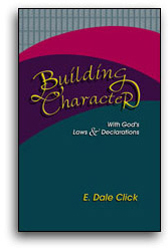
Building Character
With God's Laws And Declarations
The Eighth Commandment: "You shall not bear false witness against your neighbor."
"What does this mean for us? We are to fear and love God so that we do not betray, slander, or lie about our neighbor, but defend him, speak well of him, and explain his actions in the kindest way."
While in Argentina directing evangelism missions, I preached in a church in Buenos Aires. It was August, in the middle of winter for them. There was no heat in the church building. I wore a topcoat underneath my robe. I looked like a football player!
After worship I was invited to a home for Sunday dinner. The pastor alerted me that the family had gone to considerable expense in providing the dinner. I took that to mean that I was in for an Argentine treat.
My hostess served a meal in elegant Argentinian style. The main dish was lamb's tongue. When I was a boy on the farm I had a pet lamb. Because of this, I never ate lamb. Furthermore, the tongue of an animal is not too delectable, in my opinion, although some people crave it, especially the Argentinians.
There set before me was something I literally detest -- lamb's tongue. Placing the most charitable construction upon my host and hostess, I realized this meal was meant to honor me, for lamb's tongue to the Argentinian was a delicacy and costly.
It was difficult to smile or carry on a conversation while eating that lamb's tongue. I did well and should have received an academy award for my performance. In fact, I did so well that while my head was turned my hostess, without asking me, placed a second helping before me. On that day I nearly died -- I ate two lambs' tongues!
The human tongue must be much harder for God to swallow. In the Garden of Eden the first lie was told. The serpent spoke to Eve: "You will not die, for God knows that when you eat of it your eyes will be opened, and you will be like God, knowing good and evil" (Genesis 3:4-5). This is why Luther called Satan the "father of lies."
When Adam and Eve heard God walking in the garden in the cool of the day, they hid. God said, " 'Who told you that you were naked? Have you eaten from the tree of which I commanded you not to eat?' The man said, 'The woman whom you gave to be with me, she gave me fruit from the tree, and I ate.' Then the Lord God said to the woman, 'What is this you have done?' The woman said, 'The serpent tricked me, and I ate.' ... The Lord God said ... and to dust you shall return" (Genesis 3:11-14, 19).
It was a tongue that originated sin. It was a tongue that caused human eyes to see nakedness, to comprehend good and evil. It was a human tongue which said in reply to God's query about the whereabouts of Cain's brother, "I do not know; am I my brother's keeper?" (Genesis 4:9). It was a human tongue which answered Isaac, "Are you really my son Esau?" Jacob replied, "I am" (Genesis 27:24). It was a human tongue which denied Jesus Christ at a central point in history. "You also were with Jesus the Galilean." Peter lied, "I do not know the man!" (Matthew 26:69, 74). Humankind's tongue has been hard for God to swallow.
Lying is also hard for people to swallow. What home can exist on lies? Some thoughtless persons coupled the names of a young widow and a young married man. The man's wife went out of her mind in jealousy. In anguish, she took the law into her own hands and shot to death her husband. Then she ruthlessly and cruelly killed the young widow. Later it turned out she was mistaken. She had taken gossip at face value. But, it was too late. Three lives were destroyed. Those who spread the story were just as guilty. Married life must be built on truth, not lies.
Children must have confidence in their parents. What child can trust a lying father or mother? If a child asks a question, it should be honored and answered right away in language understandable to the child. Parents are tempted not to take time to use their tongues to help channel a child's imagination.
There are parents who threaten their children with dire consequences unless they do not do something, and then frequently relent when disobedience persists. If you promise a child discipline for disobedience, fulfill it even though it's difficult. A child's life must be built on truth, not lies.
False witness in society is hard to swallow. A cashier resigned from a bank. Shortly after he retired from his position, which he had honorably and faithfully served for many years, someone started a story that he guessed Mr. Smith was asked to retire. Someone added that he presumed there were some discrepancies in his accounts.
In a little while, the whole town was wagging its tongue about Mr. Smith's dishonesty. "Who would have thought he was that sort?" they said. People shunned him. His old friends had little to do with him. Finally, Mr. Smith asked one of his close associates what was the reason for this distant attitude on the part of people. When he was told, he was so astonished and overcome that he dropped dead.
False witness in business is hard to swallow. Television commercials can claim too much for a product. There are often "come-ons," cleverly stated advertisements to entice an individual to the scene of business in order to sell him or her something more expensive. "You really don't want this," the salesperson will explain in referring to the item advertised. "It is inferior material."
False witness in politics is standard procedure, especially during elections. The person we might think is honest and decent may be shredded to pieces, lie by lie. Shakespeare's Othello (Act III, Scene 3) spoke the truth:
He who steals my purse steals trash;
But he who filches from me my good name
Robs me of that which not enriches him
and makes me poor indeed.
False witness in religion is hard to swallow. Dr. Baltzly, in his catechetical book, writes, "Those institutions like Christian Science and the Unitarian Church are guilty of religious lies, for they pretend to be churches in which men and women shall find salvation, when in fact they deny the deity of our Lord Jesus Christ, belief in which is essential to salvation. Like priests and prophets in the Old Testament, they are saying to their members, 'Peace, peace,' when there is no peace" (Catechetical Evangelization, p. 119).
There are many religions in our day which deny the divinity of Christ. They are the greatest liars of all. We must protect people from them by being true witnesses to the Christ.
The tongue can be a wonderful instrument for God. "All of them were filled with the Holy Spirit and began to speak in other languages (tongues), as the Spirit gave them ability" (Acts 2:4). The disciples witnessed in several languages.
Most people we associate with understand and speak English. Can we not witness in one language? As in the opening words of Matins, "O Lord, open my lips, and my mouth shall declare your praise" (Lutheran Book of Worship, p. 131). That's all we need to ask of God. And that is all God asks of us, "... for we cannot keep from speaking about what we have seen and heard" (Acts 4:20).
There are many ways to break this commandment, "You shall not bear false witness against your neighbor."ÊThere are social lies, professional lies, half-truths, lying by inaccuracies, white lies, living a lie, and lying by inference.
All lies are detected and detested by God. "Do not be deceived; God is not mocked, for you reap whatever you sow" (Galatians 6:7).
Life hinges upon honesty. We either believe Jesus when he said, "The Father and I are one" (John 10:30), or we believe the lies of people who reduce Christ to a mere teacher.
The Christian is admonished by Christ, "In everything do to others, as you would have them do to you; for this is the law and the prophets" (Matthew 7:12). Luther put it in his catechism, "We are to fear and love God so that we do not betray, slander, or lie about our neighbor, but defend him, speak well of him, and explain his actions in the kindest way."
In so doing, we keep high standards, set by God ages ago. We build up the habit of making discriminating and constructive comments about people. This is God's will. Truthfulness is God's way.
I did not like the lamb's tongue set before me. How does God like your tongue? Have you thought well, whenever possible, of the people you know? Have you spoken well of them, picking out their good rather than their bad qualities? Have you made a conscious effort to further the good qualities in them? Have you spoken to others about the resurrected Jesus Christ? Have you led someone to Christ?
In answering these questions, we are led to a repentant attitude, a desire for God's forgiveness, and a determination, by the Holy Spirit, to live in accordance with God's will. Truthfulness is the best way to honor God and others. It is a demonstration of character.
"What does this mean for us? We are to fear and love God so that we do not betray, slander, or lie about our neighbor, but defend him, speak well of him, and explain his actions in the kindest way."
While in Argentina directing evangelism missions, I preached in a church in Buenos Aires. It was August, in the middle of winter for them. There was no heat in the church building. I wore a topcoat underneath my robe. I looked like a football player!
After worship I was invited to a home for Sunday dinner. The pastor alerted me that the family had gone to considerable expense in providing the dinner. I took that to mean that I was in for an Argentine treat.
My hostess served a meal in elegant Argentinian style. The main dish was lamb's tongue. When I was a boy on the farm I had a pet lamb. Because of this, I never ate lamb. Furthermore, the tongue of an animal is not too delectable, in my opinion, although some people crave it, especially the Argentinians.
There set before me was something I literally detest -- lamb's tongue. Placing the most charitable construction upon my host and hostess, I realized this meal was meant to honor me, for lamb's tongue to the Argentinian was a delicacy and costly.
It was difficult to smile or carry on a conversation while eating that lamb's tongue. I did well and should have received an academy award for my performance. In fact, I did so well that while my head was turned my hostess, without asking me, placed a second helping before me. On that day I nearly died -- I ate two lambs' tongues!
The human tongue must be much harder for God to swallow. In the Garden of Eden the first lie was told. The serpent spoke to Eve: "You will not die, for God knows that when you eat of it your eyes will be opened, and you will be like God, knowing good and evil" (Genesis 3:4-5). This is why Luther called Satan the "father of lies."
When Adam and Eve heard God walking in the garden in the cool of the day, they hid. God said, " 'Who told you that you were naked? Have you eaten from the tree of which I commanded you not to eat?' The man said, 'The woman whom you gave to be with me, she gave me fruit from the tree, and I ate.' Then the Lord God said to the woman, 'What is this you have done?' The woman said, 'The serpent tricked me, and I ate.' ... The Lord God said ... and to dust you shall return" (Genesis 3:11-14, 19).
It was a tongue that originated sin. It was a tongue that caused human eyes to see nakedness, to comprehend good and evil. It was a human tongue which said in reply to God's query about the whereabouts of Cain's brother, "I do not know; am I my brother's keeper?" (Genesis 4:9). It was a human tongue which answered Isaac, "Are you really my son Esau?" Jacob replied, "I am" (Genesis 27:24). It was a human tongue which denied Jesus Christ at a central point in history. "You also were with Jesus the Galilean." Peter lied, "I do not know the man!" (Matthew 26:69, 74). Humankind's tongue has been hard for God to swallow.
Lying is also hard for people to swallow. What home can exist on lies? Some thoughtless persons coupled the names of a young widow and a young married man. The man's wife went out of her mind in jealousy. In anguish, she took the law into her own hands and shot to death her husband. Then she ruthlessly and cruelly killed the young widow. Later it turned out she was mistaken. She had taken gossip at face value. But, it was too late. Three lives were destroyed. Those who spread the story were just as guilty. Married life must be built on truth, not lies.
Children must have confidence in their parents. What child can trust a lying father or mother? If a child asks a question, it should be honored and answered right away in language understandable to the child. Parents are tempted not to take time to use their tongues to help channel a child's imagination.
There are parents who threaten their children with dire consequences unless they do not do something, and then frequently relent when disobedience persists. If you promise a child discipline for disobedience, fulfill it even though it's difficult. A child's life must be built on truth, not lies.
False witness in society is hard to swallow. A cashier resigned from a bank. Shortly after he retired from his position, which he had honorably and faithfully served for many years, someone started a story that he guessed Mr. Smith was asked to retire. Someone added that he presumed there were some discrepancies in his accounts.
In a little while, the whole town was wagging its tongue about Mr. Smith's dishonesty. "Who would have thought he was that sort?" they said. People shunned him. His old friends had little to do with him. Finally, Mr. Smith asked one of his close associates what was the reason for this distant attitude on the part of people. When he was told, he was so astonished and overcome that he dropped dead.
False witness in business is hard to swallow. Television commercials can claim too much for a product. There are often "come-ons," cleverly stated advertisements to entice an individual to the scene of business in order to sell him or her something more expensive. "You really don't want this," the salesperson will explain in referring to the item advertised. "It is inferior material."
False witness in politics is standard procedure, especially during elections. The person we might think is honest and decent may be shredded to pieces, lie by lie. Shakespeare's Othello (Act III, Scene 3) spoke the truth:
He who steals my purse steals trash;
But he who filches from me my good name
Robs me of that which not enriches him
and makes me poor indeed.
False witness in religion is hard to swallow. Dr. Baltzly, in his catechetical book, writes, "Those institutions like Christian Science and the Unitarian Church are guilty of religious lies, for they pretend to be churches in which men and women shall find salvation, when in fact they deny the deity of our Lord Jesus Christ, belief in which is essential to salvation. Like priests and prophets in the Old Testament, they are saying to their members, 'Peace, peace,' when there is no peace" (Catechetical Evangelization, p. 119).
There are many religions in our day which deny the divinity of Christ. They are the greatest liars of all. We must protect people from them by being true witnesses to the Christ.
The tongue can be a wonderful instrument for God. "All of them were filled with the Holy Spirit and began to speak in other languages (tongues), as the Spirit gave them ability" (Acts 2:4). The disciples witnessed in several languages.
Most people we associate with understand and speak English. Can we not witness in one language? As in the opening words of Matins, "O Lord, open my lips, and my mouth shall declare your praise" (Lutheran Book of Worship, p. 131). That's all we need to ask of God. And that is all God asks of us, "... for we cannot keep from speaking about what we have seen and heard" (Acts 4:20).
There are many ways to break this commandment, "You shall not bear false witness against your neighbor."ÊThere are social lies, professional lies, half-truths, lying by inaccuracies, white lies, living a lie, and lying by inference.
All lies are detected and detested by God. "Do not be deceived; God is not mocked, for you reap whatever you sow" (Galatians 6:7).
Life hinges upon honesty. We either believe Jesus when he said, "The Father and I are one" (John 10:30), or we believe the lies of people who reduce Christ to a mere teacher.
The Christian is admonished by Christ, "In everything do to others, as you would have them do to you; for this is the law and the prophets" (Matthew 7:12). Luther put it in his catechism, "We are to fear and love God so that we do not betray, slander, or lie about our neighbor, but defend him, speak well of him, and explain his actions in the kindest way."
In so doing, we keep high standards, set by God ages ago. We build up the habit of making discriminating and constructive comments about people. This is God's will. Truthfulness is God's way.
I did not like the lamb's tongue set before me. How does God like your tongue? Have you thought well, whenever possible, of the people you know? Have you spoken well of them, picking out their good rather than their bad qualities? Have you made a conscious effort to further the good qualities in them? Have you spoken to others about the resurrected Jesus Christ? Have you led someone to Christ?
In answering these questions, we are led to a repentant attitude, a desire for God's forgiveness, and a determination, by the Holy Spirit, to live in accordance with God's will. Truthfulness is the best way to honor God and others. It is a demonstration of character.
