
Use Them Or Lose Them
Sermon
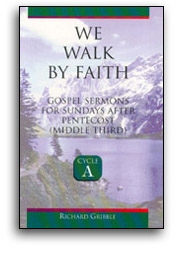
We Walk By Faith
Gospel Sermons For Sundays After Pentecost (Middle Third)
"Use it or lose it." We have all heard this expression, said it ourselves, and applied it more than once. The words tell us that it is necessary to use rightly and completely the gifts given us by God. We are challenged to use God's gifts for the betterment of all and for our own growth in the Spirit. If we fail to use properly and completely or if we abuse the gifts of God, they will be taken away.
There are many examples of how the gifts of God have been left dormant or abused with adverse results for all. In Greek mythology we remember the story of Icarus and Daedelus. The gods gave the father and son the ability to fly. It was a special gift that set them apart from all other humans. But Icarus abused the gift, thinking that with his special ability he could be like the gods and fly to the sun. As he rose high in the sky his wings began to melt; the great gift was lost.
Position in society and the power and authority that come with it are often abused. Throughout history there have been many examples of leaders who have been invested with power and authority, have used it to abuse people, and in the end have lost the gift entrusted to them. Many of the kings in Israel rejected the warnings of the prophets, abused the people, and turned away from God. Their fate was death, punishment of future generations, and ultimately exile of the Hebrew people to Babylon. In our own twentieth century we recall all too well the terror inflicted upon the world by dictators such as Adolf Hitler and Benito Mussolini. Their abuse of power led to their ultimate demise. In our own country the Watergate scandal demonstrated the abuse of executive privilege. The shock of a nation that its leader might be a criminal was magnified when Richard Nixon resigned, the only President to leave office as a result of alleged wrongdoing.
In our own lives we can think of examples of how we have failed to use properly or completely or possibly have abused God's gifts. Most of us have studied languages but few of us today can use what we learned in high school or college Spanish, French, or German class. The gift of reading or speaking another tongue must be exercised or it will be lost. If we have the ability to shoot a sub-par round on the golf course, but refuse to practice this skill, then the next time we "hit the links" the results will not be what we want or expect. As the expression goes, use it or lose it.
Jesus describes the failure of the Hebrew people to use God's gifts and to recognize his presence as Messiah and Lord in today's Gospel. In parable form the Lord says that God set up a vineyard and placed tenants in charge. The vineyard was God's gift to the people, the land promised to the patriarchs -- Abraham, Isaac, and Jacob. It was a special vineyard that was planted in order to have every possibility for success. It was protected by a hedge and a tower and possessed a vat for its sustenance. With all that the vineyard possessed and its possibility to bear good fruit, the vineyard only produced bad grapes. The tenants did not use the gifts properly. Even when God's messengers were sent to give direction and obtain a share of the produce, the Hebrew leaders would not listen. The prophets were maltreated; their message was ignored. Now, when the Son is present, the story is the same; the gifts are not used. Jesus even predicts his own death as the ultimate abuse of God's gifts.
Today's Gospel challenges us to use the gifts of God wisely or they will be taken away. Jesus tells the chief priests and the elders that because the great gift, the inheritance of God, was abused it will be taken away and given to another people. Jesus is the rejected stone which becomes the cornerstone. For hundreds of years the Jews had waited for the Messiah, but his presence was not recognized in Jesus. The evangelist Matthew tells us at the end of today's Gospel that the people believed Jesus to be a prophet, but the leaders who were given the great gifts did not. Although the Hebrew people were chosen by God to be a nation uniquely God's own, the gift of the Son will pass to the Gentiles. Because the Hebrews failed to recognize God's greatest gift, we became inheritors of the promise and now possess the presence of God in our lives.
How do we use the gifts of God? God has given us in the United States a free society and a human community which has every possibility to sustain and promote our growth. As members of this society we are asked to be good citizens, to abide by the laws of the land, and to promote a sense of harmony and peace in our relations with others. We have been given the talent and opportunity to assist others in need, especially those who reach out to us. God has given us an environment of great beauty, especially in this present fall season, and we are asked to be its stewards as caretakers of God's gifts. We are challenged as well to be conscious of the social evils which exist all around us and to make every effort within our power and talent to fight against them. Are we using the gifts of our society and community wisely? Is God satisfied with our efforts?
God has given us the church to be a source of strength and a place where we can go to weather the agonies and celebrate the ecstasies of life. Have we used the gifts which our Christian community provides properly? Have we made a good effort to participate and to be present in service and ministry to those who seek our assistance? Do we take the time necessary to be with God? Is conversation with God a top priority with us? In our busy lives is there time and space for God to work within us? Do we put our faith into practice in our everyday lives, especially in relationships with others? Can people tell from their observation of us that we are Christians by the love we show for one another? In short, have we used the gifts of the Church and our faith to make the world a better place for people today and those who will follow us?
God has given us our lives as the greatest of all gifts. God created us wonderfully and uniquely and gave us all sorts of gifts and talents. Are we using these gifts of God to their full potential? Do we exercise the talent we have to help others or simply to satisfy ourselves? Since life is God's great gift, we must ask if we are taking care of ourselves. Do we make a good attempt to strike a balance between work, sleep, and recreation, or are we abusing ourselves through excessive work insufficient sleep, or improper use of alcohol, drugs, and other chemicals? Are we, in other words, using the gift of our life for the good of God and God's people, or are we selfish with God's great gift?
God's gifts are given to us to be used, not abused. The abuse of power, privilege, and prestige generally leads to ruin. Icarus and Daedulus abused their gift and lost all. National dictators and even an American President lost face and position because they abused the privilege of leadership. The Jews' failure to recognize the Son gave the Gentiles the promise of God's inheritance.
Let us examine our world, church, and lives and see how well we are using the gifts of God. Let us use properly and completely the gifts we have been given or they will be taken away. Let us do our best to preserve our society and environment, minister in our church, and use our personal talents and skills for the betterment of all. Let us use what God has provided to build the kingdom of God in our world. Let us use our gifts or lose them.
There are many examples of how the gifts of God have been left dormant or abused with adverse results for all. In Greek mythology we remember the story of Icarus and Daedelus. The gods gave the father and son the ability to fly. It was a special gift that set them apart from all other humans. But Icarus abused the gift, thinking that with his special ability he could be like the gods and fly to the sun. As he rose high in the sky his wings began to melt; the great gift was lost.
Position in society and the power and authority that come with it are often abused. Throughout history there have been many examples of leaders who have been invested with power and authority, have used it to abuse people, and in the end have lost the gift entrusted to them. Many of the kings in Israel rejected the warnings of the prophets, abused the people, and turned away from God. Their fate was death, punishment of future generations, and ultimately exile of the Hebrew people to Babylon. In our own twentieth century we recall all too well the terror inflicted upon the world by dictators such as Adolf Hitler and Benito Mussolini. Their abuse of power led to their ultimate demise. In our own country the Watergate scandal demonstrated the abuse of executive privilege. The shock of a nation that its leader might be a criminal was magnified when Richard Nixon resigned, the only President to leave office as a result of alleged wrongdoing.
In our own lives we can think of examples of how we have failed to use properly or completely or possibly have abused God's gifts. Most of us have studied languages but few of us today can use what we learned in high school or college Spanish, French, or German class. The gift of reading or speaking another tongue must be exercised or it will be lost. If we have the ability to shoot a sub-par round on the golf course, but refuse to practice this skill, then the next time we "hit the links" the results will not be what we want or expect. As the expression goes, use it or lose it.
Jesus describes the failure of the Hebrew people to use God's gifts and to recognize his presence as Messiah and Lord in today's Gospel. In parable form the Lord says that God set up a vineyard and placed tenants in charge. The vineyard was God's gift to the people, the land promised to the patriarchs -- Abraham, Isaac, and Jacob. It was a special vineyard that was planted in order to have every possibility for success. It was protected by a hedge and a tower and possessed a vat for its sustenance. With all that the vineyard possessed and its possibility to bear good fruit, the vineyard only produced bad grapes. The tenants did not use the gifts properly. Even when God's messengers were sent to give direction and obtain a share of the produce, the Hebrew leaders would not listen. The prophets were maltreated; their message was ignored. Now, when the Son is present, the story is the same; the gifts are not used. Jesus even predicts his own death as the ultimate abuse of God's gifts.
Today's Gospel challenges us to use the gifts of God wisely or they will be taken away. Jesus tells the chief priests and the elders that because the great gift, the inheritance of God, was abused it will be taken away and given to another people. Jesus is the rejected stone which becomes the cornerstone. For hundreds of years the Jews had waited for the Messiah, but his presence was not recognized in Jesus. The evangelist Matthew tells us at the end of today's Gospel that the people believed Jesus to be a prophet, but the leaders who were given the great gifts did not. Although the Hebrew people were chosen by God to be a nation uniquely God's own, the gift of the Son will pass to the Gentiles. Because the Hebrews failed to recognize God's greatest gift, we became inheritors of the promise and now possess the presence of God in our lives.
How do we use the gifts of God? God has given us in the United States a free society and a human community which has every possibility to sustain and promote our growth. As members of this society we are asked to be good citizens, to abide by the laws of the land, and to promote a sense of harmony and peace in our relations with others. We have been given the talent and opportunity to assist others in need, especially those who reach out to us. God has given us an environment of great beauty, especially in this present fall season, and we are asked to be its stewards as caretakers of God's gifts. We are challenged as well to be conscious of the social evils which exist all around us and to make every effort within our power and talent to fight against them. Are we using the gifts of our society and community wisely? Is God satisfied with our efforts?
God has given us the church to be a source of strength and a place where we can go to weather the agonies and celebrate the ecstasies of life. Have we used the gifts which our Christian community provides properly? Have we made a good effort to participate and to be present in service and ministry to those who seek our assistance? Do we take the time necessary to be with God? Is conversation with God a top priority with us? In our busy lives is there time and space for God to work within us? Do we put our faith into practice in our everyday lives, especially in relationships with others? Can people tell from their observation of us that we are Christians by the love we show for one another? In short, have we used the gifts of the Church and our faith to make the world a better place for people today and those who will follow us?
God has given us our lives as the greatest of all gifts. God created us wonderfully and uniquely and gave us all sorts of gifts and talents. Are we using these gifts of God to their full potential? Do we exercise the talent we have to help others or simply to satisfy ourselves? Since life is God's great gift, we must ask if we are taking care of ourselves. Do we make a good attempt to strike a balance between work, sleep, and recreation, or are we abusing ourselves through excessive work insufficient sleep, or improper use of alcohol, drugs, and other chemicals? Are we, in other words, using the gift of our life for the good of God and God's people, or are we selfish with God's great gift?
God's gifts are given to us to be used, not abused. The abuse of power, privilege, and prestige generally leads to ruin. Icarus and Daedulus abused their gift and lost all. National dictators and even an American President lost face and position because they abused the privilege of leadership. The Jews' failure to recognize the Son gave the Gentiles the promise of God's inheritance.
Let us examine our world, church, and lives and see how well we are using the gifts of God. Let us use properly and completely the gifts we have been given or they will be taken away. Let us do our best to preserve our society and environment, minister in our church, and use our personal talents and skills for the betterment of all. Let us use what God has provided to build the kingdom of God in our world. Let us use our gifts or lose them.
