
What Do Your People Expect From You?
Preaching
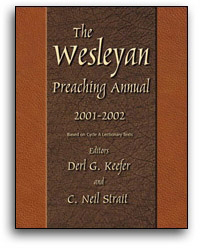
THE WESLEYAN PREACHING ANNUAL 2001--2002
Every pastor is anxious to know what his/her people expect from him/her. They are often disappointed with the answers. Too often the expectations are overwhelming, and not a few times they are unrealistic.
There is a good word for you from a Time magazine study of religion in America. Randal Ross, in an article, "Set Yourself on Fire!" writes: "... The average person requires two things from the pastor: integrity and passion" (Vital Ministry, July/August, 1999, p. 31). It is a shorter list than I thought it would be. The good news of the study is that every pastor can meet those requirements!
Integrity comes from the verb to integrate, which means to become united so as to form a complete or perfect whole. Scripture teaches that spirit, mind and body all come from the hand of God, and thus they ought to be united, functioning together as a whole (Wheaton, Ill., Tyndale House Publishers, Inc., 1999, p. 379).
Integrity, for the pastor, is integrating spiritual truths and biblical principles with his/her heart and life. All of life must reflect kingdom attitudes and values. Thomas Leonard said that "integrity is more than just honesty. It's about being integrated, so that all the parts of your life and yourself are cooperating smoothly to honor your best interest" (The Portable Coach, New York: Scribners, 1998, p. 230).
The people whom we serve have a right to expect integrity. People who allow you and me into their lives, do so because they have spiritual needs. They are seeking something - or Someone - and the path to that discovery often leads through the life of a pastor. While they may play fast and loose with other areas of life, they seek honesty when it comes to their souls.
Dennis Waitley, in an article, "Integrity: The Absolute Bottom Line," said: "... integrity is having a standard of personal morality and ethics that does not sell out to expediency and that is not relative to the situation" (Priorities, vol. 2, issue 6, p. 11). In the same article Waitley wrote that "Life is like a field of newly fallen snow; where I choose to walk every step will show" (Ibid., p. 10).
The expectation of integrity is a worthy and exciting one. It means our people desire the best in us and from us. Integrity is still the bottom line with people.
The second expectation was passion. Webster's dictionary gives these definitions: "A powerful emotion; Boundless enthusiasm; Fervor, fire, zeal; Ardor, great devotion to a cause; Warm loving feelings directed to a person" (Webster's II New Riverside University Dictionary, New York: Houghton Mifflin Co., 1984, p. 859). Passion is the articulation of what one feels and believes. It is how one communicates his/her purpose. It is the way one promotes his/her cause, values and interests. It is a way of revealing what the fervor and zeal of one's life is. In other words, what does one believe deeply enough to fight for, to give one's life to, to invest life's energies in.
Ken Jones has reminded us that "our temporal, 'throw--away' society has spawned a generation of passionless people" (The Climb of Your Life, Grand Rapids: Fleming H. Revell, 1996, p. 72). The tragedy too often is that a passionless person winds up in the ministry and in the pulpit. Such passionless persons do not move the wills and aspirations of people.
Every pastor must believe deeply and have a powerful emotion about his core values. If pastors do not have such voices they will be overridden by those who have strong, powerful and persuasive voices, if even for the wrong causes. Ours is an age that needs passionate lives and voices penetrating the secular mind--set and challenging a decaying culture to truth and mission.
Two expectations - integrity and passion. Thank God for these two requirements, for they call us to a holy life, a life of integrity and mission, all of which are in concert with what Jesus wants for our ministries.
C. Neil Strait
June 2, 2002 Second Sunday After Pentecost
WORSHIP HELPS
CALL TO WORSHIP
Leader: The wind, the fire, the tongue reminds us of unseen power.
People: The fire burns the dross from our lives.
Leader: The wind blows away the chaff.
Choir: The tongue tells of God's glory.
Leader: On this Pentecost Sunday let the Spirit
All: Refine, cleanse, and speak to us!
OFFERING THOUGHT
O God, our heavenly Father, you give life and power to Your church through the gift of Your Spirit. Inspire us with Your Spirit that we bear witness to the living Jesus that Your Word will advance. In our Savior's name. Amen.
BENEDICTION
Now praise to God and to the Word of His mercy, which builds you up and gives you a richness that comes to all the sanctified saints.
SERMON BRIEFS
Have You Heard The Good News?
Romans 1:16--17
Think of the best news you ever heard. Chances are you could hardly wait to tell someone else. Good news begs to be told. The disciples saw the "Good News Story" of the life of Jesus unfold before their very eyes. This story became known as the "Gospel." It is the story of how Jesus was born in a manger to die for humankind. This powerful drama includes His terrible death and marvelous resurrection. As the disciples encountered others throughout their lives they undoubtedly wanted to know if they had heard the Good News!
These verses provide us with three very important pieces of information about the Gospel.
I. The gospel is the power of God for salvation. (v. 16)
When the "Good News Story" of Christ is told the power of God is unleashed. Scientists tell us that energy can be broken into two categories: potential and kinetic. Holding a book in the air generates potential energy. Letting it go generates kinetic energy. The collection of the gospel truths is potential energy. The preaching of the gospel, however, is kinetic energy. It is energy in action. It unleashes God's power.
This is why preaching the gospel is the most important task a pastor will ever undertake. The words of the gospel are like the new Smart Bombs which track a target wherever it may go. They seek out the ears and heart of those who desperately need to be forgiven of their sins. The gospel is the ammunition. The preacher is the ignition. God is the power. The Holy Spirit is the guiding force. The lost sinner is the target. The gospel is the power of God for the salvation of sinners.
II. The gospel is the revealing and sharing of God's righteousness (rightness). (v. 17)
So often people decide to wait until they are good enough to come to God. They procrastinate until they can stop participating in certain sins. Everyone who ever harbored such a thought is still waiting to be good enough. They will never be good enough.
But we thank God that in the gospel there is a righteousness that is revealed. The cross is the ultimate revelation and reminder that God is righteous. The death of Christ is the stunning forever proof that God hates sin. The cross is God's final answer to sin. This story of the gospel reveals in dramatic ways that a righteous God will not tolerate sin.
Here is the staggering part of the gospel story. God does not keep all of His righteousness for Himself. Through the gospel He gives some of it away. God knows we can never be good enough to receive salvation so He gives us part of His righteousness. What a thought! What truth! God shares His righteousness with repentant man.
III. The gospel is activated by faith in God. (v. 16)
Imagine a fire in a twenty--story hotel. On the top of the hotel are two people who are trapped. One person is strong and healthy. The other is handicapped. There appears to be no way of escape. The strong person finds a ladder which he extends and forms a bridge across to the roof of the next building. He tells the handicapped person that he is going to carry him across the ladder/bridge to safety. The way of escape can only be activated if the handicapped person says, "Yes." That is really all it takes. It takes enough faith to place your life in the hands of the strongman.
There are those who say that becoming a Christian is too simple. They reason that there must be more to it than simply confessing their sin and believing in God for their salvation. But what else can we do? Against sin we are powerless. There is no way of escape. All we can do is to call out to the Strongman Jesus Christ and trust Him to carry us to safety.
Paul makes this clear in verse 16 when he says that salvation is for "everyone who believes." This salvation is not just for the privileged, the smart, or even the churched. Your assertion of belief activates the power of the gospel. When you believe, God will then share His "righteousness with you." There is nothing else you need in order for salvation to take place!
This is your moment. Say yes to God! Allow the Strongman to carry you to safety. There is no other way of escape.
Randall Hartman
The Foundation Of Obedience
Matthew 7:21--29
One of the best tests of everything is will it last. How will it appear in the moment of death, in the morning of resurrection, and at the day of judgment. Our Lord gives us a picture of persons as they will appear "in that day" (Malachi 3:17--18).
Jesus gives us the secret to the endurance of the Christian life in His closing comments in the Sermon on the Mount. This secret can be summed up in one word - obedience.
Obedience is the natural outflow of a life surrendered to Jesus Christ. Obedience reveals who we are and whose we are. Obedience gives us the power to stand in the tough times when others around us fall.
In this scripture lesson, Jesus tells us of two sets of people to illustrate the clear truth that without obedience everything else is useless.
I. True and false disciples
"Not everyone who says to me, 'Lord, Lord,' will enter the kingdom of heaven, but only he who does the will of my Father who is in heaven. Many will say to me on that day, 'Lord, Lord, did we not prophesy in your name, and in your name drive out demons and perform many miracles?' Then I will tell them plainly, 'I never knew you. Away from me, you evildoers' " (vv. 21--23).
Here Jesus contrasts true discipleship and so--called discipleship. He illustrates the importance of a personal relationship with Him which must be expressed in our worship and in our lives.
Undoubtedly, "in that day" when every person who has ever lived will be gathered before His throne, we will be called to answer for our relationship with our Lord.
Jesus indicates that "many will say to me on that day, 'Lord, Lord, did we not prophesy in your name, and in your name drive out demons and perform many miracles?' " (v. 22).
They will say, "We have done." Yes, they have done, but they have not done the Lord's will. They had hoped to make up for disobedience to His will by doing many things for Him in their church, their city, and in the world. They substituted doing in the place of being.
These fake disciples went a long way in religion:
1. They made an open profession and said, "Lord, Lord."
2. They understood Christian service. They prophesied and worked miracles.
3. They obtained remarkable success. They cast out demons and did many wonders.
4. They were diligently orthodox. They did everything in the name of Christ. "Your name" is mentioned three times.
It is a serious matter to use God's name and mean nothing by it. "To hear the law, and to disobey, is the most terrible kind of profanity of which a person can be guilty" (Spurgeon).
Jesus is making the point that works for God are not sufficient evidence that we are His. "Not everyone who says to me, 'Lord, Lord,' will enter the kingdom of heaven, but only he who does the will of my Father who is in heaven" (v. 21). It takes obedience to God's will.
Doing work for God does not mean we are doing the will of God. Let's not confuse obedience with doing things. Obedience is allowing the Lord to rule in our lives. Obedience is the life of Jesus Christ being lived through us. Obedience flows from a living relationship with God. It comes from knowing Christ intimately. The only proof of our love for Christ is the proof of obedience.
Jesus' response to the false disciples gives evidence to the truth that works apart from our relationship with Christ are works that miss the mark. Jesus calls them "iniquity." "Then I will tell them plainly, 'I never knew you. Away from me, you evildoers!' " (v. 23).
"Depart from me" is a fearful sentence; a terrible separation. Depart from the one who offered you mercy and grace; all hope; eternal life. Depart from my presence, my heaven. His sentence will never be recalled or altered.
Jesus did not mean, "I did not know about you, I do not know your name, I did not watch your life; but I never knew you. There was no relationship, no intimacy, no fellowship between us. You took My name to make your name; you took My name to work your miracles; you took My name for self--centered purposes; but you did not know Me, and I did not know you."
The church knows us, the school knows us, the world knows us, but does Jesus know us?
Doing the will of God is not keeping a list of rules and regulations. Christianity is a relationship. It is supernatural at its core. It is allowing Jesus Christ to control us. It is knowing and experiencing God. It is being led by the spirit of God.
God leads us to obey His word and to obey His will. In other words, "Lord" must express a relationship and a whole attitude of life. It flows out of being in Christ and not just doing good works. And the promise is as Peter preached on the day of Pentecost when he quoted from Joel, "And everyone who calls on the name of the Lord will be saved" (Acts 2:21).
II. Wise and foolish builders
"Therefore everyone who hears these words of mine and puts them into practice is like a wise man who built his house on the rock. The rain came down, the streams rose, and the winds blew and beat against that house; yet it did not fall, because it had its foundation on the rock. But everyone who hears these words of mine and does not put them into practice is like a foolish man who built his house on sand. The rain came down, the streams rose, and the winds blew and beat against that house, and it fell with a great crash" (vv. 24--27).
The second set of people Jesus describes illustrates what it takes to stand the storms of life. Again, we will see that obedience is the secret. Jesus contrasts the wise and foolish builders.
These two types of builders had both similarities and differences.
A. Similarities
1. Both heard Christ's sayings.
2. Both saw the necessity of building a house; or a place of refuge.
3. Both built a house. They started and finished it.
4. Both houses were exposed to storms. Storms will come. They come to everybody. There are no storm--free zones. This parable is about foundations, not avoiding the weather.
5. Both builders rested with security in what they built. They trusted in something.
B. Differences
1. They differed in their personal character. One is wise, the other foolish. The wise began by solemn, serious deliberation; persevered in adopting the best means and measures for eternal well being. The foolish was merely impressed.
2. They differed in their practice.
a. One was a doer; the other, merely a hearer.
b. One had the name and the nature; the other, the name only.
c. One had the profession and the possession; the other, the profession only.
d. One did the will of God; the other, merely a token.
3. They differed in the foundations on which they built.
a. One built on the rock; the other, on the sand.
What a contrast - rock and sand. What is the "rock" - Jesus Christ. He is the foundation chosen of God, and precious, and other foundation can no man lay.
What is the "sand"- a mere profession, self--righteousness. The difference was not in the building or the materials, but in the foundation on which they built.
4. They differed in the final result of each.
He who built on rock stood against the rain, floods, and wind. The rock was secure. He lived and died in the Lord.
He who built on the sand was finally overwhelmed. The house was undermined by the storms.
Jesus makes it clear that the wise builder is the one "who hears these words of mine and puts them into practice." The foolish builder is the one "who hears these words of mine and does not put them into practice." Both men heard, only one obeyed. The one who obeyed stood.
There is no need to go to a doctor if we are not prepared to act upon his or her advice. Only when we hear and obey will we stand.
In these two illustrations Jesus makes it clear that it is not what we hear or say that counts, it is what we do with what we hear and say.
It is Jesus' promise that the life which is founded on obedience to Him is safe, no matter what storms may come. For "he taught as one who had authority" (v. 29). God grant that we may be not hearers only, but doers of the Word.
Nina G. Gunter
There is a good word for you from a Time magazine study of religion in America. Randal Ross, in an article, "Set Yourself on Fire!" writes: "... The average person requires two things from the pastor: integrity and passion" (Vital Ministry, July/August, 1999, p. 31). It is a shorter list than I thought it would be. The good news of the study is that every pastor can meet those requirements!
Integrity comes from the verb to integrate, which means to become united so as to form a complete or perfect whole. Scripture teaches that spirit, mind and body all come from the hand of God, and thus they ought to be united, functioning together as a whole (Wheaton, Ill., Tyndale House Publishers, Inc., 1999, p. 379).
Integrity, for the pastor, is integrating spiritual truths and biblical principles with his/her heart and life. All of life must reflect kingdom attitudes and values. Thomas Leonard said that "integrity is more than just honesty. It's about being integrated, so that all the parts of your life and yourself are cooperating smoothly to honor your best interest" (The Portable Coach, New York: Scribners, 1998, p. 230).
The people whom we serve have a right to expect integrity. People who allow you and me into their lives, do so because they have spiritual needs. They are seeking something - or Someone - and the path to that discovery often leads through the life of a pastor. While they may play fast and loose with other areas of life, they seek honesty when it comes to their souls.
Dennis Waitley, in an article, "Integrity: The Absolute Bottom Line," said: "... integrity is having a standard of personal morality and ethics that does not sell out to expediency and that is not relative to the situation" (Priorities, vol. 2, issue 6, p. 11). In the same article Waitley wrote that "Life is like a field of newly fallen snow; where I choose to walk every step will show" (Ibid., p. 10).
The expectation of integrity is a worthy and exciting one. It means our people desire the best in us and from us. Integrity is still the bottom line with people.
The second expectation was passion. Webster's dictionary gives these definitions: "A powerful emotion; Boundless enthusiasm; Fervor, fire, zeal; Ardor, great devotion to a cause; Warm loving feelings directed to a person" (Webster's II New Riverside University Dictionary, New York: Houghton Mifflin Co., 1984, p. 859). Passion is the articulation of what one feels and believes. It is how one communicates his/her purpose. It is the way one promotes his/her cause, values and interests. It is a way of revealing what the fervor and zeal of one's life is. In other words, what does one believe deeply enough to fight for, to give one's life to, to invest life's energies in.
Ken Jones has reminded us that "our temporal, 'throw--away' society has spawned a generation of passionless people" (The Climb of Your Life, Grand Rapids: Fleming H. Revell, 1996, p. 72). The tragedy too often is that a passionless person winds up in the ministry and in the pulpit. Such passionless persons do not move the wills and aspirations of people.
Every pastor must believe deeply and have a powerful emotion about his core values. If pastors do not have such voices they will be overridden by those who have strong, powerful and persuasive voices, if even for the wrong causes. Ours is an age that needs passionate lives and voices penetrating the secular mind--set and challenging a decaying culture to truth and mission.
Two expectations - integrity and passion. Thank God for these two requirements, for they call us to a holy life, a life of integrity and mission, all of which are in concert with what Jesus wants for our ministries.
C. Neil Strait
June 2, 2002 Second Sunday After Pentecost
WORSHIP HELPS
CALL TO WORSHIP
Leader: The wind, the fire, the tongue reminds us of unseen power.
People: The fire burns the dross from our lives.
Leader: The wind blows away the chaff.
Choir: The tongue tells of God's glory.
Leader: On this Pentecost Sunday let the Spirit
All: Refine, cleanse, and speak to us!
OFFERING THOUGHT
O God, our heavenly Father, you give life and power to Your church through the gift of Your Spirit. Inspire us with Your Spirit that we bear witness to the living Jesus that Your Word will advance. In our Savior's name. Amen.
BENEDICTION
Now praise to God and to the Word of His mercy, which builds you up and gives you a richness that comes to all the sanctified saints.
SERMON BRIEFS
Have You Heard The Good News?
Romans 1:16--17
Think of the best news you ever heard. Chances are you could hardly wait to tell someone else. Good news begs to be told. The disciples saw the "Good News Story" of the life of Jesus unfold before their very eyes. This story became known as the "Gospel." It is the story of how Jesus was born in a manger to die for humankind. This powerful drama includes His terrible death and marvelous resurrection. As the disciples encountered others throughout their lives they undoubtedly wanted to know if they had heard the Good News!
These verses provide us with three very important pieces of information about the Gospel.
I. The gospel is the power of God for salvation. (v. 16)
When the "Good News Story" of Christ is told the power of God is unleashed. Scientists tell us that energy can be broken into two categories: potential and kinetic. Holding a book in the air generates potential energy. Letting it go generates kinetic energy. The collection of the gospel truths is potential energy. The preaching of the gospel, however, is kinetic energy. It is energy in action. It unleashes God's power.
This is why preaching the gospel is the most important task a pastor will ever undertake. The words of the gospel are like the new Smart Bombs which track a target wherever it may go. They seek out the ears and heart of those who desperately need to be forgiven of their sins. The gospel is the ammunition. The preacher is the ignition. God is the power. The Holy Spirit is the guiding force. The lost sinner is the target. The gospel is the power of God for the salvation of sinners.
II. The gospel is the revealing and sharing of God's righteousness (rightness). (v. 17)
So often people decide to wait until they are good enough to come to God. They procrastinate until they can stop participating in certain sins. Everyone who ever harbored such a thought is still waiting to be good enough. They will never be good enough.
But we thank God that in the gospel there is a righteousness that is revealed. The cross is the ultimate revelation and reminder that God is righteous. The death of Christ is the stunning forever proof that God hates sin. The cross is God's final answer to sin. This story of the gospel reveals in dramatic ways that a righteous God will not tolerate sin.
Here is the staggering part of the gospel story. God does not keep all of His righteousness for Himself. Through the gospel He gives some of it away. God knows we can never be good enough to receive salvation so He gives us part of His righteousness. What a thought! What truth! God shares His righteousness with repentant man.
III. The gospel is activated by faith in God. (v. 16)
Imagine a fire in a twenty--story hotel. On the top of the hotel are two people who are trapped. One person is strong and healthy. The other is handicapped. There appears to be no way of escape. The strong person finds a ladder which he extends and forms a bridge across to the roof of the next building. He tells the handicapped person that he is going to carry him across the ladder/bridge to safety. The way of escape can only be activated if the handicapped person says, "Yes." That is really all it takes. It takes enough faith to place your life in the hands of the strongman.
There are those who say that becoming a Christian is too simple. They reason that there must be more to it than simply confessing their sin and believing in God for their salvation. But what else can we do? Against sin we are powerless. There is no way of escape. All we can do is to call out to the Strongman Jesus Christ and trust Him to carry us to safety.
Paul makes this clear in verse 16 when he says that salvation is for "everyone who believes." This salvation is not just for the privileged, the smart, or even the churched. Your assertion of belief activates the power of the gospel. When you believe, God will then share His "righteousness with you." There is nothing else you need in order for salvation to take place!
This is your moment. Say yes to God! Allow the Strongman to carry you to safety. There is no other way of escape.
Randall Hartman
The Foundation Of Obedience
Matthew 7:21--29
One of the best tests of everything is will it last. How will it appear in the moment of death, in the morning of resurrection, and at the day of judgment. Our Lord gives us a picture of persons as they will appear "in that day" (Malachi 3:17--18).
Jesus gives us the secret to the endurance of the Christian life in His closing comments in the Sermon on the Mount. This secret can be summed up in one word - obedience.
Obedience is the natural outflow of a life surrendered to Jesus Christ. Obedience reveals who we are and whose we are. Obedience gives us the power to stand in the tough times when others around us fall.
In this scripture lesson, Jesus tells us of two sets of people to illustrate the clear truth that without obedience everything else is useless.
I. True and false disciples
"Not everyone who says to me, 'Lord, Lord,' will enter the kingdom of heaven, but only he who does the will of my Father who is in heaven. Many will say to me on that day, 'Lord, Lord, did we not prophesy in your name, and in your name drive out demons and perform many miracles?' Then I will tell them plainly, 'I never knew you. Away from me, you evildoers' " (vv. 21--23).
Here Jesus contrasts true discipleship and so--called discipleship. He illustrates the importance of a personal relationship with Him which must be expressed in our worship and in our lives.
Undoubtedly, "in that day" when every person who has ever lived will be gathered before His throne, we will be called to answer for our relationship with our Lord.
Jesus indicates that "many will say to me on that day, 'Lord, Lord, did we not prophesy in your name, and in your name drive out demons and perform many miracles?' " (v. 22).
They will say, "We have done." Yes, they have done, but they have not done the Lord's will. They had hoped to make up for disobedience to His will by doing many things for Him in their church, their city, and in the world. They substituted doing in the place of being.
These fake disciples went a long way in religion:
1. They made an open profession and said, "Lord, Lord."
2. They understood Christian service. They prophesied and worked miracles.
3. They obtained remarkable success. They cast out demons and did many wonders.
4. They were diligently orthodox. They did everything in the name of Christ. "Your name" is mentioned three times.
It is a serious matter to use God's name and mean nothing by it. "To hear the law, and to disobey, is the most terrible kind of profanity of which a person can be guilty" (Spurgeon).
Jesus is making the point that works for God are not sufficient evidence that we are His. "Not everyone who says to me, 'Lord, Lord,' will enter the kingdom of heaven, but only he who does the will of my Father who is in heaven" (v. 21). It takes obedience to God's will.
Doing work for God does not mean we are doing the will of God. Let's not confuse obedience with doing things. Obedience is allowing the Lord to rule in our lives. Obedience is the life of Jesus Christ being lived through us. Obedience flows from a living relationship with God. It comes from knowing Christ intimately. The only proof of our love for Christ is the proof of obedience.
Jesus' response to the false disciples gives evidence to the truth that works apart from our relationship with Christ are works that miss the mark. Jesus calls them "iniquity." "Then I will tell them plainly, 'I never knew you. Away from me, you evildoers!' " (v. 23).
"Depart from me" is a fearful sentence; a terrible separation. Depart from the one who offered you mercy and grace; all hope; eternal life. Depart from my presence, my heaven. His sentence will never be recalled or altered.
Jesus did not mean, "I did not know about you, I do not know your name, I did not watch your life; but I never knew you. There was no relationship, no intimacy, no fellowship between us. You took My name to make your name; you took My name to work your miracles; you took My name for self--centered purposes; but you did not know Me, and I did not know you."
The church knows us, the school knows us, the world knows us, but does Jesus know us?
Doing the will of God is not keeping a list of rules and regulations. Christianity is a relationship. It is supernatural at its core. It is allowing Jesus Christ to control us. It is knowing and experiencing God. It is being led by the spirit of God.
God leads us to obey His word and to obey His will. In other words, "Lord" must express a relationship and a whole attitude of life. It flows out of being in Christ and not just doing good works. And the promise is as Peter preached on the day of Pentecost when he quoted from Joel, "And everyone who calls on the name of the Lord will be saved" (Acts 2:21).
II. Wise and foolish builders
"Therefore everyone who hears these words of mine and puts them into practice is like a wise man who built his house on the rock. The rain came down, the streams rose, and the winds blew and beat against that house; yet it did not fall, because it had its foundation on the rock. But everyone who hears these words of mine and does not put them into practice is like a foolish man who built his house on sand. The rain came down, the streams rose, and the winds blew and beat against that house, and it fell with a great crash" (vv. 24--27).
The second set of people Jesus describes illustrates what it takes to stand the storms of life. Again, we will see that obedience is the secret. Jesus contrasts the wise and foolish builders.
These two types of builders had both similarities and differences.
A. Similarities
1. Both heard Christ's sayings.
2. Both saw the necessity of building a house; or a place of refuge.
3. Both built a house. They started and finished it.
4. Both houses were exposed to storms. Storms will come. They come to everybody. There are no storm--free zones. This parable is about foundations, not avoiding the weather.
5. Both builders rested with security in what they built. They trusted in something.
B. Differences
1. They differed in their personal character. One is wise, the other foolish. The wise began by solemn, serious deliberation; persevered in adopting the best means and measures for eternal well being. The foolish was merely impressed.
2. They differed in their practice.
a. One was a doer; the other, merely a hearer.
b. One had the name and the nature; the other, the name only.
c. One had the profession and the possession; the other, the profession only.
d. One did the will of God; the other, merely a token.
3. They differed in the foundations on which they built.
a. One built on the rock; the other, on the sand.
What a contrast - rock and sand. What is the "rock" - Jesus Christ. He is the foundation chosen of God, and precious, and other foundation can no man lay.
What is the "sand"- a mere profession, self--righteousness. The difference was not in the building or the materials, but in the foundation on which they built.
4. They differed in the final result of each.
He who built on rock stood against the rain, floods, and wind. The rock was secure. He lived and died in the Lord.
He who built on the sand was finally overwhelmed. The house was undermined by the storms.
Jesus makes it clear that the wise builder is the one "who hears these words of mine and puts them into practice." The foolish builder is the one "who hears these words of mine and does not put them into practice." Both men heard, only one obeyed. The one who obeyed stood.
There is no need to go to a doctor if we are not prepared to act upon his or her advice. Only when we hear and obey will we stand.
In these two illustrations Jesus makes it clear that it is not what we hear or say that counts, it is what we do with what we hear and say.
It is Jesus' promise that the life which is founded on obedience to Him is safe, no matter what storms may come. For "he taught as one who had authority" (v. 29). God grant that we may be not hearers only, but doers of the Word.
Nina G. Gunter
