
What's All The Fuss About?
Sermon
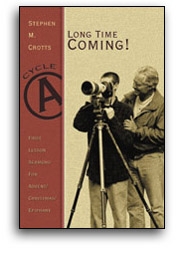
A Long Time Coming
Cycle A First Lesson Sermons for Advent, Christmas, and Epiphany
Object:
Micah is the sixth minor prophet. We call the prophets writing in the last ten books of the Old Testament minor, not because their message is of less importance, but because they were brief. Major prophets are long-winded. Minor prophets preach briefly. Get the picture?
The name "Micah" in Hebrew means "Who is like unto God." Our modern names Michael, Michelle, and Mike derive from it. Oddly enough, Micah used his own name as the theme of his book. His brief seven-chapter, six-page prophecy is all about what God is like and how we can be like him.
Micah lived in the eighth century before Christ. Ministering during the reign of three different kings (1:1), he was careful to write down his sermons. It will help you to understand that the book of Micah is not one sermon, but a collection of short oracles or condensed messages preached over a lifetime in varying situations.
It will further interest you that Micah followed both Amos and Hosea as Israel's prophet. He was also a contemporary of Isaiah, their books sharing many similarities.
Micah was from Moresheth, a small village about thirty miles southwest of Jerusalem. His town happens to be on the main coastal caravan highway where there was much going and coming, so he would have grown up with a fair knowledge of world news.
Micah's outline is easy to follow.
1. Chapters 1-3, the failure of Judah and Israel to be godly and the prediction of God's judgment.
2. Chapters 4-5, the prediction that one will come who is god-like, the Messiah.
3. Chapters 6-7, pleading with the nation to lay hold of godliness.
Furthermore, 2 Kings 15-20 gives one the historical background of Micah. God had from old desired to reveal himself to a people. So, God began by selecting the Jewish nation. He freed them from Egyptian slavery, gave them his law, and gave them a land.
It was God's desire that Israel live in community, keeping his law, loving both God and people, establishing justice. God would prosper them; the nations would see and want such order for themselves. And they would thus come to know God.
I call this plan "window dressing." You can see it applied on the modern car lot. There the dealer places his finest automobile, washed, lighted, surrounded by music and adroit car salesmen. The idea is you'll see it, want it, buy it, and tell admirers where you got it.
God's plan worked well at first. The Queen of Sheba in Africa traveled to Israel to meet King Solomon and to worship his God. "The half of it wasn't told me!" she said of his great reign.
But Israel grew slack in her covenant with God. They wanted a king like the other nations. They took shortcuts morally. They married outside the faith; false worship crept in. Their religion became a convenience. They took God on their own terms and they began to treat one another abysmally.
This is when the prophets, among them Micah, appeared. Read 1:6-7 and you'll get an idea of his message. God will make his nation Israel "a heap in the open country." From a bright red, air-conditioned family sedan shining invitingly on the showroom floor to "a heap," a rusted-out, faded, and unwanted wreck of a car in a kudzu jungle. That's the picture of Israel.
Clearly God is saying he'll remove Israel as a nation because of the embarrassment of having His name associated with a corrupt people. He said the same thing to the churches in Revelation 1-3. Jesus called us "the light of the world." But when our ways are darkness, God promises, "I will remove your lamp stand."
The trouble with Micah's audience is they were in denial. "We're not that bad!" "Who's to say God speaks through you?" "Get a life, preacher! Don't be so serious!" "The good Lord will never do that to us!"
Like any preacher who takes his calling seriously, who feels he's being dismissed unheard, Micah turns up the volume. He becomes dramatic. Chapter 1:8 says he walked around Jerusalem barefooted, stripped nearly naked, and weeping openly.
Micah also used humor on his audience, particularly the pun. In chapter 1:10-13 he preaches, "Tell it not in Gath." "Gath" sounds like the Hebrew word for "tell." So, Micah is saying, "Tell it not in tell city." Next he cries, "In Beth-le-aprah roll in the dust." "Aprah" means "dustiness." So his word is, "In the city of dustiness, roll in the dust!" Then he cries, "Those who live in Zaanan will not come out." "Zaanan" means "to march" or "go out." So he is saying "Those who live in go-out-city will not go out."
To contemporize it, Micah's ploy is like me proclaiming that America's sin is so bad that Pittsburgh really is the pits, Washingtonians need to wash, and Wisconsin is living up to its name -- WisconSIN.
Now for the clincher! The prophet shaves his head bald and invites others to do the same (1:16). You see, when foreign armies conquered a nation, they shaved the heads of the vanquished. Such not only shamed their victims, it provided easy identification.
"Get ready," Micah was preaching. "God's judgment looms! The Syrian army is on the march. They are the rod of God's anger!"
Go ahead! Read Micah, the naked, weeping, bald punster so intent on being heard. Very carefully he will share specifics of what's upsetting God about Israel's behavior. And through its message to our Jewish brothers one may hear his word to us, as well. It's all there -- greed, lack of stewardship, a religion that only tells people what they want to hear, and leaders who use their position for self-serving gain. Micah decries a culture, not unlike our own, built on distortion, bloodshed, and wickedness.
After describing Israel's slide into sin and political collapse into exile, Micah softens. In chapter 5 he predicts a coming Savior, Messiah. "But you, O Bethlehem ... who are little to be among the clans of Judah, from you shall come forth for me one who is to be ruler in Israel, whose origin is from of old, from ancient days" (5:2). Eight hundred years later this very scripture was to guide the wise men to Bethlehem in their quest for Jesus' nativity.
Recall Micah's outline?
1. Israel is ungodly and doomed.
2. A Messiah who is god-like will come.
3. A final plea for God's people to be godly.
This brings us to chapter 6:1-8. God invites his people to plead their case with him. "If you've got a problem with me," God says, "spit it out! But know of a surety, I, God, have a beef with you!" Then God takes them on a brief history tour reminding them of his plans for them and of his strong deliverance over the course of the years.
Now comes what God is after: God-fearing behavior. Micah 6:8 is the most famous quote in the book. Some of you astute students of presidential history will recall James Earl Carter of Georgia, sworn in as President of the United States, had his Bible open to this verse in 1976. "He has showed you, O man, what is good; and what does the Lord require of you but to do justice, and to love kindness, and to walk humbly with your God?"
Aye! Here's what God is after -- your walk with God and people. A walk with God that is humble and dependant, a walk with people that is kind and just.
Until that is a reality in each of our lives, we can expect to hear from Micah.
The name "Micah" in Hebrew means "Who is like unto God." Our modern names Michael, Michelle, and Mike derive from it. Oddly enough, Micah used his own name as the theme of his book. His brief seven-chapter, six-page prophecy is all about what God is like and how we can be like him.
Micah lived in the eighth century before Christ. Ministering during the reign of three different kings (1:1), he was careful to write down his sermons. It will help you to understand that the book of Micah is not one sermon, but a collection of short oracles or condensed messages preached over a lifetime in varying situations.
It will further interest you that Micah followed both Amos and Hosea as Israel's prophet. He was also a contemporary of Isaiah, their books sharing many similarities.
Micah was from Moresheth, a small village about thirty miles southwest of Jerusalem. His town happens to be on the main coastal caravan highway where there was much going and coming, so he would have grown up with a fair knowledge of world news.
Micah's outline is easy to follow.
1. Chapters 1-3, the failure of Judah and Israel to be godly and the prediction of God's judgment.
2. Chapters 4-5, the prediction that one will come who is god-like, the Messiah.
3. Chapters 6-7, pleading with the nation to lay hold of godliness.
Furthermore, 2 Kings 15-20 gives one the historical background of Micah. God had from old desired to reveal himself to a people. So, God began by selecting the Jewish nation. He freed them from Egyptian slavery, gave them his law, and gave them a land.
It was God's desire that Israel live in community, keeping his law, loving both God and people, establishing justice. God would prosper them; the nations would see and want such order for themselves. And they would thus come to know God.
I call this plan "window dressing." You can see it applied on the modern car lot. There the dealer places his finest automobile, washed, lighted, surrounded by music and adroit car salesmen. The idea is you'll see it, want it, buy it, and tell admirers where you got it.
God's plan worked well at first. The Queen of Sheba in Africa traveled to Israel to meet King Solomon and to worship his God. "The half of it wasn't told me!" she said of his great reign.
But Israel grew slack in her covenant with God. They wanted a king like the other nations. They took shortcuts morally. They married outside the faith; false worship crept in. Their religion became a convenience. They took God on their own terms and they began to treat one another abysmally.
This is when the prophets, among them Micah, appeared. Read 1:6-7 and you'll get an idea of his message. God will make his nation Israel "a heap in the open country." From a bright red, air-conditioned family sedan shining invitingly on the showroom floor to "a heap," a rusted-out, faded, and unwanted wreck of a car in a kudzu jungle. That's the picture of Israel.
Clearly God is saying he'll remove Israel as a nation because of the embarrassment of having His name associated with a corrupt people. He said the same thing to the churches in Revelation 1-3. Jesus called us "the light of the world." But when our ways are darkness, God promises, "I will remove your lamp stand."
The trouble with Micah's audience is they were in denial. "We're not that bad!" "Who's to say God speaks through you?" "Get a life, preacher! Don't be so serious!" "The good Lord will never do that to us!"
Like any preacher who takes his calling seriously, who feels he's being dismissed unheard, Micah turns up the volume. He becomes dramatic. Chapter 1:8 says he walked around Jerusalem barefooted, stripped nearly naked, and weeping openly.
Micah also used humor on his audience, particularly the pun. In chapter 1:10-13 he preaches, "Tell it not in Gath." "Gath" sounds like the Hebrew word for "tell." So, Micah is saying, "Tell it not in tell city." Next he cries, "In Beth-le-aprah roll in the dust." "Aprah" means "dustiness." So his word is, "In the city of dustiness, roll in the dust!" Then he cries, "Those who live in Zaanan will not come out." "Zaanan" means "to march" or "go out." So he is saying "Those who live in go-out-city will not go out."
To contemporize it, Micah's ploy is like me proclaiming that America's sin is so bad that Pittsburgh really is the pits, Washingtonians need to wash, and Wisconsin is living up to its name -- WisconSIN.
Now for the clincher! The prophet shaves his head bald and invites others to do the same (1:16). You see, when foreign armies conquered a nation, they shaved the heads of the vanquished. Such not only shamed their victims, it provided easy identification.
"Get ready," Micah was preaching. "God's judgment looms! The Syrian army is on the march. They are the rod of God's anger!"
Go ahead! Read Micah, the naked, weeping, bald punster so intent on being heard. Very carefully he will share specifics of what's upsetting God about Israel's behavior. And through its message to our Jewish brothers one may hear his word to us, as well. It's all there -- greed, lack of stewardship, a religion that only tells people what they want to hear, and leaders who use their position for self-serving gain. Micah decries a culture, not unlike our own, built on distortion, bloodshed, and wickedness.
After describing Israel's slide into sin and political collapse into exile, Micah softens. In chapter 5 he predicts a coming Savior, Messiah. "But you, O Bethlehem ... who are little to be among the clans of Judah, from you shall come forth for me one who is to be ruler in Israel, whose origin is from of old, from ancient days" (5:2). Eight hundred years later this very scripture was to guide the wise men to Bethlehem in their quest for Jesus' nativity.
Recall Micah's outline?
1. Israel is ungodly and doomed.
2. A Messiah who is god-like will come.
3. A final plea for God's people to be godly.
This brings us to chapter 6:1-8. God invites his people to plead their case with him. "If you've got a problem with me," God says, "spit it out! But know of a surety, I, God, have a beef with you!" Then God takes them on a brief history tour reminding them of his plans for them and of his strong deliverance over the course of the years.
Now comes what God is after: God-fearing behavior. Micah 6:8 is the most famous quote in the book. Some of you astute students of presidential history will recall James Earl Carter of Georgia, sworn in as President of the United States, had his Bible open to this verse in 1976. "He has showed you, O man, what is good; and what does the Lord require of you but to do justice, and to love kindness, and to walk humbly with your God?"
Aye! Here's what God is after -- your walk with God and people. A walk with God that is humble and dependant, a walk with people that is kind and just.
Until that is a reality in each of our lives, we can expect to hear from Micah.
